
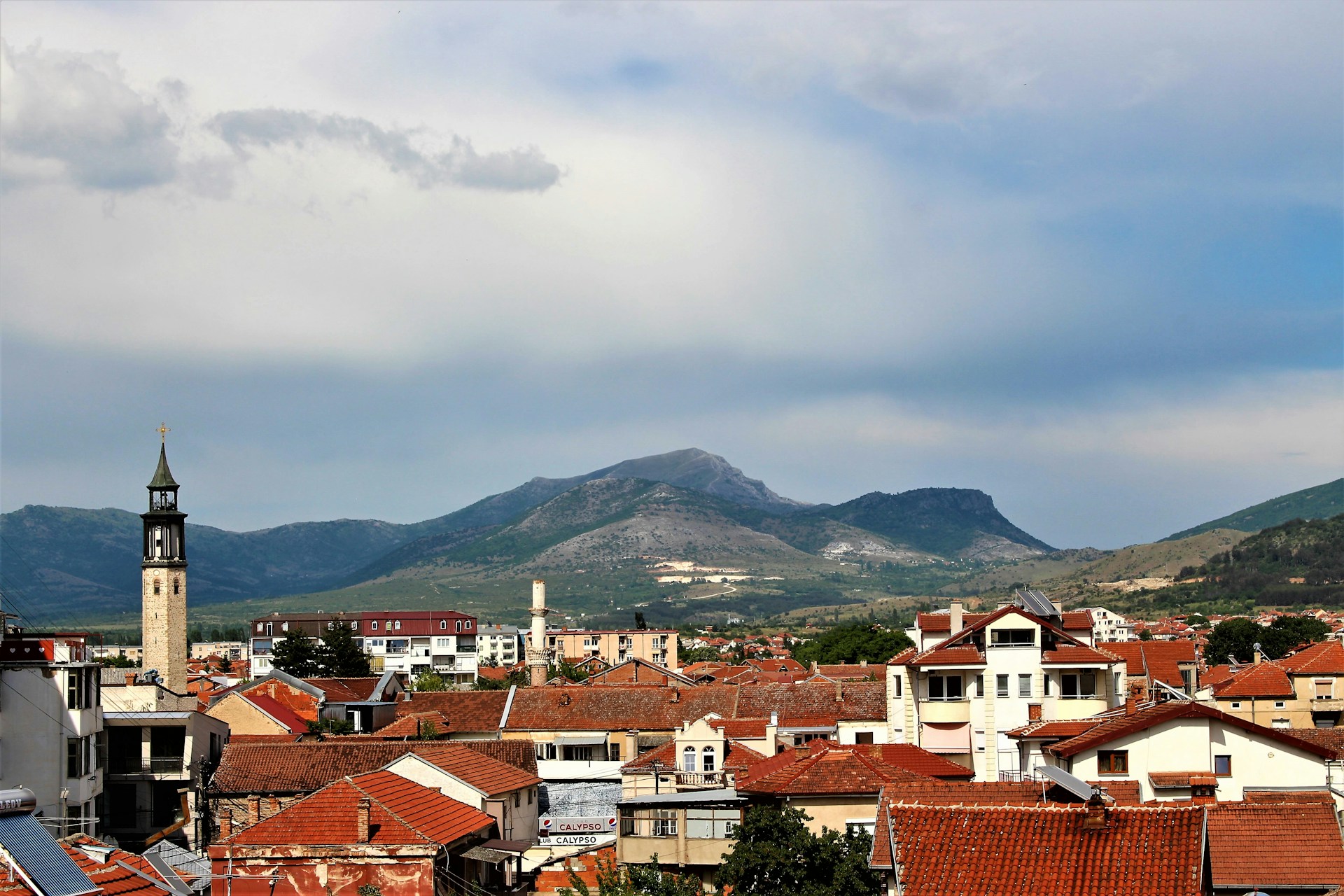
City view of Prilep, North Macedonia

Prilep

Prilep is a city of stone and smoke, famous for golden tobacco leaves and the rugged crowns of Markos Towers. Climb among granite boulders where legends travel on the wind, then drift downtown for slow cooked tavce gravce and crackling zelnik. Craftspeople carve marble and wood with monk like patience, and murals remix folk heroes with bright humor. The Monastery of Treskavec sits high like a hawk, its icons flickering beside cider colored views. Coffee culture is vigorous and chessboards appear as if summoned by opinion. Lakes nearby invite fishing and quiet naps, and cycling routes cross fields scented with thyme. Climbers test granite at sunrise and markets trade jokes as eagerly as produce. Ask about tobacco and you will hear family sagas that double as economics. Marble dust lingers in workshop light and the click of tools sounds like a measured hymn. Prilep feels rugged and friendly, a workshop of appetite, craft, and legends.

Top attractions & things to do in Prilep

If you’re searching for the best things to do in Prilep, this guide brings together the top attractions and must-see places to visit in Prilep. The top picks below highlight the most visited sights for first-time visitors, plus a few local favorites worth adding.

Marble Lake Prilep in Prilep, North Macedonia

Marble Lake Prilep

Beyond the last houses, a quarry cut into white marble has filled with spring water to form a pool of improbable turquoise. Terraces of stone step down to the surface, and every breeze scribbles pale ripples across the mirrored cliffs. Local cutters once shipped blocks of Sivec marble to distant capitals, part of a thriving trade through the 20th century; when extraction moved on, the pit slowly became a lake and a new kind of landmark. Visitors come early to catch the stillness, photographers time the light, and swimmers weigh beauty against caution, because there are no lifeguards here. Geologists point to the fine crystals of carbonate marble, while conservationists note the surprising return of dragonflies and swallows. For locals, it reads as living industrial heritage shaped by water and limestone. The reputation of Prilep marble adds a final gloss, a reminder that geology and craft shaped this serene water. Pack out everything you bring, and let the lake keep its impossible color.
Ads place
Ads place
Ads place
Ads place
Ads place
Markos Towers in Prilep, North Macedonia

Markos Towers

On the granite ridges above Prilep, a crown of weathered walls keeps watch over fields of tobacco and stone. Raised in the twilight of the medieval Balkans, the fortress grew through the rule of King Marko in the 14th century, absorbing older Byzantine layers and later Ottoman outworks into a single rocky citadel. Footpaths thread past cisterns and shattered gates toward spurs where sentries once signaled across the plain. Climbers pause at ledges to read the landscape, from Varosh rooflines to the distant rim of Pelagonia. At sunset the cliffs glow copper, and the wind lifts the scent of thyme while kestrels hang on the thermals. Locals still call the site Markovi Kuli, a name that turns stone into legend, and guides recount ballads of royal justice and stubborn freedom. Informative panels sketch phases of building and siege, but the best archive is the bedrock itself, cut with steps and tool marks. Bring sturdy shoes, an appetite for views, and a willingness to let silence do the storytelling.
Ads place
Ads place
Ads place
Ads place
Ads place
Tobacco Museum Prilep in Prilep, North Macedonia

Tobacco Museum Prilep

In a city built on leaf and labor, a small museum gathers the scents and stories of a defining crop. Displays begin with seedlings and end with elegant tins, tracing the arc of Oriental tobacco from field to factory. Cases map the shift from Ottoman guilds to Yugoslav era combines, while photographs fix harvest crews beneath mountains of golden leaf. Ledgers from the 19th century sit beside colorful export labels, and visitors learn how curing barns and careful fermentation shaped aroma. Engineers demonstrate cutters and crimpers that once rattled through shifts, and labels reveal how fashion and taste moved with politics. In reading rooms, agronomists still debate seed strains and soils, and tours often end with recollections of families who measured seasons by planting and drying. Researchers from the Tobacco Institute Prilep often contribute context, linking exhibit pieces to ongoing field trials and seed archives. The museum does not romanticize; it remembers, and it shows how a city balanced expertise and craft while adapting to new markets.
Ads place
Ads place
Ads place
Ads place
Ads place
Treskavec Monastery in Prilep, North Macedonia

Treskavec Monastery

High on Zlatovrv above Prilep, a monastery clings to a shoulder of granite where clouds snag and clear within minutes. Its heart is a church to the Mother of God, first recorded in the 13th century and later adorned with radiant Palaeologan frescoes. Pilgrims climb for hours to stand beneath soot darkened vaults, tracing saints whose faces still carry a startling tenderness. Travelers from the time of Evliya Celebi wrote of the sanctuary, and earthquakes, fires, and snows have tried and failed to erase it, including the blaze of 2013. Stone cells and refectory walls cradle a courtyard that opens to a physical and spiritual horizon. From here the eye runs over Pelagonia and back to older centuries, while bells strike notes that fade into the granite. Scholars point out Byzantine masonry and a fragment of marble relief set into the apse; hikers cherish the hush after the last switchback. Stay for vespers, when the liturgy folds mountain light into memory.
Ads place
Ads place
Ads place
Ads place
Ads place
Varosh Old Quarter in Prilep, North Macedonia

Varosh Old Quarter

At the foot of the fortress, the old quarter gathers lanes, courtyards, and a scatter of small churches into a village within the city. Stone houses lean over narrow passages where grapevines stitch shade between balconies. Parish bells set the rhythm as you pass icons soot toned by centuries and carved door lintels polished by hands. The neighborhood known as Varosh grew in the 12th to 14th centuries, then adapted to Ottoman customs without losing its Christian spine. Painters nurtured a local school of icon painting, and restorers today reveal colors that once shaped processions and feast days. Climb toward the ridge and the silhouette of Markovi Kuli returns with every turn; descend and you find small workshops where copper still rings. Courtyards hide pomegranate trees and stone cisterns, and evenings bring the smell of bread and roasted peppers while conversations drift from steps to street corner like a familiar hymn.
Ads place
Ads place
Ads place
Ads place
Ads place