
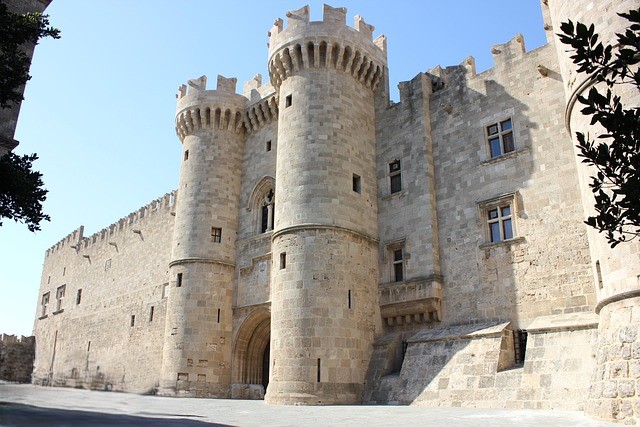
Palace of the Grand Master
In Rhodes, Greece .
More places to visit in Rhodes
Discover more attractions and things to do in Rhodes.
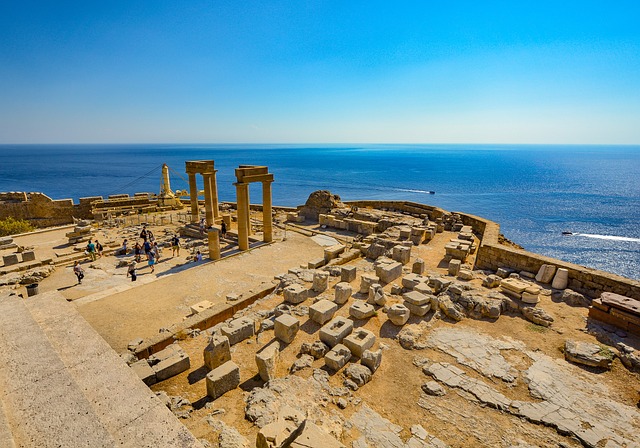
Acropolis of Lindos
Perched on a limestone promontory overlooking Vlicha Bay, the Acropolis of Lindos crowns the picturesque village with ruins spanning the 6th century BC through medieval times. The original Temple of Athena Lindia boasts Ionic capitals and marble friezes depicting maritime victories. Hellenistic fortifications and Crusader-era 13th-century battlements reveal layers of strategic adaptation. Systematic excavations by the British School of Archaeology from 1897 uncovered mosaic paving and secret cisterns that once supplied the sanctuary. Visitors ascend steep stone steps cut into the rock, passing rock-hewn staircases and terraced seating. At the summit, a restored Propylaea gateway frames panoramic views of the Aegean, including the silhouette of Santorini on the horizon. Annual dawn rituals on August 29 , the feast of Saint Symeon, revive ancient cult practices. The Acropolis of Lindos continues to captivate those drawn to its blend of classical artistry, medieval architecture, and breathtaking vistas.
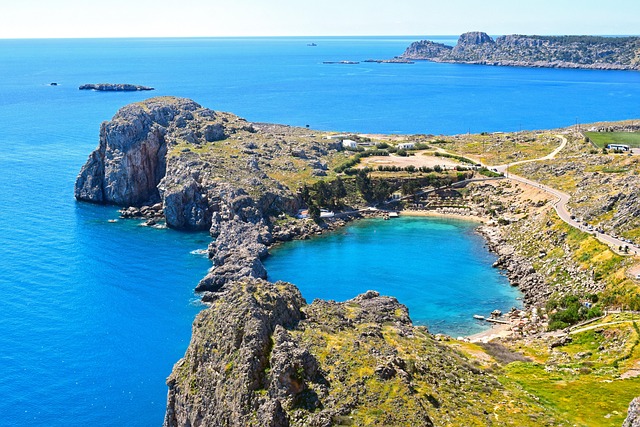
Agios Pavlos Beach
Agios Pavlos Beach, nestled on Rhodes’s remote western coast near Prasonisi, is steeped in legend and natural wonder. Tradition holds that Apostle St. Paul set foot upon these sands around 60 AD during his missionary voyages. The crescent bay is framed by dramatic red sandstone cliffs whose layered strata date to the Mesozoic era , revealing millennia of marine fossils. Atop the largest outcrop stands a modest Byzantine chapel built in the 14th century, dedicated to its namesake. Each summer, loggerhead sea turtles ( Caretta caretta ) nest on its secluded shores, protected by ongoing conservation efforts. Windsurfers and kite surfers seek the consistent Meltemi winds funneled through the nearby isthmus, making Agios Pavlos a top spot for adventure sports. Accessible via a winding dirt track, the beach remains largely undeveloped, offering tranquil sunbathing, snorkeling in crystal-clear waters, and exploration of hidden sea caves at low tide. Geologists regularly study the visible stratigraphy to understand ancient tectonic shifts. At dusk, the sandstone glows amber as pop-up beach bars serve traditional meze and local rosé. Agios Pavlos Beach blends myth, geology, and eco-tourism into a serene Aegean retreat.
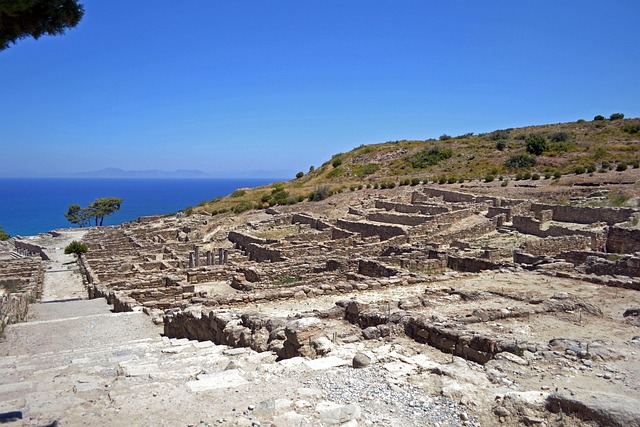
Ancient Kamiros
Founded by Dorian settlers in the 4th century BC , Ancient Kamiros was one of Rhodes’s three autonomous city-states and flourished through maritime trade and agriculture. Its meticulously planned Hippodamian grid layout showcased advanced urban design, with straight avenues intersecting at public agoras. Victorian excavator Sir Alfred Biliotti led significant digs in the 19th century , unearthing a Temple of Athena complete with Ionic columns and sculpted antae. Wandering the open-air museum, visitors explore multi-room homes with mosaic floors, public wells, and restored wine presses. A network of 9-arch aqueducts channeled spring water to street fountains. After a devastating 142 BC earthquake , Kamiros was abandoned and buried until rediscovery. The site’s interpretive center contextualizes daily life and agricultural practices, while panoramic vantage points offer sweeping views of the Aegean where the island of Crete emerges on clear days.
Kallithea Springs & Thermal Baths
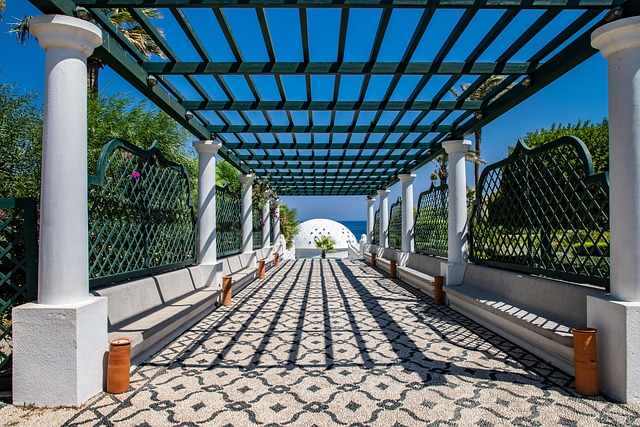
Kallithea Springs have been celebrated for their thermal waters since antiquity, when local physicians extolled their healing properties. In the 1920s , Italian architects, led by Juan Fioratti , designed elegant Art Deco and Art Nouveau pavilions around the main spring, crafting a stylish retreat on Rhodes’s eastern shore. Following a major 2007 restoration , the restored pavilions frame marble mosaic floors, ornate colonnades, and sea-facing terraces. Beneath the surface lie Roman-era aqueducts and mosaic fragments, recently unearthed by archaeologists. Visitors bathe in pools with waters reaching 40°C , believed to cure skin ailments, then wander shaded cedar pathways and thyme-scented groves. Summer wellness retreats and open-air performances animate the site, blending therapeutic relaxation with cultural heritage. Kallithea Springs stand as a testament to cross-cultural restoration and the enduring allure of Rhodes’s natural mineral springs.
Lindos Beach
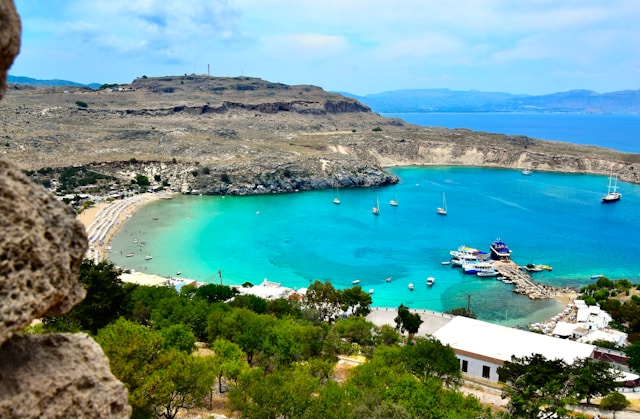
Lindos Beach is the crescent-shaped shore at the base of the iconic Acropolis of Lindos , sweeping along Vlicha Bay with fine white sand and crystalline turquoise waters. Framed by imposing cliffs that hold the ruins of the Temple of Athena Lindia (6th century BC) and the medieval fortress walls constructed by the Knights Hospitaller in the 14th century, the beach invites both history enthusiasts and sunseekers. Beneath the surface, underwater archaeological sites have yielded pottery shards and amphorae from Classical and Hellenistic periods, visible to snorkelers around hidden coves. Visitors can rent sunbeds and kayaks, paddling toward secluded inlets and the historic Byzantine Chapel of St. Paul perched on a rocky promontory. Throughout the day, waterfront tavernas serve freshly caught seafood, local wines, and traditional dips, enhancing the Mediterranean experience. As dusk falls, the sky over Lindos Beach's glows pink behind the ancient silhouette, creating a panoramic tableau cherished by photographers and travelers. Lindos Beach's harmonious blend of natural beauty, enduring heritage, and modern amenities makes it a must-visit Aegean paradise.
Medieval City of Rhodes (Old Town)
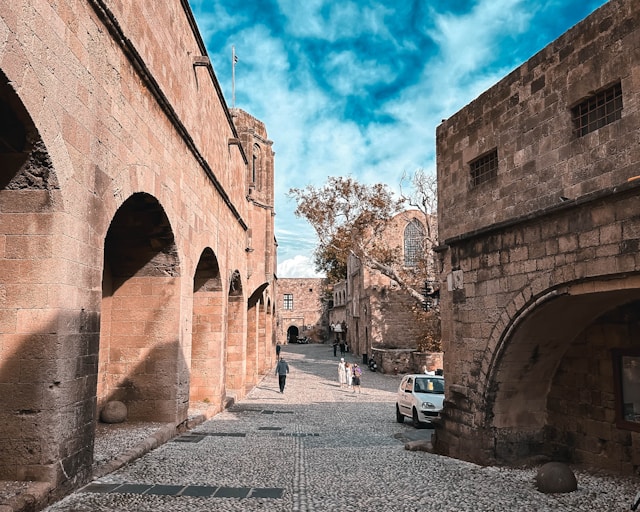
Encircled by massive fortifications built by the Knights Hospitaller during the 14th century and later reinforced in the 16th century , the Medieval City of Rhodes stands as one of Europe’s most extensive and well-preserved fortress towns. Declared a UNESCO World Heritage Site in 1988 , its labyrinthine lanes, including the famed Street of the Knights , wind past Gothic mansions, arched gateways, and hidden squares. The Grand Master’s Palace , originally a Byzantine keep, was transformed into a symbol of Hospitaller power, hosting chivalric ceremonies on its marble courtyard. Recent excavations uncovered mosaic floors and column fragments beneath chapel foundations. Today, boutique shops and traditional tavernas occupy restored mansions, offering local melekouni sweets and Rhodes wines. The city walls, which extend over 4.5 kilometers, provide panoramic views of the Aegean at sunset. Medieval festivals with costumed reenactments and jousting tournaments animate the cobbles each spring, immersing travelers in centuries of military architecture, chivalric tradition, and Mediterranean heritage.
Monastery of Panagia Filerimos
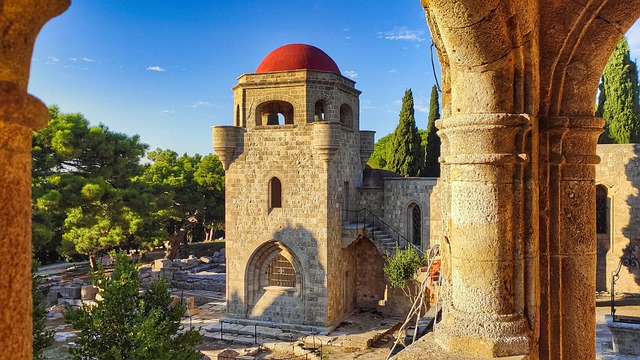
Perched atop Filerimos Hill, the Church and Monastery of Panagia Filerimos occupies the remains of a 14th-century Crusader castle later refurbished by Byzantine monks . A winding footpath, dotted with 14 painted icons of the Stations of the Cross, ascends through ancient olive groves to a monumental Byzantine cross that commands sweeping views of Rhodes Town and the Aegean Sea . Archaeologists uncovered Hellenic temple foundations from the 3rd century BC , suggesting earlier sacred activity. Meticulous conservation in 2005 restored frescoes in the monastery chapel, revealing vibrant depictions of the Virgin Mary and Christ Pantokrator. Annual Easter processions blend monastic traditions with local folklore, drawing pilgrims to this serene summit sanctuary. Filerimos Hill invites spiritual reflection amid a tapestry of classical, medieval, and ecclesiastical heritage.
Street of the Knights
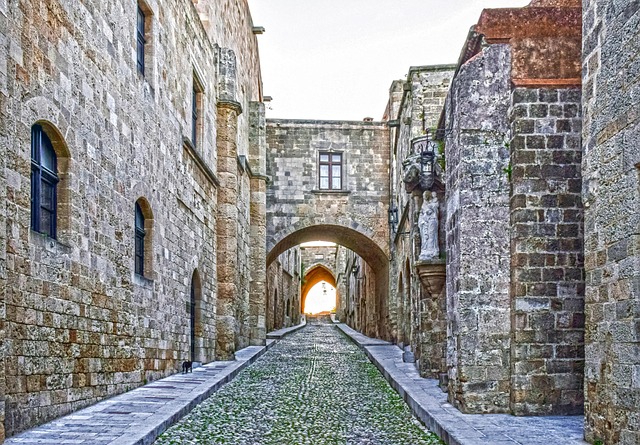
Winding through the heart of Rhodes Old Town, the Street of the Knights dates to the 14th century when the Knights Hospitaller established their quarters here. This impeccably preserved cobblestone avenue comprises seven grand inns—each aligned with the order’s different “tongues” or national divisions, from England to Italy. Facades of it feature imposing arched doorways and carved coats of arms, while interiors once hosted ceremonial gatherings and strategizing sessions before Crusader expeditions. Excavations beneath the street revealed Byzantine foundations and medieval drainage channels, showcasing advanced urban planning. During the Ottoman occupation of 1522–1912 , artisans added decorative tile panels and painted talismans to protect doorways from evil spirits. Today, restored gateways open onto tranquil courtyards offering boutique guesthouses and traditional tearooms. At dusk, warm lantern light reflects on the ancient stone, and guided walking tours recount tales of chivalric ceremonies and secret defences carved into hidden passageways. The Street of the Knights remains a living monument to medieval martial prowess, diplomatic legacy, and the enduring mystique of Rhodes.
Valley of the Butterflies (Petaloudes)
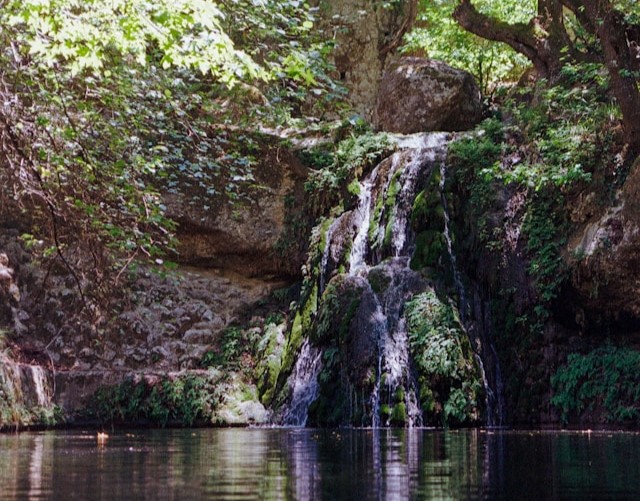
In the verdant Petaloudes Valley, millions of Jersey tiger moths migrate each summer to feast on the valley's plane trees and feed on fragrant nectar. Designated a 1971 nature reserve , this ecological haven supports delicate orchids and rare bird species under a canopy of sycamores. Legend holds that these fluttering creatures are souls of nuns, commemorated by the valley's Greek name meaning “butterflies.” Visitors stroll shaded boardwalks to witness the moths’ larval cycle , detailed at an on-site research station. Ruins of a Byzantine monastery from the 4th century and remnants of a Roman aqueduct underscore the valley’s historic significance. Guided eco-tours in spring highlight conservation efforts, while night excursions reveal the moths' luminescent behavior under moonlight, offering a tranquil intersection of myth, history, and natural wonder.