City view of Rotterdam, Netherlands

Rotterdam

Rotterdam is the rebel architect in a family of canal painters—a city where the skyline looks like it was designed with a LEGO set after a particularly wild Friday night. Bombed and bravely rebuilt, Rotterdam serves up ultramodern bridges, glittering high-rises, and those infamous Cube Houses that make you question the laws of gravity. Art and street murals add color everywhere, and the nightlife scene packs a punch—if you like your techno with a side of industrial chic, you’re home. The food? From Indonesian rijsttafel to haute cuisine, Rotterdam’s port has made it the gateway to world flavors. Hop a water taxi, pose for a selfie at the Markthal, or join locals picnicking on floating parks. Rotterdam isn’t afraid to rewrite the rules, and that’s precisely what makes it unforgettable. Fun fact: its port is the largest in Europe, once the busiest in the world.

Top attractions & things to do in Rotterdam

If you’re searching for the best things to do in Rotterdam, this guide brings together the top attractions and must-see places to visit in Rotterdam. The top picks below highlight the most visited sights for first-time visitors, plus a few local favorites worth adding.

Cube Houses in Rotterdam, Netherlands

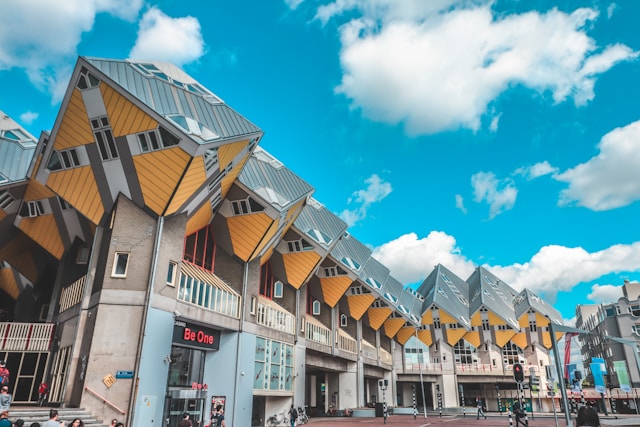
Cube Houses

Beside the rail viaduct at Blaak, a small forest of tilted cubes turns ordinary housing into a playful urban puzzle. The pedestrian deck threads between sharp angles, and the city slips below like a canal of traffic and tramlines. Conceived by architect Piet Blom and completed in 1984, the ensemble treats the neighborhood as a single organism. It belongs to Structuralism, where parts make sense only within the larger pattern they help compose. Each cube is rotated 45 degrees on a hexagonal base, so walls become roofs and views unfold diagonally. Models of the scheme circulated in the late 20th century, testing how public walkways could carry life above the street. Step into the show house and you learn the trick of furniture against sloping panes; step back outside and the whole cluster clicks into focus as a bridge you can live in. In evening light the yellow panels warm to honey, and the zigzag roofline reads like handwriting across the sky.
Ads place
Ads place
Ads place
Ads place
Ads place
Delfshaven in Rotterdam, Netherlands

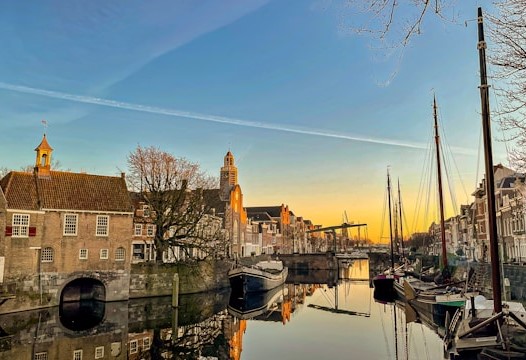
Delfshaven

Cobbled quays, stepped gables, and a calm canal make this old harbor feel like a pocket of time left open in the city. Beer kettles, ropework, and ship fittings once filled every doorway; today cafes and workshops take their place with a lighter tread. In 1620 the Pilgrim Fathers embarked from here on the Speedwell before joining the Mayflower, a story kept at the small church by the water. The district grew through the 17th century as Delft's outlet to the Maas, and the houses show the patient craft of merchants and skippers. Unlike the center, it survived the fires of 1940, so much of the texture remains intact. A statue of admiral Piet Hein signals local pride, and distillers still labor over copper kettles nearby. Stay toward sunset and the water turns to polished slate, with rigging lines drawing slow music across the sky. Walk a few minutes and the modern city returns suddenly, which makes this harbor feel even more carefully kept.
Ads place
Ads place
Ads place
Ads place
Ads place
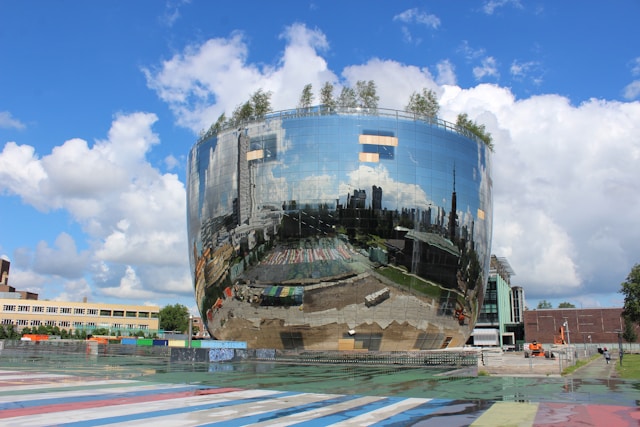
Depot Boijmans Van Beuningen in Rotterdam, Netherlands

Depot Boijmans Van Beuningen

A mirrored bowl rises from Museumpark and folds the city into its curved skin, so skyline and trees appear to hover in fragments. Visitors ride up through daylight to racks and crates usually hidden from view, meeting art where it rests between exhibitions. Opened in 2021 and designed by Winy Maas, the depot crowns its roof with a pocket landscape where about 75 trees sit above climate-controlled rooms. Inside, climate rooms hold roughly 151,000 works, a backstage tour that becomes the show itself. The project rewrites a 21st century idea of access, pairing conservation with transparency. Elevators pause at glass platforms where conservators brush and mend, and the reflections outside braid spectators into the city they stepped out of. On clear days, the terrace turns into a viewing deck over roofs and water, a small theatre where Rotterdam plays itself. Even the staircases feel deliberate, spiraling like a sketch of how collections grow from a single idea into a public memory.
Ads place
Ads place
Ads place
Ads place
Ads place
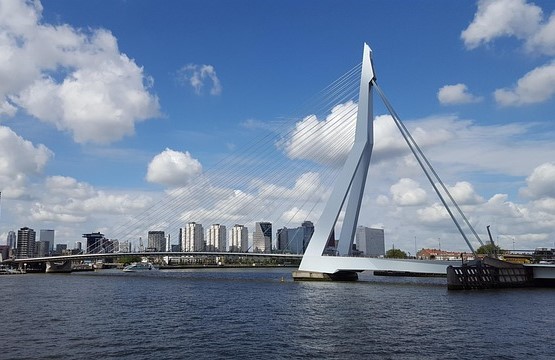
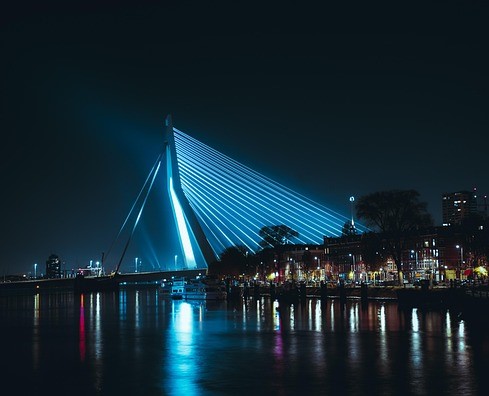
Erasmus Bridge in Rotterdam, Netherlands

Erasmus Bridge

Cutting across the Maas with a graceful sweep, the bridge links the historic north to the new skyline on Wilhelminapier and turns the river into a civic stage. Nicknamed the Swan for its white profile, it frames ships, trams, and cyclists moving in one continuous rhythm. Designed by architect Ben van Berkel, the crossing opened in 1996, a signal that the harbor city had entered a new chapter. The asymmetrical pylon rises to about 139 meters, anchoring cables that read like a harp against evening light. Its engineering belongs to late 20th century ambition, yet the deck feels intimate, close to water and wind. Major events have crossed here, including the Tour prologue in 2010, when the city cheered from both banks. Stand at midspan and the current pulls east and west at once, a reminder that Rotterdam's energy is always in motion. At night, the cables glow and the skyline answers, turning infrastructure into a drawing across the sky.
Ads place
Ads place
Ads place
Ads place
Ads place
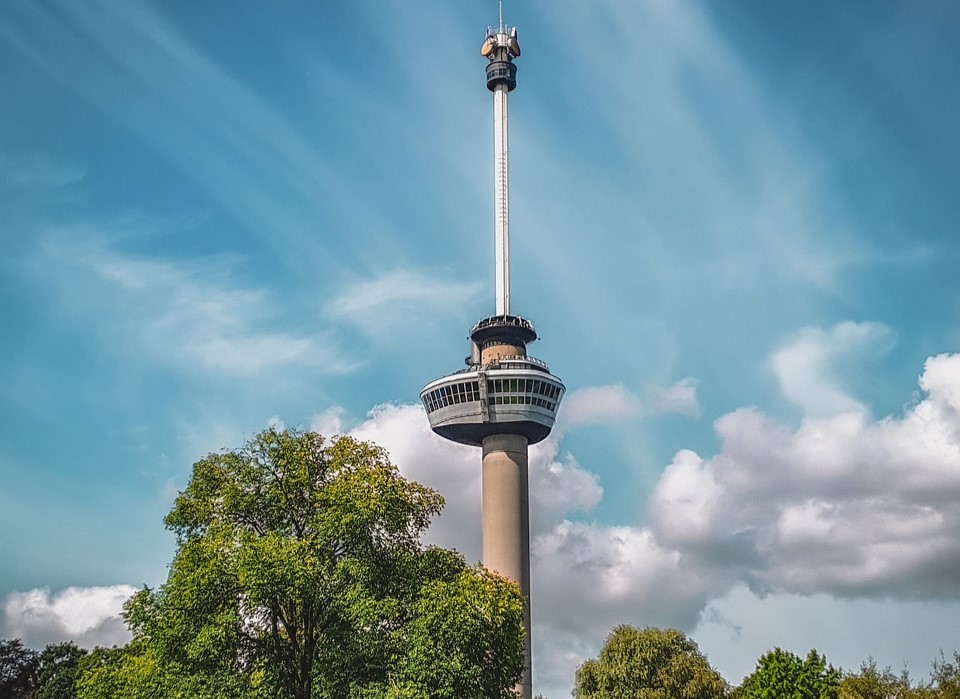
Euromast in Rotterdam, Netherlands

Euromast

From the lawns of Het Park, the tower rises with the calm of a harbor beacon and the optimism of a fairground ride. Elevators send you to decks where the river braids through docks and the North Sea light pulls far inland. Built for the Floriade in 1960 by architect Huig Maaskant, the shaft later gained the rotating Euroscoop in 1970. The addition lifted the structure to about 185 meters, securing its place among the city's clearest silhouettes. Its profile is a lesson in late 20th century confidence, equal parts instrument and promenade. On windy days the view keeps shifting—cranes swing, clouds march, and freighters slide like chess pieces. At dusk, restaurants glow against the concrete and couples lean on the rail, letting the whole port become their table conversation. In summer, the gardens below ring with picnics; in winter, the glass tightens the horizon and makes the river look carved from steel. Either way, the climb turns Rotterdam into a readable map.
Ads place
Ads place
Ads place
Ads place
Ads place
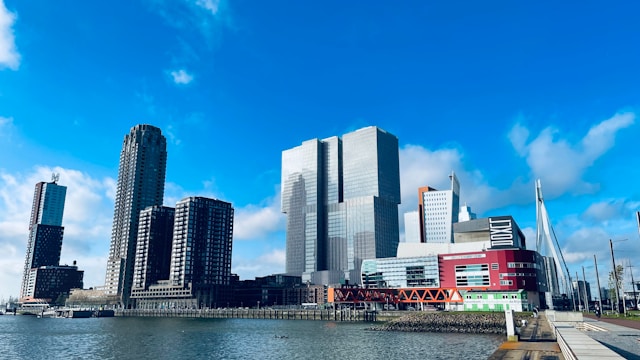
Kop van Zuid in Rotterdam, Netherlands

Kop van Zuid

Across the water from the old center, a waterfront of piers and towers lays out a promenade where the river is always part of the scene. Ferries and trams knit the district to the north bank, and evening walks turn the skyline into a gallery of silhouettes. Hotel New York in 1901 anchors the story at the former Holland America Line headquarters, a reminder of departures that shaped families on two continents. The skyline gained a hinge when the bridge opened in 1996, making the peninsula feel like a second city center. Architect Rem Koolhaas added De Rotterdam in 2013, stacking volumes like a vertical neighborhood, while Norman Foster set the World Port Center nearby. The result is a readable atlas of late 20th century and early 21st century ambition, lively at lunch and theatrical at night. Sit by the quay and the ships draw straight lines through reflections, as if the harbor were practicing calligraphy.
Ads place
Ads place
Ads place
Ads place
Ads place
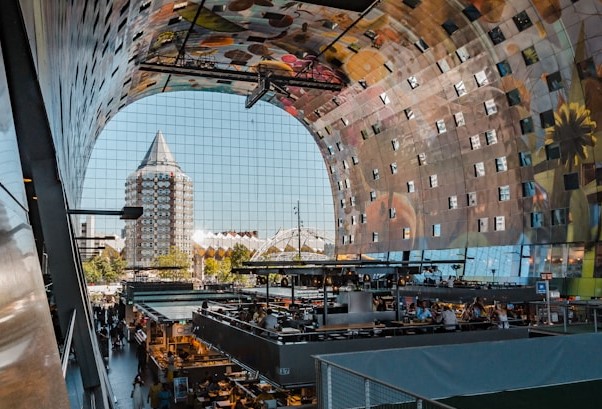
Markthal in Rotterdam, Netherlands

Markthal

Beneath a vast horseshoe arch, the market hums with voices, knives on boards, and the soft thunder of footsteps between stalls and kitchens. The building reads like a covered plaza open at both ends, so the city flows through while shoppers linger under the vault. Opened in 2014 and led by architect Winy Maas, the project fused apartments with a public hall in a single gesture. Inside, a monumental artwork by Arno Coenen blooms across the ceiling, turning produce into a swirling cosmos above lunch tables. The arch rises roughly 40 meters and runs more than 120 meters, proportioned to Rotterdam's audacious appetite. At dawn, bakers set out trays; by evening, families compare cheeses while cooks fire woks behind glass. Walk out through the transparent facade and the reflection of bicycles follows you, as if the market had decided to keep you in its orbit. The hall's acoustics soften the city's clatter, so conversations float upward and disappear into the arch.
Ads place
Ads place
Ads place
Ads place
Ads place
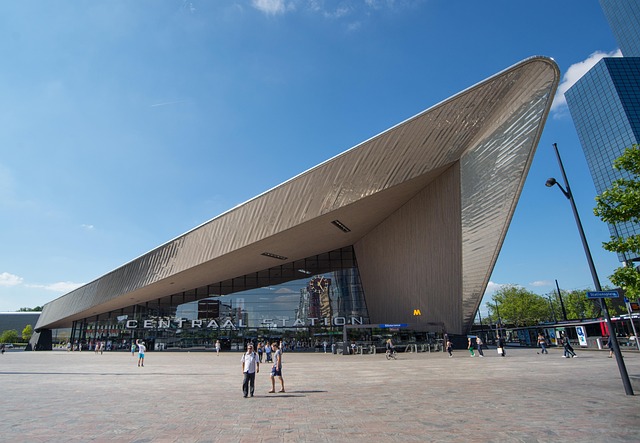
Rotterdam Centraal Station in Rotterdam, Netherlands

Rotterdam Centraal Station

Arrivals spill into a wedge of steel and glass that points toward the city like an arrow, and the forecourt sorts trams, bikes, and footsteps into one broad fan. The concourse glows with timber and daylight, so wayfinding becomes almost instinct. The present station opened in 2014, shaped by architect Mels Crouwel within a design team that balanced speed with civic calm. An earlier building from 1957 had set the postwar pattern, and its letters and clock return here as a quiet salute. The roofline reads as a piece of late 20th century optimism translated for a 21st century network of high-speed links. Platforms stretch under a canopy wide enough for weather and waiting, and cafes turn layovers into small city visits. Step outside again and the arrow points you forward, a simple gesture that still feels like a promise. In the evening, the facade mirrors headlights and bicycle lights, stitching travelers into the architecture they move through.
Ads place
Ads place
Ads place
Ads place
Ads place
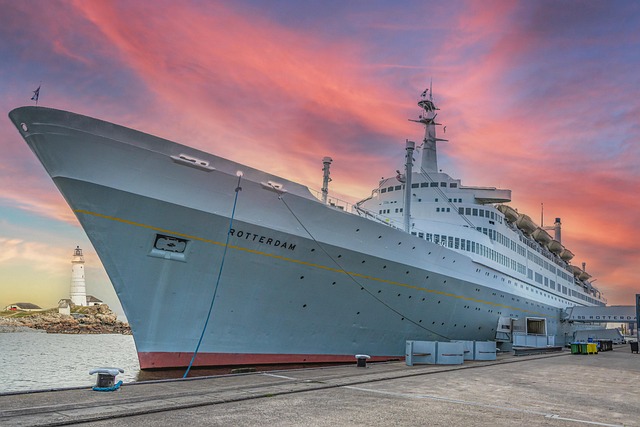
SS Rotterdam in Rotterdam, Netherlands

SS Rotterdam

Moored at Katendrecht, the ocean liner keeps the poise of a grand hotel while gulls trace the wake it no longer makes. Cabins, salons, and promenades now host guests and tours, yet the geometry of the decks still promises open water. Launched in 1958 for the Holland America Line and christened by Queen Juliana, the ship crossed the Atlantic through the 1960s before moving to cruises. At about 228 meters long, it compresses a floating city into one measured hull, all brass rails and patient teak. After years abroad it returned to Rotterdam in 2010 as a hotel and cultural venue, a practical rescue of midcentury glamour. Engine rooms echo with tours, ballrooms glow at dusk, and children race the length of the sundeck pretending the quay is still an ocean. From the pier you read the skyline differently, with the ship in the foreground like a ruler of time. It feels both anchored and underway, a paradox that suits a city built on departures and returns.
Ads place
Ads place
Ads place
Ads place
Ads place
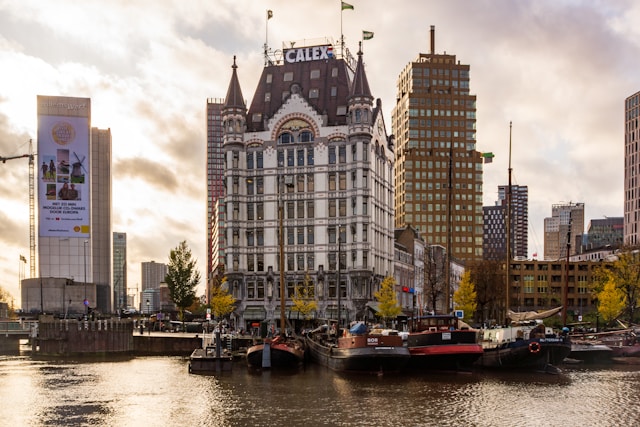
Witte Huis (The White House) in Rotterdam, Netherlands

Witte Huis (The White House)

At the edge of Oude Haven, the Witte Huis rises like a crisp white bookend, its turrets and dormers reflected in the quiet water. Completed in 1898, the steel-framed landmark climbed to 43 meters, a height that made it widely cited as Europe's first true high-rise at the end of the 19th century. The facade blends glazed brick, sculpted ornament, and sinuous ironwork that carries the optimism of Art Nouveau into a working harbor. During the Rotterdam Blitz of 1940, surrounding blocks were leveled, yet the building endured, becoming a rare survivor that anchors the city's memory of its prewar skyline. Later restorations cleaned the pale masonry and lifted the old mosaics, and its protected status as a Rijksmonument secures that story for future generations. From the quay, barges idle and camera shutters click, while upstairs offices watch the tides; step back at sunset and the house seems to float, a compact monument to resilience and commerce.
Ads place
Ads place
Ads place
Ads place
Ads place