
City view of Rouen, France

Rouen

Rouen, located in the Normandy region of northern France, is known for its historical significance, medieval architecture, and association with Joan of Arc. The city is home to the impressive Cathédrale Notre-Dame de Rouen, which inspired several paintings by the artist Claude Monet. Rouen's medieval quarter features half-timbered houses, cobblestone streets, and charming shops. The city is also famous for the Gros-Horloge, an ornate astronomical clock set in a historic archway. Rouen's markets offer local specialties like Normandy cheeses, cider, and seafood. The city's museums, such as the Musée des Beaux-Arts, house extensive collections of art, including works by renowned artists like Caravaggio and Delacroix. With its rich history, stunning architecture, and vibrant culture, Rouen is a captivating destination in Normandy.

Top attractions & things to do in Rouen

If you’re searching for the best things to do in Rouen, this guide brings together the top attractions and must-see places to visit in Rouen. The top picks below highlight the most visited sights for first-time visitors, plus a few local favorites worth adding.

Eglise Saint-Ouen in Rouen, France

Eglise Saint-Ouen

Eglise Saint-Ouen is a stunning Gothic church located in Rouen, known for its impressive architecture and rich history. This magnificent church was built in the 13th century and features a beautiful façade adorned with intricate sculptures and detailed carvings. The interior of Eglise Saint-Ouen is equally breathtaking, with soaring ceilings, stunning stained glass windows, and ornate altars that create a sense of awe. The church is renowned for its exceptional acoustics, making it a popular venue for concerts and cultural events. Visitors can take guided tours to learn about the history of the church and its significance in Rouen’s heritage. The surrounding gardens and courtyard provide a peaceful space for reflection and relaxation. Eglise Saint-Ouen is not only a place of worship but also a cultural landmark that attracts art lovers and history enthusiasts alike. Whether you are interested in architecture, music, or simply wish to enjoy a moment of tranquility, Eglise Saint-Ouen is a must-visit destination in Rouen. The church’s 7,000-pipe organ was once played by composer Camille Saint-Saëns, who held the title of organist here. Hidden in the triforium are medieval masons’ marks used to calculate payments during construction.
Ads place
Ads place
Ads place
Ads place
Ads place
Gros-Horloge in Rouen, France

Gros-Horloge

The Gros-Horloge is a historic astronomical clock located in the heart of Rouen. This iconic clock dates back to the 14th century and is a remarkable example of medieval engineering and artistry. The clock is adorned with intricate decorations and features a large dial that displays not only the time but also the phases of the moon and other astronomical details. Visitors can admire the clock’s beautiful façade and the surrounding archway that leads to the Rue du Gros-Horloge, a bustling street lined with shops and cafés. The Gros-Horloge is not only a functional timepiece but also a symbol of Rouen’s rich history and cultural significance. A visit to the clock offers a glimpse into the medieval past of the city and its architectural heritage. The clock tower provides panoramic views of the city for those who climb to the top. It is a popular spot for tourists and locals alike, making it a lively hub of activity. Whether you are interested in history, architecture, or simply looking to enjoy the vibrant atmosphere of Rouen, the Gros-Horloge is a must-see attraction. The clock’s single golden hand (instead of two) was designed to symbolize the sun’s movement across the sky. During WWII, the clock face was covered with tar to prevent German bombers from using it as a navigation landmark.
Ads place
Ads place
Ads place
Ads place
Ads place
Musee des Beaux-Arts de Rouen in Rouen, France

Musee des Beaux-Arts de Rouen

The Musée des Beaux-Arts de Rouen is an art museum located in the heart of Rouen, showcasing a rich collection of paintings, sculptures, and decorative arts. Established in the 18th century, the museum is housed in a stunning building that combines modern and classical architectural styles. The museum’s collection includes works from renowned artists such as Monet, Renoir, and Caravaggio, making it a significant cultural institution in France. Visitors can explore the various galleries that display a wide range of art, from medieval to contemporary pieces. The museum also hosts temporary exhibitions that feature both local and international artists, adding to its vibrancy. The beautiful gardens surrounding the museum provide a tranquil setting for relaxation and contemplation after exploring the exhibitions. The Musée des Beaux-Arts de Rouen is a must-visit destination for art lovers and those interested in the cultural heritage of Rouen. Whether you are an avid art enthusiast or simply looking to appreciate beautiful works of art, this museum offers a unique glimpse into the world of creativity and inspiration. During WWII, curators hid 800 artworks in a Normandy château to protect them from Nazi looting. The museum’s archives contain Gustave Flaubert’s personal art collection, donated by his niece in 1911.
Ads place
Ads place
Ads place
Ads place
Ads place
Place du Vieux-Marché in Rouen, France

Place du Vieux-Marché

Place du Vieux-Marché is a historic square located in Rouen, known for its vibrant atmosphere and rich history. This lively square is home to a variety of cafés, restaurants, and shops, making it a popular gathering spot for locals and tourists alike. The square is also famous for being the site of the execution of Joan of Arc in 1431, and a memorial cross stands in her honor. Visitors can explore the charming streets surrounding the square, which are lined with half-timbered houses and offer a glimpse into the architectural heritage of Rouen. The atmosphere in Place du Vieux-Marché is particularly lively during the summer months when outdoor events and markets are held. The square is an ideal place to enjoy a meal or a drink while soaking up the vibrant ambiance of Rouen. It is also conveniently located near other attractions, making it an ideal starting point for exploring the city. Whether you are interested in history, culture, or simply want to relax in a beautiful setting, Place du Vieux-Marché is a must-visit destination. Beneath the square lies a medieval cellar where Joan of Arc’s ashes were secretly preserved before being scattered in the Seine. The modern Église Jeanne d’Arc at the square’s center was designed to resemble both a fish (Christian symbol) and the flames of her execution.
Ads place
Ads place
Ads place
Ads place
Ads place
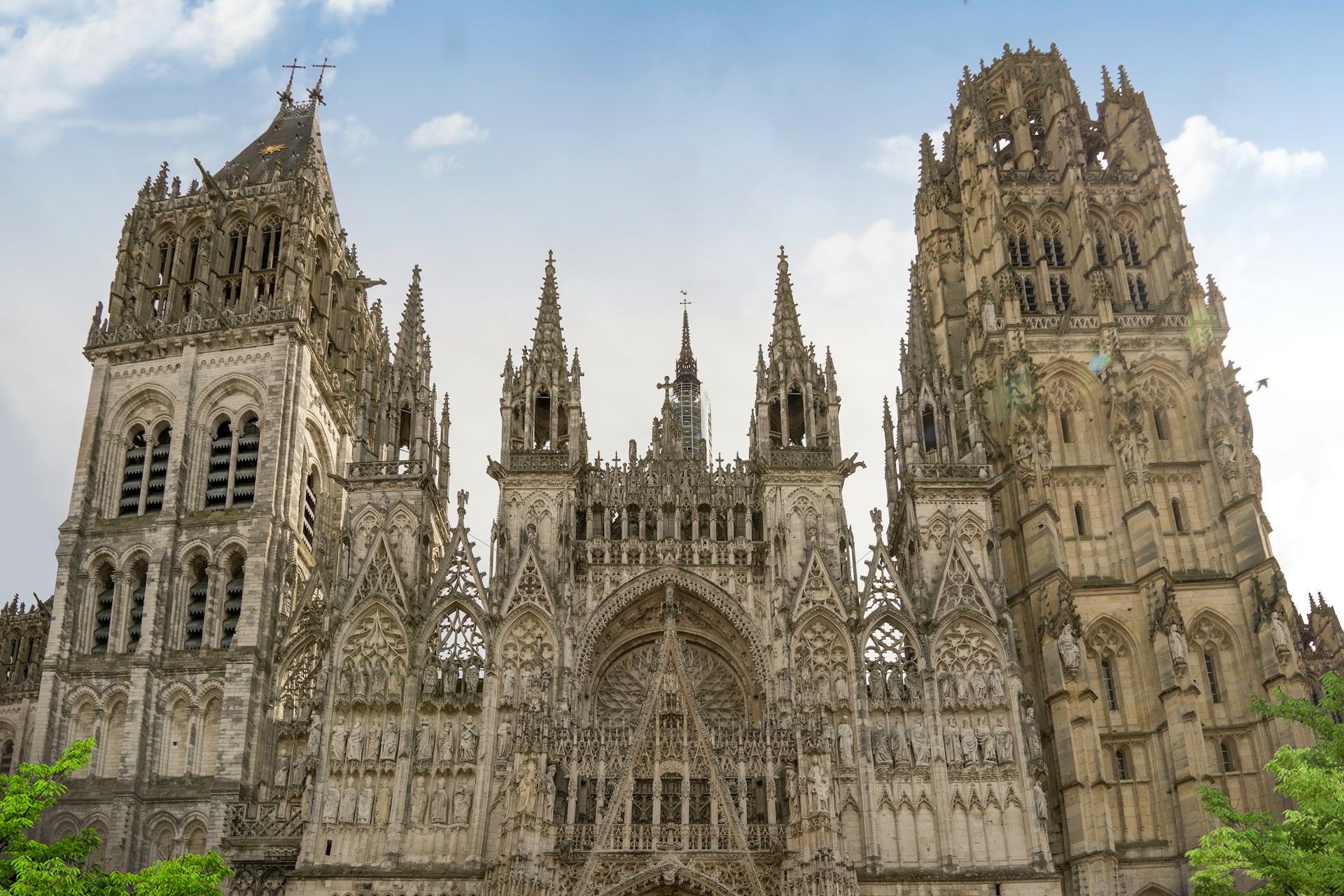
Rouen Cathedral in Rouen, France

Rouen Cathedral

The Rouen Cathedral, officially known as the Cathedral of Our Lady of Rouen, is an iconic masterpiece of Gothic architecture located in the heart of Rouen. This stunning cathedral is renowned for its impressive façade and magnificent spires that reach towards the sky. Construction began in the 12th century and continued for several centuries, resulting in a unique blend of architectural styles. The cathedral is particularly famous for its intricate sculptures and stained glass windows, which depict biblical scenes and figures. Visitors can explore the interior, where the breathtaking vaults and altars provide a serene atmosphere for contemplation. The cathedral also features a remarkable astronomical clock, which has been fascinating visitors for centuries. Throughout the year, Rouen Cathedral hosts various cultural events and concerts, making it a vibrant hub of activity. It has inspired many artists, including Claude Monet, who painted several versions of the cathedral at different times of the day. Whether you are an art enthusiast, a history lover, or simply looking to admire stunning architecture, Rouen Cathedral is a must-visit attraction that embodies the rich heritage of Rouen. The cathedral’s Tour de Beurre (“Butter Tower”) was funded by wealthy citizens who paid for indulgences to eat butter during Lent. A hidden 16th-century stained-glass window in the north transept was donated by King François I to commemorate his daughter’s baptism.
Ads place
Ads place
Ads place
Ads place
Ads place