
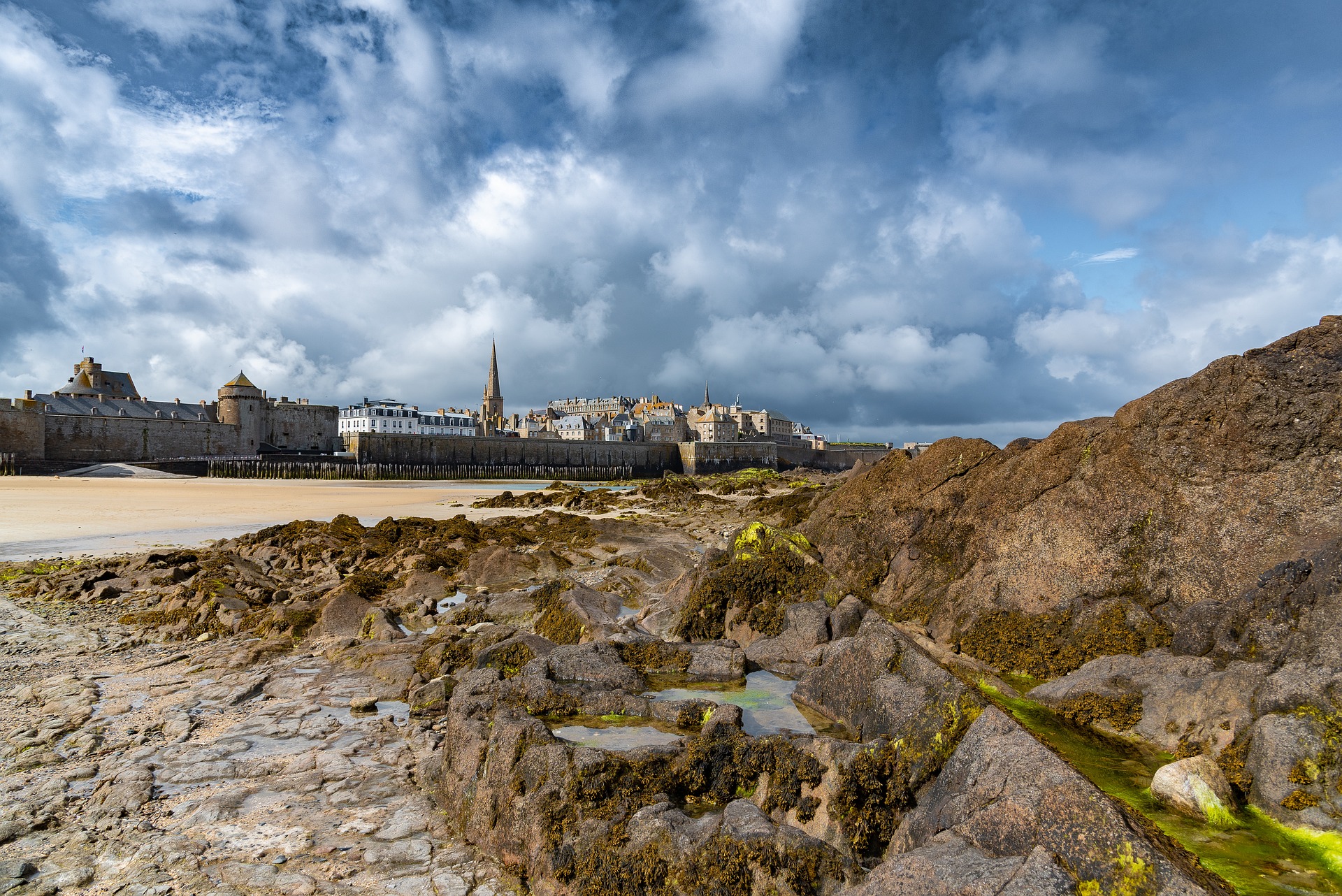
City view of Saint-Malo, France

Saint-Malo

Saint-Malo, located on the northern coast of Brittany, is a historic walled city known for its maritime heritage and beautiful beaches. The city's fortified walls, which offer stunning views of the coastline and the English Channel, are a popular attraction. Saint-Malo's Old Town features cobblestone streets, historic buildings, and lively squares. The city is also known for its connection to the corsairs, privateers who played a key role in its history. Saint-Malo's beaches, such as Plage de l'Éventail and Plage du Sillon, are popular with visitors seeking sun and sea. The city's culinary scene is celebrated, offering Breton specialties like crêpes, galettes, and seafood. With its rich maritime history, scenic beauty, and coastal charm, Saint-Malo is a top destination in Brittany.

Top attractions & things to do in Saint-Malo

If you’re searching for the best things to do in Saint-Malo, this guide brings together the top attractions and must-see places to visit in Saint-Malo. The top picks below highlight the most visited sights for first-time visitors, plus a few local favorites worth adding.

Fort National in Saint-Malo, France

Fort National

Fort National is a historic fortress built in the 17th century by the famed military architect Vauban, under the orders of King Louis XIV. Situated on a rocky islet just off the coast of Saint-Malo, the fort was strategically designed to protect the city from naval attacks. It is accessible only during low tide, allowing visitors to walk across the exposed seabed. The fort is a testament to France's military ingenuity and architectural prowess. Inside, guided tours provide insights into its history, including stories of defense and resilience during sieges and wartime. From the fort, visitors enjoy panoramic views of the coast, the city's ramparts, and the surrounding islands. During the 1693 Battle of Saint-Malo, 13 English ships failed to breach its walls. The fort's underground cisterns could store 30,000 liters of rainwater. In 1944, German forces used it as an ammunition depot. The hexagonal shape allowed 360-degree cannon coverage. Restoration in 2021 revealed original 17th-century gunpowder storage rooms.
Ads place
Ads place
Ads place
Ads place
Ads place
Grand Bé in Saint-Malo, France

Grand Bé

Grand Bé is a tidal island located near Saint-Malo, offering a unique exploration opportunity for visitors. When the tide is low, one can walk to the island and discover its rocky terrain and historical significance. The island is best known as the resting place of the famous French writer François-René de Chateaubriand. A plaque marks his tomb and attracts literature enthusiasts and history buffs. The walk to Grand Bé provides a sense of adventure as it reveals views of the surrounding sea, the fortifications of Saint-Malo, and nearby islands. The landscape offers a mix of rugged coastal beauty and serene open space. It is an ideal place for quiet contemplation, photography, and taking in the natural splendor of Brittany's coastline. However, visitors must be mindful of the tide schedule to avoid being stranded. Chateaubriand requested burial here to "hear the sea forever." The island was a Celtic druid sanctuary in pre-Roman times. German WWII bunkers are hidden among the rocks. At spring tides, the crossing path is only accessible for 2 hours. The island's name derives from Breton "Bé" meaning "tomb."
Ads place
Ads place
Ads place
Ads place
Ads place
Petit Bé Fort in Saint-Malo, France

Petit Bé Fort

Petit Bé Fort is a fascinating 17th-century fortification located just offshore from Saint-Malo. Built to enhance the city's defenses against naval attacks, this fort was designed by military engineer Vauban. Today, it stands as a symbol of the town's strategic military past. Accessible during low tide, Petit Bé offers visitors a chance to step back in time and explore its preserved walls and structures. The views from the fort are spectacular, providing a panoramic vista of the sea, the Saint-Malo ramparts, and the surrounding coast. Guided tours offer historical context and stories of its role in protecting the city. The fort's construction is a testament to the architectural skill of its time, showcasing thick stone walls and sturdy bastions that have withstood centuries of tidal forces. Petit Bé formed a defensive triangle with Fort National and La Conchée fort. Abandoned in 1885, it was restored by a local volunteer in 2000. The fort's gunpowder magazine could store 50 tons of explosives. During summer, open-air theater performances are held in the central courtyard.
Ads place
Ads place
Ads place
Ads place
Ads place
Saint-Malo Cathedral in Saint-Malo, France

Saint-Malo Cathedral

Saint-Malo Cathedral, officially known as the Cathedral of Saint Vincent, is a masterpiece of Gothic and Romanesque architecture that dates back to the 12th century. This landmark has stood the test of time, surviving numerous sieges and World War II bombings. The cathedral boasts stunning stained-glass windows that illuminate the interior with colorful light and intricate stone carvings that tell stories of the region's religious history. Visitors can explore its grand nave, beautiful chapels, and impressive organ. The cathedral's rich heritage is evident in its design, reflecting the resilience and faith of the local community. Whether attending a service or simply admiring its architectural beauty, Saint-Malo Cathedral provides a serene and awe-inspiring experience. The 1944 Allied bombing destroyed the roof but spared the 15th-century rose window. The tomb of privateer Robert Surcouf (1773-1827) lies in the north transept. The organ, built by Aristide Cavaillé-Coll in 1865, has 3,500 pipes. During summer, Gregorian chants echo through the vaulted ceilings at twilight services.
Ads place
Ads place
Ads place
Ads place
Ads place
Saint-Malo Ramparts in Saint-Malo, France

Saint-Malo Ramparts

The Saint-Malo Ramparts are an iconic part of this historic coastal city. Built to defend the city from invaders, these stone walls date back to the Middle Ages and offer panoramic views of the sea, the harbor, and the old town. Visitors can walk along the well-preserved ramparts to experience the city from above while enjoying breathtaking views of the surrounding area. The path is dotted with towers and bastions, each adding to the historical significance of the ramparts. Walking along the fortifications provides insight into the strategic importance of Saint-Malo in past centuries. The ramparts create a dramatic landscape, showcasing the meeting of land and sea and highlighting the medieval character of the city. It's an essential part of any visit to Saint-Malo, blending history, architecture, and natural beauty into an unforgettable experience. Many choose to explore the ramparts at sunset to capture the stunning colors of the sky as it reflects off the waters of the English Channel. The ramparts were rebuilt after WWII, using original stones recovered from the rubble. The Porte Saint-Vincent gate features a bust of explorer Jacques Cartier, who sailed from Saint-Malo to Canada in 1534. Look for cannonballs embedded in the walls from 17th-century naval battles.
Ads place
Ads place
Ads place
Ads place
Ads place