
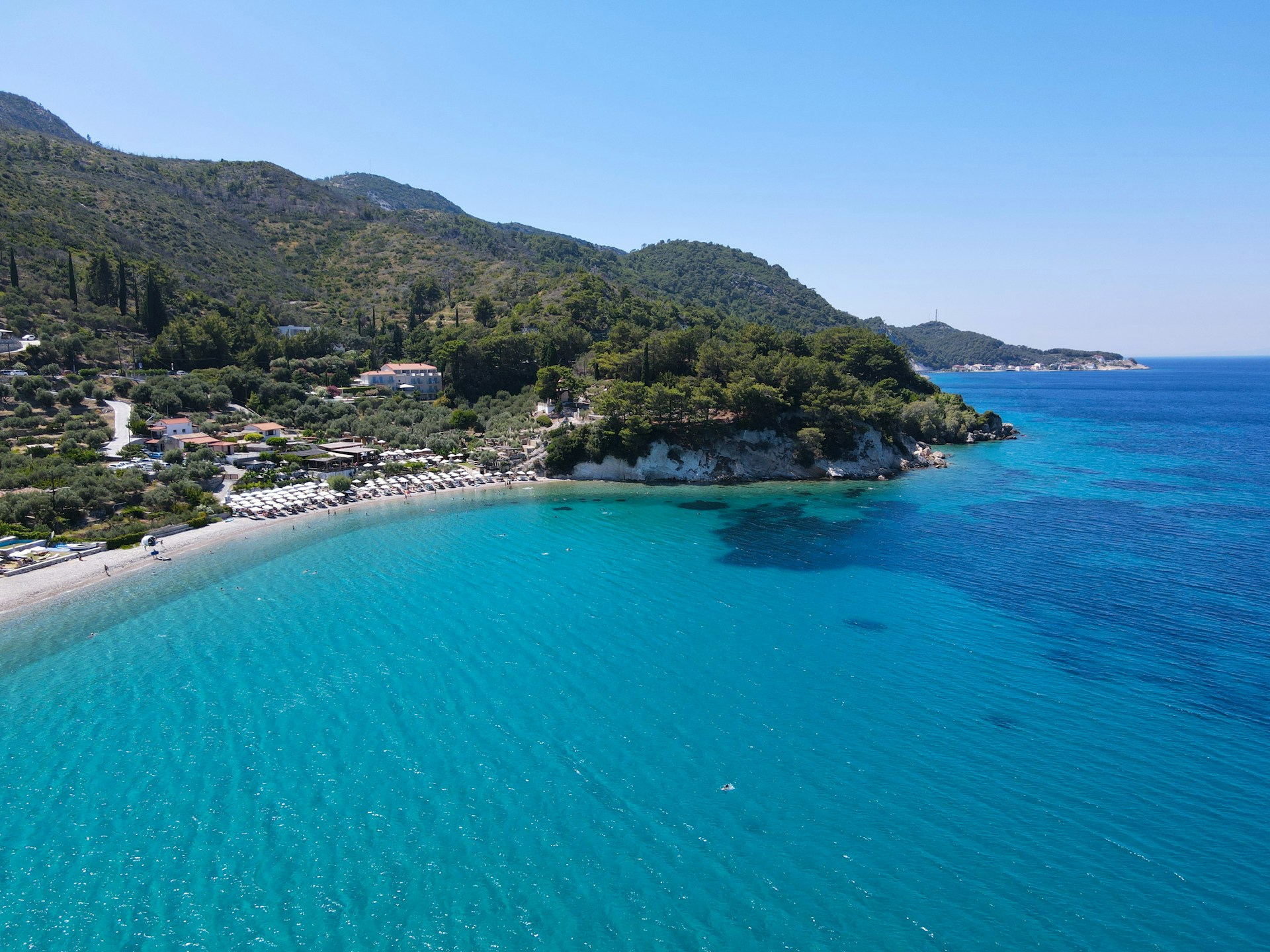
City view of Samos, Greece

Samos

Samos, the Aegean island famed as Pythagoras’s birthplace, unites verdant landscapes with ancient Ionian heritage. Dominating the shoreline, the Heraion sanctuary—home to the 6th-century BC Temple of Hera—perches on a pine-clad hill, offering sweeping sea vistas and marble colonnades recalling its sacred past. In Pythagorion, fragments of the Classical city wall and a restored Roman aqueduct evoke the island’s long history of urban engineering. Inland, the Potami valley spills into a freshwater cove where visitors can swim beside moss-lined springs. Archaeological digs at Vourkari revealed Bronze Age tombs and painted ceramics, now housed in the Archaeological Museum’s climate-controlled galleries. Samos’s vineyards thrive on volcanic soils, producing sweet muscat and dry Assyrtiko wines that pair perfectly with locally made cheeses and honeycomb. Each July, the International Music Festival fills ancient theatres and Byzantine chapels with world-class performances under starlit skies. From mountaintop monasteries to sea-level spas, Samos blends classical lore, lush nature and artisanal tradition into an unforgettable island experience.

Top attractions & things to do in Samos

If you’re searching for the best things to do in Samos, this guide brings together the top attractions and must-see places to visit in Samos. The top picks below highlight the most visited sights for first-time visitors, plus a few local favorites worth adding.

Heraion of Samos in Samos, Greece

Heraion of Samos

A short drive from the Pythagoreion reveals the sacred grounds of the Heraion, dedicated to the goddess Hera since the 8th century BC. At its heart stood the grand Temple of Hera, erected in the 6th century BC with Ionian columns hewn from local marble and adorned with sculptural friezes of mythic scenes. Excavations launched in 1890 and resumed in the 1930s unearthed massive foundation blocks, votive offerings, and terracotta antefixes featuring reliefs of divine weddings. Encircled by a formidable peribolos wall, the sanctuary housed treasuries, assembly halls, and ritual altars, underscoring its status as a pan-Hellenic pilgrimage site. Pilgrims processed along marble-paved paths to honor Hera’s annual nuptial festival, infusing the Heraion with vibrant rites. Today’s museum displays sculptural fragments in contextual exhibits, while illuminated nighttime tours during summer festivals revive the ambiance of ancient ceremonies, connecting visitors to millennia of religious devotion.
Ads place
Ads place
Ads place
Ads place
Ads place
Karlovassi Tannery Museum in Samos, Greece

Karlovassi Tannery Museum

In Karlovassi’s industrial harbor, the Tannery Museum occupies a restored 19th century leather factory that powered Samos’s commercial boom. Originally home to Ottoman-era artisanal workshops, the site saw the introduction of mechanized tanning vats and hydraulic presses around 1880. Visitors traverse preserved wooden vats, conveyor systems, and machinery, learning traditional bark-extraction methods through interactive exhibits. Archival photographs and oral histories recount the dramatic 1923 labor strikes as workers sought fair wages and safer conditions. Rotating displays feature contemporary leather artists whose designs echo historic techniques. A dockside café nestled among restored industrial structures serves local mezzes and Samos wines, blending heritage with modern culture. The Karlovassi Tannery Museum stands as a dynamic tribute to industrial innovation, social history, and adaptive reuse on the island.
Ads place
Ads place
Ads place
Ads place
Ads place
Mount Kerkis in Samos, Greece

Mount Kerkis

Dominating the island skyline, Mount Kerkis ascends to 1,434 meters, making it the highest summit in the Cyclades. Composed of fossil-rich limestone formed during the Upper Cretaceous era, its rugged ridges provide refuge for endemic species such as mountain goats and rare butterflies. Archaeologists discovered Neolithic implements and ceramic shards in hidden caves, dating to 3500 BC, suggesting ancient human activity or worship. Adventurers follow segments of the European E4 trail, winding through fragrant fields of wild thyme and centuries-old pine groves. Along the way, stone shepherds’ huts attest to pastoral traditions that persist today. At dawn, sunlight bathes the massif in golden light, unveiling sweeping vistas across Samos, Chios, and distant Santorini. Birdwatchers and geologists alike study Kerkis’s unique ecology and stratigraphy, while local lore speaks of nymphs dancing in secluded plateaus. Mount Kerkis thus unites natural wonders, mythic heritage, and scientific curiosity.
Ads place
Ads place
Ads place
Ads place
Ads place
Potami Waterfalls & River Beach in Samos, Greece

Potami Waterfalls & River Beach

Tucked into a lush gorge on the slopes of Mount Ampelos, the Potami Waterfalls descend in three tiers, with the main cascade plunging over 20 meters into emerald-hued pools. Along the riverbanks, restored water mills from the 18th century recall Samos’s agrarian past, where local millwrights harnessed spring flows. According to Herodotus, Samos was famed in the 5th century BC for its abundant freshwater springs, a legacy still evident today. A refurbished stone pathway, completed in 2005, guides visitors past tranquil swims and shaded picnic spots beneath plane trees. Nearby river beaches of sand and pebbles offer a serene alternative to the island’s coastal shores. Spring snowmelt swells the falls into a thunderous spectacle, drawing eco-tourists and photographers alike. The blend of historical intrigue, refreshing waters, and verdant scenery makes Potami an unforgettable eco-retreat.
Ads place
Ads place
Ads place
Ads place
Ads place
Pythagoreion & Tunnel of Eupalinos in Samos, Greece

Pythagoreion & Tunnel of Eupalinos

Nestled along the southeastern shores of Samos, the Pythagoreion takes its name from the philosopher Pythagoras, born here around 570 BC. This UNESCO World Heritage Site encompasses the remnants of an ancient harbor town, imposing fortifications, and the legendary Tunnel of Eupalinos. Engineered in the 6th century BC by the architect Eupalinos, this 1,036-meter aqueduct was carved through Mount Kastro using an innovative dual-entry method. Archaeological surveys in the 19th century uncovered precisely aligned masonry where opposing teams met underground. Flanking the harbor, city walls erected in the 4th century BC still bear traces of Roman reinforcement. Today, visitors traverse restored gatehouses, explore cisterns, and attend open-air concerts under ancient arches. Panoramic views of the Aegean and nearby islands highlight the site’s strategic significance, making Pythagoreion an enduring testament to scientific prowess, military architecture, and cultural vitality.
Ads place
Ads place
Ads place
Ads place
Ads place