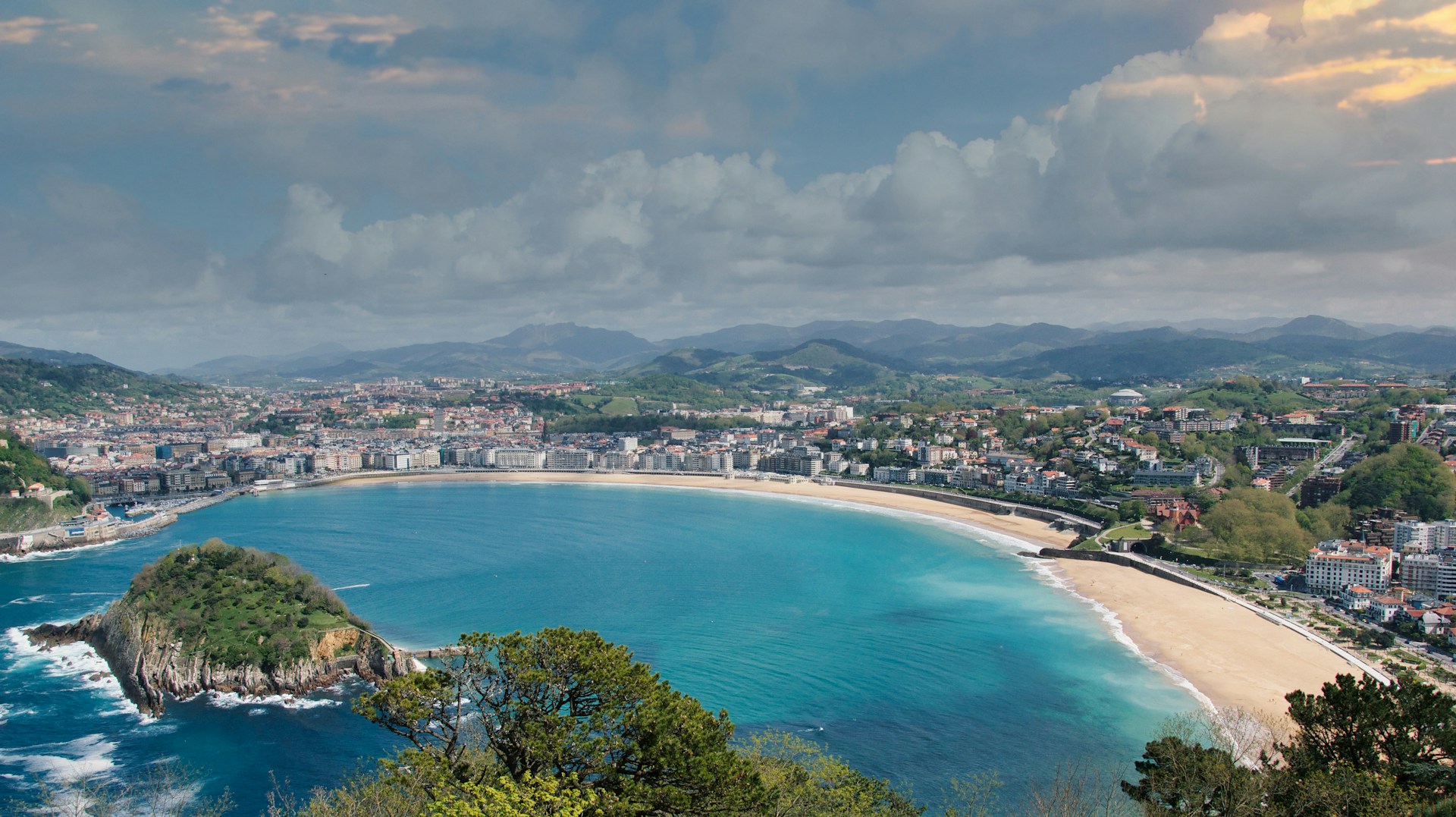

City view of San Sebastián, Spain

San Sebastián

San Sebastian, or Donostia in Basque, is a stunning coastal city in northern Spain known for its beaches, gastronomy, and vibrant cultural scene. La Concha Beach, with its golden sands and calm waters, is often considered one of the most beautiful urban beaches in Europe. The city is a culinary haven, famous for its Michelin-starred restaurants and traditional pintxos bars. Visitors can explore the Old Town, with its historic streets, lively plazas, and the iconic San Telmo Museum. The Monte Igueldo offers breathtaking views of the bay, accessible by a funicular ride. San Sebastian hosts numerous cultural events, including the prestigious San Sebastian Film Festival. With its mix of natural beauty, cultural richness, and world-class cuisine, this city is a gem of the Basque Country.

Top attractions & things to do in San Sebastián

If you’re searching for the best things to do in San Sebastián, this guide brings together the top attractions and must-see places to visit in San Sebastián. The top picks below highlight the most visited sights for first-time visitors, plus a few local favorites worth adding.

La Concha Beach in San Sebastián, Spain

La Concha Beach

The famous La Concha Beach is often ranked among the most beautiful urban beaches in the world. With its golden sands stretching for nearly 1.5 kilometers, it offers a breathtaking view of Santa Clara Island and is sheltered by the bay, making it an ideal spot for swimming. What many don't realize is that beneath the soft sand lie remnants of ancient whaling harbors, as San Sebastián was once a key whaling center in the 16th century. The promenade, known as Paseo de la Concha, is lined with elegant lampposts and intricate white railings, which have become a symbol of the city. A lesser-known secret is that there are hidden hot springs under the beach, once used for therapeutic treatments in the 19th century when Queen Isabella II popularized the area as a royal retreat. Many visitors overlook the charming little hidden cave at the far western end, accessible only during low tide, where locals claim to have found ancient fishermen's tools from centuries ago.
Ads place
Ads place
Ads place
Ads place
Ads place
Monte Igueldo in San Sebastián, Spain

Monte Igueldo

Monte Igueldo offers some of the best panoramic views of San Sebastián, but what makes this spot even more unique is its historic funicular railway, which has been in operation since 1912. At the summit, visitors will find a small vintage amusement park, a rare relic from the early 20th century, featuring attractions that have remained unchanged for decades. One of the biggest surprises is the presence of an ancient lighthouse, which dates back to the 18th century and still functions today. A lesser-known secret is that the mountain was once used as a defensive fortress against pirate invasions, and some of the original military structures are still partially visible along the walking trails. If you explore carefully, you might even stumble upon a forgotten bunker that was used during the Spanish Civil War but is now covered in ivy and often overlooked by visitors.
Ads place
Ads place
Ads place
Ads place
Ads place
Old Town (Parte Vieja) in San Sebastián, Spain

Old Town (Parte Vieja)

San Sebastián's Parte Vieja is a vibrant maze of narrow streets filled with pintxo bars, historic buildings, and hidden courtyards. The area was almost completely rebuilt after the devastating fire of 1813 when British and Portuguese troops burned the city to the ground. One of its most striking landmarks is the Basilica of Santa María del Coro, whose elaborate Baroque facade hides a fascinating fact—inside, a secret passage connects it to the old defensive tunnels of Monte Urgull. The neighborhood is also home to Plaza de la Constitución, which was once a bullfighting ring. If you look closely at the balconies, you'll see numbered boxes where spectators used to sit. Many visitors don't realize that one of Spain's oldest gastronomic societies, Gaztelubide, operates discreetly here, where locals cook traditional Basque dishes in a secretive, members-only setting.
Ads place
Ads place
Ads place
Ads place
Ads place
Peine del Viento in San Sebastián, Spain

Peine del Viento

The Peine del Viento (Comb of the Wind) is one of San Sebastián's most iconic sculptures, created by renowned Basque artist Eduardo Chillida. The three massive iron structures are embedded into the rocky coastline at the edge of Ondarreta Beach, where they are constantly battered by sea winds and waves. What many people don't know is that the design was partially inspired by ancient Basque whaling harpoons, symbolizing the connection between the people and the sea. There's also a hidden acoustic feature—when the waves hit just right, the hollow structures create an eerie, almost musical sound. Engineers have also placed underground wind tunnels here that blow air through holes in the pavement, creating a surprising and playful effect for visitors standing nearby.
Ads place
Ads place
Ads place
Ads place
Ads place
San Telmo Museoa in San Sebastián, Spain

San Telmo Museoa

Located in a former 16th-century Dominican convent, the San Telmo Museoa is the oldest museum in the Basque Country and showcases the region's unique cultural identity. Many visitors are surprised to learn that the building incorporates sections of the city's original defensive walls from the 1500s. Inside, the collection includes artifacts from prehistoric times, such as ancient Basque funerary steles, and a remarkable series of murals by José María Sert, which were once considered controversial due to their nationalist themes. A lesser-known part of the museum is its secret underground vault, which holds delicate manuscripts from the Middle Ages, many of which are still being studied by historians today.
Ads place
Ads place
Ads place
Ads place
Ads place