
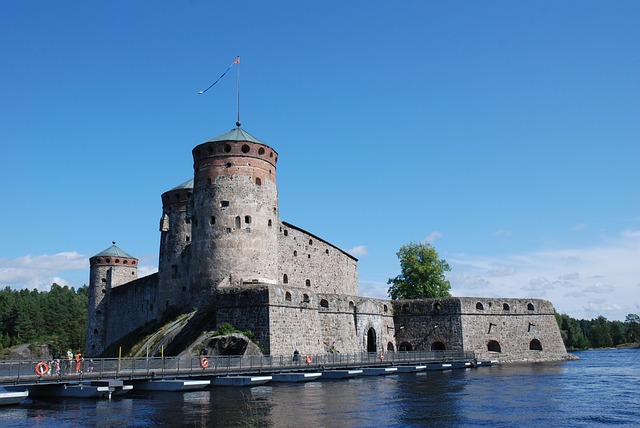
City view of Savonlinna, Finland

Savonlinna

Savonlinna wraps around Lake Saimaa and is defined by Olavinlinna Castle, begun in 1475 to guard borderlands and still standing on a rocky island. Each summer the Opera Festival fills the courtyard with voices that echo across the water, and restaurants compete with perch, smoked salmon, and mushroom sauces. Walk the harbour promenade, then take a short boat ride to nearby islands where pine forests meet mirror calm bays. The market square is small but lively, with stalls selling berries, rye bread, and local cheese. In winter, skating tracks sometimes appear on the lake, turning the town into a quiet white map. A lesser known detail is the Kerimaki Church nearby, one of the world's largest wooden churches, often visited as a quick side trip. Surprising fact: locals swear the castle has its own acoustic sweet spots, and singers test notes on the bridge just to hear how stone and water answer back.

Top attractions & things to do in Savonlinna

If you’re searching for the best things to do in Savonlinna, this guide brings together the top attractions and must-see places to visit in Savonlinna. The top picks below highlight the most visited sights for first-time visitors, plus a few local favorites worth adding.

Kerimaki Church in Savonlinna, Finland

Kerimaki Church

If you want a day trip from Savonlinna that feels quietly outrageous in scale, go to Kerimaki Church, often cited as the largest wooden church in the world. Built between 1844 and 1847 to designs by Anders Fredrik Granstedt, it is so roomy that it can seat over 3,000 people, with an overall capacity often quoted around 5,000. The surprising, lesser-known twist is practical: the main church is not heated, which is why services are typically held in summer (and famously on Christmas morning), so timing really matters. Inside, the atmosphere is bright and simple rather than gilded, with wood doing all the architectural drama and acoustics giving even small sounds a gentle echo. Give yourself time to walk the full length, because the perspective keeps changing as you move, and the scale only lands when you are halfway down the nave. Pair the visit with a lakeside stop on the way back, and you will get a very South Savo combo: timber, water, and a sense of space that feels bigger than Finland looks on a map.
Ads place
Ads place
Ads place
Ads place
Ads place
Olavinlinna Castle in Savonlinna, Finland

Olavinlinna Castle

In Savonlinna, the water is never just scenery, and Olavinlinna Castle proves it: a stone fortress placed exactly where the lake routes mattered most. Construction began in 1475 on an island in the Kyronsalmi strait, a narrow link in the wider Lake Saimaa system, so the castle feels like it is literally pinned into the landscape. Walk across the bridge and you notice the clever Late Middle Ages logic: rounded towers built for defense, thick walls, and viewpoints that turn lakes into a protective moat. The best way to experience it is slowly, letting the cool air, echoing passages, and sudden window views do the storytelling. Small details make it memorable, like how close the masonry sits to open water and how the courtyards change mood as clouds move. Come in late afternoon when light turns the stone warmer, then stay until evening if you can, when the castle looks less like a museum piece and more like a stage set waiting for the next scene.
Ads place
Ads place
Ads place
Ads place
Ads place
Punkaharju Ridge in Savonlinna, Finland

Punkaharju Ridge

Punkaharju is the classic “how is this real?” landscape near Savonlinna: a narrow ridge of pine forest with water on both sides, like someone drew a line through the lake district and forgot to erase it. Geologically it is an esker formed during the last Ice Age, and it stretches about 7.5 km, separating two parts of the Saimaa system so closely that the land sometimes feels only a breath wide. It is also one of Finland's iconic national landscapes, which explains why artists and writers have been obsessed with it for generations. The best way to do Punkaharju is unhurried: drive or cycle the scenic route, then stop often and walk short sections to hear the wind in the pines and watch the lake surface change color. Early morning is pure calm; late evening is pure glow. A small pro tip is to go after rain, when the forest smells sharp and clean and the viewpoints feel even more cinematic. Bring layers, even in summer, because lake air is part of the experience here.
Ads place
Ads place
Ads place
Ads place
Ads place
Riihisaari - Savonlinna Museum and Lake Saimaa Nature Centre in Savonlinna, Finland

Riihisaari - Savonlinna Museum and Lake Saimaa Nature Centre

Riihisaari is the kind of museum that feels “placed” rather than “built”: a small island where you can look out and see Olavinlinna in its full national-landscape drama. Inside, Savonlinna Museum exhibitions give the city context beyond the postcard, while the Lake Saimaa Nature Centre adds the local superpower: water, forests, and the rare species that make this lake system feel alive. One of the best details is practical rather than romantic: the centre is run in cooperation with Metsahallitus and also hosts regional tourist information, so it is both a museum and a real-world starting point for exploring the area. Treat it as a two-speed visit: begin with the displays to learn what you are looking at, then step outside and let the shoreline views make the information stick. It works perfectly on changeable days, because you can do culture indoors, then take a short walk around the island when the weather gives you a break. Leave time for a slow coffee nearby and watch boats slide past the castle like a moving photograph.
Ads place
Ads place
Ads place
Ads place
Ads place
Savonlinna Opera Festival in Savonlinna, Finland

Savonlinna Opera Festival

Few festivals have a venue as dramatic as Olavinlinna, and that is the whole magic of the Savonlinna Opera Festival: world-class voices wrapped in medieval stone and lake air. The idea is credited to Finnish soprano Aino Ackte, who saw the castle's potential in 1907; the first festival followed in 1912, and it is still often described as one of the world's earliest opera festivals. Even if you are not an opera devotee, the experience is unusually accessible because the setting does so much of the emotional work: thick walls, open sky, and a sense that the music is “inside” the fortress rather than merely performed on a stage. A smart plan is to arrive early, walk the shoreline paths, and watch the audience drift toward the castle as the light drops. If you cannot catch a performance, keep an eye out for tours and summer events, because simply seeing the auditorium setup inside the walls is a memory-maker.
Ads place
Ads place
Ads place
Ads place
Ads place