
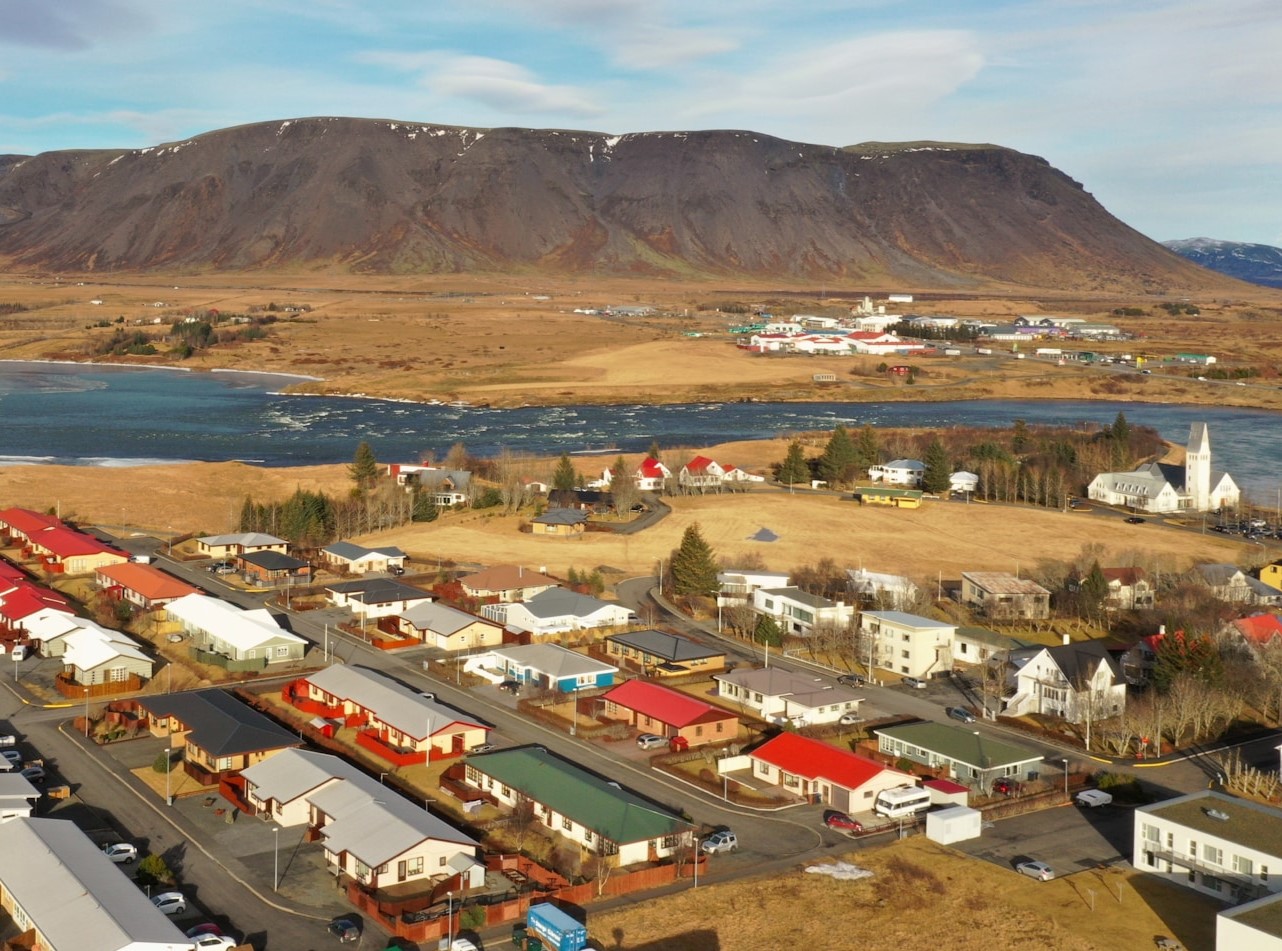
City view of Selfoss, Iceland

Selfoss

Selfoss, gateway to Iceland’s south coast, nestles along the banks of the Ölfusá River amid rolling farmlands and volcanic foothills. The town is a perfect launch point for the Golden Circle, offering easy access to natural wonders like Gullfoss waterfall, Geysir’s erupting hot springs, and Þingvellir National Park. In Selfoss itself, lively cafés serve fresh-baked kleinur (Icelandic donuts), and riverfront trails lead to panoramic bridges. The annual “Sumar á Selfossi” festival fills the streets with music, artisan markets, and Icelandic horse shows. Don’t miss the local geothermal swimming pool, a favorite gathering spot year-round. New murals and sculptures are popping up each summer as Selfoss transforms its downtown into an open-air art gallery, making it a vibrant stop between Reykjavik and the wonders of the south. The town’s creative spirit is also on display in Selfoss Center, where Icelandic design boutiques and gourmet eateries are revitalizing the riverside district.

Top attractions & things to do in Selfoss

If you’re searching for the best things to do in Selfoss, this guide brings together the top attractions and must-see places to visit in Selfoss. The top picks below highlight the most visited sights for first-time visitors, plus a few local favorites worth adding.

Bobby Fischer Center in Selfoss, Iceland

Bobby Fischer Center

The Bobby Fischer Center in Selfoss is a fascinating tribute to the chess grandmaster who became world champion in 1972 after defeating Boris Spassky in Reykjavik. The museum displays a wealth of memorabilia, including original score sheets, photographs, and personal artifacts that reveal Fischer's complex relationship with Iceland. After years of global headlines, Fischer spent his final days in Selfoss and is buried in a quiet local cemetery. The center attracts chess enthusiasts from around the world, many of whom play on the same style of boards used in the famous match. Visitors can view rare footage and interviews that highlight Fischer's genius and eccentricities. The museum also explores Iceland's role as a neutral ground during the Cold War chess battles. Local guides share anecdotes about Fischer's daily life in Selfoss, including his fondness for Icelandic pastries. The center regularly hosts tournaments and educational workshops for all ages.
Ads place
Ads place
Ads place
Ads place
Ads place
Kerid Crater Lake in Selfoss, Iceland

Kerid Crater Lake

Kerid Crater Lake is a breathtaking volcanic crater just west of Selfoss, famous for its vivid turquoise waters and steep, red slopes. Formed around 3,000 years ago during a volcanic eruption, Kerid’s caldera stretches 270 meters in circumference and plunges nearly 55 meters deep. The lake’s vibrant color results from minerals in the volcanic soil, which change hues with the seasons. Local folklore claims that the crater is the resting place of ancient spirits, adding a mystical air to the site. Visitors often hike the rim for panoramic views and descend the staircase to dip their toes in the chilly water. Kerid is part of the renowned Golden Circle route and is frequently used for open-air concerts due to its natural amphitheater acoustics. Environmentalists carefully monitor the area to preserve its delicate ecosystem. In winter, the frozen lake becomes a surreal, mirror-like expanse.
Ads place
Ads place
Ads place
Ads place
Ads place
Selfoss Church in Selfoss, Iceland

Selfoss Church

Selfoss Church stands as an elegant landmark on the banks of the Olfusa River, its tall spire visible from nearly every corner of town. Completed in 1956, the church is an outstanding example of Icelandic modernist architecture, blending clean lines with locally sourced stone and timber. The interior is adorned with striking stained glass windows, many of which were crafted by celebrated Icelandic artist Gerður Helgadottir. The church frequently hosts concerts, weddings, and community gatherings, filling the nave with music and light. Its location near the river makes it a favorite spot for peaceful reflection, while the adjacent gardens bloom with wildflowers in summer. Local residents are proud of the church’s role as a cultural hub, especially during traditional festivals. The building's distinctive organ is said to produce some of the finest acoustics in southern Iceland, attracting musicians from far and wide.
Ads place
Ads place
Ads place
Ads place
Ads place
Selfoss Waterfall in Selfoss, Iceland

Selfoss Waterfall

Selfoss Waterfall is an enchanting natural wonder just north of the town, renowned for its striking horseshoe-shaped cascade along the Jokulsa a Fjollum river. Created by glacial meltwaters from Vatnajokull, Europe's largest ice cap, the falls plunge over ancient basalt columns, creating a mesmerizing mist that often forms rainbows on sunny days. Adventurers often pair a visit here with the nearby Dettifoss, but Selfoss offers a more serene atmosphere, perfect for quiet contemplation and photography. The short hike to the falls reveals Icelandic wildflowers and volcanic rock formations. The site is part of the Vatnajokull National Park, a protected area prized for its unique geology and birdlife, including nesting Arctic terns. Geologists study the basalt cliffs for insights into Iceland's volcanic past. Even in winter, the frozen falls create a magical landscape. According to local legend, trolls once tried to divert the river, leaving mysterious boulders scattered along its banks.
Ads place
Ads place
Ads place
Ads place
Ads place
The Icelandic Turf House in Selfoss, Iceland

The Icelandic Turf House

The Icelandic Turf House in Selfoss offers an immersive glimpse into the country’s rural past. These traditional dwellings, built with thick layers of turf and stone, provided exceptional insulation against harsh northern winters. Visitors can tour authentic structures that date back to the 18th century, with interiors displaying period furniture, tools, and textiles. The museum highlights the importance of sustainable architecture and how turf houses inspired modern eco-building movements. Guides explain the symbolism behind the unique grass roofs, believed to blend homes with the landscape and protect inhabitants from storms. Special exhibitions celebrate Icelandic folklore, recounting stories of elves and spirits said to dwell in turf walls. Seasonal workshops invite guests to try their hand at traditional crafts, like wool spinning or bread baking. The site has become a beloved spot for photographers and history lovers. In spring, sheep graze around the houses, creating a picture-perfect scene.
Ads place
Ads place
Ads place
Ads place
Ads place