
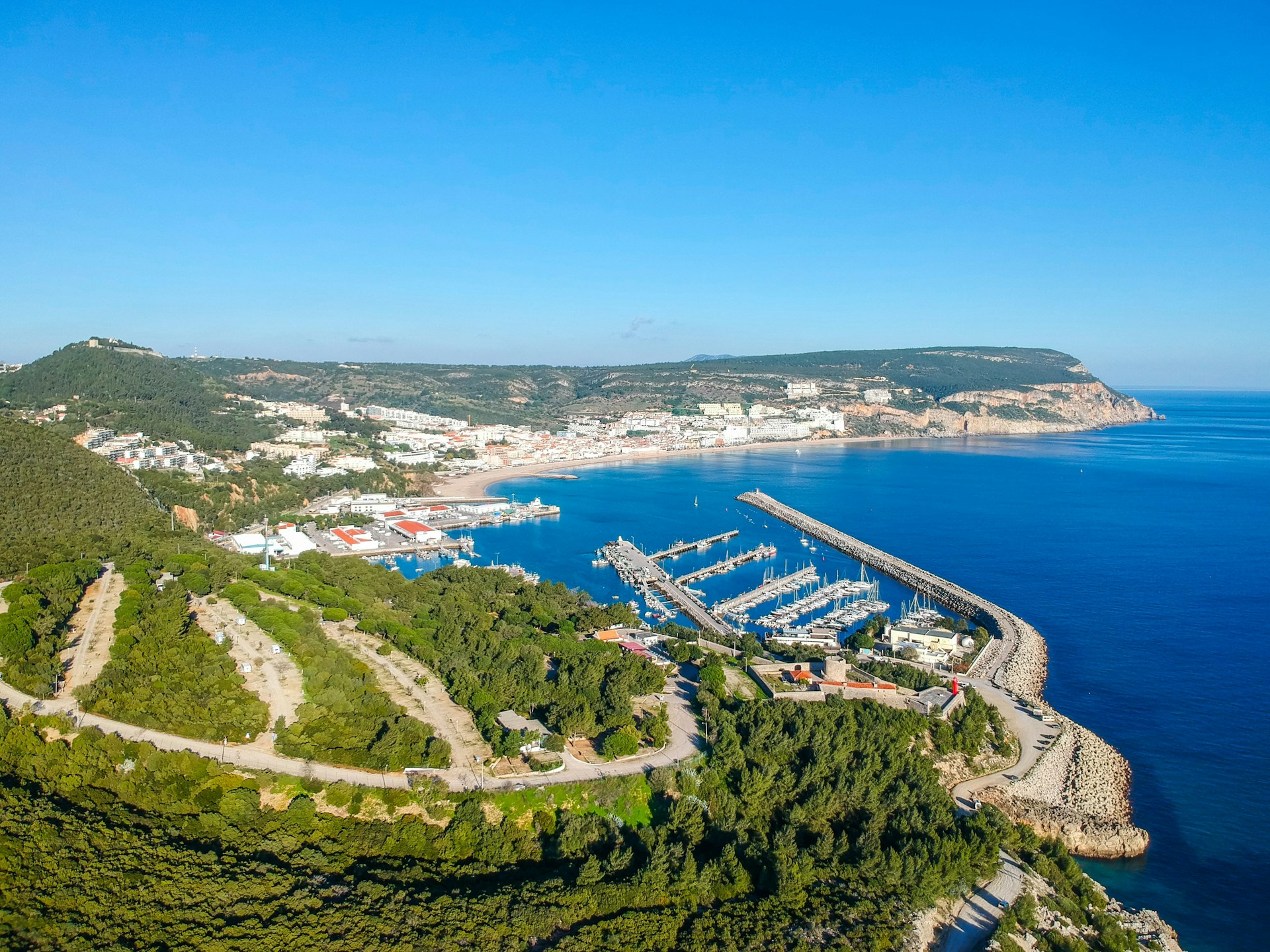
City view of Setubal, Portugal

Setubal

Setubal keeps salt, song, and working boats in easy reach. The Arrabida hills drop into coves blue enough to quiet phones, while the Sado estuary hosts a resident pod of dolphins that occasionally escort ferries. In the Mercado do Livramento, fish displays look choreographed, with cuttlefish arranged like punctuation. Warehouses pour muscatel from nearby Azeitao, and tiled facades narrate guilds, voyages, and the pride of shipwrights. Ferries bump across to Troia for Roman ruins and long walks that smell of pine. Lunch means choco frito and a salad that does not try to impress, just to balance the plate. A local curiosity: a small museum preserves the last tools of a cork cooperative, reminding visitors that even the humblest stopper begins as bark and ends as celebration. From the fortress of Sao Filipe, sunset folds ships into silhouettes older than the harbor itself.

Top attractions & things to do in Setubal

If you’re searching for the best things to do in Setubal, this guide brings together the top attractions and must-see places to visit in Setubal. The top picks below highlight the most visited sights for first-time visitors, plus a few local favorites worth adding.

Arrabida Natural Park in Setubal, Portugal

Arrabida Natural Park

Between cliffs that plunge straight into turquoise water, Arrabida Natural Park protects a rare patch of Mediterranean flora at Europe's Atlantic edge. Established in 1976, the park shelters limestone ridges and forests that resemble landscapes found in Greece more than Portugal. Monks once lived in the hidden Convent of Arrabida, using caves and chapels carved into slopes to pursue solitude. Today, trails wind past cork oaks and aromatic shrubs toward viewpoints that scan the Sado estuary. Beaches like Portinho da Arrabida offer sand so fine it squeaks, a geological quirk tied to eroded shells. Locals insist the microclimate, protected from northerly winds, grows grapes ideal for Moscatel de Setubal, and vintners agree. Oddly, during the Cold War, parts of the park were used by NATO for submarine detection exercises, leaving behind discreet relics still visible to careful eyes. The balance between wild coast and layered history makes every visit unpredictable yet grounding.
Ads place
Ads place
Ads place
Ads place
Ads place
Fortress of Sao Filipe in Setubal, Portugal

Fortress of Sao Filipe

Above the city, the star-shaped fortress of Sao Filipe commands the estuary with geometry as much as gunpowder. Commissioned by King Philip II of Spain in the late 16th century, it formed part of a network defending the Portuguese coast during the Iberian Union. Its bastions follow Renaissance military design, a response to evolving cannon technology. Inside, the chapel glitters with azulejos narrating biblical scenes, a softer counterpoint to walls built for war. Climb the ramparts and the panorama stretches from the Arrabida hills to Troia’s shifting sands, a reminder of why control of this vantage mattered. In the 20th century, the fortress was adapted as a pousada, hosting travelers who slept in rooms that once housed soldiers. Today, restoration projects continue, balancing tourism with preservation. At sunset, shadows carve star points deeper into the ground, turning fortification into artwork—proof that even defenses can mature into invitations.
Ads place
Ads place
Ads place
Ads place
Ads place
Mercado do Livramento in Setubal, Portugal

Mercado do Livramento

Inside a hall finished in 1930, Setubal's market stages a daily theater of abundance beneath walls covered with more than 5,000 azulejos. These panels narrate the estuary's history, celebrating fishermen and vineyards with blue-and-white patience. Stalls burst with cuttlefish, swordfish, and gleaming sardines, arranged as if competition were as much artistic as commercial. Beyond fish, bakers stack broas still warm from ovens, while vendors weigh citrus from orchards that have fed the city for centuries. The atmosphere is part trade, part ritual: regulars greet their suppliers with gossip before money changes hands. Even UNESCO has praised the market as one of Europe's finest for its authenticity. A curious detail: local legend claims that the tiles include a hidden self-portrait of their designer, Pedro Pinto, tucked in among sea motifs, an insider's joke that keeps visitors scanning walls between purchases. It remains a place where economics meets performance, with flavor as the common language.
Ads place
Ads place
Ads place
Ads place
Ads place
Sado Estuary Dolphin Reserve in Setubal, Portugal

Sado Estuary Dolphin Reserve

The Sado estuary hosts one of Europe's few resident pods of bottlenose dolphins, around thirty individuals who have become ambassadors for conservation. These creatures navigate waters rich in mullet and cuttlefish, visible from ferries crossing between Setubal and Troia. Researchers have tracked some individuals since the 1980s, making this pod among the best-studied in the Atlantic. Boat tours keep respectful distance while biologists explain behaviors, from cooperative hunting to playful bow-riding. The estuary itself is a mosaic of marshes and mudflats that also shelter flamingos, spoonbills, and other migratory birds, turning each excursion into a broader ecology lesson. A remarkable note: some dolphins here show tool-like use of sponges, a behavior more often observed in Australia than Europe. For Setubal, the dolphins are more than spectacle; they are living heritage, proof that coexistence between industry, tourism, and wildlife remains possible if vigilance never lapses.
Ads place
Ads place
Ads place
Ads place
Ads place
Troia Roman Ruins in Setubal, Portugal

Troia Roman Ruins

On a sandy peninsula facing Setubal, the Troia ruins recall an industrial complex from nearly two millennia ago. Established in the 1st century AD, the site processed thousands of amphorae of salted fish and garum sauce, products shipped across the Roman Empire. Walking through the stone tanks, you sense how commerce linked this estuary to far-off markets in Rome and Carthage. Mosaics decorate floor fragments, suggesting that even workers’ quarters valued art alongside labor. Excavations have revealed necropolises, thermal baths, and shrines to protect sailors embarking across rough waters. Archaeologists continue to study the site, but visitors can already wander paths marked with discreet signage that explains techniques once lost to memory. Strikingly, the fish-salting operation here may have been the largest of its kind in the Iberian Peninsula. Standing amid ruins, with the sea still carrying the same salt smell, it is easy to imagine amphorae being sealed just meters away.
Ads place
Ads place
Ads place
Ads place
Ads place