
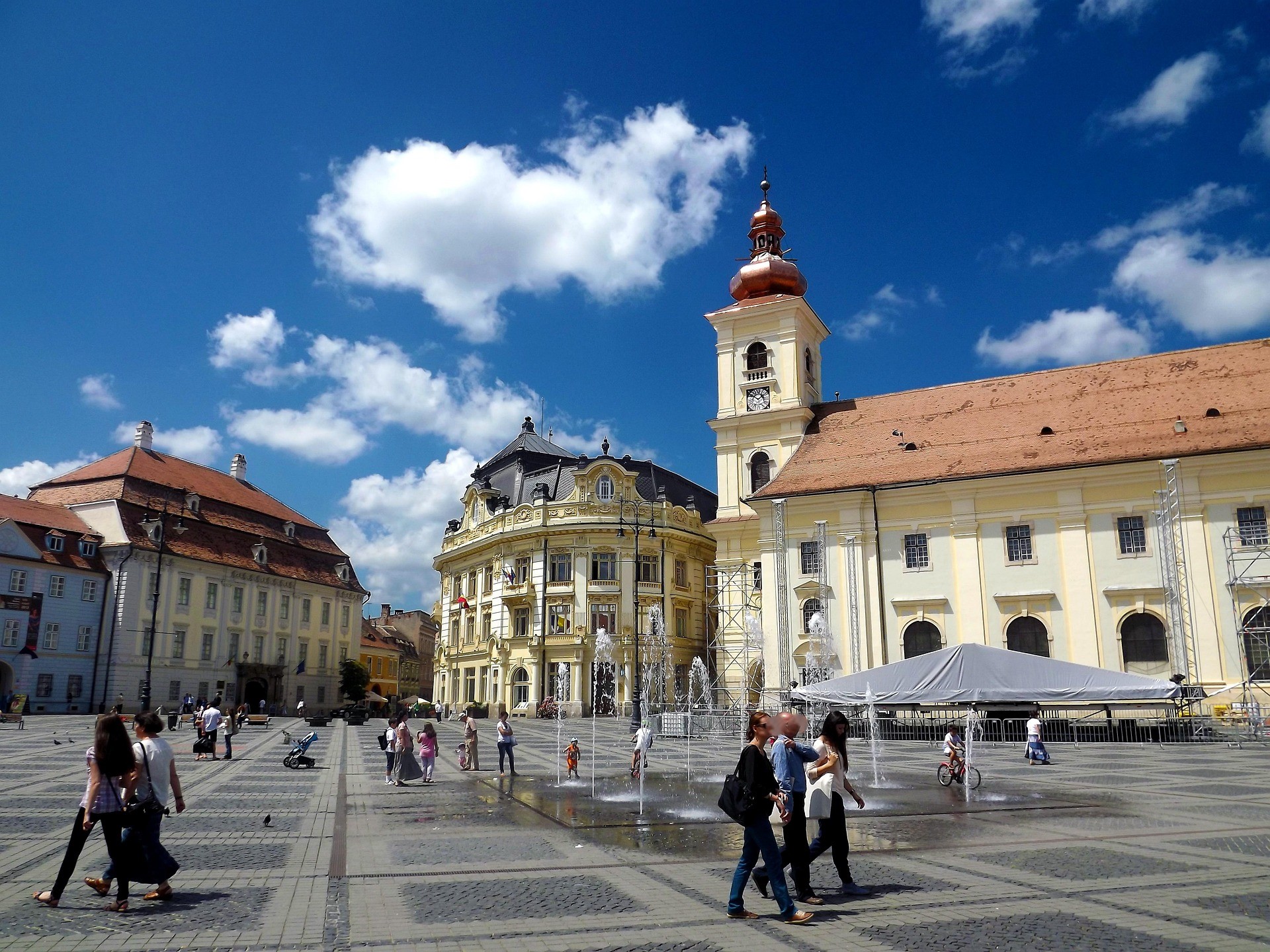
City view of Sibiu, Romania

Sibiu

Sibiu watches with its famous roof eyes, attic windows that blink above streets polished by centuries of footsteps. The Upper Town handles ceremonies around the Brukenthal Museum, one of Central Europe's earliest public collections, while the Lower Town works in courtyards where craftsmen still mind their tools. Bridges come with opinions: the cast-iron Bridge of Lies supposedly creaks if you bend the truth. Menus lean on pork, cabbage, and polenta, but bakers also turns out delicate pastries inherited from Saxon kitchens. Summer brings theater troupes and music students to plazas that soundcheck at dusk. Winters narrow the city to mulled wine stalls and conversations about how snow changes acoustics. A quiet marvel hides in plain sight: defensive towers repurposed as guild halls, then as galleries, proving that walls can retire into culture gracefully. If a cat stares at you from a window eyebrow, assume you have been weighed and judged favorably.

Top attractions & things to do in Sibiu

If you’re searching for the best things to do in Sibiu, this guide brings together the top attractions and must-see places to visit in Sibiu. The top picks below highlight the most visited sights for first-time visitors, plus a few local favorites worth adding.

ASTRA Museum of Traditional Folk Civilization in Sibiu, Romania

ASTRA Museum of Traditional Folk Civilization

A lake flashes between reeds and wooden eaves while windmills turn the weather into choreography. Founded in 1963 in the woods of Dumbrava Sibiului, this vast open-air museum gathers farmsteads, workshops, and roadside inns from every corner of the country. Blacksmiths strike iron into memory, and potters center clay until the crowd falls into the same calm. Paths thread past watermills and barns roofed with shingles arranged like scales, each building telling you which landscape taught it to survive. On Sundays, fiddles answer footsteps and bakers hand out warm bread that settles the debate about authenticity. A small chapel of logs keeps incense and quiet, while children practice running down hills that feel purpose built for laughter. Exhibitions in the modern pavilion explain migration, craft guilds, and seasonal work without romance. As dusk collects, a bell carries across the water and the silhouettes of wooden churches turn the clearing into a lesson about home.
Ads place
Ads place
Ads place
Ads place
Ads place
Brukenthal National Museum in Sibiu, Romania

Brukenthal National Museum

A city palace opens its doors like a courteous host, guiding you from marble vestibules to rooms where canvases stare back with patient intelligence. Founded from the collection of Samuel von Brukenthal, governor of Transylvania under the Habsburg crown, the museum welcomed the public in 1817 and has been teaching eyes ever since. The Baroque palace itself is part of the lesson, a stage where stucco and light flatter portraits and landscapes. Curators mix Flemish and Italian masters with local painters so that grandeur and province converse without shyness. Cabinets of medals, engravings, and rare books show how curiosity once traveled by coach and correspondence. Step to the inner courtyard and the city quiets to a murmur, as if the arcades were editing the day. The galleries do not rush you, which is their final gift, letting the Transylvanian Saxon story unfold in textures rather than headlines.
Ads place
Ads place
Ads place
Ads place
Ads place
Council Tower in Sibiu, Romania

Council Tower

From the passage between the squares, a sturdy tower offers stairs that trade breath for perspective and repay the bargain handsomely. First raised in the 13th century and rebuilt more than once, it watched markets, parades, and fires with the calm duty of a public servant. The upper room still hints at its fire watch role, a ring where danger once announced itself in smoke rather than siren. Windows frame rooftops like a model city, and you can trace the line of lost fortifications by the bend of streets. The clock mechanism ticks with the self respect of good engineering, keeping step with the bustle in Piata Mare below. Exhibitions rotate through photographs and craft, reminding visitors that time is also a gallery wall. Recent restorations left the stone honest and the floors steady, so the climb feels like a conversation with centuries rather than a test of legs. You come down reading the city more fluently.
Ads place
Ads place
Ads place
Ads place
Ads place
Large Square (Piata Mare) in Sibiu, Romania

Large Square (Piata Mare)

Space and proportion do the talking here, a broad rectangle where mornings begin with deliveries and evenings switch to strolling. Under the Habsburg administrators in the 18th century, facades learned discipline and arcades learned hospitality, and the square has practiced both ever since. The former Council House keeps an eye on things from one corner, while the Brukenthal residence reminds passersby that art can live like a neighbor. Cafes arrange their chairs in careful geometry and buskers test acoustics that flatter strings and brass. When festivals arrive, the pavement turns into a generous stage without losing its daily rhythm of errand and rendezvous. Look closely and you will see traces of guilds in emblems and lintels, evidence that commerce shaped beauty as surely as taste did. On warm nights, windows open and conversations drift down like confetti. The square does not try to impress, it simply demonstrates how a city behaves at its best, with Brukenthal Palace glowing like a footnote in gold.
Ads place
Ads place
Ads place
Ads place
Ads place
Lutheran Cathedral of Saint Mary in Sibiu, Romania

Lutheran Cathedral of Saint Mary

A forest of stone rises into a tall spire and the nave gathers light as if it were a second sacrament. Built across the 14th century, the church wears a confident Gothic outline whose ribs and vaults teach geometry by example. The tower, a landmark for travelers, carries a carillon that punctuates afternoons and guides steps back toward the center. Inside, the choir stalls and epitaphs trace the Reformation era when sermons moved from Latin to the language of the pews, and scripture felt closer to the street. Fragments of fresco and carved stone read like marginal notes in a very long book. From the galleries you glimpse the rooftops with their famous eye windows, and the city seems to lean in to listen. In the crypt, memory stays cool and orderly, a counterpoint to the market noise outside. The building asks for silence and returns clarity, which is a fair exchange in any tower of faith.
Ads place
Ads place
Ads place
Ads place
Ads place