
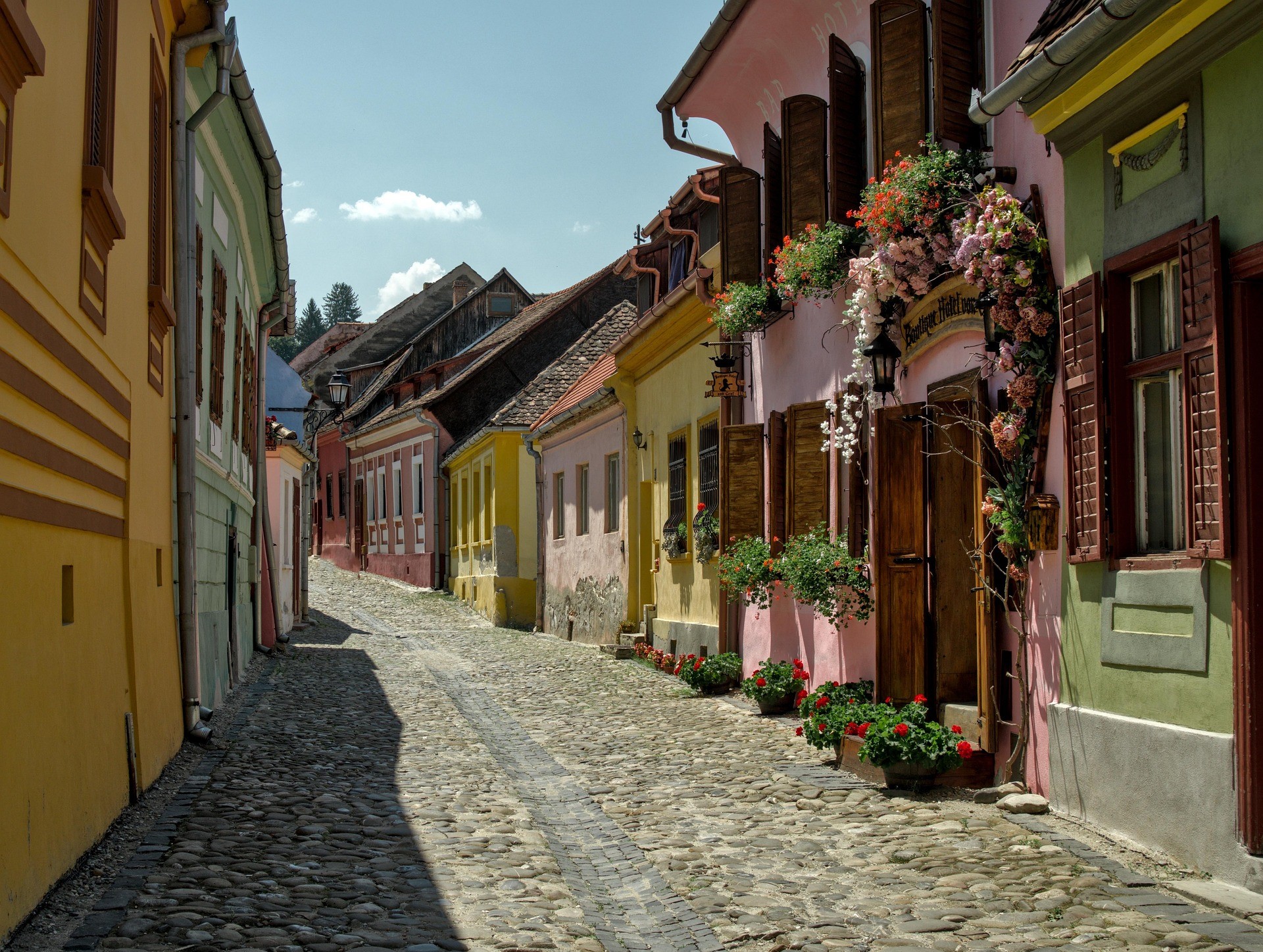
City view of Sighisoara, Romania

Sighisoara

Sighisoara stacks its citadel like a spiral notebook, each turn bringing a gate, a bastion, or a story about guilds and watchmen. The Clock Tower chimes over rooftops the color of toffee and apricot, and stairways roofed in timber lead to a hilltop church that smells of dust and fresco. Local kitchens answer cold evenings with bean soup in bread bowls and smoky sausages, followed by plum brandy poured with ceremony. Craft shops tilt toward honesty rather than kitsch, and you can still watch a tinkerer repair a pan while explaining history. Legends of a certain Wallachian ruler born here are handled with dry humor and more than one eyebrow raise. The town's odd delight is a room of antique instruments where visitors can coax a tune from a hurdy-gurdy, proving that medieval technology still works if you give it rhythm. Nights are quiet enough to hear your footsteps write their own timeline.

Top attractions & things to do in Sighisoara

If you’re searching for the best things to do in Sighisoara, this guide brings together the top attractions and must-see places to visit in Sighisoara. The top picks below highlight the most visited sights for first-time visitors, plus a few local favorites worth adding.

Casa Vlad Dracul in Sighisoara, Romania

Casa Vlad Dracul

A yellow facade watches the square with a composure earned over six centuries, and diners trade glances with history between courses. The house is associated with Vlad Dracul, the Wallachian ruler and father of Vlad Tepes, who spent time here around 1431 when the guilds kept strict hours. The name recalls his membership in the Order of the Dragon, a chivalric league that turned heraldry into politics. Inside, murals and ironwork lean more medieval than theatrical, and the talk at tables drifts from legends to logistics of frontier life. Sighisoara was a market town where Saxon merchants balanced accounts while voivodes negotiated tribute with the Ottoman court, and that tension hums softly in the walls. Whether or not every anecdote is document tight, the room makes the past feel plausible without costume. Step back into the square and the clock marks another hour, reminding you that myth here is simply history that refuses to retire
Ads place
Ads place
Ads place
Ads place
Ads place
Church on the Hill in Sighisoara, Romania

Church on the Hill

A covered stair ends in a patch of quiet where swifts stitch the air above a long nave of pale stone. The Church on the Hill belongs to the late Gothic era and carries traces of older habits under its plaster, including fragments linked to Transylvanian painters who treated saints like neighbors. Records place the completion around 1488, and the furnishings still mix stern benches with a pulpit that seems to float. Beneath the floor rests a modest crypt whose cool air smells faintly of lime and wood, a reminder that memorial and worship once shared the same room comfortably. Step outside and the cemetery reads like a family album in stone, inscriptions switching languages as generations turn. The view is not dramatic so much as complete, a patient survey of rooftops arranged by practical minds. On windy afternoons the tower hums and the town answers, two instruments tuned by time rather than design
Ads place
Ads place
Ads place
Ads place
Ads place
Citadel Walls and Bastions in Sighisoara, Romania

Citadel Walls and Bastions

Streets tighten into curves and suddenly the fortifications step forward like a lesson in persistence. The ring of walls first rose under the Transylvanian Saxons and was refined through the 16th century as guilds funded their own towers. You can still read professions in stone, a vocabulary of guilds that includes shoemakers, tinners, and archers. Visitors measure the circuit by its bastions but locals count stories of watchmen who knew every footfall on cobbles. The Tailors structure remains the most theatrical, and the repaired breach at the Tailors Tower tells a blunt tale of siege and recovery. UNESCO status arrived later as an outside compliment, yet the place earned it by surviving on work rather than ceremony, so the tag of UNESCO sits lightly. Pause by the ramparts and you sense how much trade once passed beneath these windows. The walls defend less than they define, and what they define is a town that remembers how it learned to be careful and hospitable at once.
Ads place
Ads place
Ads place
Ads place
Ads place
Clock Tower and History Museum in Sighisoara, Romania

Clock Tower and History Museum

Timber galleries and a gleaming roof draw you toward the tower that once decided the city's daily rhythm. Raised in the 14th century and reshaped after the fire of 1676, it guarded the gate while the Saxon council met inside to tax goods and settle quarrels. The roof acquired its flourish in the Baroque fashion and a set of mechanical figurines began to mark the hours with quiet theater. Climb the stairs and the museum unfolds objects that feel lived in rather than staged, from guild tools to pharmacy jars that still hint at clove and camphor. From the balcony the rooftops stack like terracotta waves and the citadel plan finally makes sense. Guides like to mention the height as 64 meters, but the number matters less than the view that edits your sense of scale. Bells drift over the valley and the town resumes its measured conversation below, exactly as it has for centuries.
Ads place
Ads place
Ads place
Ads place
Ads place
Covered Staircase in Sighisoara, Romania

Covered Staircase

Shadow cools the climb where oak beams shoulder weather and footsteps with equal patience. Built in 1642 to spare schoolchildren winter snow, the Scara Scolarilor once counted close to 300 steps before later adjustments left the present 175. Each landing frames a sliver of roofs and chimneys so you rise through the town like a page being turned. Boards creak in a rhythm that feels rehearsed and the smell of resin insists the structure is still alive to the seasons. Teachers used to time lessons by the bell and the corridor made tardiness public, a small social technology that worked. At the top the church and cemetery absorb the silence you bring with you, and the return descent becomes easier because gravity and memory cooperate. Stand at the threshold and you feel how an ordinary piece of infrastructure became a habit of care, an argument for shelter made from oak and foresight rather than ornament
Ads place
Ads place
Ads place
Ads place
Ads place