
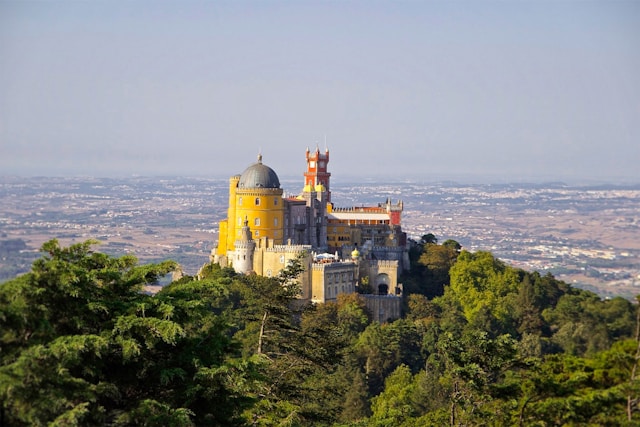
Pena Palace
In Sintra, Portugal .
More places to visit in Sintra
Discover more attractions and things to do in Sintra.
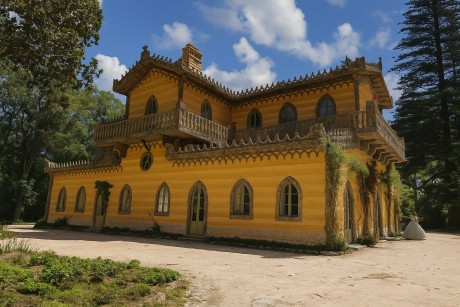
Chalet and Garden of the Countess of Edla
On the slopes near Pena Palace, this whimsical retreat was built in the 1860s by Elise Hensler , an opera singer who became the second wife of King Ferdinand II . Inspired by Alpine chalets, it features painted walls, wooden balconies, and quirky decorative elements such as cork trim. The gardens weave exotic plants with winding paths, creating an intimate contrast to Pena’s grandeur. After a devastating fire in the 20th century , restoration in the 2000s revived both chalet and grounds. Visitors wander through restored salons, noting trompe l’oeil frescoes and stained glass. The Countess herself, once controversial in court circles, left her imprint on Sintra’s romantic landscape through this retreat. A curious fact: cork used here is not only decorative but also insulating, a clever nod to both tradition and function. Today the chalet feels like a love letter in architecture, charming and deeply personal.
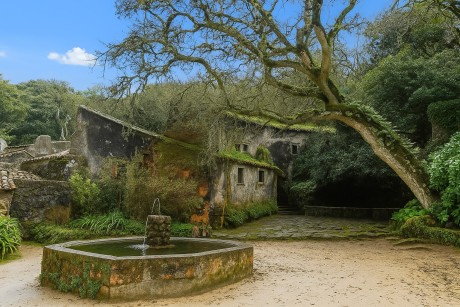
Convent of the Capuchos
Hidden in dense forest, this small Franciscan convent redefines austerity. Built in the 16th century , it was founded by Dom Alvaro de Castro in memory of his father, a viceroy of India. The cells are carved into rock and lined with cork , earning it the name “Cork Convent.” Monks lived here in deliberate poverty, sleeping on stone, enduring damp walls, and finding wealth in contemplation. Low doors force visitors to bow, embodying humility in architecture. Paths lead to chapels, cloisters, and a refectory no larger than a cottage kitchen. Despite hardship, the site attracted nobles curious about radical simplicity. Abandoned in the 19th century , it was later preserved as part of the Sintra Cultural Landscape. Visitors today sense silence like a tangible element, broken only by leaves and birds. The convent remains an austere yet moving reminder that devotion can shrink grandeur into mossy stone and cork.
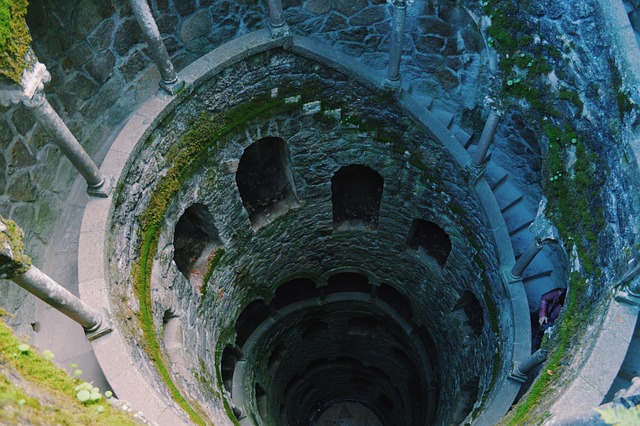
Initiation Well at Quinta da Regaleira
Descending into the earth, the Initiation Well turns architecture into a symbolic journey. Constructed in the early 20th century under Carvalho Monteiro , it embodies the spiritual language of Freemasonry and initiation rites. A spiral staircase winds around nine levels, often interpreted as the circles of Dante’s Divine Comedy or stages of rebirth. The well never held water; instead, it functioned as a ceremonial space linking myth, religion, and personal transformation. Underground tunnels radiate outward, connecting to grottoes, lakes, and gardens, creating a sense of passage between worlds. Walking down, visitors feel suspended between light and darkness, every step echoing with allegory. At the bottom, a compass rose and Templar cross in mosaic await, symbols rich in mystical resonance. A surprising fact: Monteiro himself reportedly guided select guests through secret rituals here, making the well not only a monument but also a stage for lived esotericism. The tunnels eventually connect to the enchanting Lago da Cascata , where waterfalls veil hidden entrances like portals into another chapter of the estate’s mythology.
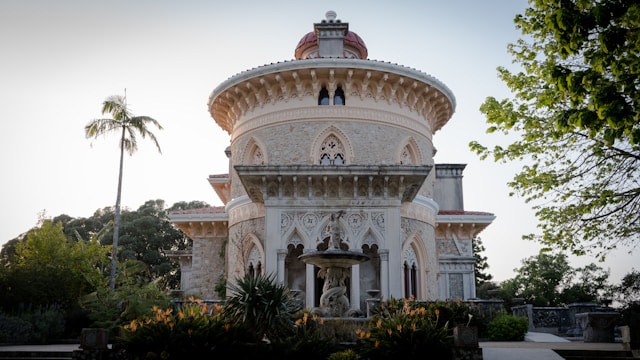
Monserrate Palace
Nestled in a lush park, this palace is a hymn to eclectic architecture and botanical ambition. Commissioned in the 19th century by English aristocrat Sir Francis Cook , it blends Gothic , Moorish , and Indian influences under domes and horseshoe arches. The interiors shimmer with marble, stucco, and carved wood, while gardens unfurl across themed zones that feature species from every continent. Lawns roll into valleys filled with tree ferns, bamboo groves, and camellias. The palace gained literary fame when Lord Byron praised its romantic setting in his poetry, forever tying it to Europe’s imagination. Restored in the 21st century , Monserrate has regained its brilliance as both cultural monument and horticultural experiment. A quirky fact: its lawns were among the first in Portugal to be planted in the English style, showing how international taste reshaped local landscape. Walking its halls feels like stepping through continents without leaving Sintra.
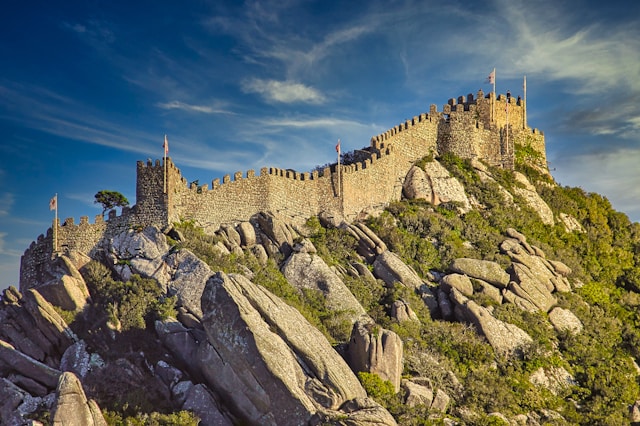
Moorish Castle
The ruined walls of this fortress snake across the hilltop like a stone crown, offering wide views toward the sea and Lisbon plain. Built by Moors in the 8th or 9th century , it once guarded Sintra’s approaches with towers, battlements, and cisterns. After the Christian reconquest in the 12th century , the castle continued as a strategic lookout until later centuries left it to ivy and silence. Restoration campaigns in the 19th century , encouraged by King Ferdinand II , stabilized the walls and turned them into a romantic ruin. Today visitors climb steep steps for panoramas, stopping to imagine soldiers scanning for sails or smoke. Moss grows on granite, and hawks wheel overhead, completing the sense of ancient vigilance. A curious note: archaeologists found silos and ceramics from medieval villagers who once lived within the walls, proof that this fortress doubled as both shield and neighborhood.
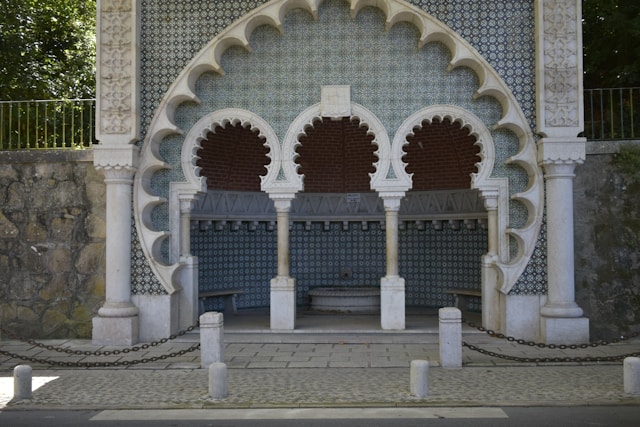
Moorish Fountain
At the edge of Sintra’s old town, the Moorish Fountain hides in plain sight, its elaborate stonework echoing centuries of cultural exchange. Built in the 1920s as part of Sintra’s romantic revival, it was inspired by Islamic decorative traditions that once flourished across the Iberian Peninsula. Horseshoe arches frame the niche, while intricate azulejos in green, blue, and white weave geometric patterns that shimmer when touched by light. A Latin inscription above the fountain recalls civic pride, while water trickles steadily, reminding visitors of the link between refreshment and contemplation. Locals still pause here to fill bottles, and children dare each other to drink from the cold stream. The fountain serves not only as ornament but also as a civic gesture connecting past and present. A curious detail: despite its name, the fountain is not medieval but an early 20th century homage, proof that Sintra enjoys reinventing its history in stone and tile.
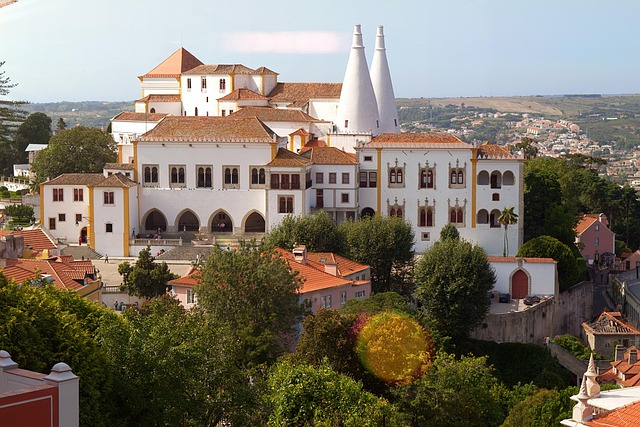
National Palace of Sintra
At the center of town, the twin conical chimneys of this palace dominate the skyline and betray its kitchen’s immense hearths. Originally a Moorish residence later expanded by King Dinis in the 14th century , it became a royal favorite for centuries. The interiors showcase a fusion of Manueline , Gothic , and Mudejar styles. Highlights include the Swan Room painted with elegant birds, the Magpie Room decorated with witty heraldic motifs, and the Coat of Arms Hall displaying emblems of noble houses under a dazzling ceiling. Tiles from the 16th century line many chambers, representing one of Europe’s most significant collections of azulejos . Courtyards invite breezes, and terraces overlook red rooftops and hills. The palace narrates how Portugal’s monarchy adapted Moorish foundations into European taste. A charming detail: the chimneys once vented feasts of venison and fish, turning architectural necessity into enduring landmark.
Park of Pena
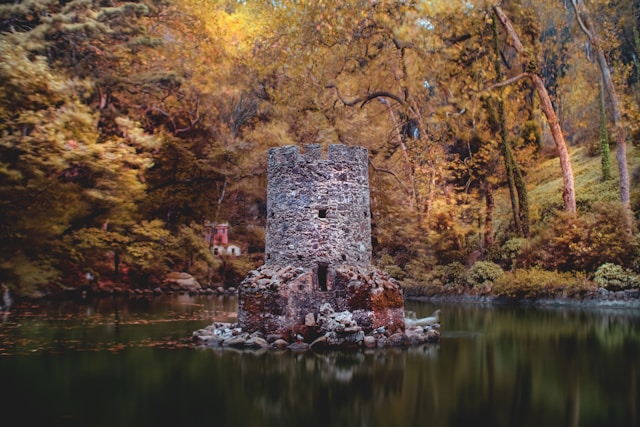
Surrounding the palace, the Park of Pena spreads across more than 200 hectares of designed wilderness. Created under King Ferdinand II in the 19th century , it transformed barren hills into a romantic forest with paths, lakes, and exotic trees imported from around the world. Sequoias, magnolias, camellias, and ferns coexist in deliberate variety, forming microclimates that surprise at every turn. Viewpoints such as the Queen’s Throne and the Cruz Alta reward hikers with glimpses of sea and mountains. The park integrates follies, grottoes, and rustic cottages, blending artifice with nature. A surprising note: the park was one of Europe’s first large-scale arboreal experiments, reflecting both scientific curiosity and aesthetic passion. Today it remains a sanctuary for biodiversity and imagination, showing how design can remake entire landscapes. Walking here feels like moving through a painting constantly repainted by fog and sunlight.
Quinta da Regaleira Palace
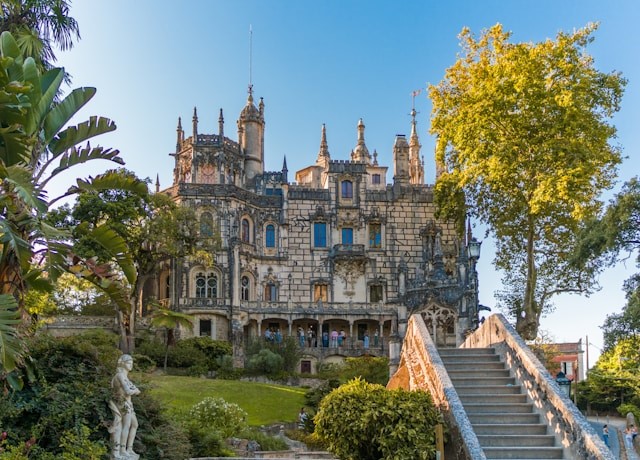
At the heart of the estate, the palace rises like a dream sculpted in stone, built in the early 20th century for wealthy collector Carvalho Monteiro . Designed by Luigi Manini , it blends Neo-Gothic , Manueline , and Renaissance flourishes into turrets, balconies, and ornate windows. Each facade reads like a carved manuscript, with symbols ranging from mythological creatures to religious motifs. Inside, salons glow with frescoes and stained glass that mirror the esoteric ambitions of the owner. Visitors wander through chambers that once hosted philosophical debates as much as leisure. The palace feels both theatrical and intimate, a residence meant for living inside allegory. A curious note: Monteiro filled his home with references to alchemy and mysticism, turning it into a coded labyrinth for anyone willing to read. Today it stands as one of Sintra’s most enigmatic mansions, where every detail suggests a deeper story waiting to be uncovered.