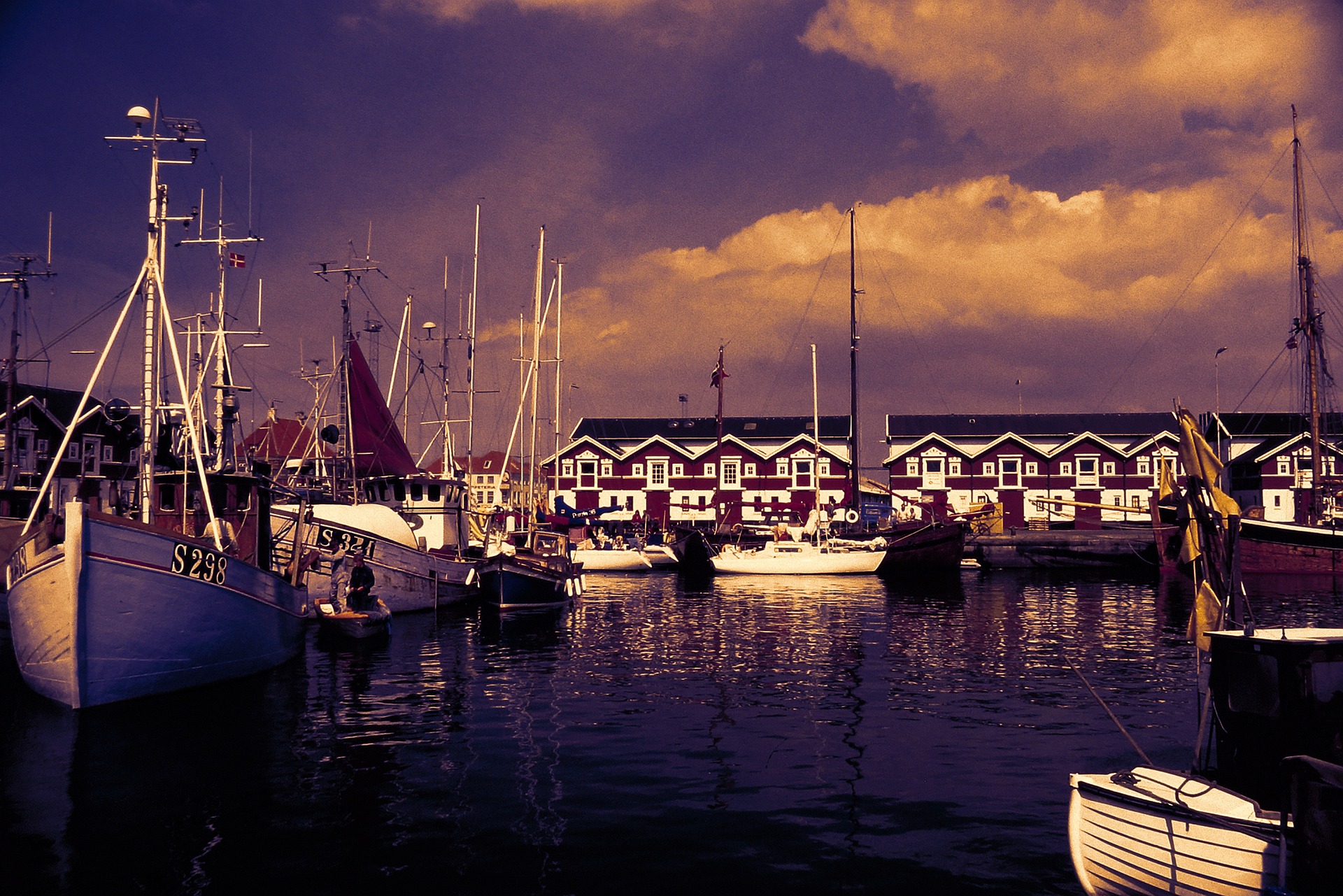

City view of Skagen, Denmark

Skagen

Skagen, located at the northern tip of Denmark, is famous for its stunning natural beauty and unique light. The town has long been a source of inspiration for artists, thanks to its distinctive coastal landscapes and charming fishermen's cottages. Grenen, where the North Sea and Baltic Sea meet, is a popular attraction, allowing visitors to stand with a foot in each sea. Skagen's art scene is centered around the Skagens Museum, which showcases works by the renowned Skagen Painters. With its picturesque beaches, thriving art culture, and fresh seafood, Skagen offers a relaxing and inspiring getaway.

Top attractions & things to do in Skagen

If you’re searching for the best things to do in Skagen, this guide brings together the top attractions and must-see places to visit in Skagen. The top picks below highlight the most visited sights for first-time visitors, plus a few local favorites worth adding.

Grenen in Skagen, Denmark

Grenen

Grenen sits at Denmark’s northernmost tip, where the North Sea and Baltic Sea collide in a spectacular dance of currents. This striking natural convergence creates swirling wave patterns that photographers and nature lovers flock to witness. Adventurous visitors can trek along the windswept beach to the very point or opt for the iconic “Sandormen” tractor shuttle for a fun, bumpy ride across shifting sands. Birdwatchers prize Grenen for its rich avian diversity—migratory terns, eiders, and even rare skuas circle overhead each spring and autumn. Informational panels near the tip explain the geological forces that drive the ever-moving shoreline. Local guides recount tales of shipwrecks and heroic rescues in centuries past, adding historical depth to the landscape. Although tempting, swimming here is ill-advised due to sudden rip currents, so visitors admire the scene from safe vantage points. At sunrise, the horizon flames in pink and gold, while evening brings the call of distant gulls. Grenen remains an elemental encounter with Denmark’s raw coastal power.
Ads place
Ads place
Ads place
Ads place
Ads place
Råbjerg Mile in Skagen, Denmark

Råbjerg Mile

Råbjerg Mile is Europe’s largest migrating dune, a colossal sea of sand spanning over 1 square kilometer and advancing up to 15 meters annually under coastal winds. Positioned just south of Skagen, this shifting desert offers an otherworldly experience—hikers ascend its golden slopes to panoramic vistas of the North Sea on one side and conifer forests on the other. Interpretive signs along the path explain the dune’s formation, its role in medieval trade routes, and the struggle to protect nearby farmland from encroachment. The dune’s crest provides a natural amphitheater for seasonal events, such as midnight sandboarding under the midnight sun. Photographers return year-round to capture the dune’s changing moods—icy frost in winter, rippled textures in summer, and sun-drenched hues at dawn. Despite its desert appearance, Råbjerg Mile teems with resilient flora, from hardy dune grasses to tiny blossoms that anchor the sand. It remains an unforgettable testament to nature’s restless energy.
Ads place
Ads place
Ads place
Ads place
Ads place
Skagen Museum in Skagen, Denmark

Skagen Museum

Skagen Museum preserves the luminous legacy of the Skagen Painters, a group of 19th-century artists drawn by the region’s legendary light. Housed in a charming yellow building surrounded by rose gardens, the museum’s galleries feature masterpieces by P.S. Krøyer, Michael Ancher, and Anna Ancher, each work capturing local fishermen, sunlit dunes, and vibrant town scenes. The collection spans from naturalistic seascapes to early modernist experiments, charting a dynamic evolution of style. Visitors explore meticulously arranged rooms that evoke the painters’ original studios, complete with period furniture and plein-air easels. Summer workshops allow guests to try painting under open skies, while rotating exhibitions bring contemporary perspectives to Skagen’s artistic heritage. Detailed labels and multimedia stations reveal the personal stories behind iconic canvases, including Krøyer’s celebrated Hip, Hip, Hurrah! group portrait. A tranquil café overlooking the adjacent garden serves refreshments named for famous works, inviting reflection. Skagen Museum stands as both a sanctuary of Danish art and a vibrant hub for creative inspiration.
Ads place
Ads place
Ads place
Ads place
Ads place
Skagen's White Lighthouse (Det Hvide Fyr) in Skagen, Denmark

Skagen's White Lighthouse (Det Hvide Fyr)

Det Hvide Fyr, erected in 1747, is one of Denmark’s oldest lighthouses and a beacon of Skagen’s maritime heritage. Painted brilliant white, its sturdy octagonal tower guided sailors safely around the dangerous northern coast for centuries. Today, the lighthouse hosts rotating exhibitions of local and contemporary art, transforming the lantern room into a unique gallery space. Visitors climb the narrow wrought-iron spiral staircase to reach the 31-meter summit, where unobstructed 360° views unfold—distant ships on the horizon, the dune-scaped beaches of Grenen, and the patchwork roofs of Skagen below. Informational plaques recount the lighthouse’s role in rescuing shipwrecked crews and its evolution from whale-oil lamp to electric beacon. Seasonal twilight concerts leverage the historic acoustics of the tower, while moonlit tours reveal the interplay of light and shadow on the wind-blown sands. Det Hvide Fyr remains a cultural landmark that marries artistic exploration with centuries of coastal vigilance.
Ads place
Ads place
Ads place
Ads place
Ads place
The Buried Church (Den Tilsandede Kirke) in Skagen, Denmark

The Buried Church (Den Tilsandede Kirke)

The Buried Church, originally St. Lawrence’s Church built in the 14th century, stands as a haunting testament to Skagen’s shifting sands. Once the region’s largest church, its nave and chancel succumbed to drifting dunes by the 18th century, leaving only the unburied 89-foot tower visible above the sands. Today, the tower’s red brickwork contrasts starkly with the pale dunes, marking a singular landmark on the coastal plain. Informational panels detail the dramatic tale of villagers who battled the encroaching desert—attempts to anchor sand with heather and driftwood ultimately failed, leading to the church’s abandonment. Visitors can explore the fenced ruins at the tower’s base, where remnants of stone arches emerge from the sand at low tide. Guided walks across the adjacent dunes illuminate the area’s geology and local legends of buried treasures. Photographers and history buffs alike are drawn to this poignant intersection of nature’s force and human perseverance. The Buried Church remains one of Denmark’s most evocative cultural relics.
Ads place
Ads place
Ads place
Ads place
Ads place