
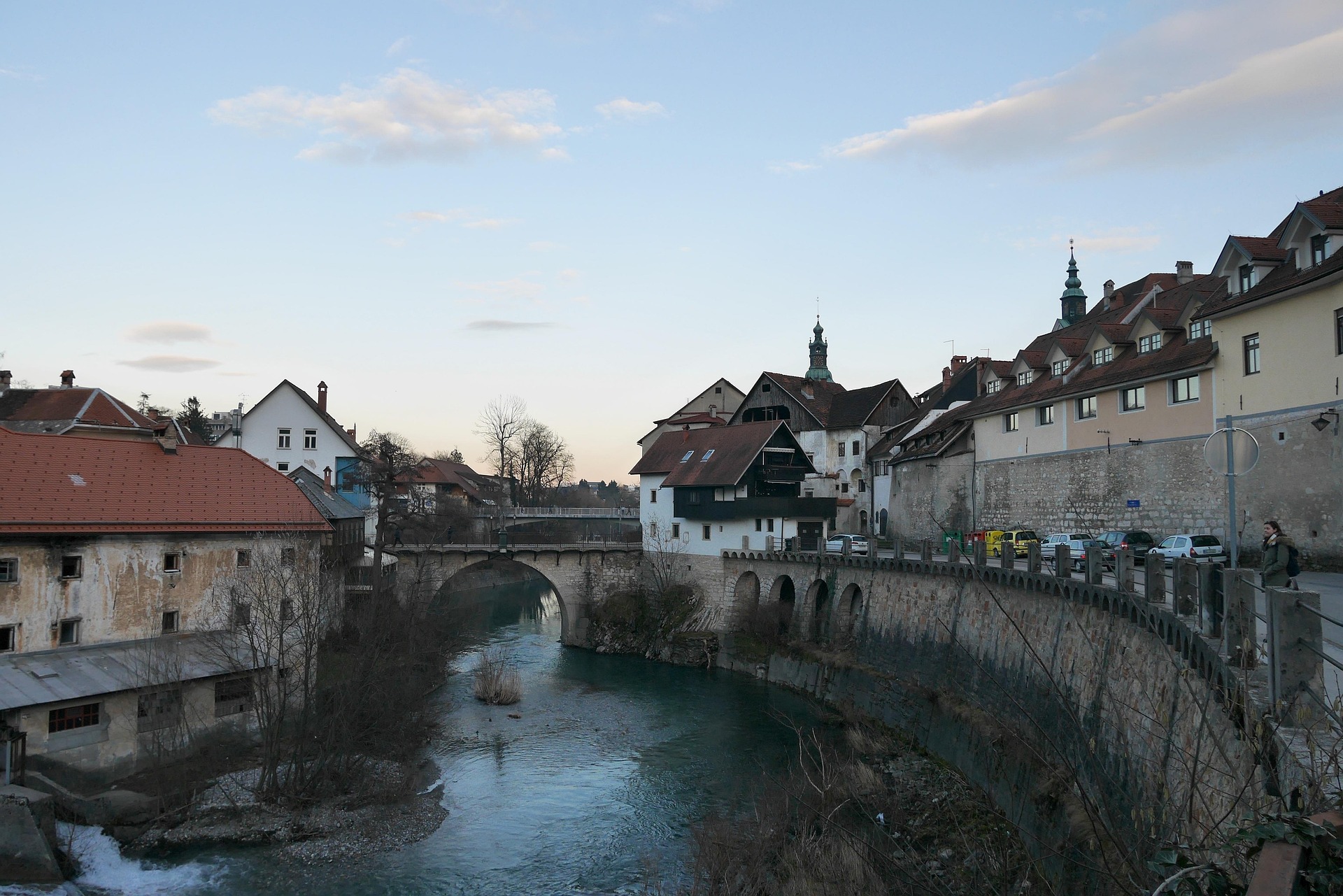
City view of Skofja Loka, Slovenia

Skofja Loka

Skofja Loka leads you uphill to a castle that doubles as viewpoint and attic. The museum keeps folk masks, tools, and a scale model that makes the river bends look like handwriting anyone can read. Craft guilds once set standards here and the habit remains; even coffee foam is drawn with care on a slow morning. Try buckwheat dumplings with sauce or a slice of potica rolled with walnuts and honey, then find a bench by the bridge and listen. Records from the 10th century mention the estate; later, a baroque passion play grew into a townwide performance staged every few years by amateurs with professional discipline. Quirky trace: a public sundial still keeps honest time on a facade and occasionally corrects phones that drift. Walk the path to Pucek's house for paintings that behave like open windows, then let the river lead you home at a good pace.

Top attractions & things to do in Skofja Loka

If you’re searching for the best things to do in Skofja Loka, this guide brings together the top attractions and must-see places to visit in Skofja Loka. The top picks below highlight the most visited sights for first-time visitors, plus a few local favorites worth adding.

Capuchin Bridge and Monastery Library in Skofja Loka, Slovenia

Capuchin Bridge and Monastery Library

A single stone arch steps over the Selska Sora with the calm of long practice, its parapet carrying a weathered saint and centuries of footfall. The bridge is commonly traced to the 14th century, rebuilt and tightened over time, with the statue of St John of Nepomuk often dated to 1718. Masons set the stone arch low against flood force, and cutwaters split the current in spring. On the near bank, the Capuchin monastery keeps a small library of sermons and travel accounts; friars cataloged volumes by topic rather than pride, an archival habit that still aids researchers. A brochure recalls a public weighing stone used here when market tolls were counted. Step to midspan and the Old Town’s roofs gather into a neat ridge line; step off and the river instantly quiets conversation. In winter the parapet leans icy, in summer it warms the palm. The bridge’s gift is scale: enough width for carts once, enough grace for walkers now, and a lesson in economy that the rest of the town still follows.
Ads place
Ads place
Ads place
Ads place
Ads place
Mestni Trg Old Town in Skofja Loka, Slovenia

Mestni Trg Old Town

Mestni Trg bends gently between facades that stack shopfronts, arcades, and attic windows like lines in a measured poem. Fire and rebuilding left a pattern of 17th century houses with painted lintels and discreet courtyards, while the Homan House shows layered fresco fragments under a tidy gable. A fountain marks the square’s center of gravity; market scales once hung nearby to keep trade honest. Pavement joints steer rain toward hidden drains, a small civic intelligence refined over generations. Signs point to side lanes that drop toward the rivers, and a surviving town gate frame tightens views like a camera. Cafes pull tables under arches; galleries keep hours that feel local rather than touristic. On festival evenings, musicians set up with minimal staging and the square becomes an open-air salon; on quiet mornings, delivery carts trace the old logistics of bread and paper. Look up and you will see carpenters’ dates scratched under eaves, small notes from makers who assumed their work would outlast them—and were right.
Ads place
Ads place
Ads place
Ads place
Ads place
Pustal Quarter and Devils Footbridge in Skofja Loka, Slovenia

Pustal Quarter and Devils Footbridge

Across the river from the core, Pustal keeps a village tempo inside the town: gardens, low houses, and a footbridge with a mischievous name. The Devil's Footbridge, or Hudicev most, was fitted in the 20th century to knit lanes over the Selska Sora, its simple steel and stone showing how modest works can change daily routes. A short stroll reaches vezice—the narrow wooden sheds once used for drying—while chapels tuck into corners at junctions like punctuation. Locals favor this loop for errands and evening air; visitors find that rhythms slow automatically at the river's pitch. Bridge railings hold countless palms each day, and winter frost draws fern patterns no designer would dare invent. Panels along the path recall floods and repairs, a ledger of years when water reminded everyone who sets the rules. Cross back toward the Old Town and the castle reappears above rooftops, closing the circle. Here, Skofja Loka proves that character does not require spectacle; it can live in a span, a shed, and a bend of water understood by foot.
Ads place
Ads place
Ads place
Ads place
Ads place
Skofja Loka Castle and Museum in Skofja Loka, Slovenia

Skofja Loka Castle and Museum

Set on the hill above the two Sora rivers, the town's castle feels purpose-built for watchfulness: angled walls, terraces catching wind, and a courtyard that closes like a palm. Chronicles trace a fort here to the 13th century, later reshaped with Renaissance comfort while pockets of Gothic stone still surface in stair turrets and window jambs. Inside, the regional museum moves from situla-era archaeology to guild tools and black-and-white photos of market days, a sequence that keeps local memory practical. Labels mention restoration phases in the 1990s, when lime mortars and cedar shingles were chosen for breath and durability. One gallery explains the town’s link to the bishops of Freising, another lays out folk costume with the cut and weight that real clothing has. From the rampart walk, the Old Town reads like a measured diagram of lanes and roof pitches; the confluence below sounds steady as a clock. Arrive early and the courtyard holds only swifts; arrive late and the hill glows, making parapets look newly drawn against the evening air.
Ads place
Ads place
Ads place
Ads place
Ads place
St James Parish Church and Bell Tower in Skofja Loka, Slovenia

St James Parish Church and Bell Tower

You approach along a slight rise and the tower resolves into stacked stages, clock, and spire, an assertive marker for a compact nave. Parish records place the church in the late 14th century, with a Gothic structure later softened by Baroque altars and calmer plaster. The bell tower, locally said to stand around 50 meters, carries sound cleanly across roofs, and on clear days its copper flashes between swifts. Inside, ribbing gathers the ceiling into tidy geometry; votive lamps hang at measured intervals; floor slabs carry initials rubbed by knees and weather. Restorers prefer limewash that breathes through damp winters, so walls glow rather than shine. A side chapel keeps a small treasury—silver, wood, a textile fragment—presented with restraint. Outside, market days pull chatter to the steps; on weekdays the square thins to footsteps and bicycle freewheels. Stand at the west door and the town aligns itself: bridge, street, ridge, and, above it all, a tower that has long balanced duty with a quiet willingness to be photographed.
Ads place
Ads place
Ads place
Ads place
Ads place