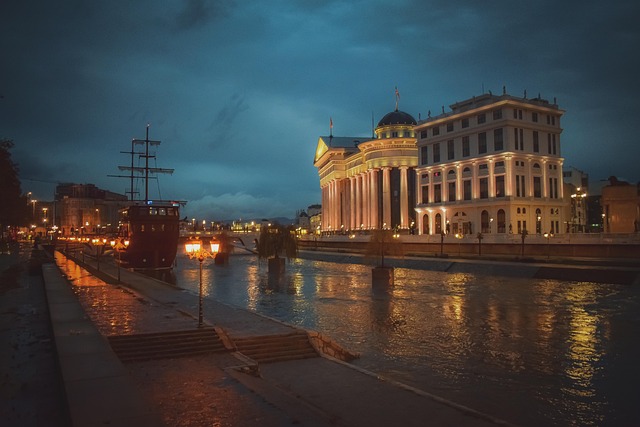
City view of Skopje, North Macedonia

Skopje

Skopje stacks eras like shelves, from Roman stones and Ottoman bazaars to bold modernism after the 1963 earthquake. Start at the Old Bazaar where copper glows and spices drift, then cross the Stone Bridge into wide boulevards along the Vardar. Kale Fortress stages sunsets, while Debar Maalo pours craft beer and rakija that turns strangers into teammates. Museums map ancient Macedon and recent upheavals with patient detail. Street vendors press simit and slice burek and bakeries answer with sticky baklava that defeats restraint. Day trips reach Matka Canyon for boats, caves, and cliffs shaped like folded paper. Hike to viewpoints, rent a kayak, or cruise past tiny chapels cut into limestone. By night, buskers test acoustics under statues and bridges, and the river becomes a ribbon of quiet light. Ask three locals for the best burek and you will get five answers and a friendly debate. Skopje is energetic, layered, generous, and ready to surprise you.

Top attractions & things to do in Skopje

If you’re searching for the best things to do in Skopje, this guide brings together the top attractions and must-see places to visit in Skopje. The top picks below highlight the most visited sights for first-time visitors, plus a few local favorites worth adding.

Archaeological Museum of North Macedonia in Skopje, North Macedonia

Archaeological Museum of North Macedonia

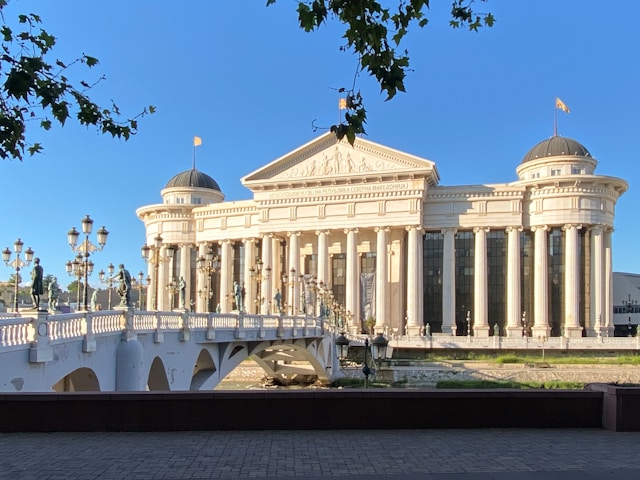
Along the riverfront, a colonnaded facade reflects in slow water, hinting at treasures inside. Galleries trace local civilizations from the Neolithic to the Roman era and through the Byzantine centuries, with gold funerary masks, intricate fibulae, and mosaics that still shimmer. A hall dedicated to the Paionians introduces a people often skipped in textbooks, while statuary and coins map power as it changed hands. Curators date major finds to the 4th century BC and beyond, letting you read politics in bronze and clay. Windows frame views of the Vardar River and the bridges that stitch eras together outside. School groups cluster around amphorae, and quiet travelers linger at tiny objects whose patience outlasted empires. You leave with a timeline in your head and a new habit of looking closely at stones beneath your feet. The museum’s careful curation makes history feel immediate and personal to each visitor.
Ads place
Ads place
Ads place
Ads place
Ads place
Art Bridge in Skopje, North Macedonia

Art Bridge

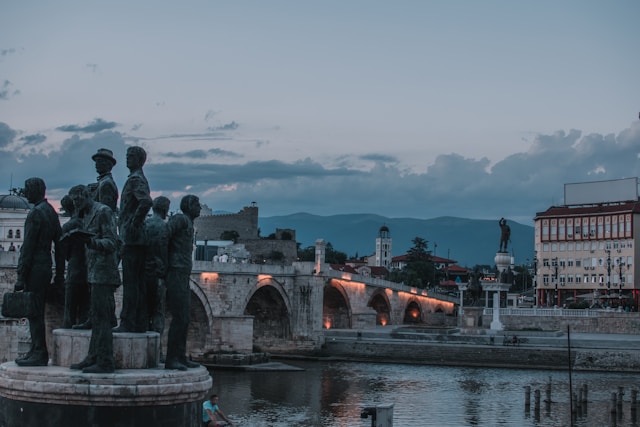
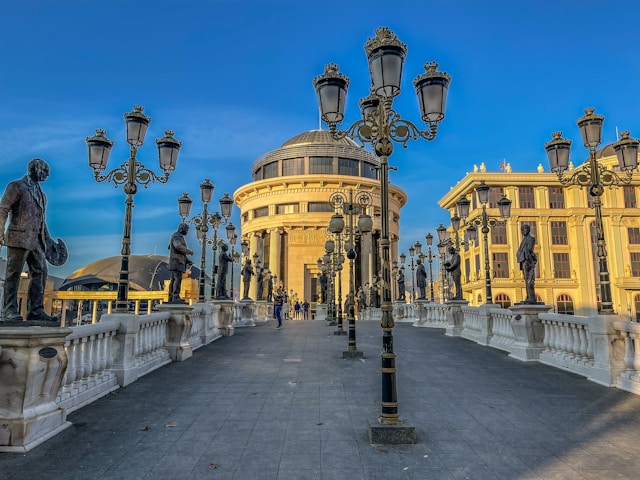
Bronze figures line a span over the Vardar like a public seminar in creativity. Sculptures of painters, poets, and composers—many from the 19th and 20th centuries—turn a crossing into a conversation, while lanterns and balustrades play at Beaux-Arts elegance. At night the lights pick out cheekbones and collars, and the river returns the favor with doubled reflections. Couples pause between statues to compare favorites; children try to mimic poses and fail with laughter. The bridge links museum to museum, but its best lesson is outdoors: culture lives where people meet. Look downstream to the Stone Bridge and upstream to the new facades, and consider how cities curate themselves in real time. Each statue carries a small plaque, offering visitors a moment to discover names that have shaped the nation's artistic heritage. During festivals, the bridge becomes a lively stage where street musicians and artists add new layers to its creative spirit. This blending of art and public space makes it one of Skopje’s most photogenic landmarks.
Ads place
Ads place
Ads place
Ads place
Ads place
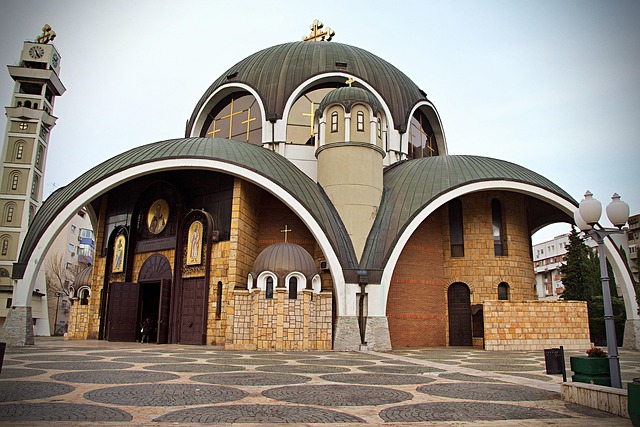
Church of St. Clement of Ohrid in Skopje, North Macedonia

Church of St. Clement of Ohrid

A cascade of brick and curved roofs draws the eye upward, and the vast interior gathers light into a warm sea of iconography. Consecrated in 1990, the cathedral dedicated to St Clement of Ohrid anchors modern religious life with a design that lets the faithful stand beneath a mighty central dome. Its fresco program, led by icon painters of the new Macedonian school, surrounds visitors with saints, scholars, and martyrs. The plan echoes early Byzantine models while speaking in a contemporary language of space and light, and the bells carry across the city on feast days. Step outside to the wide forecourt, a gathering place for baptisms, weddings, and midnight Easter processions. Construction began in 1972, and the completed complex now frames civic rites from Christmas vigils to national remembrances. Stand beneath the central dome and you sense how architecture can gather a city into one voice. Many visitors are struck by the harmony between tradition and modern design.
Ads place
Ads place
Ads place
Ads place
Ads place
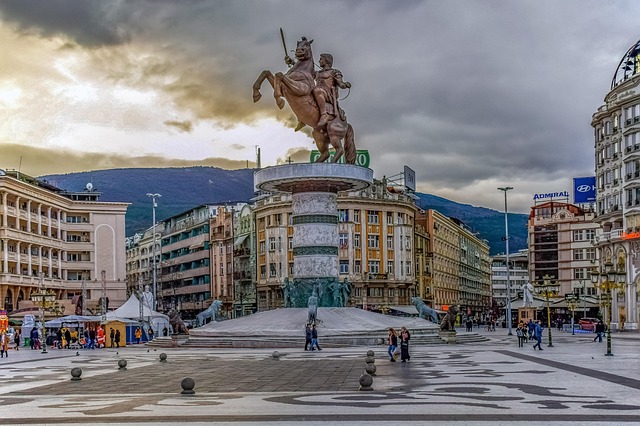
Macedonia Square in Skopje, North Macedonia

Macedonia Square

At the city’s widest stage, fountains fan into light and equestrian bronze rises above evening promenades. The central plaza took its current form after the 1963 earthquake and later urban projects of the early 21st century, ringed by cafés where conversations never quite end. The great columned figure nods toward ancient Macedonian lore, while nearby facades mix neoclassical gestures with modern glass. In December, markets sparkle under strings of bulbs; in summer, mist from the jets cools the crowd. Brass bands rehearse national songs, skaters flow around statues, and each hour the square becomes a living postcard. From here you see the axis to the Stone Bridge, the arc to the Old Bazaar, and the rhythm of a capital that keeps remaking itself. Street painters capture the skyline for pocket-size souvenirs, proof that memory can be carried home in a few quick strokes. Every season brings a new face to the square, making it timeless yet ever-changing.
Ads place
Ads place
Ads place
Ads place
Ads place
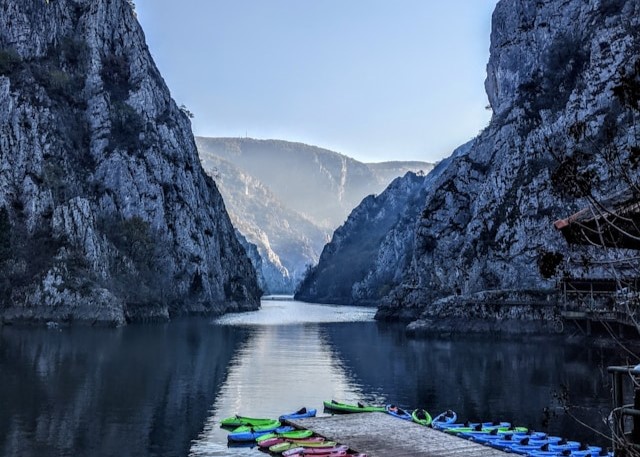
Matka Canyon in Skopje, North Macedonia

Matka Canyon

Barely beyond the suburbs, limestone cliffs close around emerald water and time slows to the paddle's pace. The artificial lake, completed in 1938, hides caves that geologists date to the Paleogene, including the famed Vrelo Cave with a lake whose depth remains debated. Monasteries from the 14th century cling to ledges, their fresco fragments blinking like small fires in stone. Kayaks and flat-bottom boats skim past dragonflies while climbers trace bolted routes up honeycombed walls. Botanists note endemic plants, and divers descend into galleries where darkness looks carved. After the last boat returns, terraces fill with grilled trout and stories. The canyon gives the capital a frontier at its doorstep—wild enough to reset your senses, close enough to make it back for evening plans. Many consider it one of the most beautiful natural escapes in all of North Macedonia.
Ads place
Ads place
Ads place
Ads place
Ads place
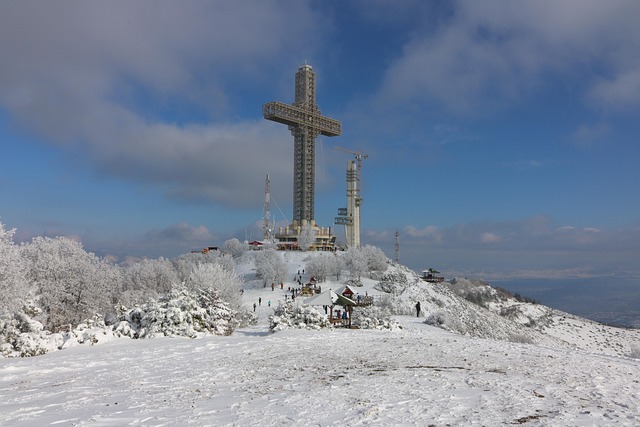
Millennium Cross (Vodno) in Skopje, North Macedonia

Millennium Cross (Vodno)

High on Mount Vodno, a lattice beacon marks the skyline and helps sailors of the streets keep their bearings. Erected in 2002 to commemorate 2,000 years of Christianity, the structure rises 66 meters and glows at night like a compass point. A cable car from Sredno Vodno whisks you over thick beech and pine, where trails link wartime memorials and picnic clearings. From the platform, the Skopje Valley reads like a relief map: river, walls, highways, mountains receding layer by layer. Winter brings rime to railings; summer brings kites and families with thermoses. The wind up here edits thoughts down to essentials. Hike one way, ride the other, and keep an eye out for crosses carved into old bark—quiet signatures of past pilgrims who also loved a good view. The panoramic sightlines are especially magical during sunrise and sunset.
Ads place
Ads place
Ads place
Ads place
Ads place
Mother Teresa Memorial House in Skopje, North Macedonia

Mother Teresa Memorial House

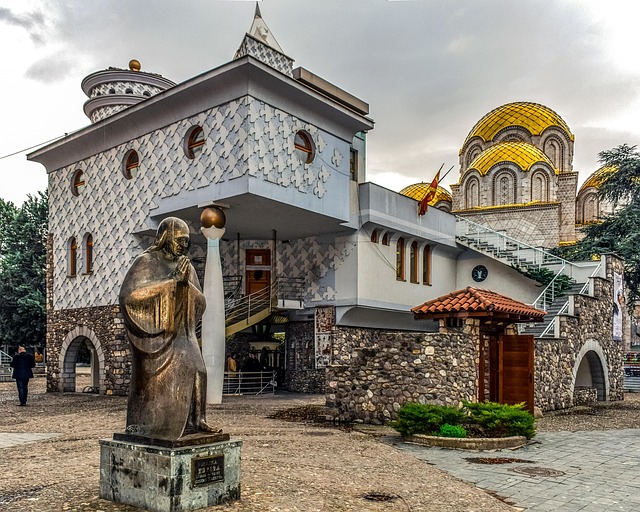
Where a small church once stood, a glass and concrete pavilion now tells a life devoted to service, framed by photographs and gentle artifacts. Born in Skopje in 1910, Mother Teresa left for India to found the Missionaries of Charity, a journey remembered here with letters, diary pages, and a chapel open to all. The building's latticed facade nods to local craft while its interior speaks a language of quiet modernism. A childhood timeline locates the family amid the Ottoman twilight and the new borders of the 20th century, and visitors often pause at the small baptismal font. School groups leave messages of kindness on cards, and the rooftop terrace offers a view across streets she once walked. A quiet corner recalls the Nobel Prize 1979, while video stations let her voice narrate the work with unadorned clarity. Many visitors leave handwritten intentions in a book near the chapel door. The memorial fosters an atmosphere of reflection and compassion for all who enter.
Ads place
Ads place
Ads place
Ads place
Ads place
Old Bazaar in Skopje, North Macedonia

Old Bazaar

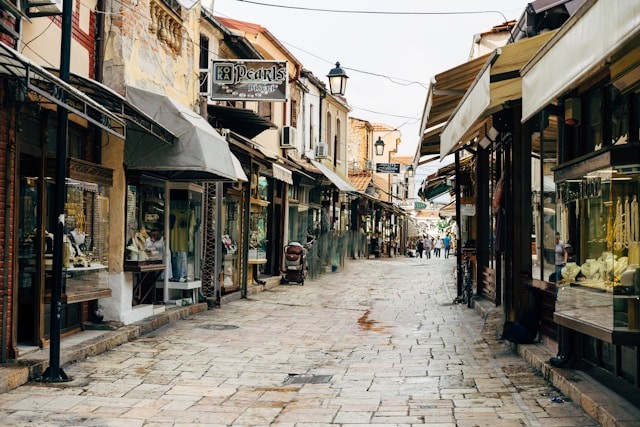
Cross the bridge and time loosens its grip in the Old Bazaar, where copper rings on anvils and coffee steams from brass pots. This trading quarter flourished under Ottoman patronage from the 15th century, when caravan routes braided across the Balkans, and its han inns, hammams, and stalls still shape the streets. Domes of the Daut Pasha Hammam mirror the skyline, while the clock at Sahat Kula once regulated deals and departures. Workshops pass down filigree techniques mastered by goldsmith guilds, and mosques and churches sit within earshot as a lesson in coexistence. By late afternoon the bazaar becomes a theater of aromas, from grilled kebabs to syrup bright baklava. By evening, musicians tune up in hidden courtyards, and the carved portals of Kapan Han catch the last light. Sit for tea, watch apprentices learn the hammer's tempo, and feel commerce become conversation. Every visit uncovers a new hidden corner, making each return a fresh discovery.
Ads place
Ads place
Ads place
Ads place
Ads place
Skopje Fortress (Kale) in Skopje, North Macedonia

Skopje Fortress (Kale)

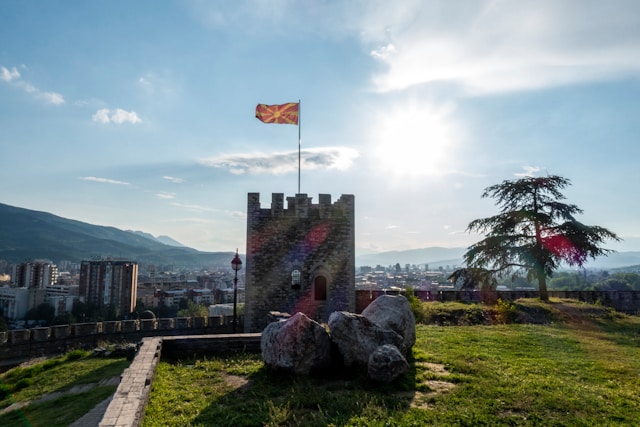
Rising above the river on a hill of buried centuries, the fortress everyone calls Kale offers the best first lesson in Skopje's layered memory. Archaeologists have traced occupation back to the 4th century and a phase under Byzantine rule, with later walls built by Ottoman sultans to guard the city's markets below. From the ramparts, the curve of the Vardar River frames minarets, domes, and new towers, and the stones themselves still show scars from the 1963 earthquake. Restored towers host open air events, while grassy courts invite families to picnic under swallows. Look for reused blocks carved with ancient motifs, a puzzle of empires fitted into one crown of masonry. At dusk silhouettes line the western wall as the skyline kindles, while modest digs still lift stamped tiles from the soil. It endures as a Late Antiquity stronghold with a patient view. Visitors often remark on the tranquil yet commanding atmosphere that surrounds its ancient stones.
Ads place
Ads place
Ads place
Ads place
Ads place
Stone Bridge in Skopje, North Macedonia

Stone Bridge

Spanning the city's main artery with calm authority, the Stone Bridge links the Old Bazaar to Macedonia Square and serves as Skopje's most durable biography in stone. Raised in the 15th century under Sultan Mehmed II, its rhythm of limestone arches carries footsteps above the Vardar River and stories between neighborhoods. Surviving the shattering 1963 earthquake, the bridge became a compass point for recovery and a stage for daily life, from dawn commuters to midnight musicians. Look closely at the parapets for carved coats of arms and tool marks left by Ottoman engineers who understood both beauty and load. Street vendors set up by the ramps, photographers catch the water turning copper at sunset, and children count arches like beads. To cross once is to understand Skopje's continuity; to linger is to watch centuries negotiate with the present. The bridge does not lecture, it simply holds, reminding every passerby that cities are promises kept in patient stone. Even in modern times, it remains the city’s silent witness to history and change.
Ads place
Ads place
Ads place
Ads place
Ads place