
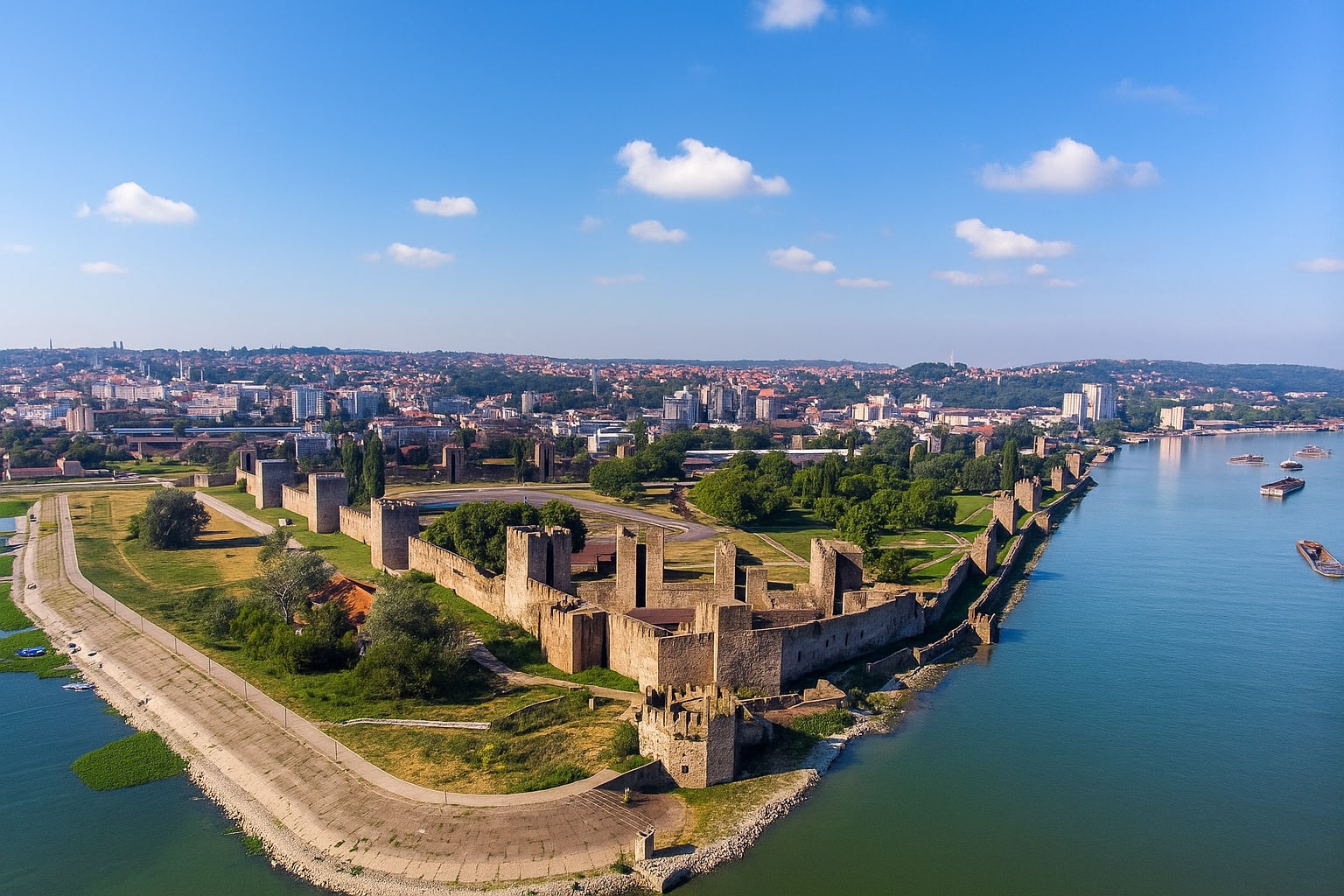
City view of Smederevo, Serbia

Smederevo

Smederevo meets the Danube with a fortress so expansive that joggers map their routes by towers. Built for Despot Djuradj Brankovic in the fifteenth century, its triangular plan still listens for upriver news among vineyards and freight horns. Inside, summer theater and wine fairs turn stone into stage, the acoustics surprisingly generous to saxophone. Downtown, pastry cases display gibanica in confident slabs; on corners, kiosks calibrate cevap and onion like a science. The city museum strolls from Roman shards to royal charters without making you hurry. Boatmen swap water levels for gossip, while fishermen weigh patience against current. A local curiosity hides behind a courtyard gate: a tiny press where labels for family wine are typeset by hand, one season at a time. Smederevo’s river path is best at dusk, when barges drag their own weather and the castle’s outline admits that defense can learn hospitality.

Top attractions & things to do in Smederevo

If you’re searching for the best things to do in Smederevo, this guide brings together the top attractions and must-see places to visit in Smederevo. The top picks below highlight the most visited sights for first-time visitors, plus a few local favorites worth adding.

Church of the Assumption in Smederevo, Serbia

Church of the Assumption

Morning gathers quietly on the steps and the nave answers in a measured voice that suits a river city accustomed to steady work. Raised in the mid 19th century after long negotiations with imperial authorities, the church adopts the Serbian Revival vocabulary where domes and arches quote older Byzantine models without imitation. A finely carved iconostasis anchors the interior and painters of the 19th century arranged saints with local features that make the holy feel neighborly. Parish books record baptisms and repairs through wars and floods, turning administration into a quiet testimony of resilience. On feast days choirs braid voices with bells and the square outside edits its pace to match the liturgy while weekday errands pass under the same clock with friendly indifference. Step back to the street and the facade keeps its calm geometry, a companion to the fortress skyline rather than a rival. The building holds authority lightly and welcomes attention without demanding it.
Ads place
Ads place
Ads place
Ads place
Ads place
Danube Quay in Smederevo, Serbia

Danube Quay

The river writes a long bright sentence and the promenade reads it at a humane pace while cyclists and strollers share the wide curve. Here the Danube meets the Great Morava, a geography that taught the town to speak both upstream and downstream with equal ease. Markers recall the Roman limes and remind passersby that borders once floated on barges as often as on maps. The view keeps the fortress in the corner of the eye so each bench becomes a small classroom in perspective and scale. In winter fog the water lowers its voice and memorial stones for World War II emerge like thoughtful punctuation while summer finds kiosks and fishermen returning the scene to work and leisure. Towboats push grain toward the Black Sea and swallows map the air above as if choreographing departures and returns. The quay proves that a city’s horizon can be useful and beautiful at exactly the same time.
Ads place
Ads place
Ads place
Ads place
Ads place
Smederevo Fortress in Smederevo, Serbia

Smederevo Fortress

River light slides over brick curtains and the walls draw a bold rectangle where a medieval capital once rehearsed authority. The stronghold rose under Djuradj Brankovic in 1428–1430, set between the Danube and the mouth of the Great Morava to command trade and diplomacy at a nervous frontier. Its double ring of towers followed late Byzantine logic adapted to cannons, proof that the Serbian Despotate negotiated war with engineering as much as with swords. After the fall to the Ottoman Empire the plan remained useful, housing garrisons and granaries that kept the river route efficient. Tragedy touched the site on June 5, 1941 when an ammunition blast shattered the town and scarred the ramparts, a date still read in chipped edges and memorial plaques. Today promenades soften the bastions and swallows stitch the sky above the Little Town and Great Town sectors so history feels inhabited rather than distant. From the quay the fortress looks both stern and generous, exactly as a guardian should.
Ads place
Ads place
Ads place
Ads place
Ads place
Smederevo Museum in Smederevo, Serbia

Smederevo Museum

A restrained facade opens onto galleries that prefer evidence to rhetoric and let the city introduce itself object by object. Founded in 1952, the museum became the natural steward of finds from the fortress and from villages along the Great Morava, pairing courtly ornaments with workaday tools. Cases move from Roman river stations to the court of Djuradj Brankovic, then follow the long shadow of the Ottoman centuries into modern citizenship. A sober room addresses June 5, 1941 with photographs and documentation that compress shock into pages and names, allowing visitors to read the day without spectacle. Temporary shows invite contemporary artists to answer the archive so the building never drifts into nostalgia. Labels are concise and the light behaves kindly which lets small shards carry generous weight. You leave with dates arranged and with the sense that Smederevo has always balanced river traffic, fortification, and household skill in a single workable story.
Ads place
Ads place
Ads place
Ads place
Ads place
Smederevo Wine Route in Smederevo, Serbia

Smederevo Wine Route

Vine rows climb warm slopes above the river and the city’s evenings carry a soft echo of cellars and songs. Local growers like to start the tale at the court of Djuradj Brankovic in the 15th century, when vineyards supplied a capital that negotiated Europe by taste as well as by treaty. The signature variety remains Smederevka, a light white that became a regional standard and survived phylloxera with stubborn grace before expanding again in the early 20th century. Interwar fairs in the 1930s taught labels to travel and today small wineries share the map with larger houses so tastings feel personal without losing craft. Cellars often sit within sight of the Danube and the breeze edits flavor with an invisible hand that locals insist you can learn to notice. A glass here is not an anecdote about terroir but a conversation about patience, weather, and neighbors who still help at harvest for the pleasure of it.
Ads place
Ads place
Ads place
Ads place
Ads place