
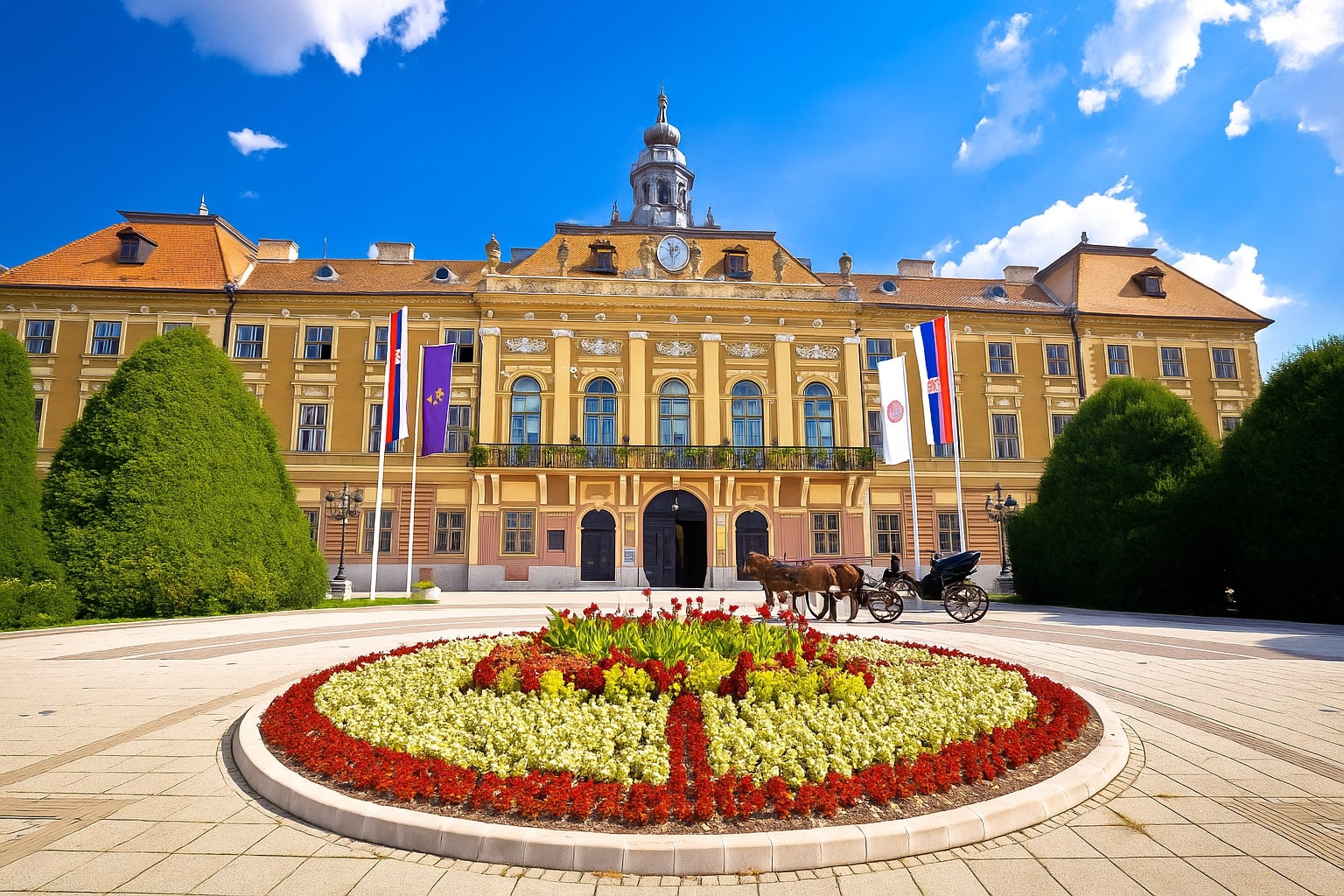
City view of Sombor, Serbia

Sombor

Sombor values shade and eye contact. Rows of trees turn streets into outdoor rooms, and benches face each other for conversations that meander as slowly as bicycles. The County Hall contains an enormous painting cycle that turns military history into an essay on patience, while small galleries curate local realism with surprising bite. Dairy culture rules the table: kajmak in scandalous quantities, palacinke rolled with jam, and fish stew along the canal on weekends. Courtyards hide violins, and the music school pours scales into twilight. A regional art secret sits in a studio that still grinds pigments by hand; the painter swears color behaves better if it has been argued with. Sombor’s nightlife is less decibel, more dialogue—wine on a terrace, a chessboard nearby, laughter the only amplifier. The city is not sleepy; it simply knows how to lower the volume until details sharpen.

Top attractions & things to do in Sombor

If you’re searching for the best things to do in Sombor, this guide brings together the top attractions and must-see places to visit in Sombor. The top picks below highlight the most visited sights for first-time visitors, plus a few local favorites worth adding.

City Museum Sombor in Sombor, Serbia

City Museum Sombor

Rooms overlook a green courtyard and the exhibition walks you from prehistory to the near present with unhurried clarity. Curators connect Roman finds from the Backa plain to medieval charters that anchored property and pilgrimage under Habsburg and lingering Ottoman customs. Cabinets open onto guild tools and woven cloth so economy acquires texture and color rather than numbers alone. A gallery on the 19th century frames portraits of mayors and teachers while maps show postal routes and river links that stitched Sombor to the region. War time sections present letters medals and documentation that let visitors read loss and recovery without melodrama. Temporary shows invite contemporary artists to answer artifacts which keeps the building talking in both directions. You leave with dates arranged into a story and with the sense that small museums can teach large lessons when labels stay honest and objects receive the light they deserve.
Ads place
Ads place
Ads place
Ads place
Ads place
Gornje Podunavlje Special Nature Reserve in Sombor, Serbia

Gornje Podunavlje Special Nature Reserve

West of town the Danube loosens into backwaters and willow galleries and the air fills with the measured wingbeats of herons. This floodplain mosaic belongs to the Ramsar family of wetlands and shelters species like the black stork whose silhouette works like a signature on the sky. Rangers manage cut banks and meadows with a light hand so seasonal floods can write their old grammar without harm. Traces of Habsburg river regulation meet older fishing paths and the result feels like collaboration between engineering and patience. In spring the reeds speak in wind while deer move the edge of your vision and boat wakes soften into the green. Information boards explain why biodiversity depends on messy margins and why quiet is a tool as necessary as boots. The reserve gives Sombor a breathing room of continental scale and visitors carry its slower tempo back to town like a useful souvenir.
Ads place
Ads place
Ads place
Ads place
Ads place
Holy Trinity Square in Sombor, Serbia

Holy Trinity Square

Cafes draw chairs into the sun and the square answers with facades that speak softly in late afternoon light. The plan reflects 18th century town making when surveyors under the Habsburg administration laid out streets to favor trade and order around a Baroque column to the Holy Trinity. Nearby churches keep bells in dialogue and a ribbon of Secession ornament curls across balconies that photograph well without showing off. Plaques remember merchants and teachers whose work stitched languages and crafts into a steady urban fabric. Markets and festivals return by season and the square edits each event into something Sombor sized always sociable never loud. Stand a moment and you will hear wheels on cobbles birds on the plane trees and a violinist testing phrases. The place proves that civic space can be tender and that history thrives when it is used daily by people who know exactly where they are and why it matters.
Ads place
Ads place
Ads place
Ads place
Ads place
National Theatre Sombor in Sombor, Serbia

National Theatre Sombor

Evening gathers under a modest facade and the foyer fills with the low excitement that precedes a good story. The company traces its professional line to 1882 and treats repertoire as a living archive where Jovan Sterija Popovic shares the bill with new voices. Directors lean on precise acting and careful rhythm and the house rewards attention with seats close enough for breath and glance to matter. Posters in the corridor read like a civic diary through the 20th century recording premieres tours and returns from festivals. Designers reference modernism without erasing tradition so light and costume feel like arguments won by patience. After the curtain you step into the mild air of Sombor and realize the theater is perfectly scaled to the town giving it a reliable pulse. It is a place where applause sounds like agreement and where art keeps local time while staying alert to the wider map.
Ads place
Ads place
Ads place
Ads place
Ads place
Zupanija Building and Battle of Senta Painting in Sombor, Serbia

Zupanija Building and Battle of Senta Painting

A quiet courtyard leads into corridors where polished floors and tall windows set a ceremonial calm before the great hall. The county seat took shape in the early 19th century as Sombor grew under the Habsburg crown and learned to express authority in careful proportions. On the main wall spreads Ferenc Eisenhut’s vast canvas of the Battle of Senta 1697, painted in 1896 and still electric in its detail. The scene fixes Prince Eugene of Savoy at the turning of a campaign and turns tactics into color that even non experts can read. Guides point to uniforms researched from archives so costume becomes documentation rather than costume drama. Outside, plane trees soften the facade and the square resumes its gentle traffic. The building feels less like a monument than a working memory where administration and art keep each other honest and where visitors learn that a picture can be both history lesson and civic contract.
Ads place
Ads place
Ads place
Ads place
Ads place