
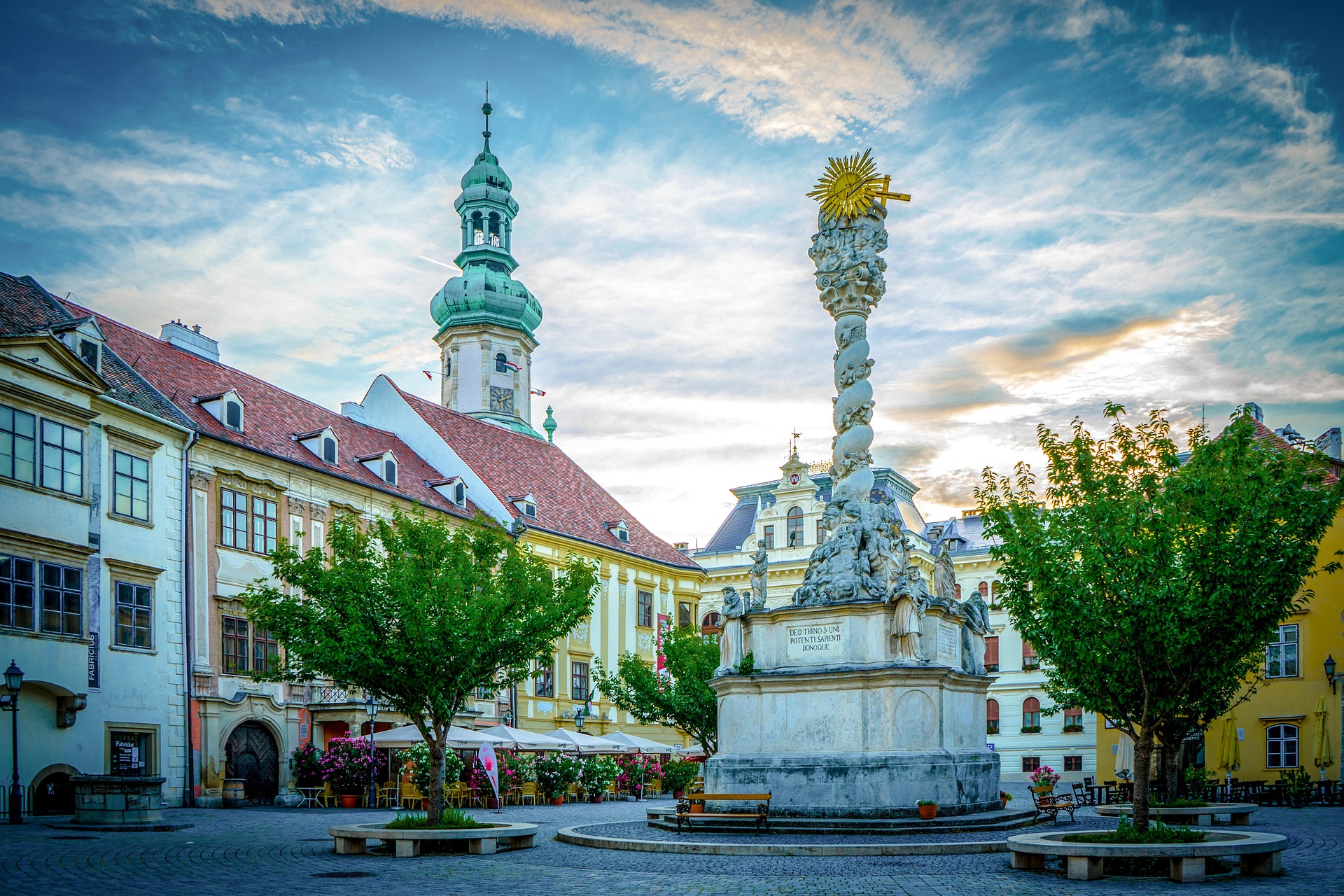
City view of Sopron, Hungary

Sopron

Sopron, just steps from the Austrian border, entices visitors with its beautifully preserved medieval and baroque old town. The iconic Firewatch Tower soars above twisting cobblestone lanes, leading past 14th-century churches, Renaissance courtyards, and the ancient Goat Church. Known as the "most loyal city", Sopron voted to remain Hungarian after World War I, a spirit celebrated in its monuments and annual festivals. Taste local Kékfrankos wines in centuries-old cellars, or dine in rustic taverns offering regional venison and poppy-seed pastries. The Lovérek Hills provide forested trails and sweeping views, while Lake Ferto’s UNESCO-listed landscapes attract nature lovers and birdwatchers. With its romantic squares, musical traditions, and cross-border charm, Sopron offers a storybook escape for history buffs and travelers alike. In summer, Sopron hosts the VOLT Festival, drawing international music acts and thousands of fans from across Europe.

Top attractions & things to do in Sopron

If you’re searching for the best things to do in Sopron, this guide brings together the top attractions and must-see places to visit in Sopron. The top picks below highlight the most visited sights for first-time visitors, plus a few local favorites worth adding.

Fabricius House in Sopron, Hungary

Fabricius House

The Fabricius House stands as a testament to Sopron's long and layered history, with its medieval cellars and grand Baroque façade. Named after the Fabricius family, who once played a key role in the city's commercial life, this mansion now houses the Sopron City Museum. The ground floor displays Roman mosaics and ancient coins discovered during renovations. The upper floors reveal furnished rooms from the 18th and 19th centuries, including a beautifully restored salon with original tapestries and furniture. Of particular interest is the collection of guild relics, reflecting Sopron’s status as a medieval trading hub. Legends abound about hidden passageways and secret negotiations that once took place in these halls. The house’s arched courtyard is a peaceful place to relax, especially on market days. Every year, the Fabricius House is a key venue during the Sopron Wine Festival, linking history, culture, and community in the heart of the city.
Ads place
Ads place
Ads place
Ads place
Ads place
Firewatch Tower in Sopron, Hungary

Firewatch Tower

Dominating the skyline of Sopron, the Firewatch Tower is a symbol of the city's resilience and history. Built originally on the foundations of a Roman gate, the tower acquired its current Baroque form in the 17th century after the great fire of 1676. For centuries, its guards warned townspeople of fires and invaders. The intricate spiral staircase leads to a panoramic viewing platform, offering spectacular views of Sopron's red-roofed Old Town and the distant Alps. On the tower's facade, you'll find the famous Sopron Loyalty Crest, commemorating the city's decision to remain part of Hungary in the 1921 referendum. Inside, a small museum presents relics from the city's Roman, medieval, and Habsburg past. Each New Year's Eve, the tower’s bell is rung to welcome the coming year—a tradition dating back centuries. In spring, storks sometimes nest atop the tower, charming locals and visitors alike. The Firewatch Tower remains an enduring testament to Sopron’s unique spirit.
Ads place
Ads place
Ads place
Ads place
Ads place
Goat Church in Sopron, Hungary

Goat Church

The Goat Church is one of Hungary's finest examples of Gothic architecture, originally constructed in the 13th century by Franciscan monks. Its unusual name comes from a legend involving a goat uncovering a treasure that funded the church's construction. Inside, visitors will find intricately carved altars, stained glass windows, and the tombs of Hungarian nobles. The church was once the site of coronations and royal weddings, notably hosting the wedding of King Matthias Corvinus. Unique frescoes and sculptural details reveal centuries of artistic evolution, while the crypt holds some of Sopron’s oldest religious relics. A hidden staircase leads to the organ loft, offering a bird’s-eye view of the nave. The adjacent cloister garden is a tranquil retreat, especially beautiful during spring blooms. During local festivals, the church’s bells play a special melody that resonates across the Old Town.
Ads place
Ads place
Ads place
Ads place
Ads place
Loverek Forest in Sopron, Hungary

Loverek Forest

Loverek Forest is Sopron's beloved green escape, a vast woodland stretching up the hills southwest of the city. Famed for its clean air and biodiversity, Loverek has attracted visitors seeking health and relaxation since the 19th century. The forest is laced with hiking and cycling trails, passing by wooden observation towers and traditional Hungarian guesthouses. In autumn, the foliage creates a stunning mosaic of color, while spring brings carpets of wildflowers and rare orchids. Notable for its century-old pine and oak trees, Loverek also hosts one of Hungary’s oldest health resorts. Local legend tells of a healing spring hidden deep in the forest, believed to cure ailments. Birdwatchers flock here for the chance to spot rare species like black woodpeckers and Eurasian jays. Each summer, open-air concerts and wellness retreats fill the woods with music and laughter, blending culture and nature.
Ads place
Ads place
Ads place
Ads place
Ads place
Storno House in Sopron, Hungary

Storno House

The Storno House, located on the main square, is a jewel of Renaissance and Baroque architecture, known for its richly decorated interiors and fascinating history. Once visited by Emperor Franz Joseph and composer Franz Liszt, the house is now a museum showcasing the remarkable collection of the Storno family—famous restorers and collectors. The rooms are filled with antique furniture, historical paintings, porcelain, and rare books. Unique features include a lavish 19th-century dining room and the beautifully frescoed stairwell. During the 1848 Revolution, the house served as a meeting place for civic leaders. Legend has it that secret passages once linked the house to the city walls. Today, visitors can join guided tours to learn about Sopron’s golden age and see authentic personal belongings of the Stornos. Each December, the Storno House hosts a festive Christmas exhibition that draws crowds from across western Hungary.
Ads place
Ads place
Ads place
Ads place
Ads place