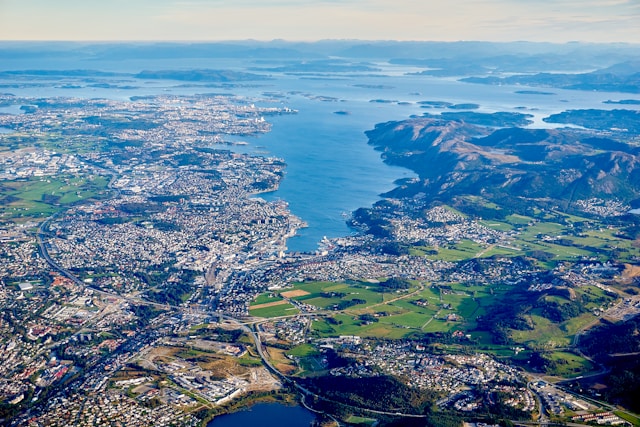
City view of Stavanger, Norway

Stavanger

Stavanger balances its role as Norway’s oil capital with a softer side rooted in maritime heritage and cultural ambition. The old town’s white wooden houses speak of centuries past, while modern street art injects bursts of color into everyday corners. Food here leans heavily into the bounty of the North Sea, with locally caught shellfish and bold culinary experiments drawing national attention. As a gateway to the dramatic Lysefjord, it tempts hikers toward Preikestolen, a cliff that drops nearly 600 meters to the water below. Museums dedicated to both petroleum history and Viking culture underline the city’s dual identity. A curious fact: Stavanger hosts an annual street art festival that turns entire building facades into murals. This meeting of industrial strength, outdoor adventure, and cultural expression gives the city a rhythm unlike anywhere else in the country.

Top attractions & things to do in Stavanger

If you’re searching for the best things to do in Stavanger, this guide brings together the top attractions and must-see places to visit in Stavanger. The top picks below highlight the most visited sights for first-time visitors, plus a few local favorites worth adding.

Breiavatnet and Byparken in Stavanger, Norway

Breiavatnet and Byparken

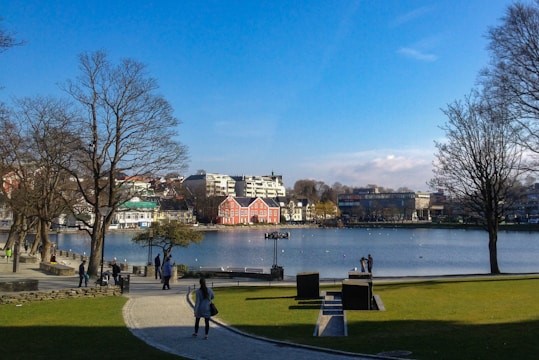
In the center of town a small lake performs outsized civic duty, reflecting towers, clouds, and the seasons with equal enthusiasm. Swans claim the water like landlords, while runners and readers orbit on paths lined with mature trees planted in the 1800s. A fountain sketches arcs that children count off like metronome beats. On winter days the surface may freeze, a reminder that latitude sets the schedule here. The park has hosted speeches, protests, and quiet lunches, making it a diary where the city writes in multiple hands. From certain angles you can frame the cathedral and modern offices in one photograph, a summary of continuity and change. The benches are lessons in urban design: simple, well placed, and useful in any weather window the North Sea allows. A remarkable note is that the lake once supplied drinking water to Stavanger, underlining its central role beyond beauty and leisure.
Ads place
Ads place
Ads place
Ads place
Ads place
Flor og Fjaere in Stavanger, Norway

Flor og Fjaere

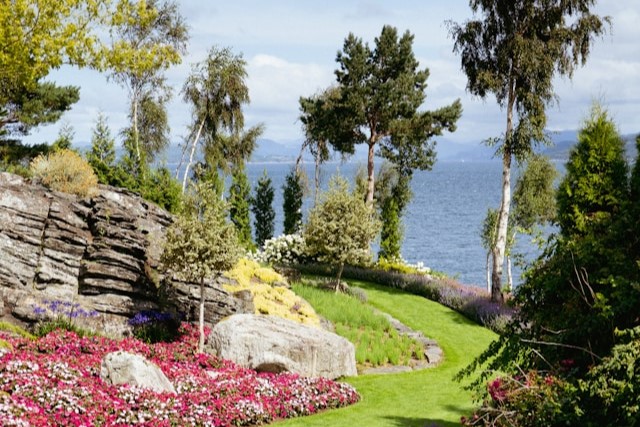
A boat ride delivers you to an island that behaves like a botanical experiment carried out with patience and a sense of theater. The family behind the project began planting in the 1990s, proving that palms, ponds, and exuberant borders can thrive a short hop from the North Sea. Microclimates are engineered with stones and hedges; gardeners talk about wind as if it were a neighbor with moods. Evening dinners are staged among lights that edit leaves into satin and water into mercury. The statistics please skeptics: over 50,000 plants and a design refreshed each season so repeat visitors never walk the same path twice. Guides tell how storms have rewritten sections overnight, and how resilience is built into every choice of species. It feels like an island-scale sketchbook, where horticulture, hospitality, and audacity meet in polite conspiracy. One fascinating detail is that the island even features tropical banana trees, flourishing far north of their usual climate zone.
Ads place
Ads place
Ads place
Ads place
Ads place
Lysefjord Cruise in Stavanger, Norway

Lysefjord Cruise

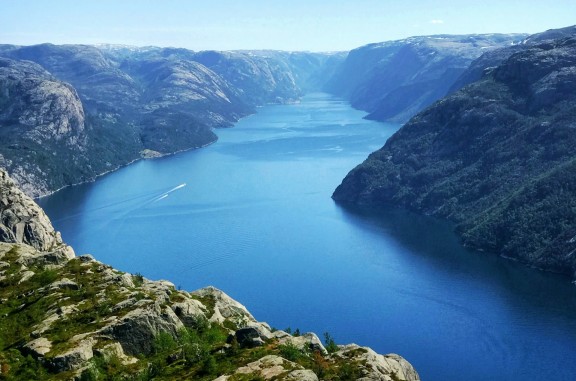
Boats slide beneath walls of gneiss that climb straight into the clouds, and the skipper points out seams where glaciers once carved their slow exit. The fjord stretches for about 42 kilometers, its name “Lyse” referring to the pale granite that catches every shift of light. Passengers peer upward to the summit of Preikestolen, then watch goats graze improbably on near-vertical turf at a place locals call “the goat balcony.” The route often pauses at the Hengjanefossen waterfall, where spray salts the deck and cameras surrender to mist. Stories surface about power stations buried directly inside the rock, feats of Norwegian engineering dating to the 20th century. When the engine quiets, you hear the fjord breathe—waves ticking against hull and cliff in alternating rhythms. It is a lesson in scale, an essay written in stone and water, where human artifacts feel temporary and the landscape dictates every chapter.
Ads place
Ads place
Ads place
Ads place
Ads place
Norwegian Petroleum Museum in Stavanger, Norway

Norwegian Petroleum Museum

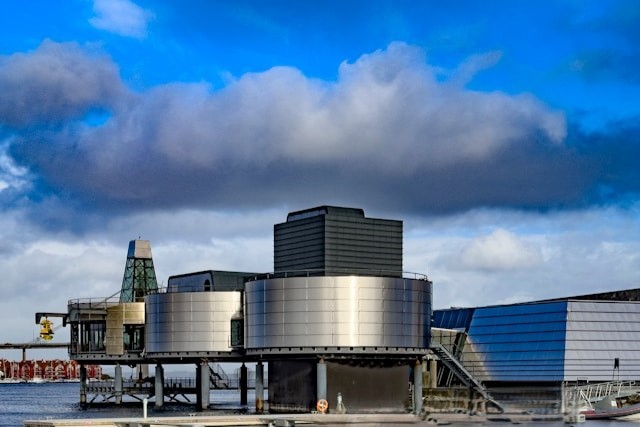
A museum about oil could have been all pipes and jargon, yet this waterfront landmark chooses narrative and design to explain how offshore platforms changed a nation. The building itself resembles a constellation of tanks, a nod to rigs that once stood like cities at sea. Exhibits chart discoveries in 1969 at the Ekofisk field and follow policy choices that built the Government Pension Fund Global, now one of the world’s largest sovereign funds. Children try a simulated escape chute; adults examine a lifeboat that launched from a storm-lashed platform. Engineers appreciate the story of the Condeep concrete giants, structures poured in fjords and towed into the North Sea. Ethics are not avoided—rooms invite debate about climate, transition, and responsibility. By the time you step outside to the harbor, the industry’s scale feels less abstract and more human, a ledger of risk, skill, and national self-discipline.
Ads place
Ads place
Ads place
Ads place
Ads place
Old Stavanger (Gamle Stavanger) in Stavanger, Norway

Old Stavanger (Gamle Stavanger)

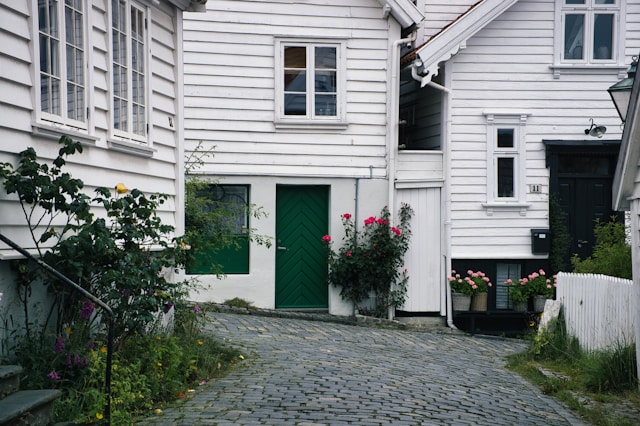
Wooden houses line lanes so narrow that neighbors exchange greetings from window to window, a scale designed for feet rather than fenders. More than 170 cottages survive here, most built after the town fires of the 18th century and carefully restored in the 20th century when demolition once seemed inevitable. Paintwork ranges from cream to slate, but the harmony lies in carpentry details—door surrounds, sash panes, and hand-forged latches. The Canning Museum nearby illustrates a business that kept these homes busy, when sardines in tins carried Stavanger’s name far beyond Norway. Residents still hang laundry in sea air, and rosebushes shoulder past railings like friendly trespassers. You sense how prosperity and thrift coexisted, how a shipping wage translated into a new stove or fresh cladding. Evening light turns every porch into a small stage, and conversations drift as slowly as the harbor breeze.
Ads place
Ads place
Ads place
Ads place
Ads place
Ovre Holmegate (Color Street) in Stavanger, Norway

Ovre Holmegate (Color Street)

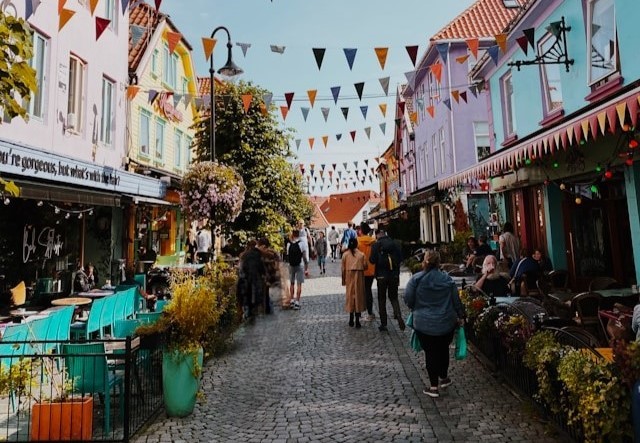
A local hairdresser pitched a wild idea: repaint every facade to a coordinated palette, and let the street behave like a mood-lifting installation. The plan was developed with artist Craig Flannagan, who assigned hues using color theory rather than whim. Since the transformation in the 2000s, cafes and boutiques have treated the blocks as both workplace and gallery, and photographers time visits for shadows that intensify the pigments. The effect is choreographed rather than chaotic; even doorframes participate in the scheme. During festivals, the street becomes a runway for pop-ups and small concerts, proof that design can recalibrate a neighborhood’s energy. Look closely and you will find period carpentry hiding beneath paint, reminders that reinvention rarely deletes the past. On rainy days the wet asphalt behaves like a mirror, doubling turquoise, coral, and citrus into something almost theatrical.
Ads place
Ads place
Ads place
Ads place
Ads place
Preikestolen (Pulpit Rock) in Stavanger, Norway

Preikestolen (Pulpit Rock)

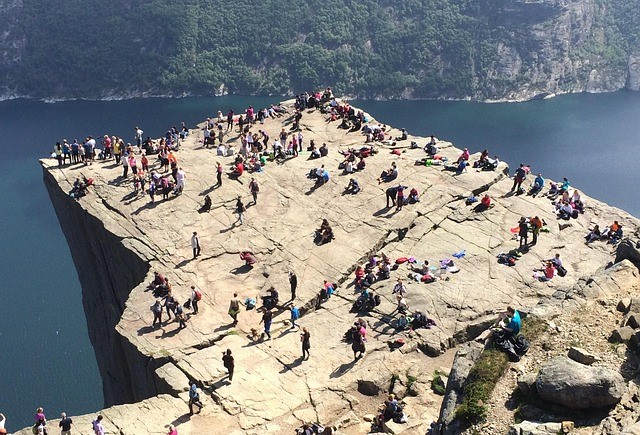
Rising sheer above Lysefjord, this plateau lures walkers along a granite staircase laid by Sherpa craftsmen to a ledge that feels purpose-built for contemplation. The cliff stands about 604 meters over the water, a number that becomes palpable when a fjord cruise appears like a toy below. Modern fame spiked after a daring helicopter scene in Mission: Impossible – Fallout (2018), yet local reverence goes back generations, long before cameras and cables. Trail improvements since 2013 made the route more resilient to rain, while still preserving the raw drama that defines the final approach. Guides retell the story of the plateau’s fractured blocks, a geology shaped after the last Ice Age loosened the mountainsides. On calm days you can hear your voice bounce off stone and water in a natural amphitheater. The paradox is irresistible: a stage without railings where nature, scale, and silence hold the audience absolutely still.
Ads place
Ads place
Ads place
Ads place
Ads place
Stavanger Cathedral in Stavanger, Norway

Stavanger Cathedral

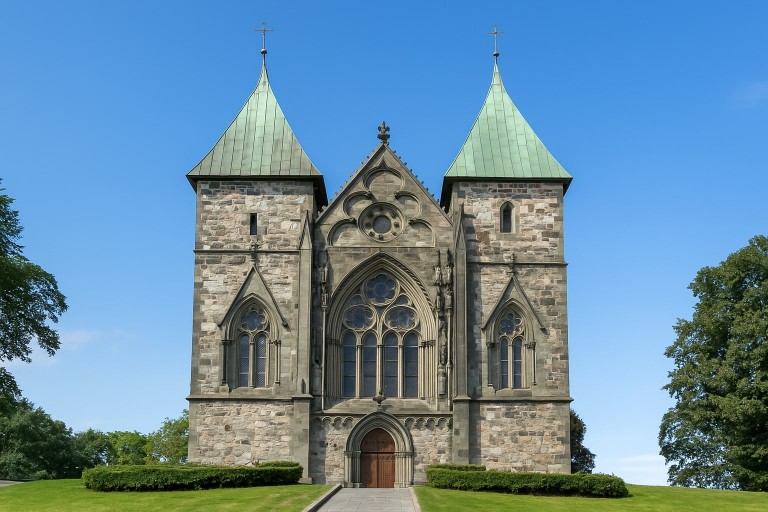
At the city’s center stands a church whose stones have outlasted fires, reforms, and shifting borders. Construction began around 1125 under Bishop Reinald of Winchester, bringing English artisanship to Norway’s southwest. The building blends Romanesque heft with later Gothic refinements, a palimpsest that invites the eye to move from round arches to pointed ribs in a single glance. After a devastating town blaze in 1272, the interior was renewed, and later centuries layered baroque woodcarving and a pulpit whose details reward slow looking. Pilgrims once came for relics of St. Swithun, a devotion that quietly survived political weather. Today choirs rehearse under a ceiling where soot, incense, and time have negotiated a truce. Step outside and the marketplace returns you to the present, but the cathedral holds its own cadence—a reminder that Stavanger’s story began in stone and still keeps an ancient beat.
Ads place
Ads place
Ads place
Ads place
Ads place
Swords in Rock in Stavanger, Norway

Swords in Rock

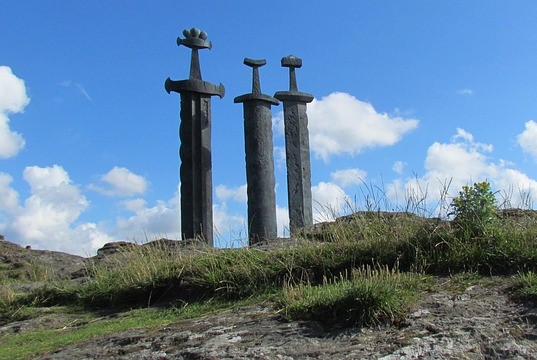
Three colossal blades appear to pierce the headland at Hafrsfjord, their hilts weathering sea wind like veteran sailors. The monument commemorates the unifying battle of c. 872, when Harald Fairhair is said to have consolidated Norwegian rule. Sculptor Fritz Roed set the swords into bedrock, a material statement that peace should feel anchored and difficult to uproot. Each weapon is distinct, echoing the rival chieftains who met here with ambition and oaths. Weddings and reunions gather under the steel shadows, a modern ritual that softens the memory of conflict. The site faces open water, so gulls provide the soundtrack and weather writes its edits across the sky. Come at high tide and the reflections double the drama; come at dusk and the blades turn to silhouettes, still enforcing a command: remember where a country decided its future.
Ads place
Ads place
Ads place
Ads place
Ads place
Valberg Tower in Stavanger, Norway

Valberg Tower

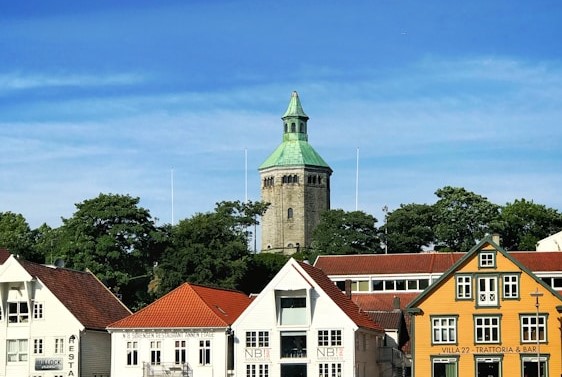
Once the city’s watchman climbed this tower to scan for the one threat Stavanger could never ignore: fire. Built in 1853 on Valberghaugen hill, the lookout gave wardens authority to ring alarms and direct bucket brigades through a maze of timber streets. The tower’s lantern now glows for atmosphere rather than emergency, and the small museum recounts long nights, strict rules, and the pride of a job that measured success in uneventful shifts. From the balcony you can track rooftops to the harbor and imagine sparks riding a gale toward shingles. Urban planning decisions in the 19th century slowly replaced tinder with safer materials, reducing the watchman’s power even as the city expanded. Today couples climb for views and history enthusiasts for context; both come away with a renewed respect for vigilance and the fragile arithmetic of safety. Few know the tower also served as Stavanger’s official timekeeper, ringing bells that set the city’s rhythm for decades.
Ads place
Ads place
Ads place
Ads place
Ads place