
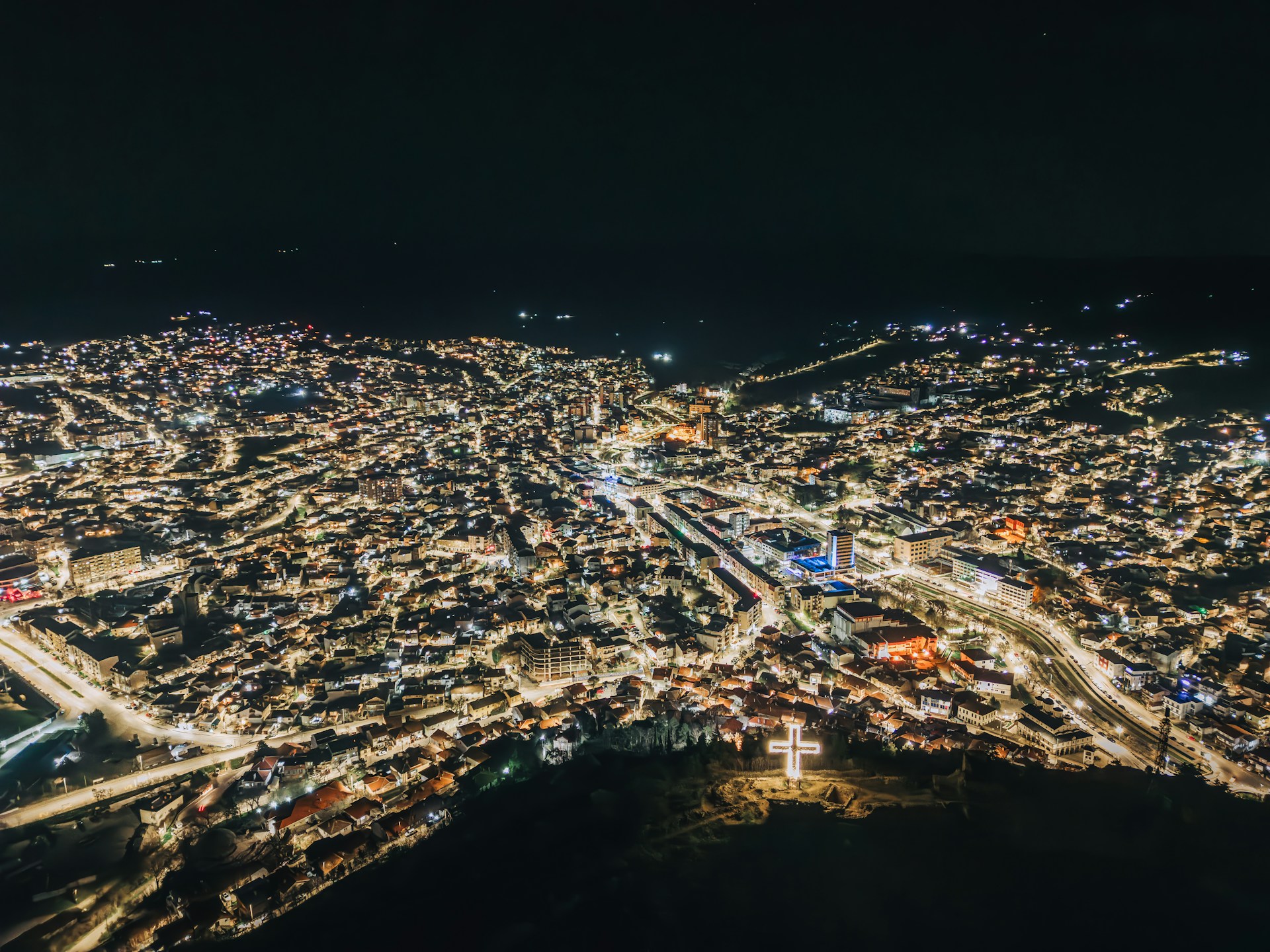
City view of Stip, North Macedonia

Stip

Stip studies by day and celebrates by night, powered by its university and a bright tradition of welcome. Set among rolling hills, the city looks toward the medieval Isar Fortress and inward to churches with woodcarving that curls like vines. Menus star pastrmajlija, an oval bread boat that carries spiced pork or cheese and deserves cold beer and warm company. Markets brim with herbs and textiles and tailors measure twice before cutting once. Festivals blend folk costume with modern beats and students turn squares into dance floors without permits. The Bregalnica valley invites hikes and river picnics and nearby sites reveal Roman footprints. Textile workshops hum with modern industry and family skill. Bakers fold dough with thoughtful wrists and the air smells like study breaks done right. Street names echo scholars and heroes and students treat them like roommates. Climb to the fortress at dusk to watch lights stitch the city into a glowing quilt.

Top attractions & things to do in Stip

If you’re searching for the best things to do in Stip, this guide brings together the top attractions and must-see places to visit in Stip. The top picks below highlight the most visited sights for first-time visitors, plus a few local favorites worth adding.

Church of St. Nicholas in Stip, North Macedonia

Church of St. Nicholas

Behind a modest courtyard, this parish church reveals a glow of carved wood and candlelight, the kind of interior that hushes footsteps without trying. Raised in 1867 by the famed master builder Andrej Damjanov, it follows a handsome three-aisled basilica plan, where arches guide the eye toward a gilded iconostasis alive with saints and vines. Frescoes from the 19th century soften the stone with delicate blues, and the slim bell tower keeps time for the neighborhood. On feast days, choirs turn the nave into a river of sound, while weekday mornings bring a quieter rhythm of candles and whispered prayers. Step outside and you notice how the church anchors a small world of bakeries and balconies. Step back in, and it becomes a pocket museum of local craft and devotion that still breathes. A small treasury displays embroidered vestments and hammered silver chalices, each bearing donors' names from the old craftsmen's guilds. On St. Nicholas Day, the procession circles the quarter, and bells answer from every street.
Ads place
Ads place
Ads place
Ads place
Ads place
Isar Fortress in Stip, North Macedonia

Isar Fortress

High above the rooftops, a crag of limestone carries the city's oldest storyteller, a hilltop stronghold that watches the meeting of two rivers and the changing light. Built and rebuilt through the 14th century and the shifting tides of the Ottoman era, the fort gathers traces of earlier lives, from Byzantine pottery to shepherd paths that still thread the slope. Climb at dusk and the walls open to a panorama of the Bregalnica valley, the quicksilver line of the Otinja, and streets curling like ribbons beneath. Guides love to point out cannon niches and foundations of vanished towers, while locals arrive with snacks and stories about festival bonfires. In spring, wild thyme perfumes the stairs and kestrels hover on the updraft. The fortress feels both ruin and lookout, a place where history and weather conspire to frame the city just right. Discreet panels outline its phases, from medieval curtain to later bastions, and after rain, tiny pottery shards still glint along the paths.
Ads place
Ads place
Ads place
Ads place
Ads place
Kezhovica Spa in Stip, North Macedonia

Kezhovica Spa

Steam curls above river stones and the air carries a faint mineral tang, long prized by locals who swear the waters know exactly where it hurts. Fed by thermal sulphur springs that rise at over 70 C, this bath complex traces its reputation back to Roman habits and a love of unhurried soaking. Pools vary by temperature, and benches invite languid conversation between sessions of gentle balneotherapy. The setting near the Bregalnica feels like a pocket valley where time goes elastic, and the soundtrack is all water and birds. Staff explain the chemistry with a smile, mentioning hydrogen sulphide as if it were an old friend, then suggest a tea that tastes faintly of the hillside herbs. Even on winter days, steam and snow meet here in a kind of quiet handshake. Locals swear by a brisk plunge in the cool pool between soaks, a ritual said to sharpen the senses. At night, lanterns string along the rails and the vapour looks like silk unfurling against the dark.
Ads place
Ads place
Ads place
Ads place
Ads place
Museum of the City of Stip in Stip, North Macedonia

Museum of the City of Stip

In a restored town house, cabinets of curiosity tell the city's story from hearth ash to factory whistle, stitching centuries together with care. The setting recalls a 19th-century konak, yet inside you move from chipped amphorae and Roman coins to looms that hum with the memory of the region's celebrated textile industry. There are weapons and wedding veils, market weights and schoolbooks, plus letters that mention Goce Delchev with an intimacy no statue can manage. Docents relish small details, like the polish on a tradesman's chest or embroidery patterns mapped to villages. By the exit, a case of Bronze Age finds sits across from a photograph of workers pouring into daylight after a shift, and the juxtaposition feels perfect. The museum is compact, welcoming, and precise, a place where everyday objects become a chorus of timelines. Upstairs, rotating shows spotlight lacework patterns and design sketches rescued from shuttered mills, linking memory to making. Step onto the balcony and the river breeze carries the faint thrum of modern looms downstream.
Ads place
Ads place
Ads place
Ads place
Ads place
Novo Selo Church Complex in Stip, North Macedonia

Novo Selo Church Complex

On a quiet rise above the town, a cluster of stone buildings tells the layered story of worship, schooling, and community in Stip. Centered on the Church of St. Archangel Michael, whose roots reach into the 14th century, the complex also shelters a 19th-century schoolhouse where lessons once echoed in both Cyrillic and Ottoman Turkish. The church interior glows with icons painted by skilled hands, their gilding mellowed by candle smoke and time. In the courtyard, old mulberry trees shade the paths and locals linger to trade news. Archaeologists have found traces of earlier chapels beneath the current floor, suggesting centuries of rebuilding on the same sacred spot. During summer, cultural evenings fill the space with music and light, binding past and present together in the warm air. Slavonic grave slabs lean by the porch, recalling pilgrims of the Ottoman era. A carved iconostasis frames the nave, its panels bright with halos. On the feast of St. Archangel Michael, bread is blessed and hymns drift into the lane.
Ads place
Ads place
Ads place
Ads place
Ads place