
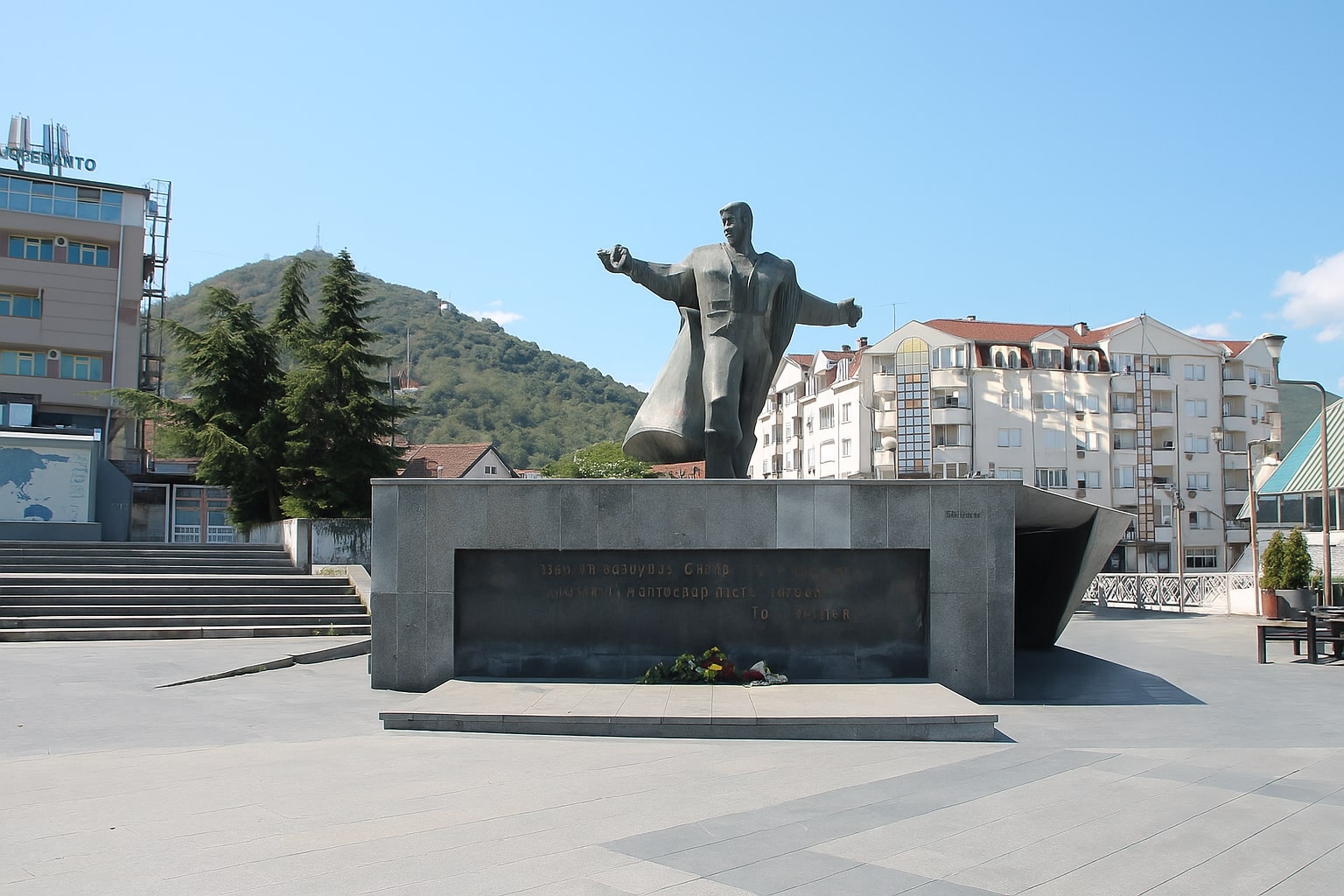
City view of Strumica, North Macedonia

Strumica

Strumica is a festival disguised as a city, cheerful in every season. Its carnival parades through winter with masks and drums while monasteries at Veljusa and Vodoca keep prayer in brick and fresco. The climate leans Mediterranean so markets overflow with tomatoes and figs and peppers bound for glorious ajvar. Smolare and Kolesino waterfalls tumble through beech forests that offer picnic perches and cool air applause. Restaurants favor pepper forward dishes and grilled river fish and desserts soaked in syrup. Street cafes set the tempo and conversations include recipe debates with footnotes. Vineyards on the hills pour wines with sunny accents and cooks insist that the right pepper changes destiny. Dance troupes rehearse in school yards and sneakers learn to move like silk. Hikers collect friends on Belasica long before they collect trail dust. Strumica dances from square to forest and back again, a city that treats celebration as a daily duty.

Top attractions & things to do in Strumica

If you’re searching for the best things to do in Strumica, this guide brings together the top attractions and must-see places to visit in Strumica. The top picks below highlight the most visited sights for first-time visitors, plus a few local favorites worth adding.

Carevi Kuli Fortress in Strumica, North Macedonia

Carevi Kuli Fortress

Crowning a rocky hill above the Strumica plain, this citadel surveys roads that have stitched the region together for millennia. Archaeologists note fortification phases from Late Antiquity through the Byzantine and later Ottoman eras, with stories that link the site to administrative reforms under Justinian I in the 6th century. As you follow the ridge path, reused blocks and brick bands reveal how each epoch repaired or repurposed the walls. Sunset paints the Strumica Valley in copper, and swifts circle the towers like ink strokes on the sky. Local guides point out cisterns and a gate trace that once framed traders and garrisons alike. On festival evenings the hill becomes a natural amphitheater, and the wind threads through grass that grows between centuries of stone. Stand by the parapet and it feels as if the map beneath you is quietly turning its pages. Many locals believe the fortress still hides undiscovered tunnels leading toward the heart of the old city.
Ads place
Ads place
Ads place
Ads place
Ads place
Koleshino Waterfall in Strumica, North Macedonia

Koleshino Waterfall

North of the border ridge and close to the village that gives it a name, this waterfall gathers green light in a bowl of stone and spray. The Baba Reka tumbles in two tiers of roughly 16 meters, carving shelves where moss takes hold like velvet. Wooden walkways lead to overlooks that keep you close enough for the season to touch your face. Autumn paints the Belasica foothills in copper and ocher, while winter sketches filigree along the edges. Families unpack picnics in glades where the water sounds like pages turning. On quiet weekdays you may have the pool to yourself, with trout flickering in the clear shallows. Information panels trace the stream to upland springs and explain how small ravines knit together a larger watershed. It is a place where scale becomes intimate and the day slows to the speed of water. Local hikers say the surrounding forest hides rare orchids that bloom only for a few days each year.
Ads place
Ads place
Ads place
Ads place
Ads place
Smolare Waterfall in Strumica, North Macedonia

Smolare Waterfall

Deep in the Belasica range, a cold ribbon drops through forest to a plunge pool so clear that stones look arranged by a careful hand. Fed by the Bela Reka, the cascade is celebrated as the highest waterfall in North Macedonia, measuring about 39.5 meters as it fans over dark rock. A stairway climbs through beech and chestnut, its landings offering spray and the steady percussion of water. Spring brings wildflowers to the banks and butterflies to the sunlit clearings. In summer, the shade makes a natural refuge, and locals time visits for the hour when the arc of mist lights up. Trail boards note the role of the Belasica slopes as a catchment and habitat, where cool ravines shelter salamanders and ferns. If you stand long enough on the footbridge, the rhythm of the falls settles into your breathing and sends you back down the path renewed. In winter, icicles form crystal curtains that sparkle in the low sun.
Ads place
Ads place
Ads place
Ads place
Ads place
Veljusa Monastery (Holy Mother of God Eleusa) in Strumica, North Macedonia

Veljusa Monastery (Holy Mother of God Eleusa)

Hidden among orchards above the village, this monastery preserves a rare slice of Macedonian Byzantium in living color. An inscription records its founding in 1080 by the monk Manuel, and the church blends stone and brick in refined cloisonne masonry. Inside, a cross-in-square plan collects lamplight beneath a low dome, where the original frescoes still breathe with quiet intensity. The iconography follows Byzantine models while revealing local hands in the folds and faces. In spring, bees move through rosemary by the gate, and a bell marks the hour with a gentleness that suits the hillside. Pilgrims step softly on worn thresholds, leaving candles and whispered petitions. Monastics tend vines and an herb patch that scents the cloister on warm days. Even a brief visit feels like a lesson in proportion, patience, and the endurance of craft. Some visitors return in autumn to taste the monastery’s homemade grape molasses, a centuries-old tradition.
Ads place
Ads place
Ads place
Ads place
Ads place
Vodocha Monastery of St Leontius in Strumica, North Macedonia

Vodocha Monastery of St Leontius

A little west of town, the Vodocha complex gathers chapels and gardens around a church dedicated to St Leontius, where art and stone remember earlier centuries. Scholars date major building phases to the 11th century, with a compact domed plan that preserves a remarkably layered fresco program across niches and arches. The aesthetic carries a distinctly Byzantine sensibility, yet pigments and inscriptions disclose regional particularities. Excavations have revealed archaeological layers that chart repairs after earthquakes and long seasons of neglect. Today, birdsong threads through the cypress, and a small museum case displays fragments that once formed halos and borders. Visitors often sit on the low wall to watch light drift across plaster, as if the day itself were turning folios. The monastery feels at once secluded and open, a threshold where devotion and art keep equal company. Local lore claims that one ancient fresco hides the faint outline of a forgotten saint, only visible at dawn.
Ads place
Ads place
Ads place
Ads place
Ads place