
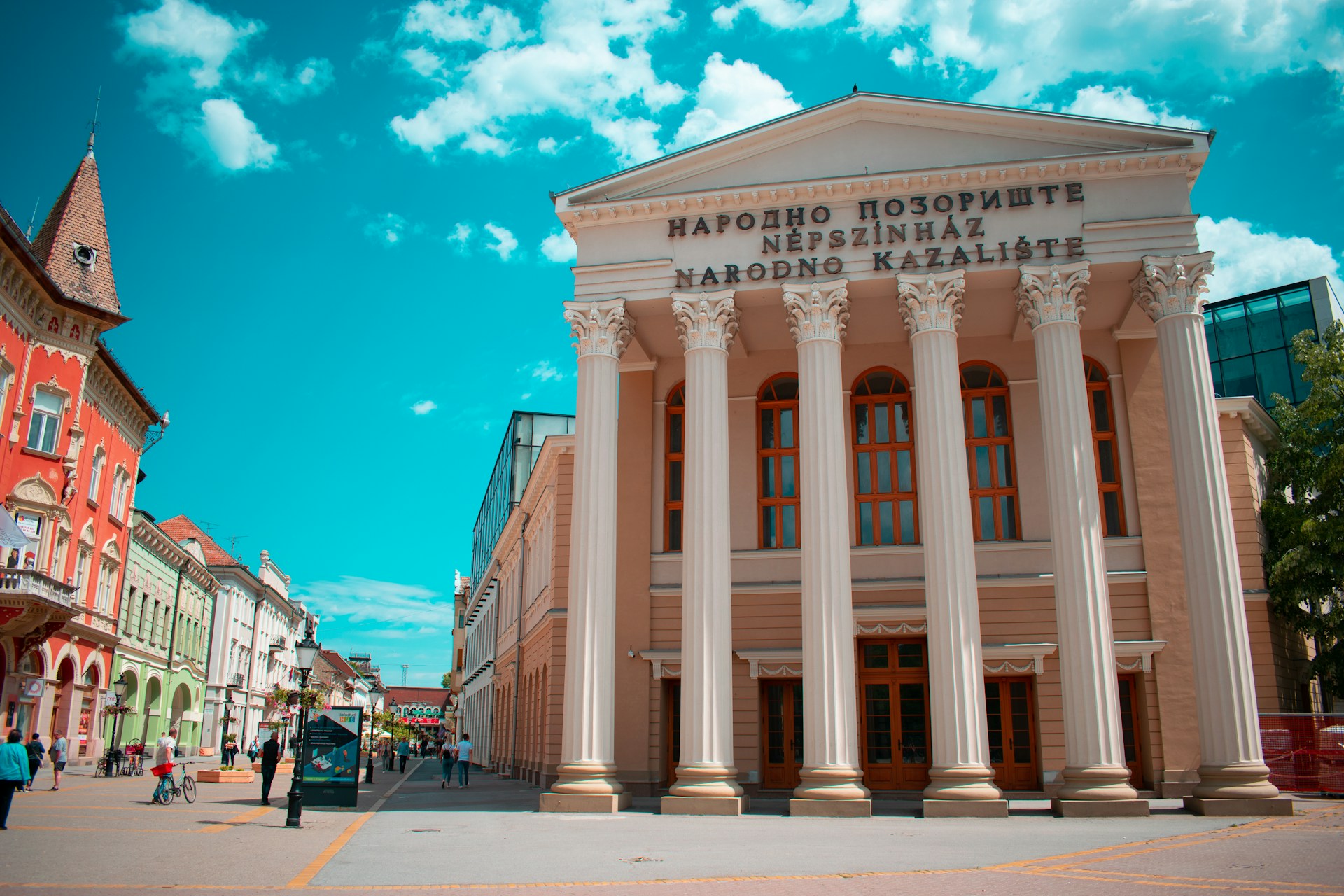
City view of Subotica, Serbia

Subotica

Subotica treats ornament as a language worth speaking. City Hall gleams with ceramic tiles and curving lines, and the restored synagogue gathers daylight under a floral dome that feels both confident and kind. Secession facades lean into color; wrought-iron balconies sketch vines above pastry shops that engineer krempita with architectural ambition. Markets trade paprika in five moods and pickles stacked like geometry, while cafes pour strong coffee to an audience that switches between Serbian and Hungarian mid-sentence. Lake Palic waits nearby with swan boats and wooden pavilions that survived fashion cycles intact. The City Museum tells how merchants financed beauty, and how clay, glass, and craft multiplied into civic pride. If you visit in autumn, cranes pass overhead, their calls briefly silencing a square that usually prefers conversation. Subotica does not panic about time; it trims it, files it, glazes it, and sets it gently in the window.

Top attractions & things to do in Subotica

If you’re searching for the best things to do in Subotica, this guide brings together the top attractions and must-see places to visit in Subotica. The top picks below highlight the most visited sights for first-time visitors, plus a few local favorites worth adding.

Cathedral of St Theresa of Avila in Subotica, Serbia

Cathedral of St Theresa of Avila

A calm facade faces the square with measured pilasters and a tower that keeps time for errands and processions alike. Built in the late 18th century and refreshed during the 19th century, the cathedral holds a Baroque and Classicist conversation that suits a multicultural town on the Pannonian plain. Dedication to St Theresa anchors the liturgical year while chapels display altarpieces that traveled with patrons across languages and borders. Organ pipes speak warmly into the nave and the acoustics reward choirs with a generous bloom that lingers after the final note. Outside, the urban fabric folds the church into a network of schools and courtyards so sacred and ordinary remain good neighbors. Plaques remember repairs after wars in the 20th century when parish life learned resilience as a routine. Step out to the square and the clock resumes its quiet authority while the city continues at a humane tempo that suits the place well.
Ads place
Ads place
Ads place
Ads place
Ads place
Palic Lake and Grand Terrace in Subotica, Serbia

Palic Lake and Grand Terrace

Reeds comb the waterline while wooden pavilions play variations on a single elegant theme that travelers learned to call leisure. Palic developed as a spa in the 19th century and matured around 1909–1912 when the Grand Terrace, Water Tower, and Music Pavilion appeared in confident Secession style. Architects Marcell Komor and Dezso Jakab turned promenades into theater, laying out piers and lawns so families could stage a summer day with easy grace. Old postcards show striped swimsuits and careful hats while present visitors rent bikes and listen to evening concerts that float across the shore. Cafes manage to be nostalgic without pretending time stopped and the parkland keeps a tidy balance between shade and view. Stand on the terrace and the lake flattens worries into a single bright sentence. Palic proves that urban life can keep a holiday drawer ready and that good design ages like a favorite song, always welcome to return.
Ads place
Ads place
Ads place
Ads place
Ads place
Raichle Palace in Subotica, Serbia

Raichle Palace

Turn a corner from the boulevard and a fantasia of curves and color announces an architect determined to sign the street with joy. Built in 1904 as the home and studio of Ferenc Raichle, the palace stages the exuberant side of Art Nouveau with asymmetrical gables, ceramic garlands, and windows shaped like petals. Tiles from Zsolnay throw a soft glaze across stucco so the facade changes mood with every cloud. Inside, today's gallery hangs contemporary work against original stenciled walls and carved doors, making a dialogue between present experiment and historic craft. Stories about Raichle's fortunes and later moves explain how talent and finance do not always keep the same calendar. Yet the building remains persuasive, a thesis that ornament can be structural to a city's identity. Step back to the pavement and even cautious passersby glance upward, briefly converted to believers in architecture as a generous public performance.
Ads place
Ads place
Ads place
Ads place
Ads place
Subotica City Hall in Subotica, Serbia

Subotica City Hall

A copper roof blooms above a mosaic of brick and tile, and the square seems to tune itself to the building's patient rhythm. Designed by Marcell Komor and Dezso Jakab in the idiom of Hungarian Secession, the City Hall opened in 1912 with stained glass that still edits daylight into calm colors. Look closer and ceramic details from Zsolnay factories turn leaves and flowers into a civic vocabulary that feels both playful and precise. Inside, a ceremonial hall hosts weddings and concerts while offices hum with ordinary paperwork that keeps the city moving. The tower view lays out boulevards like compass points and explains why Subotica reads easily at street level. Guides like to mention the careful restoration that rescued murals without freezing the place into a museum. Step back into the square and the facade resumes its quiet conversation with market stalls and tram bells, proof that grandeur can be sociable when design remembers people first.
Ads place
Ads place
Ads place
Ads place
Ads place
Subotica Synagogue in Subotica, Serbia

Subotica Synagogue

A dome rises on a web of ribs and light blooms through floral glass so the interior feels both intimate and expansive. Completed in 1902 to designs by Marcell Komor and Dezso Jakab, it is a masterpiece of Hungarian Secession that translates folk motifs into architecture with confident grace. Glazed ceramics from Zsolnay shimmer over the facade, and tulip patterns repeat in wood and wrought iron until the whole building seems to breathe. The synagogue traveled through hard decades in the 20th century yet restorations returned its color and purpose, welcoming concerts and guided visits alongside remembrance. Visitors pause at plaques that recall families who once filled these pews and whose names belong to the city's ledger of loss and renewal. The acoustics reward a single note with generous echo, and the gallery railings invite a slow circuit. Subotica keeps many fine facades but few interiors speak this clearly about resilience made beautiful.
Ads place
Ads place
Ads place
Ads place
Ads place