
City view of Suceava, Romania

Suceava

Suceava is a gateway to painted monasteries, but it keeps its own stories in a hilltop fortress and museums that chart a principality's rise. The citadel explains siege craft with earthworks and views, while the village museum nearby preserves wooden houses that smell of resin and slow time. Markets trade in cheese, forest berries, and cured meats destined for picnic tables under beech trees. Buses fan out to Humor, Voronet, and other churches where blues and cinnabars argue politely on frescoes. Back in town, cafes coax visitors to linger over sour cherry cakes and small cups of potent coffee. The city's odd treasure is a collection of Easter eggs painted with a level of patience that suggests meditation. Suceava feels like a staging point for faith and hiking boots, a place that understands departure but values return even more. Trains whistle, clouds spill over hills, and plans soften accordingly.

Top attractions & things to do in Suceava

If you’re searching for the best things to do in Suceava, this guide brings together the top attractions and must-see places to visit in Suceava. The top picks below highlight the most visited sights for first-time visitors, plus a few local favorites worth adding.

Bucovina Village Museum in Suceava, Romania

Bucovina Village Museum

A lane of wooden gates opens into seasons layered in timber and habit, each homestead ferried here to save it from quiet disappearance. Founded in the 20th century as an open air collection, the museum gathers houses, barns, and a wayside cross relocated from villages across Bukovina. Roofs carry shingles like scales, porches carve lace from pine, and interiors display dowry chests with patterns older than maps. The small church hums with candle smoke and a choir of remembered Sundays. Curators explain the craft grammar of joinery and the logic of stacked clay stoves, while workshops bring egg painting and spoon carving back to daily speed. Come during haymaking demonstrations and the air smells of cut grass and stories. As dusk falls, crickets replace commentary, and the houses seem to breathe. What you learn is simple and durable, that continuity is a handmade thing stitched from tools, rites, and patience.
Ads place
Ads place
Ads place
Ads place
Ads place
Dragomirna Monastery in Suceava, Romania

Dragomirna Monastery

Pines draw a dark frame around a church so slender it seems to rise on breath alone. Founded by Anastasie Crimca in 1609, the monastery pairs a lacework of carved stone with heavy walls added later to face raids across the borderlands. The tall nave wears a belt of motifs that read like embroidery translated into masonry, while manuscripts copied by the calligrapher-bishop still glow in vitrines. Inside, light climbs the drum of the tower and softens the edges of fresco fragments. The complex also keeps a refectory painted with saints who look as if they have opinions about recipes. Guides tell how the fortress ring was completed under threat and how the community revived after the Habsburg takeover reshaped the region. Walk the perimeter and you feel both fragility and resolve. By the gate a small museum explains the local school of miniature painting that turned patience into prestige far beyond Suceava.
Ads place
Ads place
Ads place
Ads place
Ads place
Hanul Domnesc (Princely Inn) in Suceava, Romania

Hanul Domnesc (Princely Inn)

Timber beams and low ceilings invite you to lean into conversation the way travelers once did when this was a royal hostelry. The building’s core dates to the 17th century, later adapted as a museum that explores weapons, costumes, and household tools from Moldavia. Display cases curve through rooms warmed by stoves, where embossed saddles and flintlocks whisper about escorts through winter forests. Curators trace guild marks on copper and the daily choreography of markets that connected Suceava with Transylvania and the Baltic trade. A carved doorway bears patterns found on older churches, proof that motifs traveled as fast as news. During the 19th century the inn doubled as a meeting place for merchants and minor nobility, the sort of room where alliances were rehearsed before they became treaties. Step back onto the street and the modern city feels closer for knowing how its errands already filled these rooms centuries ago.
Ads place
Ads place
Ads place
Ads place
Ads place
Suceava Fortress (Citadel of Suceava) in Suceava, Romania

Suceava Fortress (Citadel of Suceava)

Wind combs the plateau above the city where battlements once measured diplomacy as carefully as distance. Raised to guard the seat of Moldavia under Stephen the Great, the stronghold grew after 1490 into a knot of walls, courtyards, and secret passages that outlasted sieges and fashions. Archaeologists have rebuilt sections to reading height, so arrow slits and gatehouses explain themselves without a lecture. Exhibits trace alliances with Poland and conflicts with the Ottoman Empire, while a model shows how the outer bailey wrapped the hill like a clasp. Night projections retell chronicles in light, a modern flourish that leaves the stone unbothered. From the ramparts, Suceava’s churches and markets arrange a timeline below, proof that capitals migrate but gravity remains. The best surprise is the echo in the vaulted cellar where guides recount the Bukovina coat of arms, and footsteps sound like signatures returning to the record.
Ads place
Ads place
Ads place
Ads place
Ads place
Zamca Monastery in Suceava, Romania

Zamca Monastery

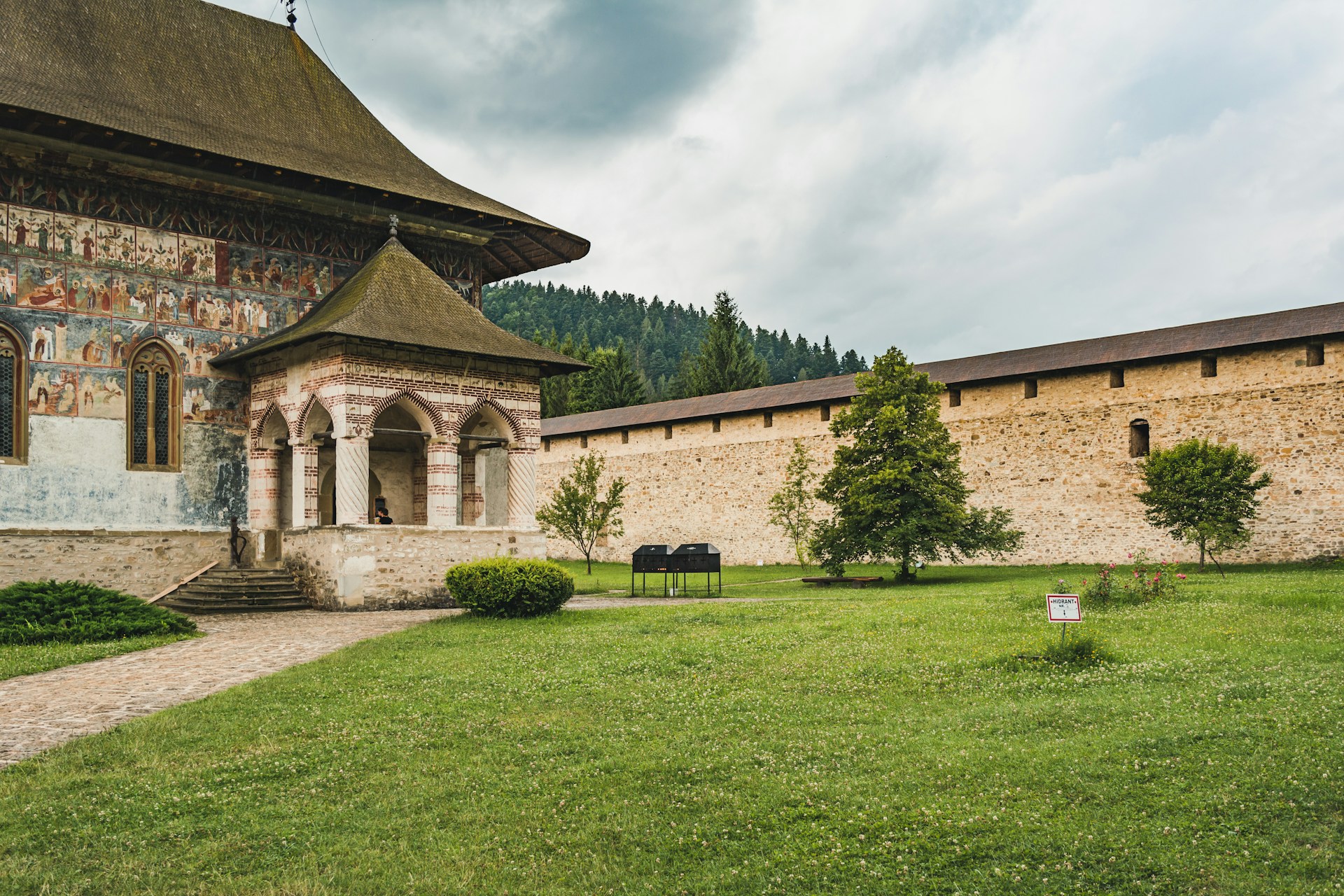
On a gentle rise west of the center, thick walls shelter a church whose origins speak Armenian as easily as Romanian. Built around 1606 by the local Armenian community, the compound kept watch over trade routes that linked Lviv, Poland, and the Moldavian plains. The belfry gate still frames arrivals with a soldierly calm, and cells ring a courtyard where herbs soften the stone. Frescoes are fewer than in nearby churches, yet the geometry of the brickwork has its own devotion. During tense years the enclosure served as a fortified refuge, a practical theology learned from experience. Restoration in the 20th century respected the mixture of Eastern and Western lines, so the silhouette feels both singular and at home. Stand by the rampart and the wind carries bells from other parishes, a polyglot of prayer. In the archive, documents chart privileges granted by Stephen the Great, reminders that tolerance once traveled with ledgers.
Ads place
Ads place
Ads place
Ads place
Ads place