
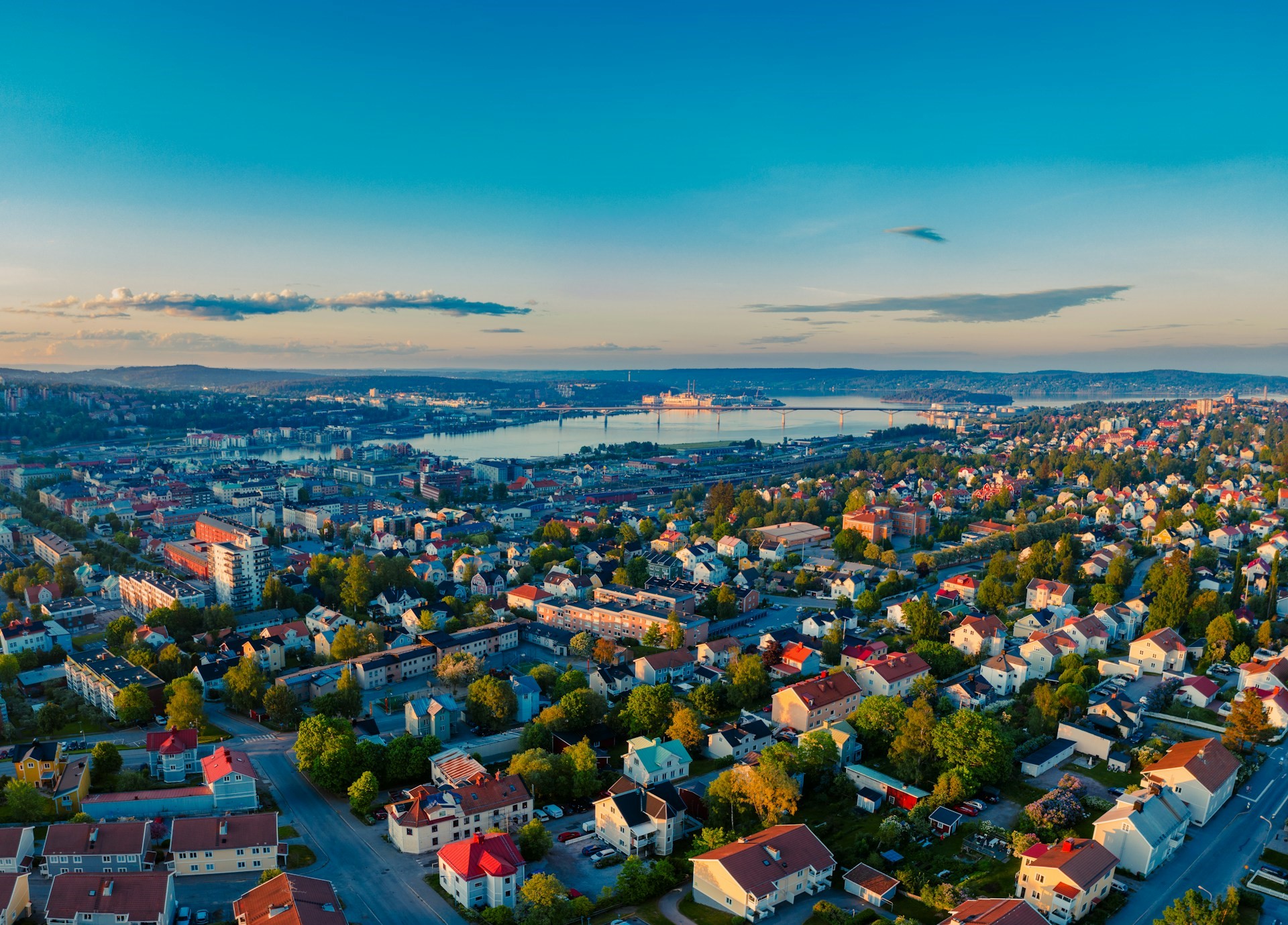
City view of Sundsvall, Sweden

Sundsvall

Sundsvall rose again after the catastrophic fire of 1888, rebuilding a district of stone palaces so confident it earned the nickname Stenstaden. Walk Esplanaden to study facades, then climb Norra Berget for wooden farm buildings and views of Bothnian blue. Seafood soups, roasted beets, and rye bread fuel walks, while cafes sell cardamom buns warm from the oven. Casino Cosmopol once operated here in a former customs building; locals still trade stories about its guest list. In summer the harbor fills with sailing schools and the smell of tar and spruce. Inside Kulturmagasinet, museums fill old warehouse halls; out on Alno, traditions of fermented herring spark stories. Another surprise is a hilltop coffee stall that opens even in snow, serving waffles beside a crackling stove. A narrow alley hosts a yearly echo contest, judged by how neatly the shout bounces from stone.

Top attractions & things to do in Sundsvall

If you’re searching for the best things to do in Sundsvall, this guide brings together the top attractions and must-see places to visit in Sundsvall. The top picks below highlight the most visited sights for first-time visitors, plus a few local favorites worth adding.

Kulturmagasinet and Sundsvall Museum in Sundsvall, Sweden

Kulturmagasinet and Sundsvall Museum

Kulturmagasinet sits in a row of former brick warehouses near the inner harbor, their high arched windows now looking onto readers instead of cargo. The complex dates from the 1890s and once stored coffee, grain, and timber for merchants who helped make Sundsvall a northern trading hub. In the early 1980s architect Ralph Erskine inserted a glass atrium between the sheds, creating a sheltered indoor street that links the city library, Sundsvall Museum, and changing exhibition halls. Museum displays move from medieval church sculptures and Sami objects to models of sawmills and a clever section on the great fire of 1888, where charred beams and photographs explain how quickly a wooden town could vanish. The library stretches over several floors with study tables tucked into the old loading bays, and a cafe overlooks the courtyard where children race between art workshops and story times. Kulturmagasinet feels less like a single museum and more like an everyday meeting place, one where history, books, and current debates share the same oxygen.
Ads place
Ads place
Ads place
Ads place
Ads place
Norra Berget Open Air Museum in Sundsvall, Sweden

Norra Berget Open Air Museum

Norra Berget lifts you above Sundsvall into a patchwork of forest paths, viewpoints, and historic buildings that feels half city park and half countryside. The open air museum began in 1920 when timber farmhouses, lofts, and boathouses from around Medelpad were moved up the hill, and today more than 40 structures frame yards where goats and old Swedish Red cattle graze. A wooden lookout tower from 1888 offers wide views over the harbor and the stone city center that rose after the fire. Indoors, exhibitions explain sawmill life, tar production, and the long winters that once shaped every decision along the coast. Families drift between playgrounds, a small craft shop, and the summer cafe that hides in one of the old houses. In winter, lit ski tracks loop through the forest while the city glows below. Norra Berget rewards unhurried wandering, the kind where you stop often to read name boards on houses and notice how carefully each building was taken apart and rebuilt here.
Ads place
Ads place
Ads place
Ads place
Ads place
Selanger Church Ruins and Pilgrim Site in Sundsvall, Sweden

Selanger Church Ruins and Pilgrim Site

West of Sundsvall, the ruins of Selanger Church sit in a quiet valley that once felt like the edge of the known world for medieval pilgrims. Stone foundations and low walls mark the outline of a large 13th century church linked to the sea route of St Olaf, whose legendary journey toward Norway turned Selanger into a stopping point. Archaeologists working here in the 1920s uncovered graves, coins, and traces of wooden jetties that suggest this was once a busy harbor before land uplift moved the coastline. Today a small visitor center explains the geology of the Gulf of Bothnia, the politics of pilgrimage, and the later shift of trade toward what became Sundsvall. Information boards outside walk you through floor plans and show how the church might have looked with its tower and painted interior. In late summer, services and concerts draw people back to the grass inside the nave. Most other days you share the site with birds, wind, and the steady sense of distance from modern main roads.
Ads place
Ads place
Ads place
Ads place
Ads place
Sodra Berget Outdoor Area and Viewpoint in Sundsvall, Sweden

Sodra Berget Outdoor Area and Viewpoint

On the opposite side of the valley, Sodra Berget gives Sundsvall a more rugged counterpart to Norra Berget, built around cliffs, pine forest, and long views. Trails lace the hill in loops from 3 kilometers up to about 15 kilometers, marked for running in summer and groomed as ski tracks once the snow settles. The high plateau hosts the Sodra Berget Hotel and spa, where large windows face the bay and the string of bridges that carry the E4 across the water. Locals talk about clear evenings in October when the city lights below look like a scattered circuit board and the air already hints at winter. Simple wind shelters and fire pits along the paths make it easy to grill sausages or just sit with a thermos and watch weather roll in from the Gulf of Bothnia. You can start directly from residential streets at the foot of the hill, which keeps Sodra Berget firmly woven into daily life rather than just a weekend destination.
Ads place
Ads place
Ads place
Ads place
Ads place
Stenstan Historic Center in Sundsvall, Sweden

Stenstan Historic Center

Stone Town, or Stenstan, is the name locals use for the compact grid of streets where Sundsvall rose again after flames cleared most of the wooden town in 1888. In the rebuilding that followed, merchants hired architects from Stockholm and Germany, and by 1890 the main avenues carried banks, hotels, and offices in confident stone rather than timber. Palaces along Esplanaden and Storgatan mix Neo Renaissance, Art Nouveau, and robust Nordic classicism, often attributed to designers such as Erik Hahr. Look up and you see atlases, owls, and merchant monograms carved into cornices that once advertised stability to trading partners. Today the same buildings hold cafes, a university campus, and the Stenstan Visitor Center, where a relief model of the city explains the fire and reconstruction. Evening light brings out warm colors in the sandstone and brick while trams and buses slide past the old facades. Walking these blocks becomes a slow architectural interview with the decades when timber fortunes turned into stone.
Ads place
Ads place
Ads place
Ads place
Ads place