
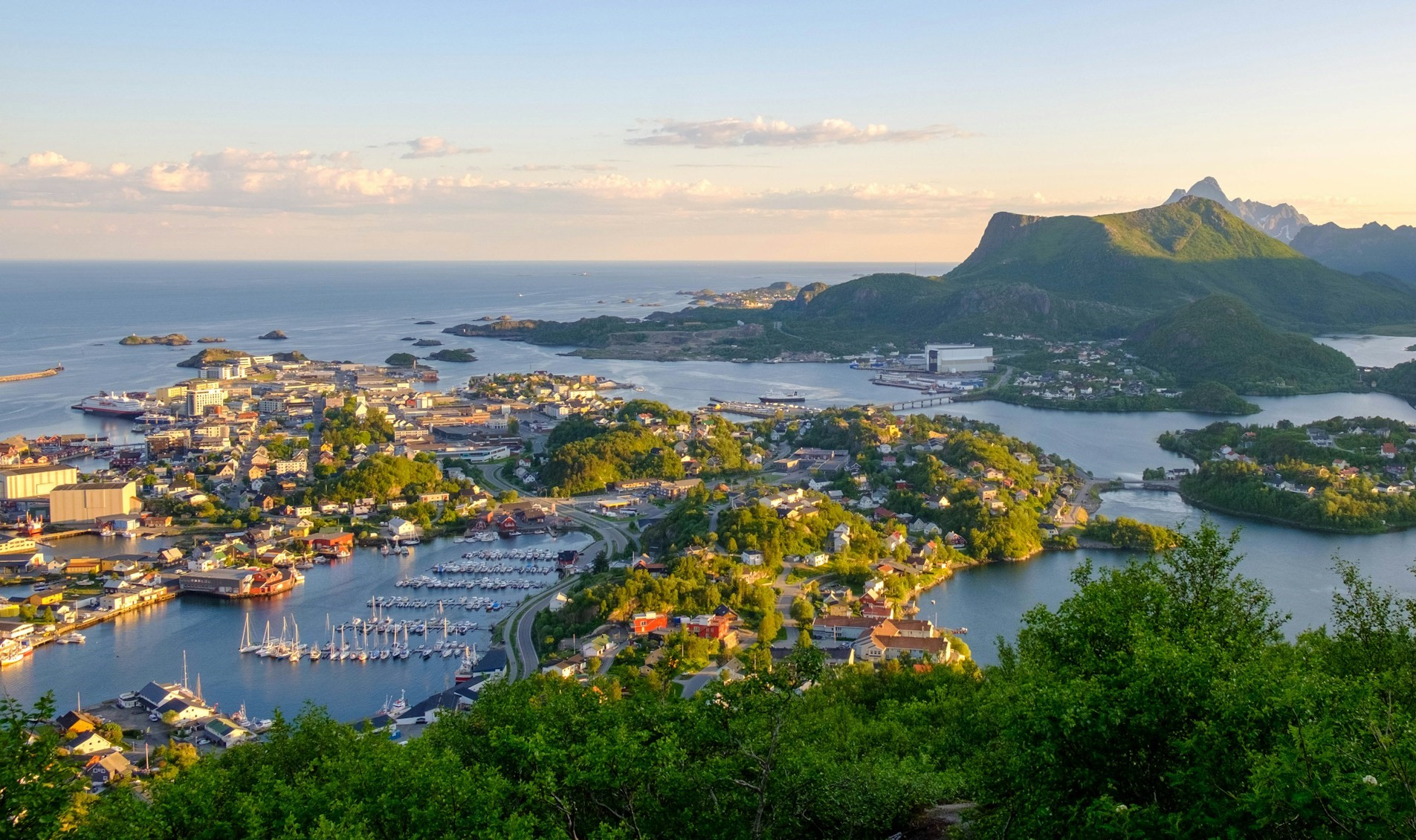
City view of Svolvaer, Norway

Svolvaer

Svolvaer, in the Lofoten Islands, offers a front-row seat to some of Norway’s most dramatic coastal landscapes. Fishing remains the lifeblood of the town, with racks of drying cod lining the harbor in winter. Galleries and studios reflect the influence of shifting light and rugged scenery on local artists. Boat trips explore nearby fjords and narrow inlets, while hikers take on trails that rise steeply from the sea. Restaurants specialize in Arctic char, lamb, and stockfish prepared with respect for tradition. An unusual highlight: Svolvaer has an outdoor sea pool, heated year-round, letting swimmers float while gazing at snow-covered peaks. The combination of maritime tradition, artistic expression, and raw nature creates an atmosphere that is both grounded and inspiring.

Top attractions & things to do in Svolvaer

If you’re searching for the best things to do in Svolvaer, this guide brings together the top attractions and must-see places to visit in Svolvaer. The top picks below highlight the most visited sights for first-time visitors, plus a few local favorites worth adding.

Lofoten War Museum in Svolvaer, Norway

Lofoten War Museum

Behind a modest storefront waits one of Norway's most densely curated collections from the Second World War, gathered over decades by a determined local. Mannequins wear original uniforms that still carry the weight of decisions made in occupied towns and at remote airfields. Display cases outline the British commando raid of 1941 known as Operation Claymore, when factories were destroyed and codebooks captured along the Lofoten coast. Letters and armbands trace the choices of the resistance, while propaganda posters show how images tried to discipline the public mood. Visitors pause at medals and field gear from Wehrmacht units stationed in the islands, then turn to stories of rebuilding after 1945. The museum's rooms feel intimate rather than grand, and that closeness suits the subject: war measured at human scale. You leave sensing how Svolvaer sat astride supply lines and shipping lanes, a small town forced into global history by cold seas and hard geography.
Ads place
Ads place
Ads place
Ads place
Ads place
Magic Ice Lofoten in Svolvaer, Norway

Magic Ice Lofoten

Step through the heavy door and the temperature drops to theater-like clarity, where sculptures catch light like frozen brushstrokes. The bar is kept around -5 C, and attendants hand out thermal capes so glasses carved from ice do not chill fingers numb. Walls glow with blue and magenta projections that riff on the aurora borealis, while local scenes—fishing boats, mountains, and cod racks—appear as crystalline reliefs. The concept began in the 2000s and has since become a playful gallery that treats winter as a medium rather than a season. Exhibits change as artists recarve the space, sometimes referencing Viking patterns and sometimes the modern stockfish economy that shaped Svolvaer's piers. Music hums softly so conversations feel private, and the first sip tastes colder than expected but sweeter after a second. When you step back into coastal air, the town seems warmer, as if the ice bar taught your senses to recalibrate what comfort means.
Ads place
Ads place
Ads place
Ads place
Ads place
Svinoya Rorbuer in Svolvaer, Norway

Svinoya Rorbuer

Across a short bridge from the center, an island of weathered wharves tells how fishing built Svolvaer long before visitors arrived with cameras. In winter the air smells of cod drying on hjell racks, a tradition that feeds the stockfish trade linking Lofoten to southern Europe since medieval days. The red cabins called rorbuer still host seasonal crews during the January-April fishery, then welcome travelers who want to sleep over the tide. Warehouses carry initials from companies that once shipped fortunes out through the Vestfjord, and quays creak with the same tide tables used by great-grandparents. At dusk, lights in the windows make a quilt across the pylons, while gulls edit the soundtrack with unembarrassed commentary. Guides point out how the island's trading post dates to the early 19th century, giving Svinoya a continuity rare in working harbors. Staying here feels less like a hotel and more like borrowing a chapter of the town's own ledger.
Ads place
Ads place
Ads place
Ads place
Ads place
Svolvaergeita in Svolvaer, Norway

Svolvaergeita

This two-horned granite spire stands above Svolvaer like an exclamation mark, inviting hikers to look up and climbers to test their nerve. Routes braid the pillar with clean cracks and airy ledges, culminating in a notorious leap between the twin horns that has fueled campfire stories for generations. The first ascent came in 1910, when Norwegian alpinists including Ferdinand Schjelderup proved the peak could be tamed with hemp ropes and hobnailed boots. Since then, modern protection has made the climbs more secure, but the exposure still writes its own sermon about caution. On clear evenings, you can watch the harbor lights flicker far below while a red sun slides into the Vestfjord. Local guides explain how the rock was sculpted after the last Ice Age, leaving a natural obelisk that seems improbably balanced. Even spectators feel the pull: from town you can frame the horns perfectly, a living emblem of Lofoten's vertical theater.
Ads place
Ads place
Ads place
Ads place
Ads place
Trollfjord Cruise in Svolvaer, Norway

Trollfjord Cruise

Boats leave Svolvaer and slide into a corridor of shadow where cliffs narrow until water feels like a polished hallway. The captain keeps a slow cadence as the bow turns into Trollfjord, a pocket of water famous for walls that rise almost straight from the sea. On deck, guests crane upward while white-tailed sea eagles circle with deliberate wings, a quiet airshow above the spray. History enters with the tale of 1890, when steam trawlers and open rowboats clashed here over fishing rights, a confrontation that later inspired novels and films. Some trips run on fast RIB boats, others on steady cruisers that linger under waterfalls so fine they seem to unravel in midair. In summer, the midnight sun keeps the fjord lit like an endless late afternoon; in winter, the aurora borealis can ripple across the notch between peaks. Either way, the ride functions as a moving classroom where geology, ecology, and memory travel side by side.
Ads place
Ads place
Ads place
Ads place
Ads place