
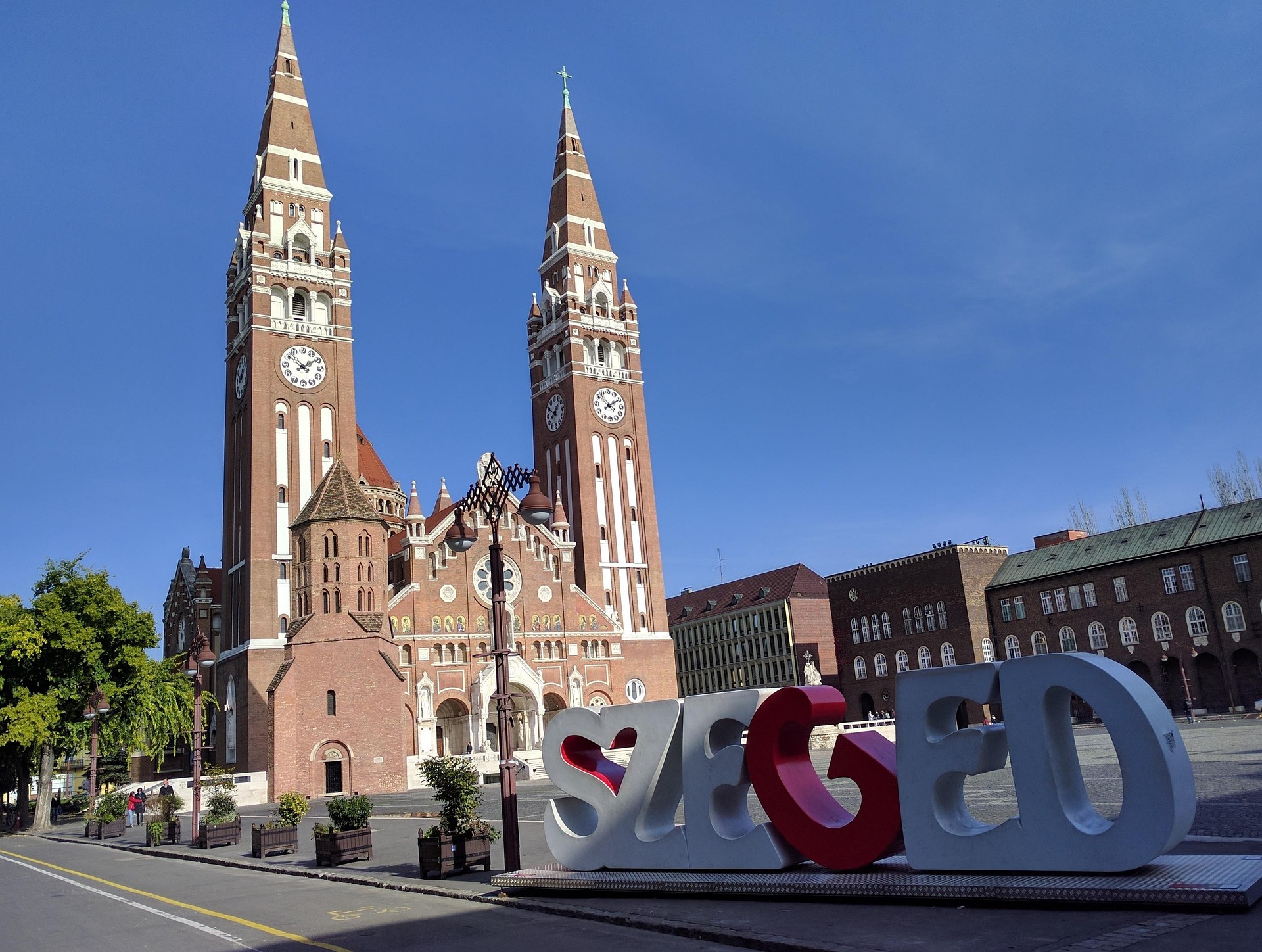
City view of Szeged, Hungary

Szeged

Szeged, the "City of Sunshine", radiates charm on the banks of the Tisza River in southern Hungary. The striking Votive Church, with its twin red-brick spires, dominates Dóm Square, where open-air opera performances and music festivals fill the summer air. Wander the Art Nouveau boulevards lined with pastel-hued mansions, then stroll along the riverbank promenades and lush Széchenyi Square, alive with fountains and bustling terraces. Renowned for its paprika production, Szeged’s markets tempt with spicy sausages and rich fish soup. University students lend the city a dynamic, youthful energy, filling the cafés and lively bars. The annual Szeged Open-Air Festival transforms the city into a cultural hotspot, while nearby thermal spas offer a relaxing retreat. Szeged’s Tisza River beaches also draw visitors in summer for kayaking, sunbathing, and riverside festivals with vibrant Hungarian folk music.

Top attractions & things to do in Szeged

If you’re searching for the best things to do in Szeged, this guide brings together the top attractions and must-see places to visit in Szeged. The top picks below highlight the most visited sights for first-time visitors, plus a few local favorites worth adding.

Anna Thermal Baths in Szeged, Hungary

Anna Thermal Baths

Anna Thermal Baths offer a unique blend of historic spa culture and modern wellness in the heart of Szeged. Established in 1896, the baths draw from a natural thermal spring discovered during railway construction. The elegant building showcases Neo-Renaissance architecture, with marble columns and decorative mosaics adorning the baths and pools. The mineral-rich water is famed for its therapeutic properties, said to relieve rheumatism and joint pain. Visitors can enjoy traditional steam rooms, saunas, and open-air pools set in lush gardens. Special treatments include medicinal mud wraps and underwater massages. A little-known fact: Anna Bath was once a favorite retreat of Hungarian poets and artists seeking inspiration. Today, it is a tranquil escape for both locals and travelers, and hosts wellness festivals throughout the year. The night-time bathing events under lanterns give the spa a magical, unforgettable charm.
Ads place
Ads place
Ads place
Ads place
Ads place
Reok Palace in Szeged, Hungary

Reok Palace

Reok Palace is a masterpiece of Hungarian Secessionist design, built in 1907 by architect Ede Magyar, often called the “Hungarian Gaudi.” The palace’s undulating façade and floral decorations evoke the movement of water, fitting for a city shaped by the Tisza River. Inside, wrought-iron staircases and stained glass windows lead to elegant galleries that now house the Reok Contemporary Art Center. The palace is celebrated for its unique ceramic tiles, ornate balconies, and whimsical plasterwork, all meticulously preserved. Local legend claims that secret codes are hidden in the floral motifs. Exhibitions here feature both Hungarian and international artists, while the courtyard hosts open-air performances in summer. Reok Palace’s blend of architectural innovation and vibrant cultural programming make it a must-see for art lovers and those interested in the creative spirit of Szeged. The building lights up beautifully at dusk, adding to the city’s magical evening atmosphere.
Ads place
Ads place
Ads place
Ads place
Ads place
Szechenyi Square in Szeged, Hungary

Szechenyi Square

Szechenyi Square is the lively heart of Szeged, lined with stately 19th-century buildings and leafy promenades. Named after Hungarian reformer Istvan Szechenyi, the square is famous for its fountains, flowerbeds, and grand statues celebrating national heroes. At its center stands the City Hall, topped by a famous dome and clock tower. The square hosts bustling markets, open-air concerts, and festivals all year round, attracting both residents and visitors. Notable is the statue of Lajos Kossuth, a leader of Hungary’s 1848 revolution, and the impressive horse chestnut trees, some over 100 years old. Beneath the surface, archaeological excavations have uncovered remnants of medieval walls and merchant stalls, offering glimpses into Szeged’s rich history. Each December, the square transforms into a festive Christmas market glowing with lights and traditional crafts, making it a beloved gathering place for the whole city.
Ads place
Ads place
Ads place
Ads place
Ads place
Szeged Synagogue in Szeged, Hungary

Szeged Synagogue

The Szeged Synagogue stands as one of Europe's most beautiful examples of Art Nouveau architecture, completed in 1903 under the direction of architect Lipot Baumhorn. The vast interior features a stunning blue-and-gold dome decorated with floral and geometric motifs, and seats over 1,300 worshippers. Its stained glass windows, crafted by the renowned Miksa Roth, create a kaleidoscope of colors when sunlight streams inside. The synagogue is not just a place of worship, but also a symbol of Szeged’s rich Jewish heritage and resilience. During World War II, the building survived major damage and has since been lovingly restored. Guided tours reveal little-known details about the organ and hidden Hebrew inscriptions. The annual Jewish Cultural Festival, held here every autumn, fills the synagogue with music, lectures, and lively gatherings, making it a living monument to both faith and culture.
Ads place
Ads place
Ads place
Ads place
Ads place
Votive Church of Szeged in Szeged, Hungary

Votive Church of Szeged

The Votive Church of Szeged, also known as the Szeged Cathedral, is one of Hungary's grandest neo-Romanesque churches, completed in 1930 as a symbol of gratitude after the city's devastating 1879 flood. Its striking twin towers soar over 90 meters, dominating the expansive Dom Square, one of the largest in Central Europe. The church is famed for its intricate frescoes and stained glass windows, which narrate local history and biblical stories in vibrant color. The organ, among the largest in Hungary, frequently hosts renowned concerts. Beneath the cathedral, a crypt houses the tombs of local bishops and the revered founder, Bishop Sándor Dessewffy. A little-known feature is the clockwork figures that appear daily at noon, delighting onlookers with their mechanical performance. Each August, the square is transformed by the Szeged Open-Air Festival, when the church’s façade becomes a dramatic backdrop for world-class theater and opera.
Ads place
Ads place
Ads place
Ads place
Ads place