
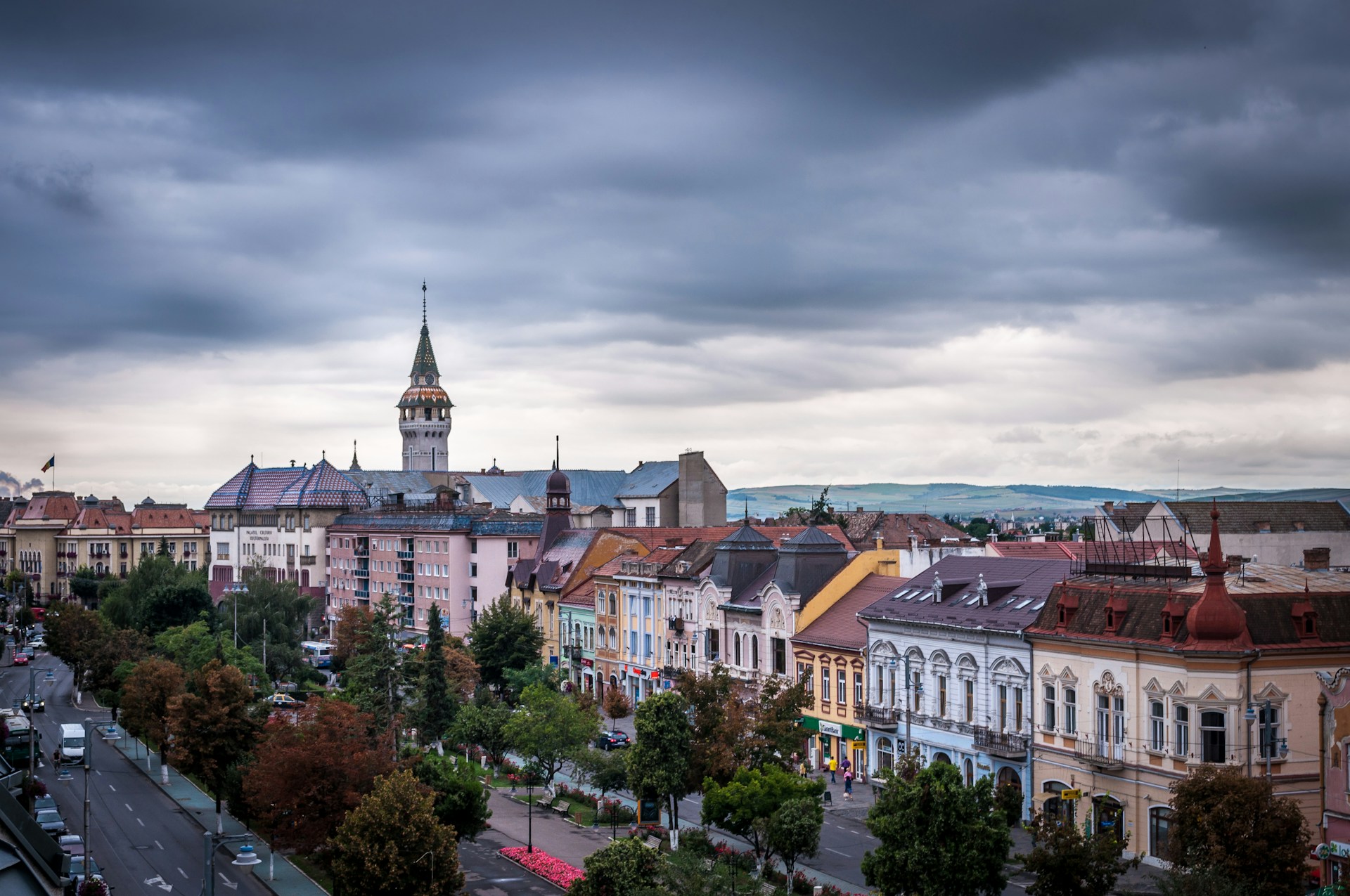
City view of Targu Mures, Romania

Targu Mures

Targu Mures blends Hungarian and Romanian threads into a fabric best seen from the Cultural Palace, where stained glass turns sunlight into gentle persuasion. Nearby, the fortress keeps watch over streets that trade bakeries for bookshops and back again. Menus move from goulash to bean soup with smoked ham, and dessert might be a slice of Dobos that defeats your schedule. The medical university brings international voices to pubs and quiet gardens, while theaters test new scripts with enviable frequency. Architecture plays with Secession curves and sober classicism, often on the same block. Markets are practical, selling cheese, honey, and pickled everything, no hashtags required. An endearing oddity: a vintage salt mine bath complex not far away draws loyal regulars who swear by its briny calm. The city trusts conversation more than spectacle and rewards the visitor who enjoys walking slowly enough to hear it.

Top attractions & things to do in Targu Mures

If you’re searching for the best things to do in Targu Mures, this guide brings together the top attractions and must-see places to visit in Targu Mures. The top picks below highlight the most visited sights for first-time visitors, plus a few local favorites worth adding.

Big Synagogue in Targu Mures, Romania

Big Synagogue

A pair of towers rises over the Fabric quarter and a rose window gathers the afternoon like a patient eye. Built around 1899 in Moorish Revival vocabulary, the synagogue reflects a community that traded widely and studied seriously. Inside, painted arches carry floral motifs that seem to hum at the edges of prayer and the ark glows with careful gilding. Names on plaques chart benefactors who helped raise the roof when optimism was currency. In the 20th century the building endured hardship yet survived thanks to neighbors who understood that sacred places also anchor neighborhoods. Today you might hear a guided talk on heritage while sunlight dusts the pews with color. Step back outside and the façade settles into brick calm as trams pass with their ordinary errands. The synagogue keeps watch, a steadfast witness to rescue, loss, and renewal told without drama yet remembered clearly.
Ads place
Ads place
Ads place
Ads place
Ads place
Cultural Palace in Targu Mures, Romania

Cultural Palace

From the moment you step into the marble foyer, the building insists on conversation between light and craft. Raised in the early 20th century under Mayor Bernady Gyorgy, the palace gathers concert halls, galleries, and a stained glass room where heroes parade across colored panes. Architects worked in the spirit of Secession style, translating floral curves into stone and wood so that corridors feel choreographed rather than merely drawn. Upstairs, a mosaic of Transylvanian folk motifs nods toward the countryside that fed the city’s imagination. The auditorium still hosts orchestras whose tuning notes float into the colonnade like a promise kept. Look closer and you find inscriptions from 1913 that survived political edits, gentle proof that art can outlast arguments. Outside on Piata Trandafirilor, tram bells and café chatter pick up where the overture ends, turning the palace into a hinge between performance and daily life.
Ads place
Ads place
Ads place
Ads place
Ads place
Medieval Fortress in Targu Mures, Romania

Medieval Fortress

Walk through the gate and the ground changes temperament from traffic to gravel, then to the steady cadence of your own steps. The current walls date largely to the 17th century when local builders answered the age of firearms with compact bastions in the Transylvanian style. A small calvinist church anchors the interior and timber galleries run like balconies for watchmen now repurposed as viewpoints for photographers. During the storms of 1848, soldiers bivouacked here and the masonry kept its cool lesson in geometry. Restoration in recent decades reopened courtyards for festivals so music now negotiates the same angles that once negotiated cannon. Touch the brick and you feel tool marks left by hands that measured twice and cut once. As evening arrives the fortress becomes a lantern for the surrounding streets and the city’s younger voice seems to borrow confidence from these older lines.
Ads place
Ads place
Ads place
Ads place
Ads place
Piata Trandafirilor in Targu Mures, Romania

Piata Trandafirilor

The city’s long central avenue behaves like a living room stretched into the open air. Churches bookend the promenade, cafés arrange chairs like punctuation, and flower beds keep their appointment with color. Much of the ensemble took shape in the late 19th century and the interwar decades when civic ambition wore stone cleanly. Look up to find Secession flourishes curling across cornices, then glance down to notice plaques that date renovations to 1911 and beyond. On weekends folk dancers trade turns with brass bands and the audience is everyone passing with an extra minute. Vendors sell pretzels still warm and children race to the fountain that misted their parents years ago. The square’s trick is balance. Commerce and ceremony share the same benches and the same view toward the Cultural Palace. Stay through sunset and the facades light up in sequence as if the city were inhaling before a relaxed last act.
Ads place
Ads place
Ads place
Ads place
Ads place
Teleki-Bolyai Library in Targu Mures, Romania

Teleki-Bolyai Library

Dust here smells like inquiry and vellum, which suits a library founded by Count Samuel Teleki in 1802. Shelves climb under painted ceilings while globes and atlases rest like sleeping instruments waiting for a steady hand. The reading rooms preserve the exact hush that taught generations to treat knowledge as ceremony. In side cases, treatises by the mathematician Janos Bolyai share space with his father Farkas Bolyai, a family duet that changed the grammar of space with non Euclidean ideas. Catalogs written in looping script prove librarianship can be a literary art. A first edition here and a marginal note there turn strolls into treasure hunts. The building itself mixes baroque sobriety with practical grace and its windows pour soft light across calfskin bindings. You leave understanding why scholars return like pilgrims and why the city guards these rare books as if they were living citizens with long memories.
Ads place
Ads place
Ads place
Ads place
Ads place