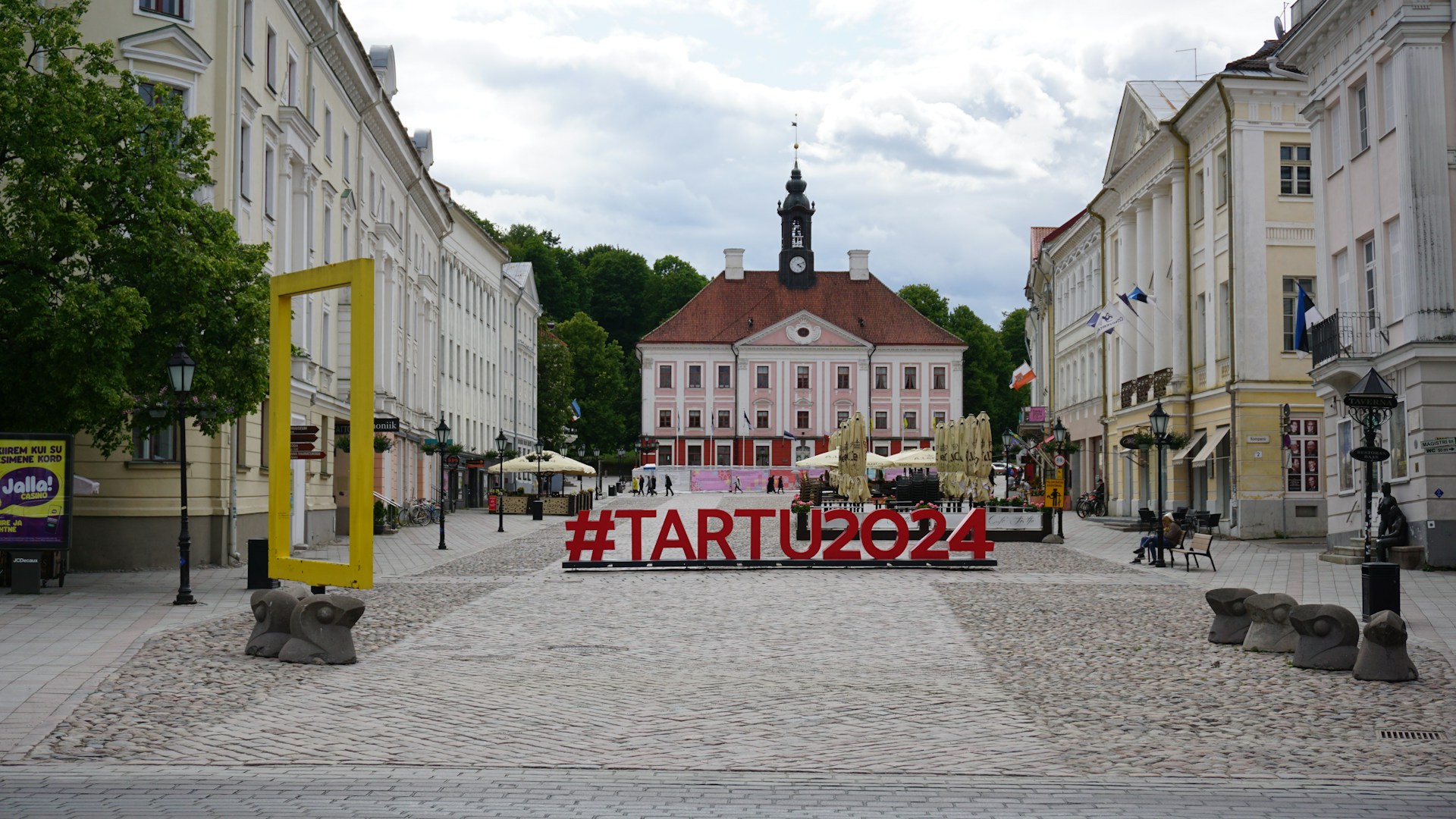

City view of Tartu, Estonia

Tartu

Tartu is known as Estonia's university city, hosting the country's oldest and most prestigious university, the University of Tartu. The city's vibrant student life and youthful energy are balanced with historical architecture and cultural sites. The Tartu Old Town offers an inviting atmosphere, with cafés, art galleries, and charming streets. One of the most iconic spots is the Town Hall Square with its statue of the Kissing Students, a popular meeting point. Additionally, the University of Tartu Art Museum and Tartu Toy Museum are delightful stops. Tartu's parks, like Toome Hill, provide greenery and a place to relax, while the modern AHHAA Science Centre offers interactive exhibits for curious minds.

Top attractions & things to do in Tartu

If you’re searching for the best things to do in Tartu, this guide brings together the top attractions and must-see places to visit in Tartu. The top picks below highlight the most visited sights for first-time visitors, plus a few local favorites worth adding.

AHHAA Science Centre in Tartu, Estonia

AHHAA Science Centre

Since opening its glass-roofed atrium in 2011, AHHAA has become the Baltic region’s largest playground for the scientifically curious. A resident planetarium projects 8K journeys through black holes, while the three-story “Hands-on Hall” lets children pedal a bicycle across a tightrope and generate thunder in a Tesla cage. The Water World gallery invites barefoot exploration of whirlpools and Archimedes screws; next door, living ant colonies demonstrate complex social algorithms. Daily chemistry theatre erupts with flaming magnesium and colour-changing cocktails, and weekend surgery demos livestream from the university hospital to teach anatomy via augmented reality. Visitors can ride a gyroscope to feel astronaut training or spend the night during monthly “Science Sleepovers.” An outdoor rooftop garden tests aeroponic lettuce under Nordic LEDs, underscoring the centre’s climate focus. The gift shop stocks Estonian-invented robotics kits, and the café serves nitrogen-frozen ice cream. Blending education with adrenaline, AHHAA transforms complex research into memorable, family-friendly adventure.
Ads place
Ads place
Ads place
Ads place
Ads place
Estonian National Museum in Tartu, Estonia

Estonian National Museum

Stretching 350 meters across a former Soviet runway, the Estonian National Museum (ERM) embodies cultural take-off in both form and content. Opened in 2016 by architects Dorell Ghotmeh Tane, its cantilevered glass prow points toward Lake Peipus like a departing paper plane. Inside, the flagship exhibition “Echo of the Urals” immerses guests in Finno-Ugric myth via sound domes and tactile artefacts, while the “Encounters” gallery traces everyday life from Stone-Age seal hunters to Singing Revolution protesters with 1,400 objects and holographic storytellers. Interactive language labs let visitors record greetings in Võro or Seto dialects, and smart tickets save personalised content to download later. The vast atrium hosts folk-dance flash mobs and drone shows, and outdoor grounds feature an experimental Smoke Sauna recognised by UNESCO. A research library, conservation labs, and ethnography centre buzz behind the scenes, underscoring ERM’s scholarly mission. Recharge at the restaurant serving modern twists on rye bread and forest herbs before browsing the design store’s woollen handicrafts. ERM offers a panoramic, tech-savvy journey through Estonia’s resilient identity.
Ads place
Ads place
Ads place
Ads place
Ads place
Tartu Old Town in Tartu, Estonia

Tartu Old Town

Tartu Old Town weaves medieval alleyways and Enlightenment-era boulevards into one walkable tapestry of culture. Start at pastel-pink Town Hall (1789) where the hourly carillon echoes across Raekoja plats and newlyweds pose beneath the beloved Kissing Students fountain. Baroque merchants’ houses now host indie bookshops and cafés serving kama dessert with local cloudberry jam. Duck through the vaulted gateway of the St John’s Church to admire over 1,000 surviving terracotta sculptures—Europe’s largest Gothic clay ornament collection. On summer evenings, open-air film screenings animate the riverside Emajõgi quay, while basement jazz clubs keep vault arches humming past midnight. QR plaques on façades reveal stories of secret printing presses that fueled Estonia’s National Awakening; nearby Leaning House, a Georgian mansion tilting more than Pisa, hosts rotating art shows. The annual Hanseatic Days festival transforms cobbles into a 16th-century market with falconry and blacksmiths. From craft-beer bars in brick cellars to rooftop terraces overlooking red-tile roofs, Tartu Old Town balances living university energy with the timeless charm of a Baltic Hanseatic hub.
Ads place
Ads place
Ads place
Ads place
Ads place
Toome Hill in Tartu, Estonia

Toome Hill

Rising 25 meters above the Emajõgi plain, Toome Hill (Toomemägi) offers Tartu’s most poetic blend of nature and ruins. Shaded by linden and maple groves planted during the University reopening in 1802, its winding paths lead to the skeletal arches of the 13th-century Tartu Cathedral, bombarded in the Livonian War and now housing the University History Museum. Nearby, the romantic Angel’s Bridge bears a Latin inscription urging scholars to “resign yourself to diligence,” while the darker Devil’s Bridge commemorates Emperor Alexander I. Geological outcrops reveal Devonian sandstone riddled with legends of hidden passages. Families picnic beside the observatory designed by Friedrich Struve, whose meridian arc became a UNESCO World Heritage science site. In winter, students sled down the hill by torchlight; spring brings carpets of wood anemones around monuments to poet Kristjan Jaak Peterson. Augmented-reality panels allow visitors to overlay vanished towers onto today’s skyline, merging past and present on their phones. Whether for panoramic sunrise views, quiet reading benches, or night-time star parties, Toome Hill remains Tartu’s green acropolis.
Ads place
Ads place
Ads place
Ads place
Ads place
University of Tartu in Tartu, Estonia

University of Tartu

Founded in 1632 by Swedish King Gustavus Adolphus, the University of Tartu embodies Estonia’s centuries-long quest for knowledge and national self-expression. The white-columned main building, completed in 1809, crowns Ülikooli Street with Ionic grandeur and still hosts solemn matriculation ceremonies beneath a restored Lock-Up cell once reserved for over-zealous students. Step inside the Art Museum—a Pompeii-style rotunda lined with plaster casts of classical statues—or descend to the Cabinet of Curiosities where narwhal tusks and Siberian shaman drums share glass cases. Across town the Old Observatory, listed on UNESCO’s Memory of the World Register, showcases a meridian circle that helped map the first accurate star catalog for czarist Russia. Campus life spills into cafés that offer discount “brain pies” and host lively philosophy nights, while the annual Spring Days festival fills streets with raft races and choral flash mobs. Whether you attend a public lecture, browse rare folios in the library’s manuscript vault, or simply admire neo-classical façades glowing at dusk, the University of Tartu remains the intellectual heartbeat of Estonia’s second city.
Ads place
Ads place
Ads place
Ads place
Ads place