
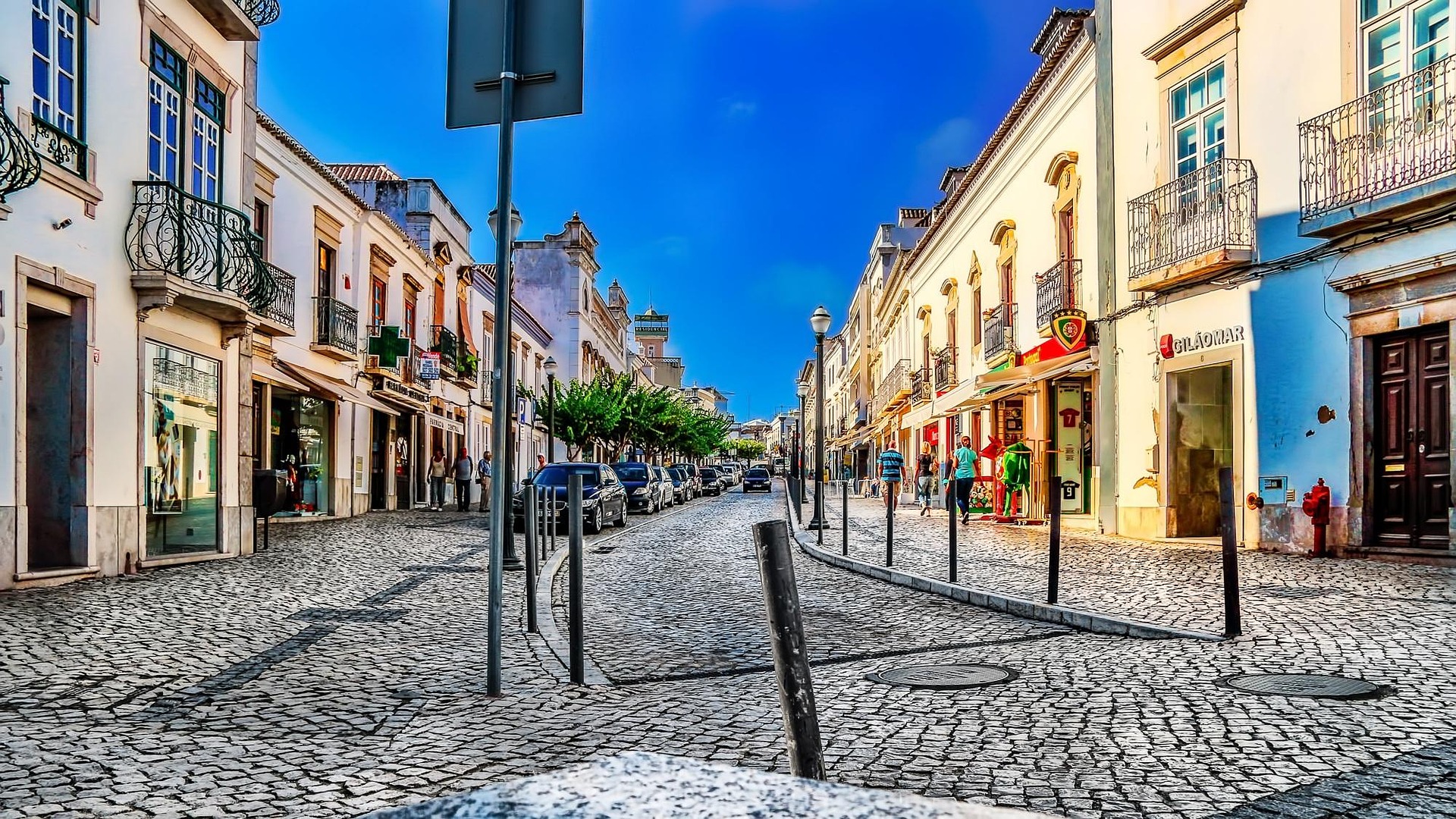
City view of Tavira, Portugal

Tavira

Tavira divides itself kindly around the Gilao River, linking gardens and rooflines with a Roman bridge that behaves more like a meeting place than a monument. Church towers—there are many—mark a schedule older than tourism, and azulejo panels retell saintly adventures in cool blues. The Ria Formosa skirts town and ferries nose toward Ilha de Tavira, a sand ribbon perfect for naps and shell collecting. Markets give octopus top billing, while restaurants tuck it into rice or grill it until the texture argues back just once. Salt pans lie pale beyond the houses, and flamingos treat them as mirrors. For a detail to pocket, look for the tuna works museum on the edge of town; its rusted anchors and quiet photographs explain how migrations once set the calendar as firmly as school terms. Evening brings guitar chords across the water, and conversations drift as slowly as the tide under the bridge.

Top attractions & things to do in Tavira

If you’re searching for the best things to do in Tavira, this guide brings together the top attractions and must-see places to visit in Tavira. The top picks below highlight the most visited sights for first-time visitors, plus a few local favorites worth adding.

Camera Obscura Tavira in Tavira, Portugal

Camera Obscura Tavira

Inside a converted water tower, mirrors and lenses remake the city in real time. The Camera Obscura demonstrates optical technology first popularized during the Renaissance, yet here it narrates Tavira’s present with remarkable clarity. As the operator tilts the device, streets unfold across a white disk, showing live panoramas of markets, rooftops, and seagulls chasing the tide. Children gasp at the illusion; adults recall that this was once cutting-edge science, studied by Leonardo da Vinci and astronomers mapping the heavens. The tower itself, built in the 1930s, supplied water until decommissioned, when artists and engineers decided vision was another form of resource. From its terrace you also gain a physical view, but the lens below teaches perspective differently, slowing the gaze. Many leave remarking that it feels like Tavira paused to let you look more carefully, a gift rare in towns where sun and sea tempt you to hurry.
Ads place
Ads place
Ads place
Ads place
Ads place
Igreja da Misericordia in Tavira, Portugal

Igreja da Misericordia

The church of Misericordia wears its history in flourishes that reflect both faith and artistry. Commissioned in 1541, it was designed by Andre Pilarte, a master mason also linked to Lisbon’s Jeronimos Monastery. The facade shows Renaissance balance, while the interior dazzles with azulejos narrating works of mercy in blue and white. Each tile panel functions like a sermon etched in clay, showing how compassion was understood in 16th century Portugal. Wooden altarpieces gilded with gold leaf remind visitors of maritime wealth flowing through Tavira’s port. The ceiling vaults, delicate yet firm, whisper of engineering confident in both stone and story. Locals still use the church for weddings and processions, keeping ritual alive beneath centuries-old arches. A curious detail: the azulejos were once hidden under limewash during periods of austerity, rediscovered when restorers scraped back the layers. Their survival is as much accident as design, a reminder that mercy sometimes hides before it is revealed.
Ads place
Ads place
Ads place
Ads place
Ads place
Ilha de Tavira in Tavira, Portugal

Ilha de Tavira

A ferry ride turns the city into a horizon while sand takes over as host. Ilha de Tavira stretches for 11 kilometers, a barrier island protecting the Ria Formosa lagoon. Its dunes, anchored by grasses and pine groves, form part of a protected natural park where birds stage migrations in spring and autumn. Families pitch tents beside restaurants that specialize in octopus, a local pride served grilled or stewed. The island’s history ties to tuna fishing, once the economic spine of the Algarve, with anchors still displayed like sculpture along the coast. In the 20th century, it became a summer refuge for Tavirenses escaping inland heat, accessible first only by boat and later by seasonal bridge. Today, campers mingle with day-trippers, and the rhythm of tides dictates the soundtrack. Walk far enough and you find sections where silence carries louder than the surf, proving wilderness can survive a short ferry away.
Ads place
Ads place
Ads place
Ads place
Ads place
Roman Bridge of Tavira in Tavira, Portugal

Roman Bridge of Tavira

Stones carry memory across the Gilao River where the so-called Roman bridge has spanned centuries of repair, flood, and festival. Although scholars note its current form reflects medieval reconstruction, the name endures, linking it to earlier engineering along the Algarve coast. The seven arches stand steady against tides, once bearing carts loaded with salt, fish, and grain. In 1755, the Lisbon earthquake damaged parts of the crossing, but local craftsmen restored it, blending function with quiet grace. Today, pedestrians replace carts, and musicians sometimes turn the balustrades into stages. The view upstream frames rooftops patched in terracotta, while downstream the lagoon prepares its meeting with the Ria Formosa. Guides remind visitors that this bridge was once the heart of civic life, connecting markets and parishes long before roads stretched inland. At dusk, lamps ignite the arches, and the reflections turn the Gilao into a double portrait of resilience and continuity.
Ads place
Ads place
Ads place
Ads place
Ads place
Tavira Castle in Tavira, Portugal

Tavira Castle

High walls embrace a garden where bougainvillea climbs what was once a Moorish fortress. Built in the 11th century during Islamic rule, the castle anchored Tavira until the 1242 Christian conquest changed banners but kept the stone. You still enter through a narrow horseshoe arch, one of the few authentic survivors of the period. The interior no longer bristles with arms but with roses and lavender, planted after restorations in the 20th century. From the ramparts, the town arranges itself in white tiles and chimneys shaped like hats, an architectural quirk of the Algarve. Local lore claims tunnels once led toward the river, offering defenders both escape and supply. As you walk the perimeter, each stone reminds you that power here was negotiated not only with enemies but with earthquakes, raids, and slow decline. What remains is a hybrid space: half fortress, half garden, entirely stitched into Tavira’s story.
Ads place
Ads place
Ads place
Ads place
Ads place