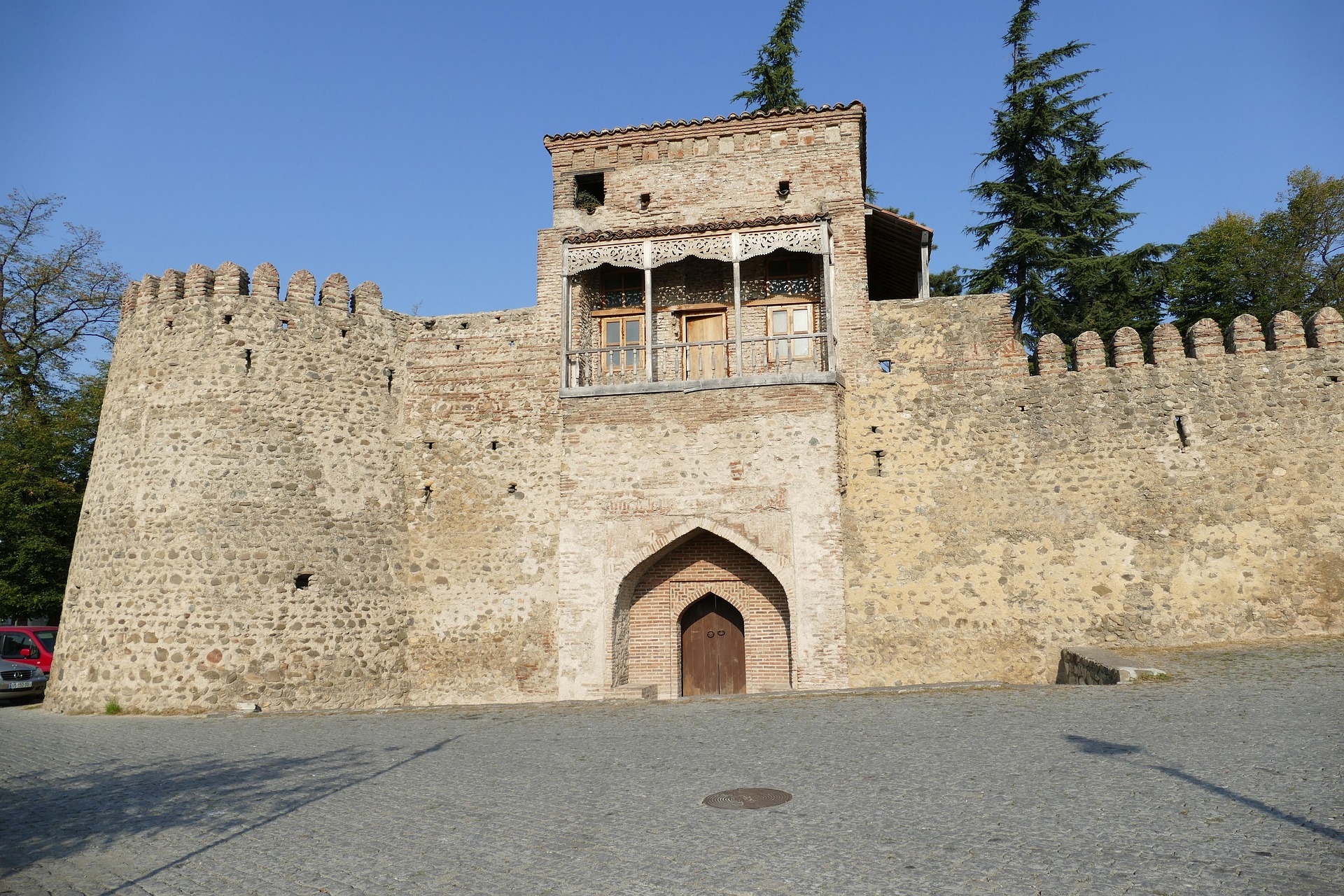

City view of Telavi, Georgia

Telavi

Telavi, the historic capital of the Kakheti region, stands amid rolling vineyards and foothills of the Greater Caucasus, anchoring Georgia’s legendary wine country. Its core is dominated by the medieval Batonis Tsikhe fortress, which once sheltered kings and now houses a museum chronicling royal life. Across the square, the crown jewel of Kakheti’s ecclesiastical architecture, Alaverdi Monastery—founded in the 6th century and rebuilt in the 11th—presides over the valley with its soaring dome and cellars brimming with monastic vintages. Telavi’s narrow streets teem with wine cellars, or marani, where travelers taste qvevri-fermented reds and whites in subterranean vaults, learning age-old techniques passed down through generations. Scenic overlooks like the Queen Tamar’s Balcony reveal panoramic vineyard mosaics framed by snow-capped peaks. Local markets overflow with spicy cheese, honey, and freshly baked churchkhela. Combining regal history, breathtaking landscapes, and immersive wine tourism, Telavi invites visitors to experience Georgia’s rich viticultural soul.

Top attractions & things to do in Telavi

If you’re searching for the best things to do in Telavi, this guide brings together the top attractions and must-see places to visit in Telavi. The top picks below highlight the most visited sights for first-time visitors, plus a few local favorites worth adding.

Alaverdi Cathedral in Telavi, Georgia

Alaverdi Cathedral

Perched on a hill above Telavi, Alaverdi Cathedral was founded in 6th century by monks from the nearby David Gareja monastery complex, then rebuilt in 1014 under King David IV the Builder. At 55 meters, it ranks among the tallest medieval churches in Georgia. The cathedral’s robust drum and conical dome cast a distinctive silhouette against rolling vineyards below. Inside, visitors encounter 12th-century fresco fragments and a stone altar used for centuries of royal coronations. Underneath, an underground crypt houses the remains of Catholicos-Patriarchs, marked by engraved tombstones. In spring, a hidden garden of wild irises blooms beside the chapel dedicated to Saint George, said to contain sacred relics brought from Jerusalem. A 2018 restoration uncovered a network of medieval wine tunnels carved into the rock foundation—once used to age monastic vintages in stable, cool conditions. As afternoon light filters through narrow windows, it illuminates the cathedral’s white stonework, making Alaverdi a sublime pilgrimage site for architecture buffs and wine lovers tracing Kakheti’s spiritual and viticultural heritage.
Ads place
Ads place
Ads place
Ads place
Ads place
Batonis Tsikhe Fortress in Telavi, Georgia

Batonis Tsikhe Fortress

Dominating central Telavi, Batonis Tsikhe Fortress—literally “Lord’s Fortress”—dates to the 8th century and was expanded into a royal palace by King Levan of Kakheti in 1649. Its thick stone walls, punctuated by arrow slits and bastions, once sheltered Georgian monarchs during Persian invasions. Within the courtyard lies a secluded chapel decorated with 18th-century frescoes portraying local saints and scenes from the Gospels. Recent archaeological digs uncovered a hidden wine cellar where qvevri jars still bear 17th-century inscriptions, revealing the fortress’s role as both a defensive stronghold and a centre of Kakhetian viticulture. Visitors ascend a spiral stair to a panoramic terrace, offering sweeping views of the Alazani Valley and the snow-capped Caucasus peaks. Beneath the fortress walls runs an ancient aqueduct, ingeniously built to channel spring water uphill. Each September, the fortress hosts a harvest festival featuring traditional music and tastings of historic vintages—some poured from clay amphorae recovered on-site. A living link between Telavi’s regal past and its renowned wine culture, Batonis Tsikhe remains a must-visit for history enthusiasts and oenophiles alike.
Ads place
Ads place
Ads place
Ads place
Ads place
Chateau Mukhrani Wine Estate in Telavi, Georgia

Chateau Mukhrani Wine Estate

Founded in 1892 by Prince Mikheil Chavchavadze, partially on land granted by the Russian Tsar, Chateau Mukhrani pioneered modern winemaking in Georgia. Located just 10 km west of Telavi, the estate’s neo-Gothic manor house overlooks manicured vineyards planted with both indigenous Saperavi and international varietals. A state-of-the-art cellar installed in 2013 blends oak-barrel aging rooms with stainless-steel fermentation tanks, marrying tradition with innovation. Visitors tour underground aging tunnels carved into tufa rock, where temperature and humidity remain constant year-round. The estate’s signature “King George’s Reserve,” introduced in 2016, is aged 12 months in French oak and named after the monarch who first commissioned viticulture here. Beyond wine, Chateau Mukhrani hosts polo matches on its floodlit arena and gourmet farm-to-table dinners in the restored stables. A new museum space showcases historic wine presses and 19th-century wine amphorae discovered on-site, tracing Georgia’s 8,000-year-old viniculture lineage. With its blend of aristocratic legacy and cutting-edge oenology, Chateau Mukhrani offers a comprehensive Telavi day trip.
Ads place
Ads place
Ads place
Ads place
Ads place
Queen Tamar’s Balcony in Telavi, Georgia

Queen Tamar’s Balcony

Named for Georgia’s revered Queen Tamar the Great, who reputedly gazed upon her kingdom from this rocky outcrop in the 12th century, Queen Tamar’s Balcony is a scenic overlook just outside Telavi. A carved stone balustrade installed in 2010 marks the viewing platform, offering 180° panoramas of the Alazani Valley’s patchwork vineyards, orchards, and the distant peaks of the Greater Caucasus. Birdwatchers favor the site at dawn, when migrating flocks of white storks lift from nearby wetlands. Archaeological teams in 2017 uncovered remnants of a small fortress turret and medieval prayer crosses, suggesting the spot also served military and religious functions. On clear days, visitors can spot the spire of Alaverdi Cathedral and the silhouette of the Mt. Patara fortress on the horizon. A small kiosk sells local honey and churchkhela, allowing guests to savor Kakhetian flavors while absorbing the same view that inspired Georgia’s legendary monarch.
Ads place
Ads place
Ads place
Ads place
Ads place
Tsminda Sameba Church of Akhali Shuamta in Telavi, Georgia

Tsminda Sameba Church of Akhali Shuamta

Hidden in wooded hills north of Telavi, the Church of Akhali Shuamta—meaning “New Light”—was built in 1890 atop a hermitage site dating to the 10th century. Its honey-colored stone façades, carved with intricate cross motifs, reveal influences from Byzantine and Armenian architectural traditions. The church’s dome is crowned by a slender lantern tower, unusual in Kakheti, and its interior houses rare frescoes depicting scenes from the Transfiguration, rediscovered during a 2005 restoration. A network of hidden chapels beneath the main sanctuary once sheltered monks practicing asceticism, their cells now open for visitor exploration. According to local legend, St. Nino’s original cross was briefly kept here before being relocated to Bodbe, giving the site a special place in Georgian Christian lore. Each August, pilgrims trek up the hillside path to celebrate the Feast of the Holy Cross, carrying candles that illuminate the church at dusk. Offering serene views of the Alazani Valley, Akhali Shuamta remains a peaceful retreat from Telavi’s bustling wine trails.
Ads place
Ads place
Ads place
Ads place
Ads place