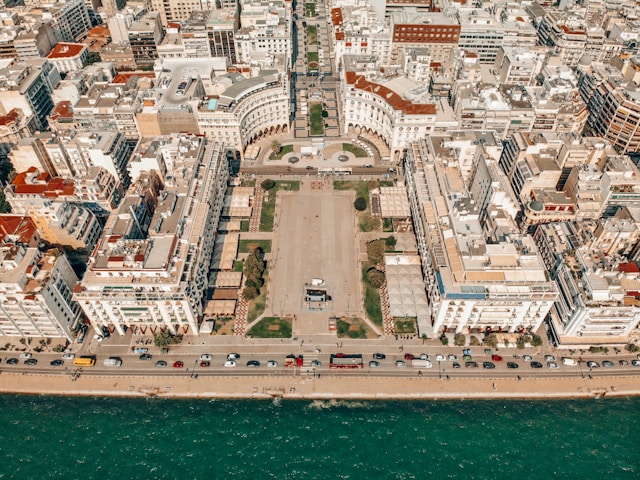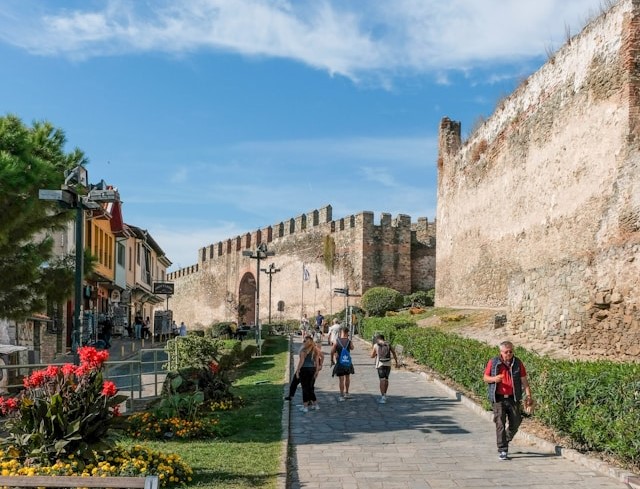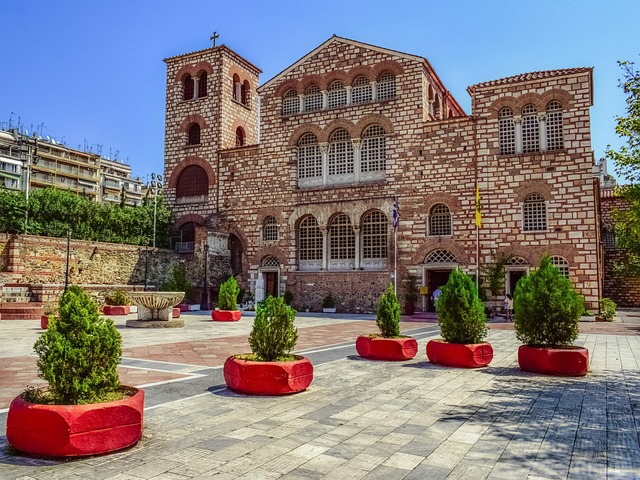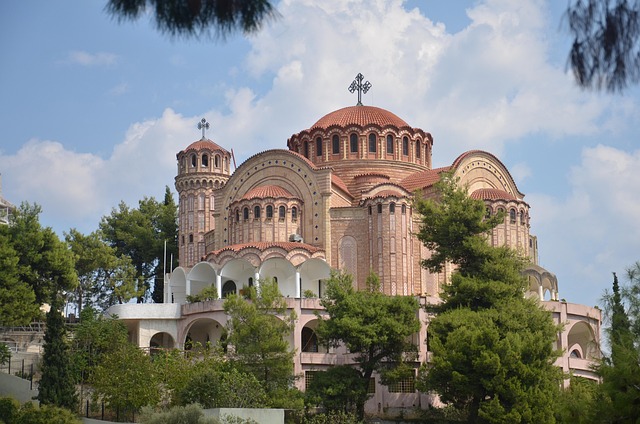
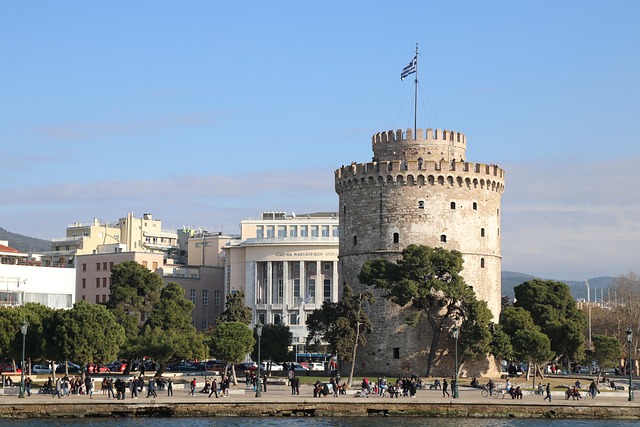
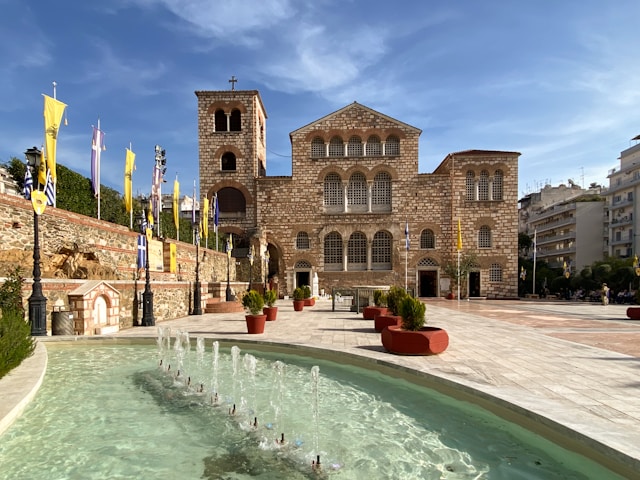
City view of Thessaloniki, Greece

Thessaloniki

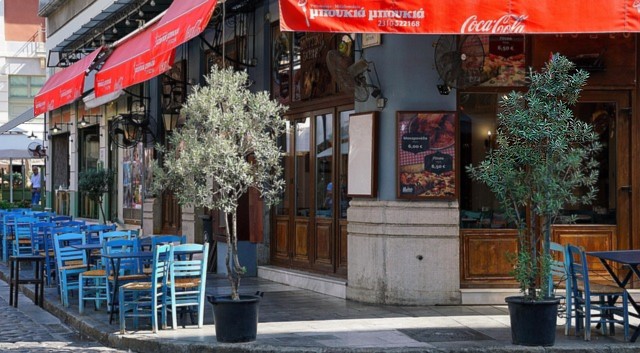
Thessaloniki, Greece’s vibrant second city, perches on the Thermaic Gulf as a living palimpsest of Roman, Byzantine, Ottoman and modern cultures. The UNESCO-listed Rotunda of Galerius (4th century) and its adjoining Arch stand beside the Ottoman-era White Tower, once a fortress and now a museum. In Ladadika, restored warehouses house traditional tavernas and bouzouki clubs, while Aristotelous Square’s grand neoclassical façades open onto a bustling seafront promenade. Dawn finds bakers selling hot bougatsa pastries and markets like Modiano brimming with fresh seafood, cheeses and spices. Climb the Heptapyrgion fortress walls for sweeping harbour vistas. Street-art murals and craft-beer bars animate Valaoritou’s side streets by night. Each November, the International Film Festival and Dimitria arts festival draw crowds to open-air performances. Seamlessly blending layered history, seaside charm and contemporary creativity, Thessaloniki invites exploration at every turn.

Top attractions & things to do in Thessaloniki

If you’re searching for the best things to do in Thessaloniki, this guide brings together the top attractions and must-see places to visit in Thessaloniki. The top picks below highlight the most visited sights for first-time visitors, plus a few local favorites worth adding.

Ano Poli (Upper Town) in Thessaloniki, Greece

Ano Poli (Upper Town)

Ano Poli, Thessaloniki’s only district to survive the 1917 fire, preserves the city’s oldest layers—Byzantine, Ottoman and Frankish. Winding cobblestone lanes wind between traditional Ottoman-era houses with wooden galleries and vibrant bougainvillea. Key landmarks include the Heptapyrgion fortress, built in 4th century and rebuilt by Ottomans in 1536, and the church of Panagia Chalkeon, founded in 1028 with remarkable frescoes. From the Eptapyrgio terrace, visitors gaze over the entire cityscape and Thermaic Gulf at sunset. Ano Poli’s atmosphere is enriched by small cafés offering honey-laced loukoumades and local tsipouro. Preservation efforts in 2004 restored crumbling walls and traditional homes. Blending medieval fortifications, authentic urban fabric, and panoramic overlooks, Ano Poli offers a timeless glimpse into Thessaloniki’s enduring spirit.
Ads place
Ads place
Ads place
Ads place
Ads place
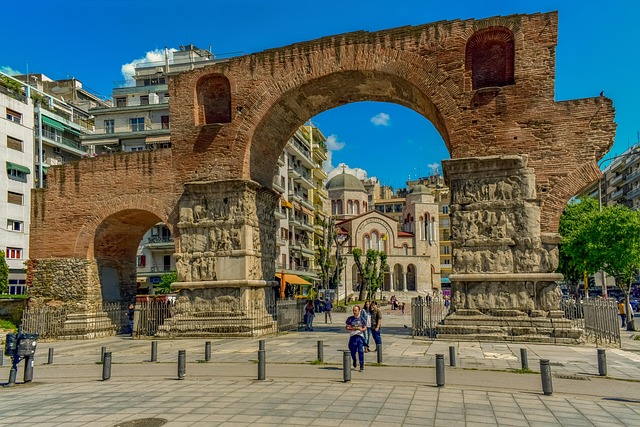
Arch of Galerius (Kamara) in Thessaloniki, Greece

Arch of Galerius (Kamara)

The Arch of Galerius, or “Kamara,” was erected in 297 AD to commemorate Emperor Galerius’s victory over the Persians. This imposing stone archway once formed part of a grand triumphal complex linking the Rotunda with the imperial palace. Its intricately carved relief panels depict battle scenes, captives, and imperial processions, highlighting Roman sculptural mastery. Restored in 1910, Kamara remains a bustling city gate where Aristotelous Square’s boulevard meets the Vassilissis Olgas Avenue. Each evening, locals gather beneath its vaulted passage for live rebetiko music and street food. In 2015, conservationists stabilized its foundations against seismic risk. The Arch of Galerius’s blend of imperial propaganda, public ritual, and modern urban life marks it as a timeless symbol of Thessaloniki’s layered identity.
Ads place
Ads place
Ads place
Ads place
Ads place
Aristotelous Square in Thessaloniki, Greece

Aristotelous Square

Aristotelous Square, designed in 1918 by French architect Ernest Hébrard, is Thessaloniki’s grand central plaza linking the port with the city’s heart. Flanked by neoclassical buildings with distinctive arcades and colonnades, its broad open space hosts open-air markets, concert stages, and seasonal festivals. At its center stands a statue of the philosopher Aristotle, celebrating the city’s Hellenistic roots under King Cassander. Cafés and patisseries spill onto the pavement, serving bougatsa and Greek coffee beneath umbrellas mirroring the square’s rhythm. Each summer, the Thessaloniki International Film Festival transforms the square into a cinematic hub with giant screens and celebrity appearances. Illuminated fountains dance at dusk to classical and modern music, while tram lines trace the perimeter, connecting to the Byzantium Walls and Rotunda. Aristotelous Square’s blend of classical homage, urban design, and lively events makes it Thessaloniki’s vibrant social stage.
Ads place
Ads place
Ads place
Ads place
Ads place
Byzantine Walls (Heptapyrgion) in Thessaloniki, Greece

Byzantine Walls (Heptapyrgion)

The Byzantine Walls, encircling Ano Poli, date from the 4th century and were reinforced by Emperor Theodosius II. The Heptapyrgion citadel—known locally as Yedi Kule—was adapted by Ottomans in 1430 and later served as a prison until 1980. Walking the ramparts, one encounters seven polygonal towers interconnected by double curtain walls, offering strategic viewpoints over the city’s rooftops and the sea. Archaeological excavations in 2010 uncovered Byzantine cisterns and medieval stables. At dusk, LED illumination highlights the masonry’s textures, evoking centuries of siege and defense. The adjacent Military Museum displays weaponry and maps from the Macedonian front of 1912–1913. The Byzantine Walls embody Thessaloniki’s layered fortitude, tracing a defensive legacy from antiquity through modern times.
Ads place
Ads place
Ads place
Ads place
Ads place
Church of Agios Dimitrios in Thessaloniki, Greece

Church of Agios Dimitrios

The Church of Agios Dimitrios, dedicated to the city’s patron saint, occupies the site where St. Dimitrios was martyred in 306 AD. The five-aisled basilica, rebuilt in 7th century, features a golden mosaic in the sanctuary depicting Christ enthroned among angels. Beneath the crypt lies the martyr’s silver-shrouded tomb, visited by thousands during the annual October feast day. In 1917, a catastrophic fire destroyed much of the church, but meticulous restorations completed in 1949 preserved its Byzantine frescoes and marble columns. The adjoining archaeological museum displays early Christian glassware, inscriptions, and reliquaries unearthed from the foundations. Candlelit services, choral hymns, and the scent of incense evoke centuries of devotion. Blending sacred architecture, dark martyrdoms, and vibrant community ceremonies, the Church of Agios Dimitrios remains Thessaloniki’s spiritual heart.
Ads place
Ads place
Ads place
Ads place
Ads place
Church of St. Paul in Thessaloniki, Greece

Church of St. Paul

The Church of St. Paul, perched on the seafront near the White Tower, was erected in 1903 to commemorate the Apostle Paul’s missionary work in Thessaloniki. Designed by Bavarian architect Ernst Ziller, its striking Byzantine-Revival façade features alternating bands of brick and stone, a tall slender bell tower, and a mosaic of St. Paul above the main portal. Inside, the nave is illuminated by stained-glass windows depicting scenes from the Acts of the Apostles, while the intricately carved marble iconostasis houses icons by renowned local painter Theofilos Hatzimichail. Annual celebrations on June 29 draw pilgrims who attend vesper services and venerate a silver reliquary said to contain fragments of the Apostle’s letters. The church survived the 1917 fire with minimal damage and was meticulously restored in 1999, preserving its original frescoes and cupola. Overlooking the Thermaic Gulf, the Church of St. Paul blends architectural elegance, spiritual heritage, and panoramic views into one of Thessaloniki’s most evocative sacred sites.
Ads place
Ads place
Ads place
Ads place
Ads place
Ladadika District in Thessaloniki, Greece

Ladadika District

Ladadika District, once the heart of the city’s 19th-century olive oil trade, has transformed into Thessaloniki’s premier nightlife quarter. Its network of cobbled streets is lined with restored neoclassical warehouses—once filled with barrels of oil and wine—now housing vibrant tavernas, jazz clubs, and gastropubs. The landmark Kapani Market, established in 1922, still pulses with merchants selling olives, pastrami and local spices by day. At night, Ladadika’s gas lanterns glow as bouzouki and rebetiko tunes drift from intimate venues. Street festivals, like the annual Ladadika Art Walk in 2018, activate murals and pop-up galleries among the historic façades. Ladadika District’s fusion of industrial heritage, contemporary culture, and culinary exploration makes it Thessaloniki’s liveliest entertainment hub.
Ads place
Ads place
Ads place
Ads place
Ads place
Modiano & Kapani Bazaar in Thessaloniki, Greece

Modiano & Kapani Bazaar

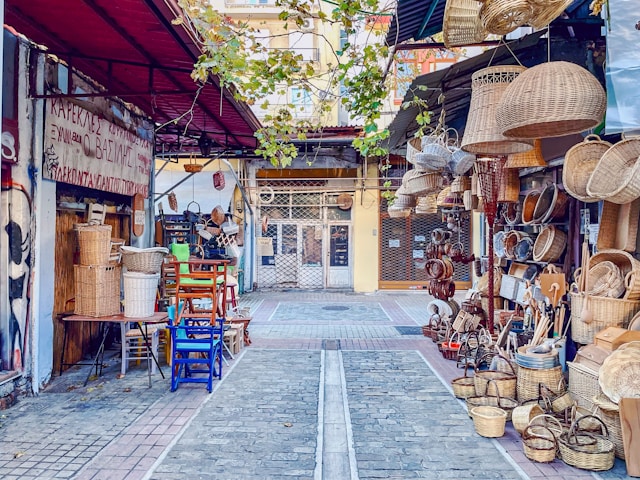
The Modiano & Kapani Bazaar district, Thessaloniki’s historic food quarter, dates back to the 15th century Ottoman era and was rebuilt after the 1917 fire. Named for wholesale merchant D’Modiano, Modiano Market’s iron-and-glass hall (constructed in 1922) anchors a labyrinth of narrow lanes lined with spice stalls, meat and fish counters, and stalls selling olives cured in local brine. Adjacent Kapani Market—whose name means “barn” in Turkish—still distributes fresh produce, cheeses, and the famed bougatsa pastry to cafés that spill onto flagstone alleys. In 2010, a municipal restoration project uncovered 17th-century stone-paved floors beneath the market, highlighting its Byzantine layers. Aromas of saffron, mastic and slow-cooked pork mingle under neon signs, while families and chefs haggle over phyllo sheets and smoked gyros. Seasonal festivals, like the Masoutis Ouzo Fair in March, activate the arcades with tastings and live rebetiko music. Blending Ottoman architecture, culinary heritage, and everyday bustle, Modiano & Kapani Bazaar remains Thessaloniki’s most authentic market experience.
Ads place
Ads place
Ads place
Ads place
Ads place
Rotunda of Galerius in Thessaloniki, Greece

Rotunda of Galerius

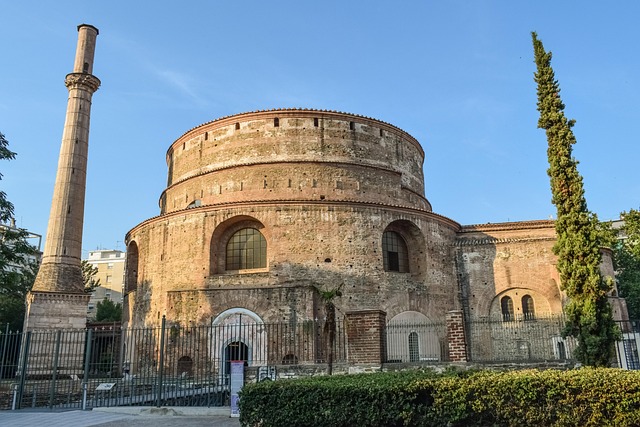
The Rotunda of Galerius, erected in 306 AD by Emperor Galerius, is one of Thessaloniki’s oldest monuments. Constructed as part of the imperial palace complex, its massive 24 m diameter drum and domed roof rival Rome’s Pantheon. In 330 AD, it was converted into a Christian basilica dedicated to St. George, its interior adorned with exquisite 5th-century mosaics of peacocks, vine scrolls and geometric motifs. Under Ottoman rule from 1590, the Rotunda served as a mosque, with the minaret still visible on its western side. Restorations in 1980 uncovered hidden frescoes and re-illuminated the mosaic masterpieces. Today, the Rotunda hosts occasional concerts, its perfect acoustics echoing through the vast circular hall. From its imposing exterior to its richly decorated interior, the Rotunda of Galerius encapsulates Thessaloniki’s imperial, spiritual, and multicultural legacy.
Ads place
Ads place
Ads place
Ads place
Ads place
White Tower in Thessaloniki, Greece

White Tower

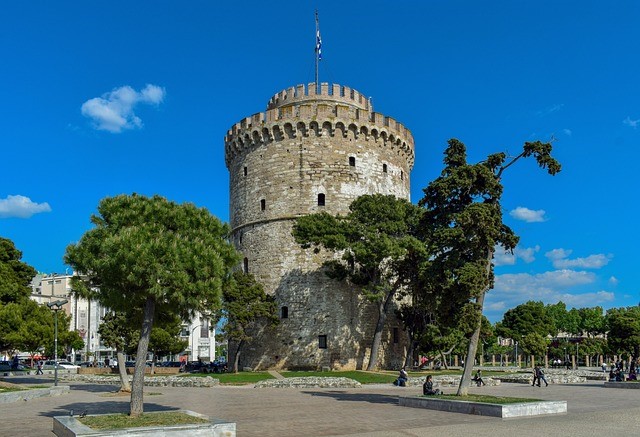
The White Tower, Thessaloniki’s most iconic landmark, stands guard on the city’s waterfront since its Ottoman reconstruction in 1535. Originally part of the Byzantine fortifications, its cylindrical silhouette and 23 m height made it both a prison and defensive bulwark. In 1912, Greek forces reclaimed the tower and painted it white to celebrate liberation, giving it the name it bears today. Inside, five floors of interactive exhibits chronicle Thessaloniki’s 2,300-year history—from its founding by King Cassander in 315 BC to its role as the Byzantine Empire’s second city. The rooftop terrace rewards visitors with 360° panoramas of the Thermaic Gulf, Aristotelous Square, and the distant peaks of Mount Olympus. Seasonal light shows project historic scenes onto the tower’s façade, while narrated walking tours trace its transformation from fortress to city symbol. Combining military architecture, urban lore, and cultural revival, the White Tower epitomizes Thessaloniki’s layered heritage.
Ads place
Ads place
Ads place
Ads place
Ads place