City view of Timisoara, Romania

Timisoara

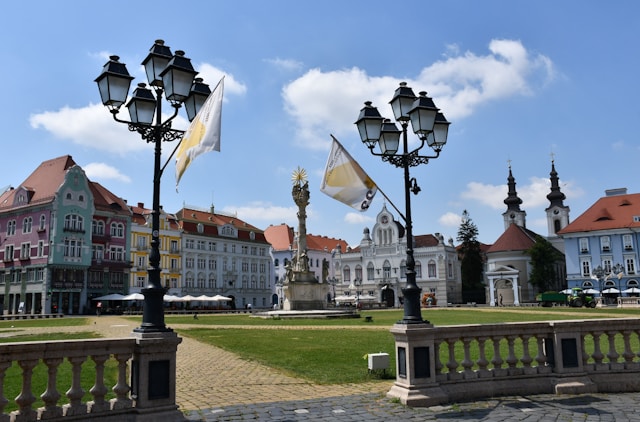
Timisoara welcomes with Secession facades and parkland, then reminds you it helped spark change in 1989 with a handful of protests that grew into revolution. Three central squares play musical chairs with cafes, Orthodox and Catholic spires, and pastel mansions, creating a daily loop of espresso and people-watching. The Bega Canal adds bike paths and leisurely boat rides, while student neighborhoods feed the city's appetite for galleries and street theater. Plates arrive generous: goulash meets sarma, and everyone claims their grandmother cooks the definitive paprikash. The former Habsburg outpost keeps its grid tidy but its conversations relaxed. Look for Serbian bakeries selling burek before dawn; they sell out by the hour. Tech companies settle into refurbished factories, proof that brick can learn new tricks. An unexpected bit of trivia: Timisoara was among Europe's first cities with electric street lighting, a habit of brightness it has never entirely lost.

Top attractions & things to do in Timisoara

If you’re searching for the best things to do in Timisoara, this guide brings together the top attractions and must-see places to visit in Timisoara. The top picks below highlight the most visited sights for first-time visitors, plus a few local favorites worth adding.

Banat Village Museum in Timisoara, Romania

Banat Village Museum

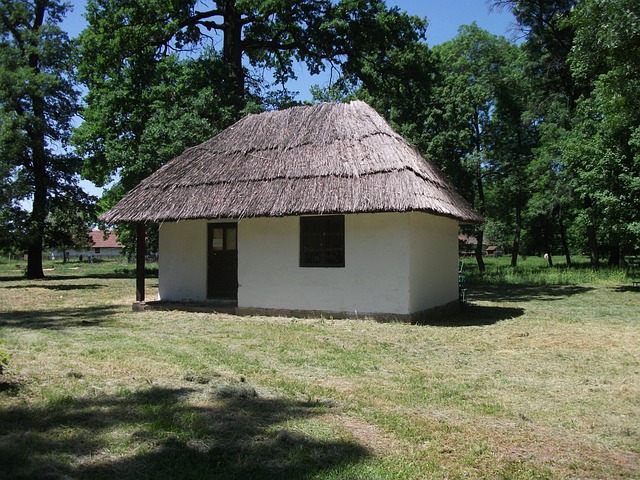
On a green edge of the city stands a village stitched from time and timber. Established in 1971, this open-air museum preserves farmsteads, mills, and wooden churches relocated from across the Banat. Curators emphasize the region’s blend of cultures—Romanian, Serbian, German, Hungarian—so barns sit beside Swabian houses and a 19th century inn. Seasonal fairs bring potters, blacksmiths, and bakers who make language unnecessary once the bread emerges. Children race between looms and maize cribs while elders trade stories about harvest rituals. The small wooden church, dark with resin and incense, keeps icons that traveled more than many parishioners ever did. During the communist decades, ethnographers fought to protect these buildings from “modernization,” a quiet act of civil courage. Walk the lanes at dusk and the crickets join your footsteps; it feels like a postcard made honest. The museum argues gently that progress and memory can share the same plot of ground.
Ads place
Ads place
Ads place
Ads place
Ads place
Bega Canal Promenade in Timisoara, Romania

Bega Canal Promenade

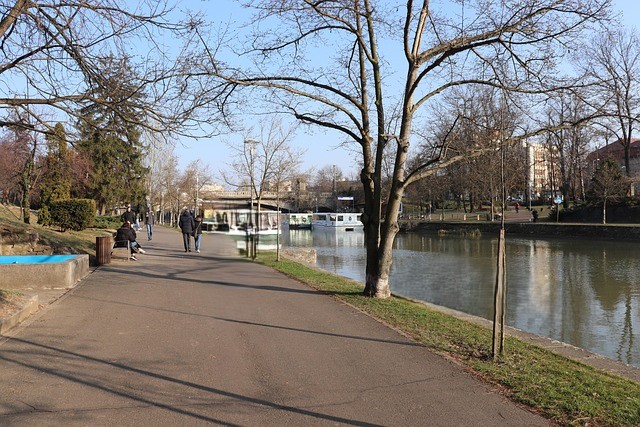
Water once powered mills and carried timber, now it stages bicycle bells and sunset walks. The Bega Canal was regulated in the 18th century under the Habsburg engineers, making Timisoara one of the first cities in the region with a navigable urban waterway. Today, sleek waterbuses share the channel with kayaks, connecting parks like beads on a string. Bridges catalog styles from sober concrete to elegant ironwork restored after 2000. In spring, willows drape the banks and cafes park their terraces so close you can count ripples. The old river port buildings whisper about grain tariffs and night watches, while new cycle paths encourage a different commerce: time exchanged for air. A favorite pause lies near the hydrotechnical lock, a modest piece of infrastructure that children watch like theater. Locals say the canal teaches patience; its current is unhurried, and that mood slowly recruits everyone walking alongside.
Ads place
Ads place
Ads place
Ads place
Ads place
Fabric District and Millennium Church in Timisoara, Romania

Fabric District and Millennium Church

Cross the canal and the city shifts from showroom to workshop. Fabric District grew with mills and tanneries in the 19th century, attracting artisans from across the empire. At its center towers the Millennium Church, a red-brick basilica completed in 1901, whose twin spires trace the horizon for returning workers. Streets reveal factories reborn as studios and microbreweries, a second life powered by creativity rather than steam. Tramlines rattle politely, and corner bakeries still sell kifli before dawn. The nearby Synagogue of Fabric, built in 1899, waits through a careful restoration, reminding passersby that pluralism once paid the rent here. Locals cherish the scruffy edges; they prove the neighborhood has not been ironed flat. Visit on a Saturday morning to catch the market’s accent soup—Serbian, Hungarian, Romanian—served with pickles and jokes. Progress here prefers the sound of tools to speeches.
Ads place
Ads place
Ads place
Ads place
Ads place
Liberty Square (Piata Libertatii) in Timisoara, Romania

Liberty Square (Piata Libertatii)

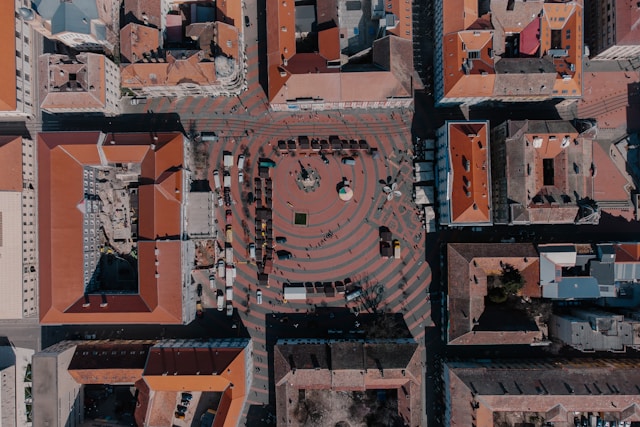
Red-brick paving and orderly trees create a salon under the sky, the oldest formal square of the city. Once the heart of the military and administrative quarter under the Habsburgs, it hosted executions, proclamations, and the daily machinery of empire. The St. Mary statue at its center recalls a deliverance from plague in the early 18th century, a theology of gratitude written in stone. Today, the Old City Hall and the Military Casino watch over chess boards and street painters. Jazz evenings set up a portable stage and the acoustics bounce kindly between facades. Look closely at the former garrison buildings and you will see dates of 1731 and later renovations that kept symmetry fashionable. The square’s calm is earned. It has absorbed enough noise to prefer conversation at human volume. Order a lemonade and practice the local sport of unhurried observation.
Ads place
Ads place
Ads place
Ads place
Ads place
Metropolitan Cathedral in Timisoara, Romania

Metropolitan Cathedral

Step from traffic into a nave of warm brick and filtered light, where candles make the air feel thick with intention. Completed in 1946 to a design by Ion Traianescu, the cathedral fuses Moldavian and neo-Byzantine notes, crowned by eleven towers clad in glazed tiles. Below the main floor a crypt-museum shelters icons and early-20th century embroideries that survived war and regime change. The bells, cast in 1938, carry across Victory Square like a calm announcement. During December 1989, demonstrators sought refuge on these steps, and priests offered water and prayers while the city negotiated its future. Frescoes show saints sharing space with folk motifs, a localized theology of color and pattern. Outside, the small park becomes an antechamber where students read and grandparents measure time by pigeons. However busy you arrive, the cathedral edits your pace, then returns you to the boulevard with steadier breath.
Ads place
Ads place
Ads place
Ads place
Ads place
Piata Victoriei in Timisoara, Romania

Piata Victoriei

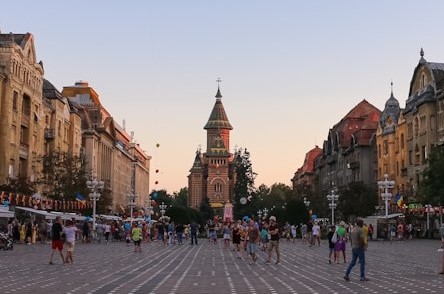
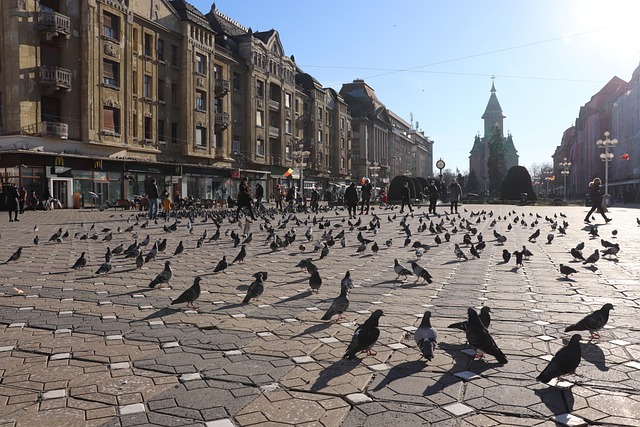
Arcades throw steady shade while a long promenade funnels you toward the cathedrals copper roofs and the hum of evening plans. Here the city learned to speak publicly: on December 20, 1989 crowds filled the boulevard and heard from the balcony of the National Opera that Timisoara was the first free city. That sentence still seems to hover over the paving stones. At the opposite end rises the Metropolitan Cathedral, its bells timing rendezvous as street vendors roast seeds beneath plane trees. Architecture flips through chapters, from Secession curves to stern modernism, yet the square keeps a patient rhythm of families, students, and veterans sharing benches. In the interwar years locals strolled the Corso, and the habit persists: window shopping, gossip, and careful evaluations of umbrellas when rain threatens. Sit with lemonade and watch the lights come on one facade at a time, the plaza turns theatrical without noise, and you realize the best souvenir here is a memory with a date attached.
Ads place
Ads place
Ads place
Ads place
Ads place
Roses Park (Parcul Rozelor) in Timisoara, Romania

Roses Park (Parcul Rozelor)

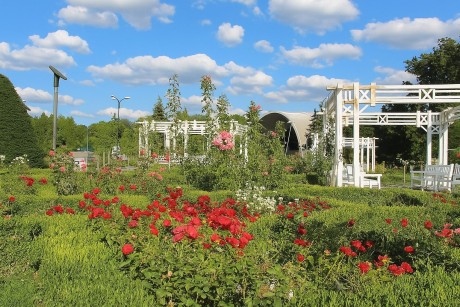
An amphitheater of petals and music sits close to the Bega, staging summer nights that smell faintly of jam. First planted in 1928 with help from German horticulturists, the park grew into a living catalog of varieties, later reimagined after wartime damage in the 1950s. The open-air theater hosts operetta and folk ensembles, carrying on a habit that started in the interwar years. Paths loop past trellises heavy with blooms, while plaques name cultivars with the seriousness of a library. During June, festivals invite choirs and tango bands; autumn brings gardeners trading cuttings like recipes. The park’s surprising resilience shows in archives that list how roses were evacuated and replanted, a botanical evacuation plan that actually worked. Bring a book and resign yourself to staying longer than intended. Even on quiet days, a rehearsal drifts over the hedges, and you leave with a tune you did not know you knew.
Ads place
Ads place
Ads place
Ads place
Ads place
Theresia Bastion in Timisoara, Romania

Theresia Bastion

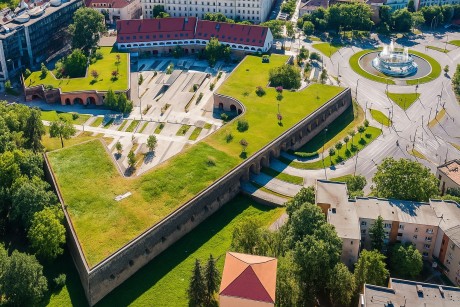
A wedge of brick and vaulted passageways reminds visitors that geometry once kept the city safe. The Theresia Bastion formed part of the star-shaped fortifications rebuilt after 1716 when Eugene of Savoy drove out the Ottomans. Its casemates now house galleries, bookstores, and cafes, a textbook case of adaptive reuse that began after careful restorations in the 2000s. Inside, interpretive displays explain how ravelins, glacis, and moats worked together like a well-tuned machine. Stand on the ramp and you can read the old lines of fire along modern boulevards. A bronze of Carol of Habsburg nearby nods to the imperial engineers who loved mathematics as much as mortar. Evenings are best, when bricks hold the day’s warmth and conversations bounce softly off the arches. The bastion proves fortifications can retire into culture without losing their edge; they simply defend memory instead of territory.
Ads place
Ads place
Ads place
Ads place
Ads place
Union Square (Piata Unirii) in Timisoara, Romania

Union Square (Piata Unirii)

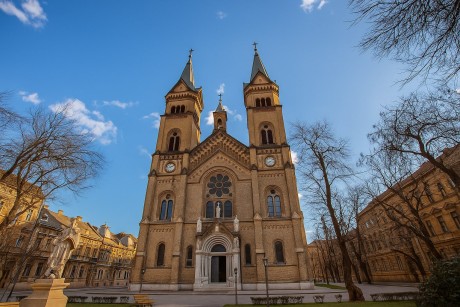
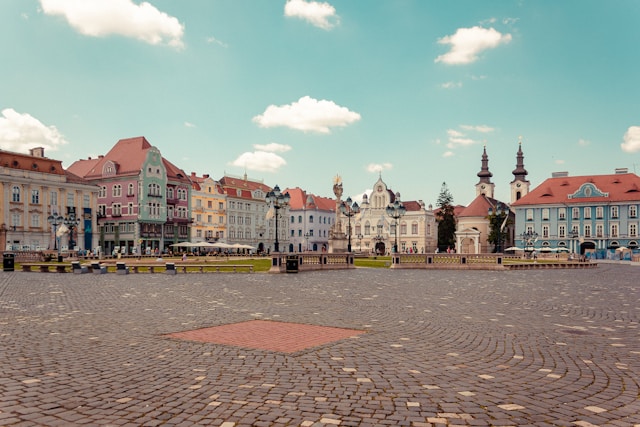
Pastel facades gather around a generous rectangle where conversation moves as easily as the light. The square took shape under the Habsburg administration after 1716, when Ottoman rule ended and urban planners drew streets like a chessboard. At one end rises the Roman Catholic Cathedral, across from the Serbian Orthodox Cathedral, a daily reminder of the city’s layered faiths. Beneath the cobbles runs an old network of vaulted cellars that once cooled wine and kept merchants honest. Cafes spill outward, yet the story remains architectural: the Baroque Palace now houses the Art Museum with canvases by Corneliu Baba. Guides point to the Plague Column erected in 1740, gratitude cast in stone after a hard season. Sit long enough and you will notice the rhythm of bicycles and wedding parties, proof that public space here is not staged but lived. Sunset turns stucco to honey, and the square edits noise into a friendly murmur.
Ads place
Ads place
Ads place
Ads place
Ads place
Victory Square and National Opera in Timisoara, Romania

Victory Square and National Opera

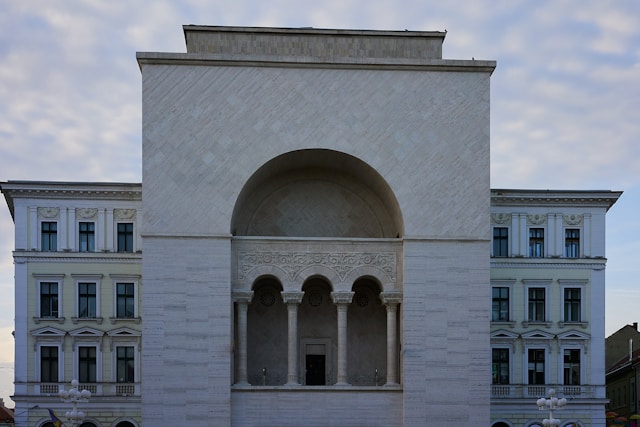
This long boulevard functions as the city’s living room, framed by arcaded palaces and anchored by the theater where history changed course. On December 20, 1989, crowds gathered here and heard a declaration that Timisoara was the first “free city” of Romania, a line amplified from the balcony of the National Opera. The plaza’s axial view ends at the Metropolitan Cathedral, its coppery roofs rising like a stage set. Fountains divide walkers from window-shoppers, and summer brings open-air performances that echo toward the colonnades. Architectural layers stack from Secession curves to modernist experiments, while mosaics in the pavement keep a steady rhythm underfoot. Vendors sell roasted seeds like metronomes of evening, and the smell of popcorn drifts past protest banners or orchestras, depending on the week. Look up and you will see bullet scars still visible on a few facades, tiny commas in a sentence the city keeps rereading with care.
Ads place
Ads place
Ads place
Ads place
Ads place