
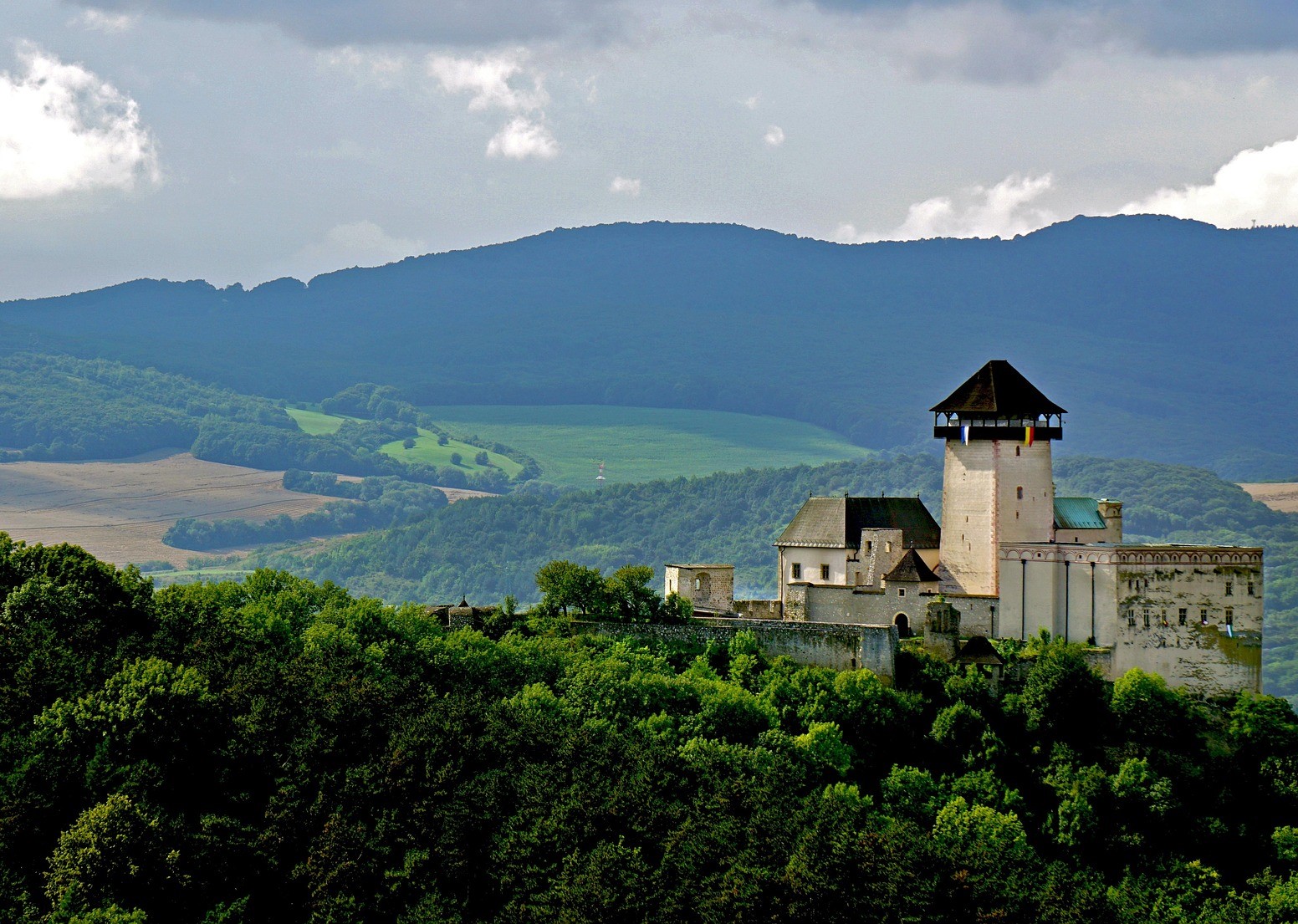
City view of Trencin, Slovakia

Trencin

Trencin is defined by its cliff top fortress writing a strong line across the valley. Roman soldiers once carved a Latin inscription into nearby rock, a message that still makes historians grin. The town below is easygoing, built for river walks and long lunches featuring river fish when the season cooperates. Boutiques occupy burgher houses and a jazz club sneaks great acoustics into medieval stone. Climb the castle towers for breezes and battlefield views, then reward the legs with kremes from a cafe that has perfected cream physics. Cyclists love the path toward Trencianske Teplice, ending with spa water and retro colonnades. Summer weekends bring open air theater where swallows share the stage between lighting cues. Odd fact remembered fondly, the city once staged a fashion show on the castle ramparts and the wind behaved like a professional stylist, which tells you everything about local confidence and humor.

Top attractions & things to do in Trencin

If you’re searching for the best things to do in Trencin, this guide brings together the top attractions and must-see places to visit in Trencin. The top picks below highlight the most visited sights for first-time visitors, plus a few local favorites worth adding.

Brezina Forest Park in Trencin, Slovakia

Brezina Forest Park

Five minutes from the center, the pavement gives way to needles and birdsong: Brezina is Trencin's green backrest. Paths climb toward lookouts that frame the town and castle in changing proportions, a free lesson in viewpoints and pace. In spring the understory trades shades of green; in winter the trunks draw clean lines against sky. Waymarkers loop into family-friendly circuits, and fitness stations punctuate longer routes for practical pauses. A small memorial route recalls 20th century upheavals with quiet signage, while conservation boards explain how guidelines shape trimming and habitat. Cyclists share wide sections, hikers keep to softer trails, and everyone learns that maintenance is the quiet hero of parks. At sunset, the ridge collects a last band of light and the city resets below. Bring water, good shoes, and unhurried company; the forest will handle the rest.
Ads place
Ads place
Ads place
Ads place
Ads place
Mierove Namestie and Town Tower in Trencin, Slovakia

Mierove Namestie and Town Tower

The square meets you with a confident rectangle of facades, a stage where errands turn into promenades. Merchant houses keep Renaissance and later rhythms over older plots, while arcades turn weather into theatre. At one end stands the Town Tower, often dated to the 16th century and reworked in the 18th century, its gallery offering a modest climb and a generous view. A plague column centers the space with gratitude cast in stone, and shopfronts carry understated signs that respect the old grid. Guides point out faint sgraffito and reused blocks with mason marks—economy that doubles as preservation. On market days, stalls sketch a temporary choreography; at dusk, stucco catches a second light and the square becomes reflective in every sense. From here the castle aligns the skyline like a bookmark, and street clocks keep an honest, civic tempo. Good urbanism needs no manifesto: a bell, a bench, and a rectangle that invites conversation.
Ads place
Ads place
Ads place
Ads place
Ads place
Piarist Church of St Francis Xaverius in Trencin, Slovakia

Piarist Church of St Francis Xaverius

Step inside and the air seems arranged for listening before anyone speaks. Raised by the Piarists in the early 18th century, the church wears a measured Baroque vocabulary: stucco scrolls, balanced cornices, and an altar that prefers clarity to spectacle. The order's mission combined teaching with devotion, so side chapels once served both catechism and comfort. An image linked to St Francis Xaverius gathers candles and travel stories, while the pulpit demonstrates how rhetoric used to travel by voice. Conservators note campaigns in the 20th century that stabilized roofs and refreshed pigments with reversible glazes. During rehearsal the organ tests a chord that blooms down the nave like a warm draft; even silence feels room-shaped. Look for discreet crests of local patrons who treated generosity as infrastructure. Step back outside and the facade holds its poise against everyday errands—proof that scholarship, music, and prayer once shared a timetable.
Ads place
Ads place
Ads place
Ads place
Ads place
Roman Inscription Laugaricio in Trencin, Slovakia

Roman Inscription Laugaricio

Beneath the castle rock, a slab of Latin declares victory with the confidence of a headline. The 179 AD inscription, cut by soldiers of Legio II Adiutrix, records operations near a place the Romans called Laugaricio, giving Trencin one of Central Europe's clearest on-the-spot Roman notes. The letters survive against weather thanks to the cliff's shelter and periodic conservation that favors reversible methods. A viewing terrace explains the text line by line, translating ranks and abbreviations so the stone becomes a readable dispatch. Context panels sketch the Empire's frontier logistics along the Danube, and maps show how marching routes braided with river traffic. Look closely and you will see tool marks where chisels paused; the craft feels immediate across centuries. Evening light helps the serifs stand out, but morning quiet rewards patient readers too. The rock is not a museum case, yet it functions like one—evidence anchored exactly where the report was filed.
Ads place
Ads place
Ads place
Ads place
Ads place
Trencin Castle in Trencin, Slovakia

Trencin Castle

Climbing the hill feels like paging through a rugged notebook where stone remembers every argument. The castle grew from a core associated with Matthias Csak in the early 14th century, then expanded into upper, middle, and lower wards that read as chapters rather than add-ons. From the ramparts you read the Vah valley like a logistics diagram; inside, the museum walks you past armor, maps, and a sober chronology of sieges. The slender Mathew's Tower rises as a lookout and emblem, while a courtyard well reputedly sinks to impressive depth—a practical miracle in dry times. Fire and repairs in the 18th century left careful fingerprints that conservators now interpret with limewash and patience. Stand near the gatehouse and you will notice stonemasons' marks repeating like signatures. At sunset the walls turn honey-colored and the town resets its tempo below. It is not just a fortress; it is an index of how power, trade, and topography learned to share one ridge.
Ads place
Ads place
Ads place
Ads place
Ads place