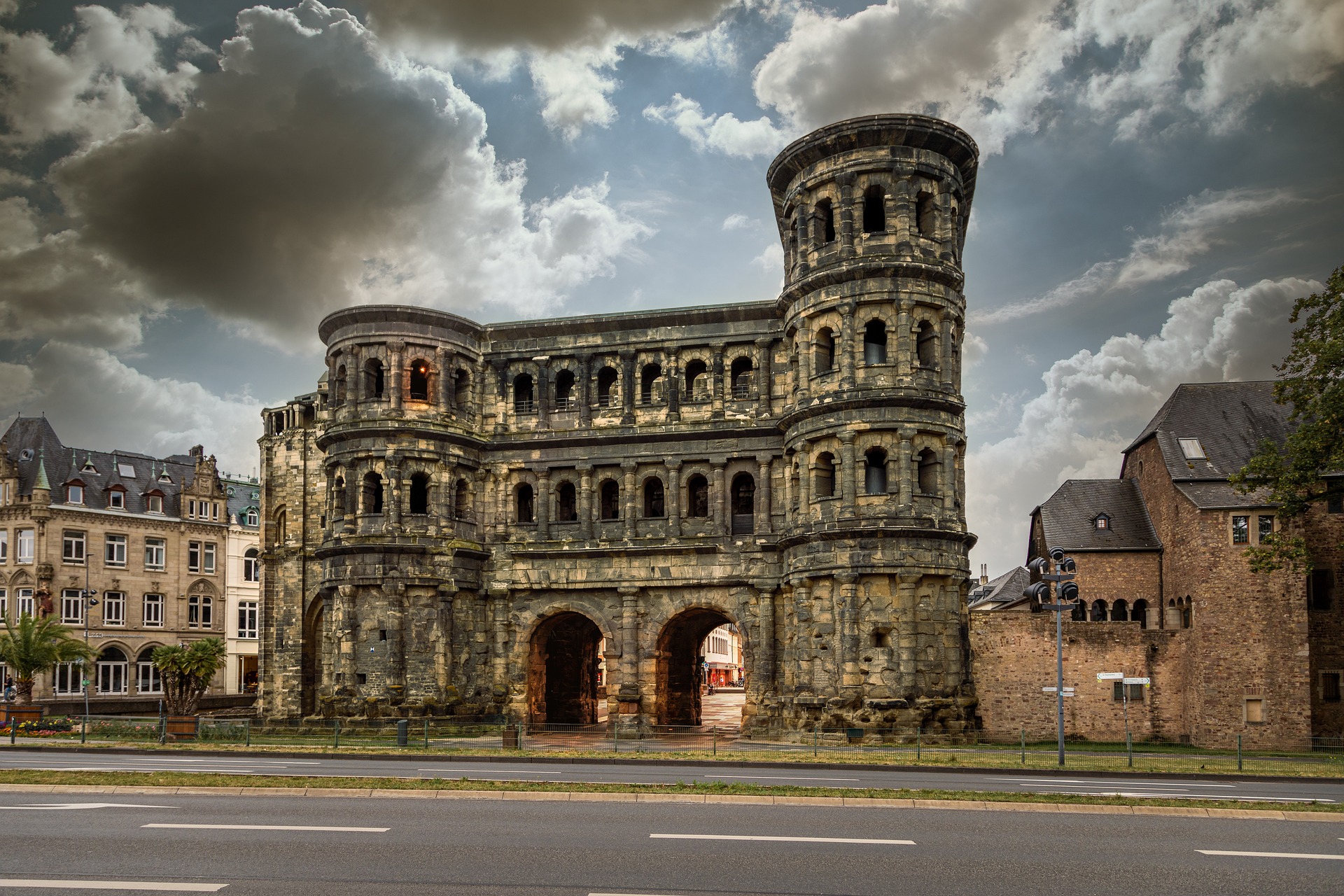

City view of Trier, Germany

Trier

Trier, known as Germany's oldest city, boasts an impressive collection of Roman and medieval monuments. The Porta Nigra, a well-preserved Roman city gate, is a testament to the city's ancient heritage. Trier's UNESCO-listed Roman sites include the Imperial Baths and the Roman Amphitheatre. The city's cathedral, Trier Cathedral, houses relics such as the Holy Robe. Trier's market square is lined with colorful buildings and cafes. The city's location in the Moselle wine region provides opportunities to sample local wines. With its rich history, architectural landmarks, and vibrant cultural scene, Trier is a must-visit for history enthusiasts.

Top attractions & things to do in Trier

If you’re searching for the best things to do in Trier, this guide brings together the top attractions and must-see places to visit in Trier. The top picks below highlight the most visited sights for first-time visitors, plus a few local favorites worth adding.

Basilica of Constantine in Trier, Germany

Basilica of Constantine

The Basilica of Constantine, also known as the Aula Palatina, is a monumental Roman building located in the heart of Trier. Built by Emperor Constantine in the early 4th century, the basilica served as the throne hall for the emperor. The building's impressive size and architecture make it one of the largest Roman buildings to have survived in Europe. Its massive interior, with a vaulted roof and massive columns, reflects the grandeur and power of the Roman Empire. Today, the Basilica of Constantine is used as a Protestant church, and visitors can explore its vast, open interior. The building's historical significance, combined with its imposing presence, makes it one of Trier's most important attractions. The Basilica of Constantine is a reminder of the city's role as the capital of the Western Roman Empire during the reign of Constantine the Great.
Ads place
Ads place
Ads place
Ads place
Ads place
Karl Marx House in Trier, Germany

Karl Marx House

The Karl Marx House in Trier is the birthplace of Karl Marx, the famous philosopher, economist, and political theorist. The house has been converted into a museum that explores the life and ideas of Marx, offering insights into his upbringing in Trier and his revolutionary contributions to social and political thought. The museum is divided into several exhibits that showcase Marx's writings, personal belongings, and the historical context in which he lived. Visitors can learn about Marx's impact on the development of socialist and communist movements, as well as his influence on global politics. The Karl Marx House is a significant cultural and historical landmark in Trier, drawing visitors from around the world who are interested in Marx's legacy and the intellectual history of the 19th century. Little-known fact: The building was seized by the Nazis in 1933 and used as a printing press before being restored as a museum in 1947. The museum also displays Marx's original desk and a first edition of The Communist Manifesto annotated by Friedrich Engels.
Ads place
Ads place
Ads place
Ads place
Ads place
Porta Nigra in Trier, Germany

Porta Nigra

The Porta Nigra is one of the most iconic landmarks in Trier and is a must-see for history enthusiasts. Built around 180 AD, it is one of the best-preserved Roman gates in Europe. The Porta Nigra served as the northern city gate to the Roman city of Augusta Treverorum and was originally a magnificent structure made of sandstone. Over the centuries, the gate underwent various modifications, including being converted into a church in the Middle Ages. Today, it stands as a symbol of Trier's rich Roman history and is a UNESCO World Heritage site. Visitors can explore the gate's impressive architecture and climb to the top for a panoramic view of the city. The Porta Nigra is also home to a museum that showcases Trier's Roman past, with artifacts and exhibits that offer a glimpse into life during the Roman Empire. The monument is a testament to Trier's role as one of the oldest cities in Germany.
Ads place
Ads place
Ads place
Ads place
Ads place
Roman Amphitheater in Trier, Germany

Roman Amphitheater

The Roman Amphitheater in Lecce is a remarkable ancient structure located in the heart of the city. Dating back to the 2nd century AD, this amphitheater once hosted gladiator battles and various public spectacles, reflecting the cultural significance of Lecce during the Roman Empire. Today, the amphitheater serves as a fascinating reminder of the city's Roman heritage. Although it is partially buried under modern buildings, the amphitheater is still an impressive sight to behold. The structure's size and the remnants of its seating area give visitors a sense of the scale and grandeur of the events that once took place there. Its historical importance is not just in its age but also in the way it showcases the engineering prowess of the Roman Empire. The amphitheater is a captivating site for history enthusiasts, archaeologists, and anyone interested in exploring Lecce's deep roots in antiquity. Despite being partially excavated, the site is a significant draw for visitors looking to understand the city's ancient past. The amphitheater is part of a larger archaeological complex that highlights the rich history of Lecce, making it an essential stop for anyone visiting the city.
Ads place
Ads place
Ads place
Ads place
Ads place
Trier Cathedral in Trier, Germany

Trier Cathedral

Trier Cathedral, also known as the Cathedral of Saint Peter, is the oldest cathedral in Germany and one of the most significant religious buildings in the country. The cathedral's origins date back to the 4th century when Emperor Constantine built a basilica on the site. Over the centuries, the cathedral was expanded and remodeled, resulting in a stunning mix of Romanesque, Gothic, and Baroque architectural styles. Inside, visitors can admire exquisite stained-glass windows, medieval frescoes, and the famous Holy Robe, which is believed by some to be the tunic worn by Christ at his crucifixion. The cathedral's impressive bell tower, which rises high above the city, is a prominent feature of the Trier skyline. Visitors can explore the cathedral's history and architecture while also enjoying the peaceful atmosphere inside. The Trier Cathedral is not only a place of worship but also a symbol of the city's long Christian heritage.
Ads place
Ads place
Ads place
Ads place
Ads place