
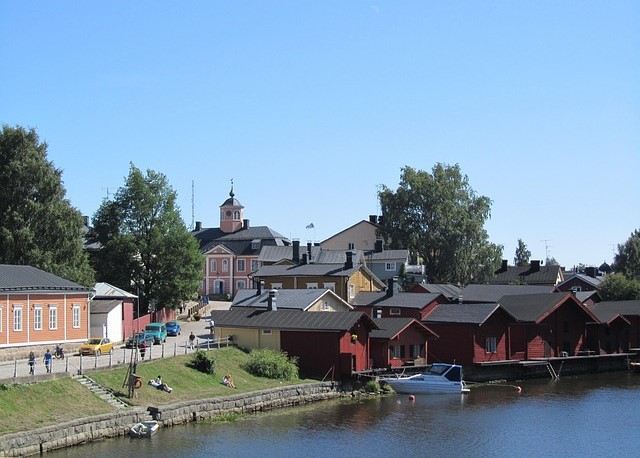
Itainen Rantakatu Riverside Warehouses
In Turku, Finland .
More places to visit in Turku
Discover more attractions and things to do in Turku.
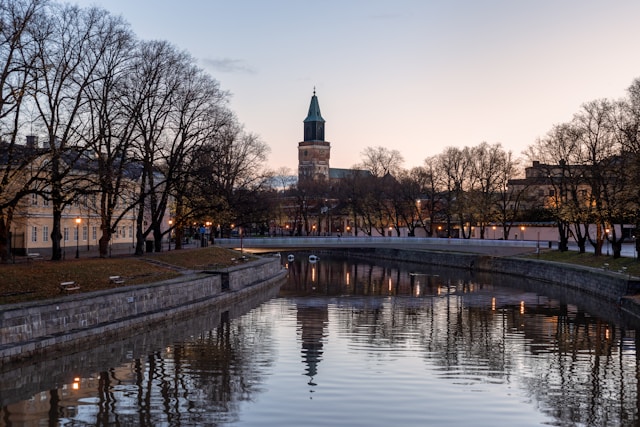
Aura River Riverside
In Turku, the fastest way to get your bearings is to follow the Aura River and let the city unfold along its banks. The river runs about 70 km from Oripaa to the Archipelago Sea , and in the center it becomes a public living room stitched together by footbridges. Cafes, museum ships, and terraces lean toward the water, while locals treat the quays as a daily commute route and a weekend lounge. Aurajoki is known for its brown color, a plain-spoken reminder that farmland and runoff shape the valley upstream. The basin covers roughly 885 km2 , and the flow can feel surprisingly quick after rain, even when the surface looks calm. Pick a simple walk from the cathedral down toward the castle, pausing mid-bridge to watch reflections break into small squares. In winter, snow dulls the sound and you hear the current more clearly; in summer, the light lingers and turns the water metallic. Bring coffee, sit facing the boats, and you will understand why Turku always feels both inland and maritime at once.
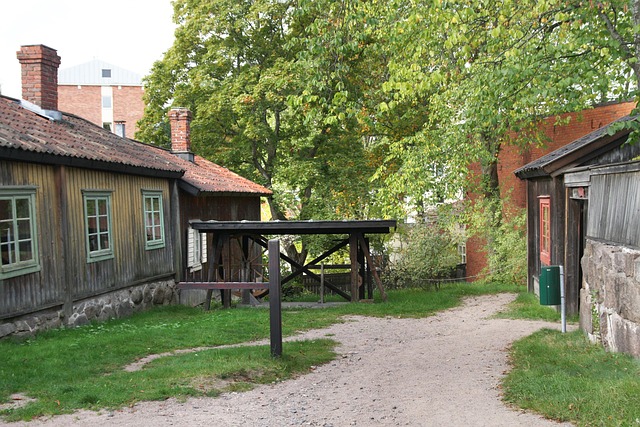
Luostarinmaki Handicrafts Museum
Luostarinmaki feels less like a museum and more like a neighborhood that simply decided to keep its doors open. It is Turku's best-preserved wooden quarter, spared by the Great Fire of 1827 and opened to visitors in 1940 . Instead of grand galleries, you wander lanes of small houses and workshops arranged around closed courtyards , a layout that once kept wind out and community in. Rooms are staged as working spaces for shoemakers, weavers, and printers, with tools on hooks and surfaces marked by soot and use rather than polish. The story focuses on everyday city life in the 18th century and 19th century , when a town quarter worked as a practical ecosystem of trades. Look for details museums usually hide: worn thresholds, low ceilings that conserve heat, and tiny windows placed for light without draft. Finding it is easy at Vartiovuorenkatu 2 , yet the atmosphere feels removed from modern traffic. Visit in winter for quiet lanes, or in summer when demonstrations and small events make the wood-and-work feel freshly alive.
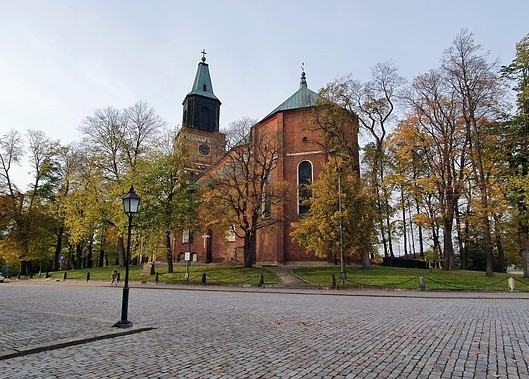
Old Great Square
Old Great Square feels like Turku's original stage, where the city can perform its history without needing a costume. From the 13th century onward this was the administrative and commercial heart, and the proportions still suggest markets and proclamations. After the Great Fire of Turku in 1827 , the northern side became parkland, but the southern edge kept a line of buildings rebuilt in Neoclassical moods. The best-known is Brinkkala Mansion , whose balcony hosts the annual Christmas Peace proclamation, a ritual that turns a quiet corner into a civic headline. Walk slowly and notice how the square links cathedral streets to the river, letting you move from sacred space to public life in minutes. Summer brings the medieval market and small concerts; winter feels more contemplative, with lanterns and crisp cobbles. Come early for clean photos and a sense of scale, then return later when people fill the edges with coffee cups and conversation. It is not the busiest square in modern Turku, but it may be the one that explains the city best.
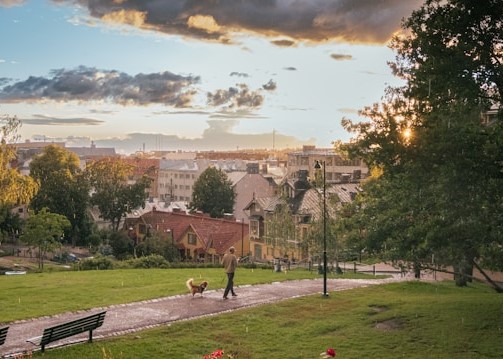
Puolala Park (Puolalanpuisto)
A gentle climb above the center brings you to a pocket of calm where Turku suddenly looks softer, as if the city has been folded into a postcard. Puolala Park sits on a small ridge, and much of its vegetation was planted in the early 1900s , favoring native Finnish species that handle wind and winter without drama. The lawns and paths unfurl behind the Turku Art Museum , and a nearby courtyard reveals the old wooden houses of Iso-Puolala , a reminder that the city's story is not only stone and brick. Turku is often described as a city of 7 hills , and this viewpoint explains why: trails rise, level out, then open to rooftops and distant water. Come at golden hour when the grass turns luminous, or after fresh snowfall when footsteps sound padded. Benches face the panorama, making it a natural pause between museums, cafes, and the riverside. Pack a coffee, take one slow loop, and let the skyline do the talking. In summer, it doubles as a picnic slope for students.
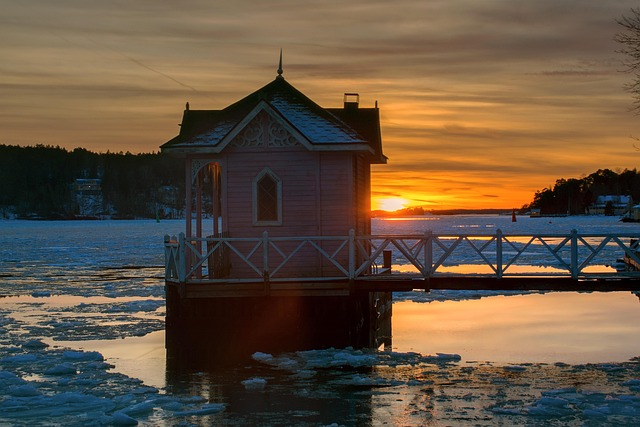
Ruissalo Island
Ruissalo is where Turku goes to breathe, an island that feels like a weekend trip even though it sits right on the city's edge. The outdoor area covers about 23.1 km2 , mixing rocky shoreline, meadows, and some of Finland's most extensive oak forests , where rare species thrive in the old canopy. Along the roads you will spot delicate 19th-century villas, reminders that Ruissalo was once the leisure landscape of a growing port city. Nature trails and bike paths loop through grazing fields and sandy corners like Saaronniemi, so you can choose anything from a short stroll to a full day of pedaling. Because the island sits in the Archipelago Sea , the light changes fast: one moment bright, the next filtered through sea haze and leaves. In summer, the atmosphere turns festive during Ruisrock , but on ordinary days the best plan is simple: walk to a viewpoint, listen for birds, then end with coffee near the waterfront. Bring layers even in July; the sea breeze can flip the mood from picnic to brisk in minutes.
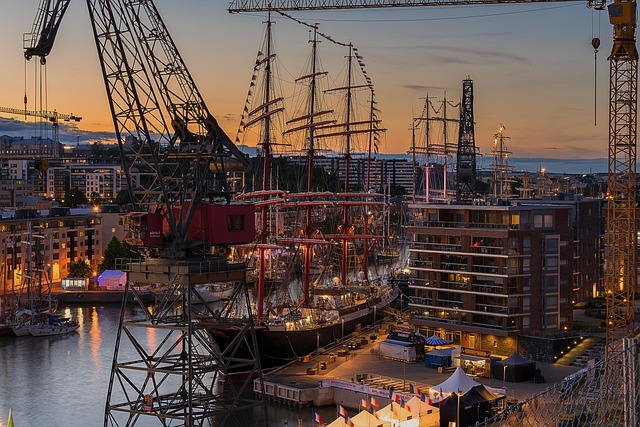
The Tall Ships Races Turku
On a warm July evening, the Aura riverbank turns into a floating boulevard, with masts rising above cranes and music carrying over the water. The Tall Ships Races arrives as a city-wide harbor festival, and in 18-21 July 2024 Turku welcomed over 60 sailing vessels from 16 countries , moored along the riverside streets and quays. If you want the best view, walk from the cathedral end down toward the castle, then pause where the ships pack tight and the rigging forms a lace skyline. The event has proved its pull before: in 2017 it drew about 500,000 visitors , and organizers say the races return to Turku every four years going forward. Many ships open their decks for quick visits, and the quayside stalls keep the air busy with coffee and warm pastries. Beyond the photogenic hulls, there are crew competitions, family programs, and late-night lights reflected in the Aura like rippling brass. Even if you do not board a ship, watching the tall silhouettes arrive almost overnight makes Turku feel briefly ocean-sized.
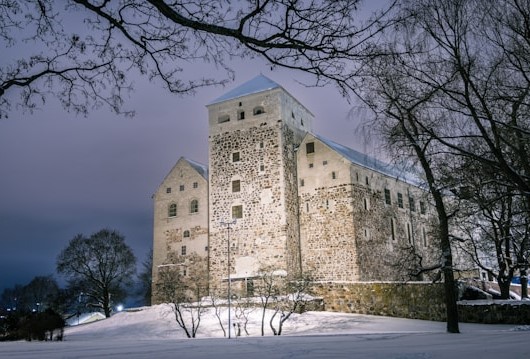
Turku Castle
Turku Castle wears its history like layered stone, stern at first glance and surprisingly human once you step inside. Its construction began in the 1280s as a Swedish stronghold at the river mouth, then grew into the key seat of power in southwest Finland. In the early 14th century , Commander Mats Kettilmundsson was already staging a knightly court behind these walls. Court life later reached its most glittering phase under Duke John in the 1550s and 1560s , when rooms were refashioned for ceremony as much as defense. Walk the medieval keep, then notice how later ambitions soften the fortress logic with wider staircases and brighter chambers. Exhibits lean on armor, models, and everyday objects instead of long panels, so you sense how a garrison actually lived here. After serving as barracks and storage in the 18th century , the castle became a museum where restoration still echoes in the masonry. Finish outside by following the riverside promenade toward the harbor, and you will feel how Turku grew around this anchor.
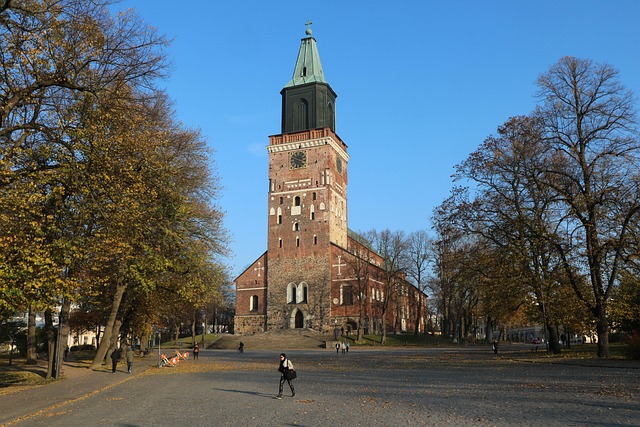
Turku Cathedral
Turku Cathedral makes the city feel older, quieter, and more serious the moment you step inside. Work began in the late Middle Ages and the stone church was consecrated in 1300 , becoming the symbolic heart of Finnish Lutheran life. Its body stretches about 89 m , and the tower rises to roughly 85.5 m , so it anchors views along the river. Architecturally it carries Gothic bones with later layers, and the side chapels read like footnotes in stone. After the Great Fire of Turku in 1827 , much of the interior was rebuilt, which is why medieval masonry and newer details sit side by side. Look for the calm light, the echo in the nave, and the sense that this is still a working cathedral, not a staged relic. Outside, the lanes lead naturally toward the Old Great Square, so you can trace the medieval center in one walk. Visit on a weekday when a short organ rehearsal turns the vastness into something personal, then step out and notice how everyday Turku snaps back into focus.
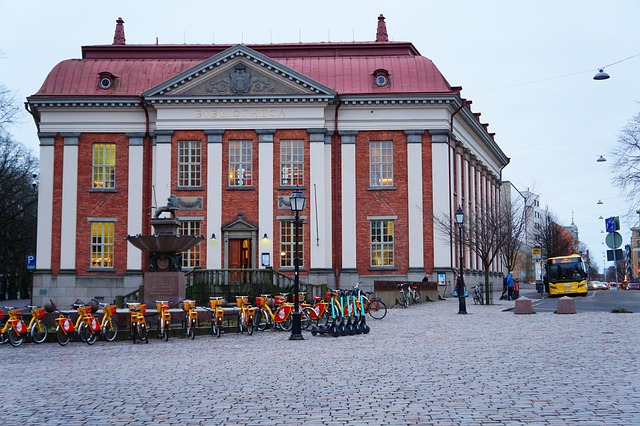
Turku Main Library (Bibliotheca)
From the outside, Turku Main Library looks like a dignified civic palace, but inside it still behaves like a generous living room for the city. The historic front building, known as Bibliotheca, was handed over to Turku as a gift on 17 September 1903 by Fredric von Rettig , and it was designed by Karl August Wrede . Its facade leans into Dutch late Renaissance cues and was modeled on the House of Nobility in Stockholm , which is a wonderfully confident reference for a public library. The original layout also carried a social idea: the first floor served a people's library for working readers, while the second floor supported a more scientific city collection. Even if you come only to browse, notice how the main entrance frames the street like a proscenium, and how the reading rooms reward slow time rather than quick errands. Pair the visit with a stroll to the market square, then return for an hour of quiet that feels distinctly Finnish: practical, warm, and unpretentious. On winter days, the coat racks fill fast.