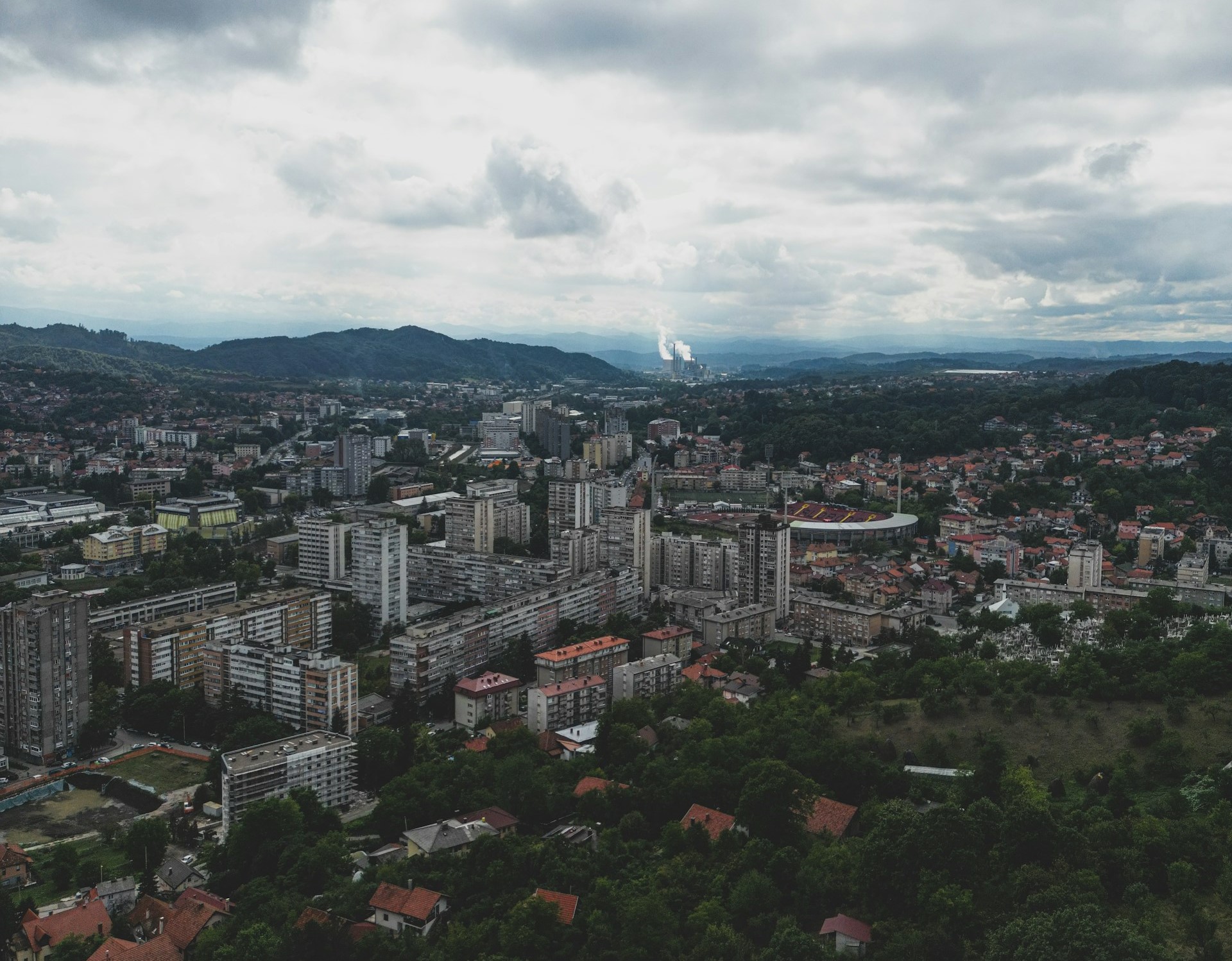

City view of Tuzla, Bosnia and Herzegovina

Tuzla

Tuzla, one of the oldest cities in Europe, is located in northeastern Bosnia. It is known for its salt lakes, which are unique in the region, and for its industrial history centered around salt production. The Panonsko Jezero (Pannonian Salt Lakes) is a popular attraction for visitors looking to swim in a city setting. Tuzla also has a rich cultural scene, with several theaters, galleries, and festivals. The city is home to a diverse population, and its long history includes Roman, Ottoman, and Austro-Hungarian influences, all visible in its architecture and urban design.

Top attractions & things to do in Tuzla

If you’re searching for the best things to do in Tuzla, this guide brings together the top attractions and must-see places to visit in Tuzla. The top picks below highlight the most visited sights for first-time visitors, plus a few local favorites worth adding.

Kapija Memorial in Tuzla, Bosnia and Herzegovina

Kapija Memorial

Kapija Memorial is a poignant site located in the heart of Tuzla, dedicated to the victims of the 1995 massacre during the Bosnian War. The site marks where 71 young people tragically lost their lives in a mortar attack. Today, it serves as a reminder of the city's painful past and as a symbol of resilience and hope. Visitors come to pay their respects, laying flowers or simply reflecting in silence. The memorial is not just a historical site but also a place for education and remembrance, ensuring that the tragic events of the war are never forgotten. A glass mosaic wall, added in 2020, displays the names and portraits of the victims. The adjacent Peace Garden features 71 olive trees, each symbolizing a life lost. School groups participate in workshops about conflict resolution, aligning with Tuzla’s “City of Peace” initiative.
Ads place
Ads place
Ads place
Ads place
Ads place
National Theatre Tuzla in Tuzla, Bosnia and Herzegovina

National Theatre Tuzla

The National Theatre in Tuzla is one of the most important cultural institutions in the city. Established in 1949, it has been a cornerstone for performing arts in the region, showcasing local and international productions. The theatre hosts a variety of events, including plays, concerts, and dance performances, attracting both local talent and visiting artists. Its neoclassical architectural style is a sight to behold, and the interior boasts an intimate atmosphere, perfect for live performances. Attending a performance here offers insight into Tuzla's rich cultural scene, making it a must-visit for anyone interested in the arts. The theater’s gold-leaf ceiling, restored in 2017, replicates designs from Austro-Hungarian palaces. It hosts the annual Pontfest international theater festival, featuring avant-garde acts from the Balkans. Behind the stage, a small museum displays vintage costumes and scripts from iconic Bosnian plays.
Ads place
Ads place
Ads place
Ads place
Ads place
Pannonian Lakes in Tuzla, Bosnia and Herzegovina

Pannonian Lakes

The Pannonian Lakes are an artificial set of saltwater lakes located in Tuzla's center. These lakes are the only ones of their kind in Europe and offer a blend of history, recreation, and nature. The salty water is sourced from natural brine, similar to the ancient Pannonian Sea that once existed in the area. Locals and tourists alike enjoy swimming in the lakes during the summer months, and the surrounding parkland is perfect for sunbathing or strolling. The lakes also have sports facilities, cafes, and restaurants, ensuring a full day of activities and relaxation for visitors of all ages. The lakes’ brine contains 26 minerals, mirroring the composition of the extinct Pannonian Sea. Nighttime swimming events under LED-lit waterfalls are popular during full moons. A submerged “Sunken Forest” art installation, visible in clear waters, symbolizes the region’s geological evolution.
Ads place
Ads place
Ads place
Ads place
Ads place
Salt Pans (Slana Banja) in Tuzla, Bosnia and Herzegovina

Salt Pans (Slana Banja)

Tuzla's Salt Pans, or Slana Banja, is one of the city's most iconic spots. The area was historically important for salt extraction, and today it serves as a picturesque recreational park. Visitors can explore the outdoor saltwater pools, making it a unique experience in Bosnia and Herzegovina. The saltwater lakes are said to have therapeutic benefits, and many tourists come here for wellness and relaxation. Surrounded by greenery, Slana Banja offers a peaceful environment for walks, picnics, and relaxation. Additionally, the park has several monuments and memorials dedicated to historical figures, making it a culturally rich destination. The saltwater contains magnesium and iodine, known to alleviate skin conditions and respiratory ailments. Every July, the park hosts the Salt Festival, featuring traditional salt-harvesting demonstrations and folk music. Archaeologists recently uncovered medieval salt presses nearby, now displayed in an open-air museum.
Ads place
Ads place
Ads place
Ads place
Ads place
Turalibeg's Mosque in Tuzla, Bosnia and Herzegovina

Turalibeg's Mosque

Turalibeg's Mosque is a notable historical and religious landmark in Tuzla, dating back to the 16th century. It is one of the oldest mosques in the region, representing Ottoman architectural heritage. The mosque’s simple yet elegant design features a single minaret and a large central dome. Surrounded by a peaceful courtyard, the mosque remains an active place of worship, as well as a symbol of Tuzla's cultural diversity. Visitors can explore the beautifully preserved interior, with intricate calligraphy and woodwork, or simply enjoy the tranquil atmosphere of the mosque's surroundings. Restoration in 2018 revealed hidden Ottoman frescoes depicting floral motifs and Quranic verses. The mosque’s courtyard houses a centuries-old çinar tree, planted during the Ottoman era. Monthly interfaith dialogues are held here, bridging Tuzla’s Muslim, Catholic, and Orthodox communities.
Ads place
Ads place
Ads place
Ads place
Ads place