
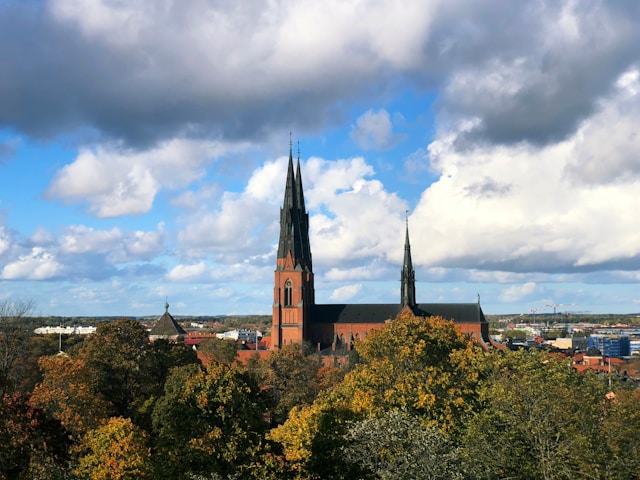
Uppsala Cathedral
In Uppsala, Sweden .
More places to visit in Uppsala
Discover more attractions and things to do in Uppsala.
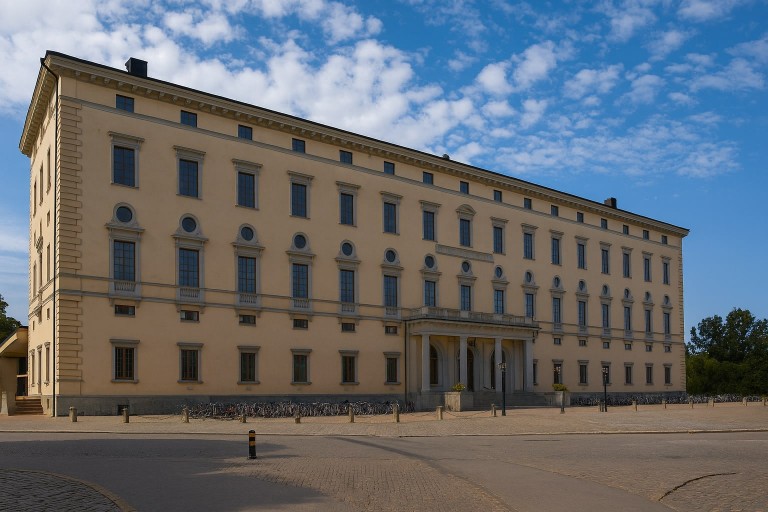
Carolina Rediviva Library
On the ridge opposite the castle, steps rise to a long facade that smells faintly of paper and winter light. Carolina Rediviva opened in 1841 as the university library's monument and workshop, housing millions of volumes and the famed Codex Argenteus , a 6th-century Gospel manuscript that glows under dim display. Reading rooms stretch under coffered ceilings; catalogues reconcile ink with keyboards in a choreography refined since the 19th century . A map cabinet reveals sea monsters and trade winds; conservation labs mend spines invisibly. The name—“revived Carolina”—nods to an earlier plan that stalled; the building that rose instead made good on the promise with sober Neoclassical discipline. From the terrace, the city arranges itself around learning: cathedral spires, student nations, and the line of the Fyris. Come during exams and benches fill with whispering plans; come in summer and tourists pass quickly to the manuscript, rightly tempted by silver letters that survived empires, climate, and curiosity to become a quiet kind of celebrity.
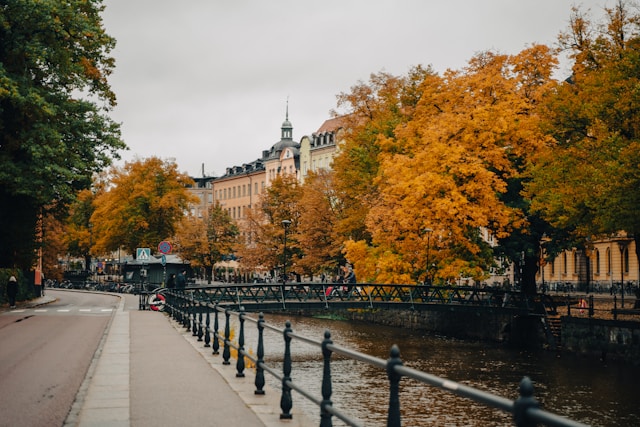
Fyris River Quays and Islandsfallet
Follow the Fyris and Uppsala relaxes: cafes lean over the water, bicycles clip by, and a fall divides the current into bright threads. The Islandsfallet weir steps the river with a drop of roughly 1.9 meters ; a fish passage built in the 20th century sneaks salmon past the turbulence. Quays between Stora Torget and the mill stage markets, buskers, and the famous student raft race each spring. Bridges make a tidy rhythm—Vaksalabron, Fyristorgsbron—spaced like commas to model a walk of 15-20 minutes . Old warehouses show brick dentils and iron hoists, reminders that this was once logistics, not leisure. In winter the railings collect frost and the city’s sounds sharpen; in summer the water reflects facades that seem to stand up straighter for the occasion. Sit with a cup, watch rowers work upstream, and accept that the river tells the time here as reliably as any clock.
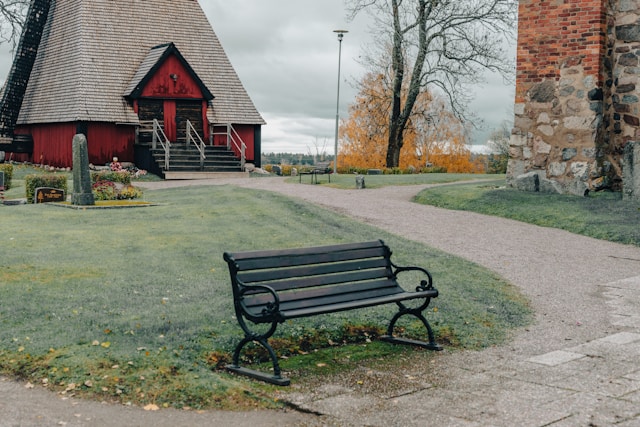
Gamla Uppsala Church and Village
Beside the mounds stands a stone church that once sat at the fault line between belief systems, its tower reading the plain like a surveyor. The present structure shows Romanesque bones from the 12th century with later Gothic height, and a sacristy that kept records now cited in local histories. Inside, fragments of wall painting survive where limewash spared them; outside, the cemetery hums with swallows. A wooden bell house stands apart, a regional habit that protects timbers from vibration. The village keeps low farm buildings, fences, and a curve of road that still prefers carts to buses. On feast days the green fills with families; on weekdays the path to the mounds carries dog walkers and scholars in equal measure. Numbers are small—seating under 300 , a tower perhaps 30 meters —yet the place holds an outsize gravity. Here the word “old” is not marketing; it is simply a datum from which the rest of Uppsala can be measured.
Gamla Uppsala Royal Mounds
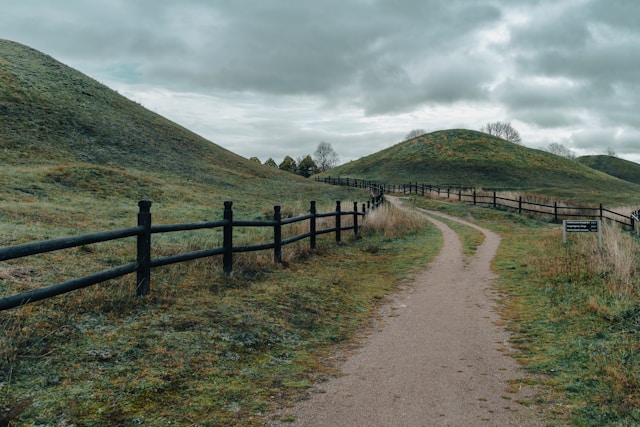
North of town the land heaves into three measured hills, graves that anchor saga to soil. The royal mounds are usually dated to the 6th-7th centuries , massive barrows whose diameters run near 70 meters and heights around 10 meters . Excavations in the 19th century and later found cremations, weapon fragments, and imported goods that tie this place to far routes. A low ridge path lets you walk the line; wind carries church bells from the village below. Panels admit what is known and what is guessed, an honesty that suits archaeology. In winter the mounds read as geometry under snow; in summer they soften to pasture. Stand on the central crown and the Uppland plain flattens like a map; imagine processions measured by steps, not seconds. The museum nearby translates finds into context without stealing the hills’ authority. Few sites are this quiet and this large at once; the effect is both national and personal, a landscape that remembers better than people do.
Gustavianum and Anatomical Theatre
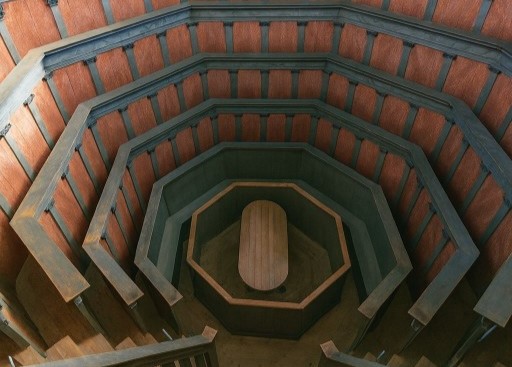
Across from the cathedral, a sober building with a cupola hides one of Europe's strangest classrooms: an anatomy theatre stacked like a wooden flower. The university's oldest surviving main building, Gustavianum opened in the 1620s , and Olof Rudbeck added the theatre around 1663 for public dissections lit by high windows. Today the museum steps through cabinets of curiosity, the Augsburg Art Cabinet with drawers inside drawers, and instruments that made science portable. The theatre's tiers seat a few hundred tightly, ranks of students once peering over railings while the professor spoke from a table barely 2 meters across. Exhibits explain conservation choices from the 20th century that kept the timber dry and the cupola weatherproof. Outside, the courtyard sits at the crossover of scholarship and tourism; inside, the building remains a composite argument for patience, classification, and a certain theatrical courage. Stand near the top rail and look down: you see how knowledge once required proximity, endurance, and a willingness to watch carefully, even when a subject insisted on silence.
Helga Trefaldighets Church
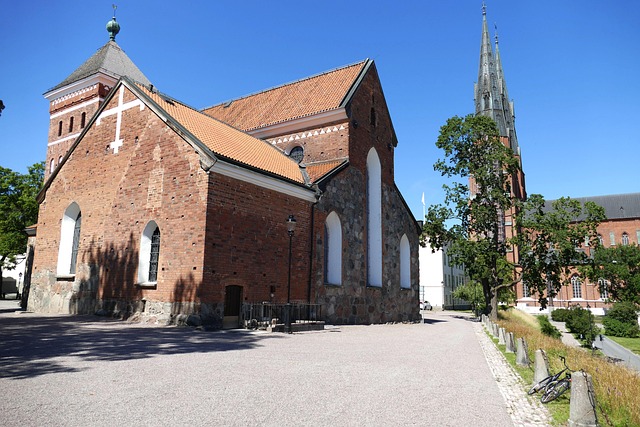
Standing quietly beside Uppsala Cathedral, Helga Trefaldighets Church combines the grace of the 15th century with layers of later restoration that reveal Sweden’s long dialogue between faith and craft. Its brick vaults, built in 1349 by the Dominican order, were reshaped after a fire in 1473 and show the earliest examples of late Gothic in the region. Inside, a sequence of frescoes attributed to Albertus Pictor brings biblical figures into vivid local scenes, painted around the 1480s . The pulpit and altar, carved in oak and gilded in 1735 , contrast against the rough masonry of its choir walls. Visitors can trace centuries through the organ loft, which holds 2,400 pipes from the Romantic rebuild of 1905 . Helga Trefaldighets Church is not monumental but intimate—its acoustics, the whisper of footfalls on stone, and the faint scent of wax together shape a space that still carries the rhythm of devotion and the artistry of medieval Uppsala.
Radhuset
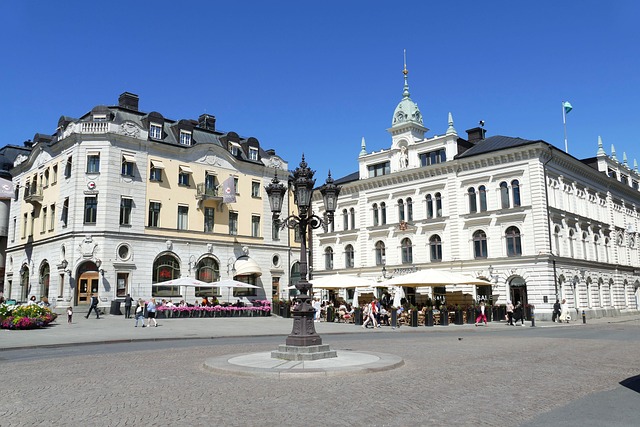
Uppsala’s Radhuset, or Town Hall, anchors Stora Torget with its restrained neoclassical symmetry and pale-yellow facade completed in 1643 . Originally designed by Nicodemus Tessin the Elder, the building was reshaped after a devastating fire in 1702 , acquiring its present appearance during the 19th-century restoration that added Corinthian pilasters and a formal portico. Its grand staircase and arched windows convey civic dignity, while the central hall once hosted the city council’s sessions under gilded chandeliers. The exterior’s rhythm of twelve tall windows mirrors the ideals of rational order that defined Enlightenment Sweden. Today, Radhuset serves as both a symbol of local governance and a venue for exhibitions and public receptions, with details like the original coat of arms above the entrance and the iron lampposts flanking the steps preserved from the 1890s . Standing at the heart of Uppsala, it remains a focal point for festivals, speeches, and quiet observation of the city’s evolving civic life.
Uppsala Botanical Garden and Linneanum Orangery
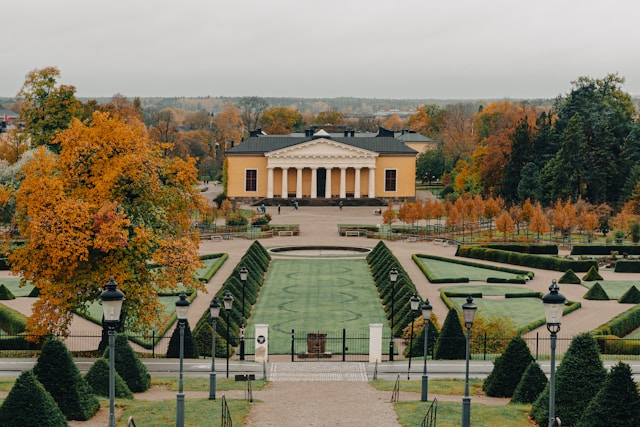
South of the castle a baroque parterre draws gravel into pattern, a diagram you walk rather than read. The botanical garden took its present form in the 18th century under royal patronage; today it spans over 30 hectares counting park, glasshouses, and research plots. The grand Linneanum orangery, completed in 1807 , stages concerts between palms when the weather allows. Plantings are arranged by climate and family; a systematic section lays out relationships like a map. Summer opens the Tropical Greenhouse to crowds, where humidity and orchids fog glasses in seconds. Numbers give scale: collections run to the thousands of species, and the parterre's central axis measures about 300 meters from facade to fountain. Benches face the castle’s pink flank; children count carp in the pools. The garden’s temper is instructive without pedantry—an urbane compromise between science and leisure that lets you leave smarter without ever feeling lectured.
Uppsala Castle and Art Museum
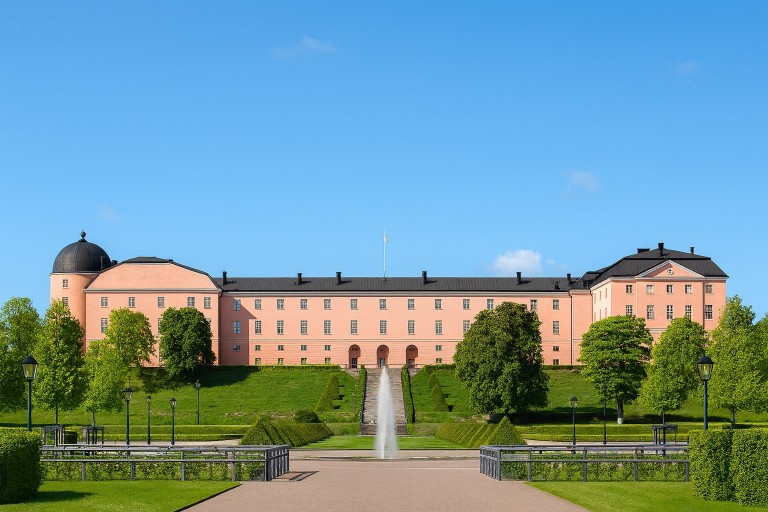
A pink fortress stretches along the ridge, half palace, half lookout, with cannon courtyards turned to promenades. The castle began under Gustav Vasa in the 1540s , burned in 1702 , and returned as a calmer baroque outline that still dominates Carolina Hill. In one hall, the Sture Murders are narrated with measured text rather than spectacle; in another, the Uppsala Art Museum stages exhibitions that favor experiment over echo. The bastions read as geometry in brick and turf, their angles a lesson in defense you can walk in 10 minutes . Windows catch weather from three directions; stairwells keep the day's cool even in July. A short path leads to the Gunpowder Tower and a view that folds cathedral, river bends, and campus into a tidy diagram. The castle's gift is scale: big enough for history, small enough for conversation, and hospitable to the idea that a working museum can share quarters with centuries of politics without losing its nerve.