
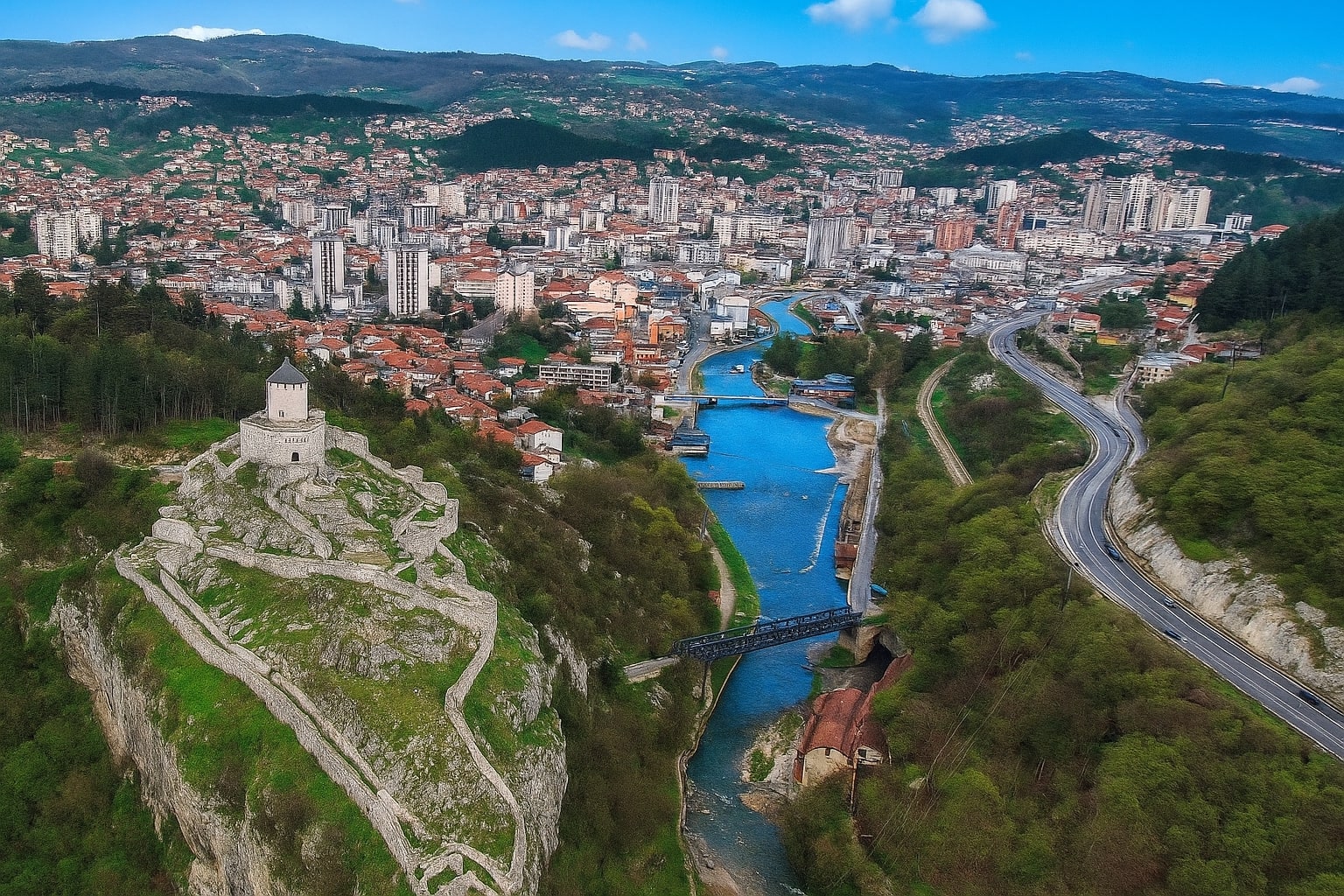
City view of Uzice, Serbia

Uzice

Uzice makes drama look practical. The river loops the center, tamed early by a hydroelectric plant that once put the town ahead of many capitals in light per capita, a fact engineers still recite with affection. Above, fortress fragments cling to rock like a sentence missing words, best explored with stubborn shoes and a forgiving schedule. Zlatibor’s smoked meats drift into town, arguing amiably with kajmak and hot bread. A wartime museum in a former bunker explains how improvisation saved lives in 1941; the blueprints are surprisingly beautiful. Trains thread tunnels like needles through cloth, and cafes set their tables so close to the water that trout become eavesdroppers. A kiosk sells notebooks printed with vintage factory logos, the kind that make to-do lists feel heroic. Uzice leaves you sharper at corners, slower on bridges, and skeptical of any problem that refuses a handmade solution.

Top attractions & things to do in Uzice

If you’re searching for the best things to do in Uzice, this guide brings together the top attractions and must-see places to visit in Uzice. The top picks below highlight the most visited sights for first-time visitors, plus a few local favorites worth adding.

Hydroelectric Power Plant on the Djetinja in Uzice, Serbia

Hydroelectric Power Plant on the Djetinja

A modest brick hall beside the river holds a story of early electrification that still feels bold. Commissioned in 1900 under the guidance of professor Djordje Stanojevic the plant adopted AC principles championed by Nikola Tesla and translated them to a compact local grid. Turbines spun beneath a skylight while belts and meters turned water into lamplight for workshops and streets and the city learned to keep later hours. Exhibits show generators switches and photographs of crews who treated maintenance as ceremony and science at once. The hall smells faintly of oil and metal which suits a museum that prefers demonstration to nostalgia. Outside the Djetinja runs clear between old piers of the narrow gauge line and the industrial romance writes itself without help. Standing by the control board you hear the click that once signaled modernity and you realize how quickly confidence can travel along copper.
Ads place
Ads place
Ads place
Ads place
Ads place
Kadinjaca Memorial Complex in Uzice, Serbia

Kadinjaca Memorial Complex

Beech and grass fold around concrete forms that stand like a chorus answering the wind. The site marks the battle of 1941 when the Workers Battalion defended the retreat from the short lived Uzice Republic and paid in heavy loss. Sculptor Miodrag Zivkovic opened the ensemble in 1979 arranging pylons and ossuary so memory would inhabit landscape rather than a room. Names and reliefs draw the eye from dates to faces and then out over villages that supplied food and messengers during the first partisan months. Guides speak sparingly because the geometry does the explanation and the silence finishes it. On commemorations the hill fills with choirs veterans and pupils who hear the same lesson that courage without vanity remains persuasive across generations. The memorial proves that modern art can carry history with clarity and that a ridge can become a classroom where resistance is understood as discipline not noise.
Ads place
Ads place
Ads place
Ads place
Ads place
Potpece Cave in Uzice, Serbia

Potpece Cave

The entrance rises like a horseshoe cut into the hill and cool air pours out as if the mountain were taking a measured breath. Inside halls branch to chambers where dripstone folds and organ pipes remind you that geology composes slowly and remembers everything. Surveys in the 20th century mapped routes past underground lakes and ledges while village stories recalled earlier visits when torches made the rims glitter. The portal itself climbs over fifty meters which explains why photographs always feel theatrical even when the day is plain. Guides point to layers that record rivers older than today's Djetinja and a patient chronology that counts in thousands rather than dozens. Steps and railings keep the walk safe without stealing the cave's mood and light is used as sparingly as a good editor. You emerge blinking and grateful for the sun and the simple arithmetic of limestone water and time shaped by karst logic.
Ads place
Ads place
Ads place
Ads place
Ads place
Uzice National Museum in Uzice, Serbia

Uzice National Museum

Galleries move from prehistory to the partisan years with the calm of an institution that trusts evidence. The rooms devoted to 1941 and the Uzice Republic present documents weapons and leaflets so visitors can read how a city ran itself briefly under pressure. Earlier sections explain Roman finds and medieval trade then shift to the arrival of factories and rail which changed the tempo of daily life in the 20th century. Curators pair uniforms with letters and family photographs so policy becomes personal and halls feel inhabited rather than staged. A corner honors industrial pioneers including Djordje Stanojevic whose work appears again at the Djetinja plant tying technology to biography. Temporary shows invite contemporary artists to answer history which keeps the archive from closing its covers. You step back onto the street with dates arranged clearly and a renewed respect for how documentation can steady a city's memory.
Ads place
Ads place
Ads place
Ads place
Ads place
Uzice Old Town Fortress in Uzice, Serbia

Uzice Old Town Fortress

High above the Djetinja the cliff narrows into terraces of stone where watchmen once measured danger by the river's sound. The core dates to the 14th century and later bastions reflect the arrival of gunpowder as the Ottoman frontier shifted back and forth with regional wars. Masonry here is pragmatic and steep so steps follow the rock rather than force it which keeps the walk honest and the views exact. Archaeology lifts buckles shards and tool marks that read like marginal notes left by garrisons who repaired as often as they patrolled. From the parapet the gorge frames Uzice and the old rail bed and you start to understand why geography chose this spot first and rulers only followed. Evening brings swallows that stitch the air while the last light warms the ledges to a copper tone. The ruin speaks quietly about fortification as a way of thinking not only a wall to be climbed.
Ads place
Ads place
Ads place
Ads place
Ads place