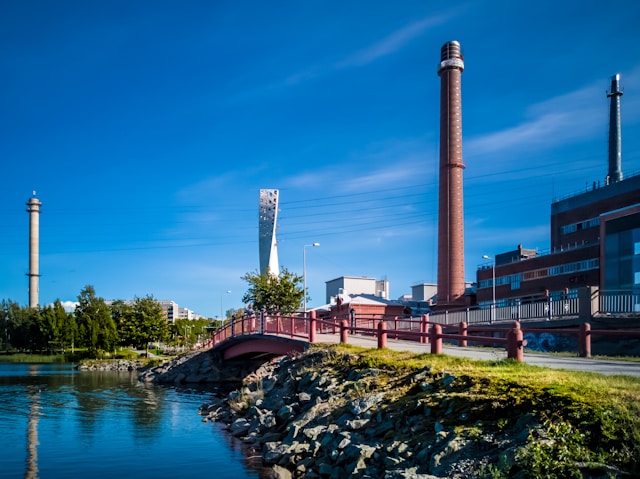

City view of Vaasa, Finland

Vaasa

Vaasa faces the Gulf of Bothnia and was rebuilt closer to the sea after the old town burned in 1852. Its bilingual Swedish Finnish culture shows on menus and street signs, and summer evenings fill the waterfront with cyclists. Nearby begins the Kvarken Archipelago, a UNESCO landscape where land is still rising, slowly reshaping the shoreline year by year. Eat fresh fish, creamy salmon soup, or rye bread with local cheese, then visit the Terranova section of the Ostrobothnian Museum for stories of sailors and shipbuilders. In Palosaari, student bars and wooden houses share the same blocks, and coffee can turn into a late debate. A quieter detour leads to the old battery islands, where birds outnumber people and wind does most of the talking. Quirky fact: locals track the annual shoreline changes like a friendly competition, comparing new rocks the way others compare garden harvests.

Top attractions & things to do in Vaasa

If you’re searching for the best things to do in Vaasa, this guide brings together the top attractions and must-see places to visit in Vaasa. The top picks below highlight the most visited sights for first-time visitors, plus a few local favorites worth adding.

Old Vaasa Ruins and Korsholm Church in Vaasa, Finland

Old Vaasa Ruins and Korsholm Church

Old Vaasa is where the city's past is not behind glass but spread across grass and stone foundations you can trace with your feet. Almost everything here burned in the 1852 fire, and the ruins still outline the earlier street plan like faint ink. The most compelling survivor is Korsholm Church, created when the old Court of Appeal building was converted after the disaster. That courthouse was completed in 1786 to plans by C. F. Adelcrantz, which explains the calm, official symmetry you still read in its facade. Look up for the bell tower designed by C. A. Setterberg and built in the 1870s, a post-fire marker that helps you spot the site from a distance. Walk slowly: birdsong replaces traffic, and the sparse remains make you imagine shopfronts, schoolyards, and the old shoreline. It is a quiet visit, but it sticks, because you feel a whole town relocate in your head. Small information boards help you place what you see, and the building's change from court to church becomes strangely moving in the silence.
Ads place
Ads place
Ads place
Ads place
Ads place
Ostrobothnian Museum and Terranova in Vaasa, Finland

Ostrobothnian Museum and Terranova

For a compact crash course in the region, the Ostrobothnian Museum lets you read Vaasa through objects, art, and the natural world in one go. The main building in Marianpuisto was designed by architect Eino Forsman and inaugurated in June 1930, with a dignified presence that fits the park setting. Inside you can move from cultural history to the natural science exhibition Terranova, which explains the coastal ecosystem and the Ice Age story behind the Kvarken seascape. A later exhibition wing, planned by architect Erik Krakstrom, was added in 1967, giving the museum more breathing space without breaking its rhythm. Terranova is especially good at making the Kvarken Archipelago feel tangible, with soundscapes, species displays, and the slow logic of land uplift. Give yourself time for the details, then step outside into Marianpuisto; the transition from gallery light to sea air is part of the experience. The museum also highlights local collectors and seafaring life, so the exhibits connect directly to Vaasa's harbors, factories, and everyday routines.
Ads place
Ads place
Ads place
Ads place
Ads place
Replot Bridge and World Heritage Gateway in Vaasa, Finland

Replot Bridge and World Heritage Gateway

Drive twenty minutes from Vaasa and the landscape starts acting like geology class, in the best possible way. The Kvarken Archipelago joined UNESCO's World Heritage List in 2006, prized for rapid post-glacial land uplift and its web of about 5,600 islands and skerries. Your easiest starting point is the World Heritage Gateway, set right by the Replot Bridge, where maps and exhibits help you understand what you are seeing before you head out. The bridge itself is a landmark: it stretches 1,045 m, its pylons rise about 82.5 m, and it was officially opened on 27 August 1997. Stop for a short walk near the shore and you will notice the ridged moraine formations and shallow bays that make the archipelago feel more like a sculpted floor than open sea. Come at sunset when the water turns metallic and the bridge lights click on, and the whole coast feels staged for you. On summer days, boardwalk trails and simple launch points tempt you into short paddles, and even a picnic feels like fieldwork with a view.
Ads place
Ads place
Ads place
Ads place
Ads place
Tikanoja Art Museum in Vaasa, Finland

Tikanoja Art Museum

The Tikanoja Art Museum makes Vaasa feel unexpectedly international, because the collection carries stories that traveled far before they came home. Housed in the former residence of art patron Frithjof Tikanoja, the building has served as an art museum since 1951, keeping a domestic scale that encourages close looking. The museum's own collection includes over 1,000 works, mixing Finnish painting with highlights from abroad, including French masters from around the turn of the 20th century. You will also see strong threads of 19th century Nordic art, where light and everyday scenes matter more than grand gestures. Because rooms are intimate, you can actually pause in front of a single canvas without feeling pushed along. Pair the visit with a slow walk along the nearby boulevards, and you will notice how museum light changes your eye for the city's own colors. Temporary exhibitions keep the rooms fresh, and the best visits happen when you pick one painting and follow its mood through the rest of the galleries.
Ads place
Ads place
Ads place
Ads place
Ads place
Vaasa Car and Motor Museum in Vaasa, Finland

Vaasa Car and Motor Museum

Vaasa Car and Motor Museum is a happy rabbit hole for anyone who likes design, engineering, or just the smell of old leather and metal. The museum opened in 1981 and is owned by the Vaasa Vintage Car Society, which is why the displays feel enthusiast-led rather than corporate. It is often described as Finland's largest private car museum, and the collection ranges from early motoring to sports and rally curiosities. One detail that pulls you into the past is a horse-drawn ambulance from 1909, displayed alongside fire engines and engine rooms that show how daily life once moved. The museum relocated to its present building in 2010, gaining the kind of space that lets you compare shapes and eras side by side. Go with time to wander without a plan: you will start noticing dashboards, badges, and paintwork like small pieces of industrial art, then walk out seeing traffic differently for the rest of the day. Kids usually love the sheer variety, and adults tend to linger over the small, clever solutions hidden in older mechanics.
Ads place
Ads place
Ads place
Ads place
Ads place