
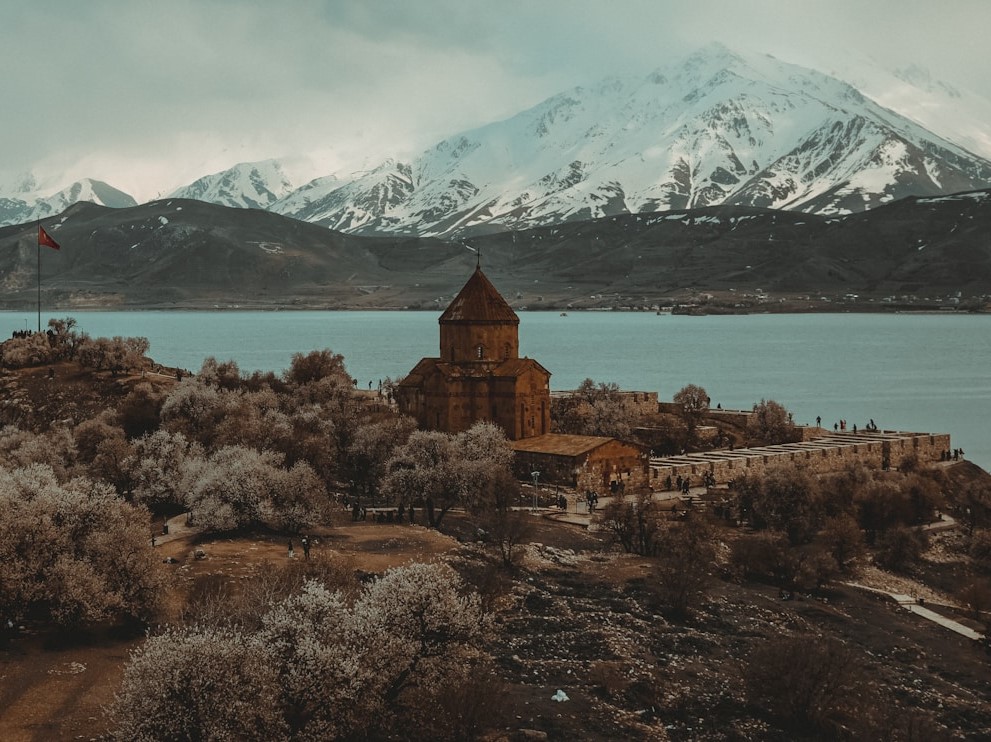
City view of Van, Turkey

Van

Van perches on an elevated plain beside Turkey’s largest lake, Lake Van, whose alkaline waters shimmer turquoise beneath the shadow of snow-capped mountains. The city’s most iconic landmark, the medieval Van Castle, crowns a peninsula jutting into the lake, offering panoramic views across water and sky. Below, the 10th-century Akdamar Church stands on a small island, its Armenian stone carvings and frescoes remarkably preserved within a serene island woodland. Van’s floating markets bustle with vendors rowing small boats laden with melons, apricots and handwoven rugs, while the lakeside promenade brims with cafés serving Van breakfast—layers of honeycomb, clotted cream and crusty bread. Culinary enthusiasts delight in local otlu peynir—a herb-infused cheese—and hearty kete pastries layered with sesame and mahlep. Inland, the Muradiye Waterfalls cascade through lush pastures, inviting hikers to picnic beneath their cool spray. Each August, the Lake Van Jazz Festival juxtaposes modern beats against an ancient natural amphitheater of mountains and water. Van’s combination of Byzantine ruins, vibrant markets and dramatic lake scenery positions it as a hidden jewel in eastern Anatolia.

Top attractions & things to do in Van

If you’re searching for the best things to do in Van, this guide brings together the top attractions and must-see places to visit in Van. The top picks below highlight the most visited sights for first-time visitors, plus a few local favorites worth adding.

Akdamar Island & Holy Cross Church in Van, Turkey

Akdamar Island & Holy Cross Church

Situated serenely on Lake Van, Akdamar Island is home to the iconic Armenian Holy Cross Church, constructed between 915-921 AD by the Armenian king Gagik I Artsruni. Renowned for its exceptional stone carvings, the church features detailed reliefs depicting biblical scenes, daily life, and ornate floral motifs, exemplifying medieval Armenian craftsmanship. Inside, original frescoes dating back to the 10th century provide insights into early Christian art. A major restoration completed in 2007 allowed the church to reopen for occasional services and visits, attracting global interest in its cultural and historical significance. Surrounded by almond trees, especially stunning in spring when blossoms cover the island, Akdamar combines natural beauty with profound historical relevance, offering visitors a poignant connection to the rich multicultural heritage of the Van region.
Ads place
Ads place
Ads place
Ads place
Ads place
Cavustepe Fortress in Van, Turkey

Cavustepe Fortress

Constructed during the reign of Urartian king Sarduri II in the mid-8th century BC, Cavustepe Fortress represents one of the most meticulously planned cities of the ancient Urartu kingdom. Archaeological excavations have exposed two main sections of the fortress, featuring temples dedicated to gods Khaldi and Irmusini, storerooms, workshops, and residential areas. Intricately carved basalt blocks with cuneiform inscriptions detail administrative activities, religious rituals, and construction efforts, providing critical insights into Urartian civilization. Remarkably well-preserved water channels and cisterns highlight their sophisticated engineering skills. From its commanding position overlooking the fertile Gurpinar plain, visitors can explore the fascinating ruins and contemplate Urartu’s impressive architectural ingenuity and administrative sophistication. Cavustepe Fortress thus serves as an essential historical landmark, shedding valuable light on ancient civilizations that once thrived in this remote region.
Ads place
Ads place
Ads place
Ads place
Ads place
Hosap Castle (Hosap Kalesi) in Van, Turkey

Hosap Castle (Hosap Kalesi)

Dominating the landscape in the village of Hosap, the Hosap Castle was erected primarily by Kurdish warlord Suleyman Mahmudi in 1643. A powerful example of medieval Kurdish architecture, this impressive fortress was strategically located along the historic Silk Road route, providing protection and oversight for caravan traders traveling between Iran and Anatolia. Built using local limestone and mud bricks, its defensive structures include sturdy battlements, watchtowers, and imposing gates adorned with Persian inscriptions celebrating its construction. Archaeological finds at the castle have unearthed coins, ceramics, and weaponry that tell stories of vibrant trade and fierce conflicts. Today, visitors climb its weathered ramparts to gaze across the rugged, mountainous terrain, experiencing firsthand the strategic foresight and martial heritage embodied in Hosap Castle’s formidable ruins.
Ads place
Ads place
Ads place
Ads place
Ads place
Muradiye Waterfall in Van, Turkey

Muradiye Waterfall

Named after the Ottoman Sultan Murad IV, who is said to have visited the area during his Persian campaign in the 17th century, the Muradiye Waterfall cascades beautifully from a height of around 20 meters. Located approximately 80 kilometers north of Van city, the waterfall forms part of the Bend-i Mahi River, a tributary feeding into Lake Van. It is particularly captivating during springtime when melting snow from surrounding mountains dramatically increases the water flow. Nearby, historic stone bridges and ruins dating back to Ottoman times add cultural depth to the natural setting. The lush greenery around Muradiye offers visitors picnic spots and walking paths, where they can appreciate the stunning scenery, diverse birdlife, and the tranquility of nature. Muradiye Waterfall thus merges historical intrigue with natural beauty, reflecting the rich heritage and environmental significance of Van Province.
Ads place
Ads place
Ads place
Ads place
Ads place
Van Fortress (Van Kalesi) in Van, Turkey

Van Fortress (Van Kalesi)

Rising prominently above the eastern shore of Lake Van, the Van Fortress, known locally as Van Kalesi, was initially constructed around the 9th century BC by the ancient Urartian king Sarduri I. Built from basalt stone, its impressive ramparts, towers, and inscriptions showcase the advanced engineering and artistry of the Urartian civilization. One significant feature is the cuneiform inscription commemorating the achievements of Xerxes I from the Persian period, highlighting the fortress's historical layers. Archaeological excavations have revealed numerous artifacts, including bronze weapons and jewelry, dating from Urartian to Ottoman times. Visitors today can explore the well-preserved ruins, including tomb chambers and temple foundations, while enjoying breathtaking panoramic views of Lake Van and the surrounding snow-capped mountains. This fortress embodies the deep historical heritage and strategic importance of the region, making it a fascinating glimpse into ancient Anatolian history.
Ads place
Ads place
Ads place
Ads place
Ads place