
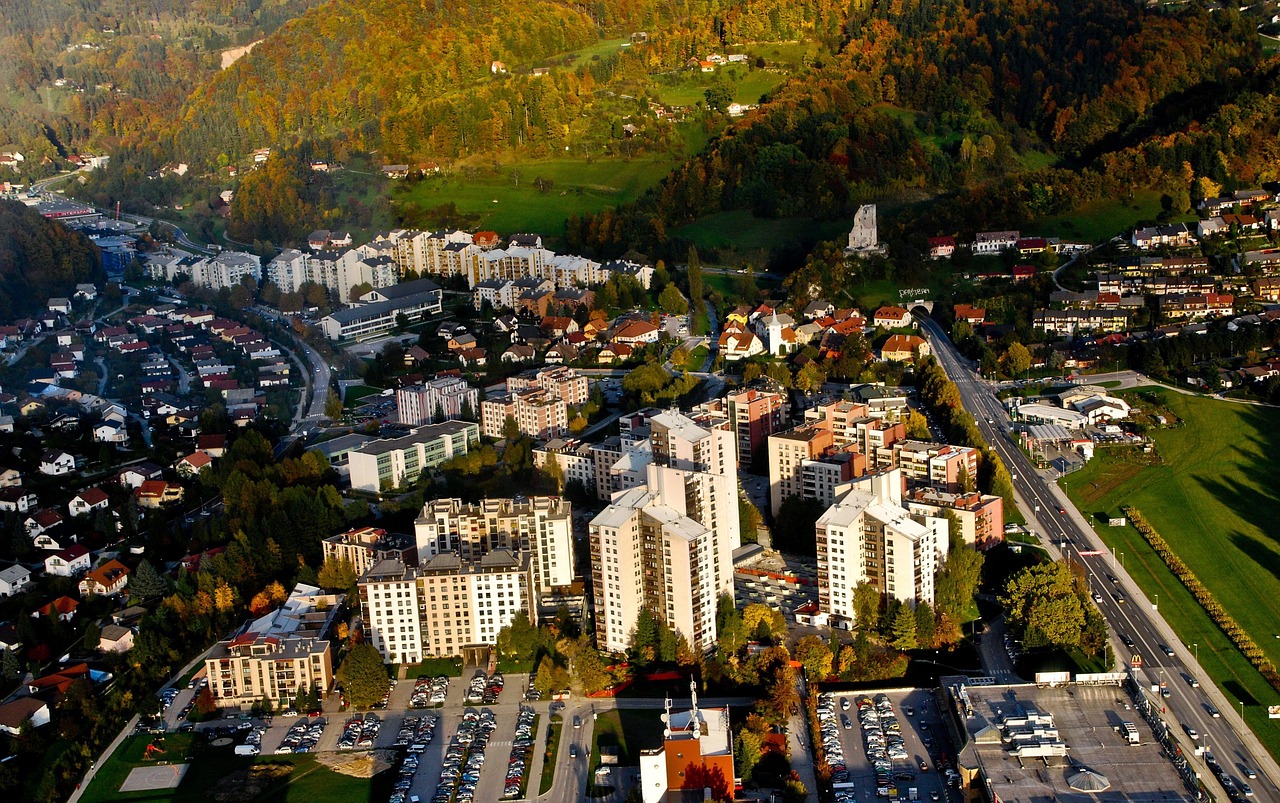
City view of Velenje, Slovenia

Velenje

Velenje grew modern on purpose, a planned town with a wide square and a confidence in concrete that still feels optimistic rather than heavy. A castle on the hill keeps an older diary, now a museum with rooms devoted to furniture that remembers other houses and careful hosts. The mining gallery explains how lignite shaped paychecks and weekends; helmets and lamps become props that suddenly feel heavy in the hand. Eat pasulj or a grilled pleskavica, then join locals for ice cream beside the lake that summer adopted as a beach with pedal boats. The 1950s left statues and alignments that photographers love to diagram on cloudy days. Surprising fact: a giant statue of Tito stands here, among the largest anywhere, and teenagers still meet beside the boots as if they were a clock. Evening brings long shadows across Kidriceva road, and the town reads as a lesson in design that decided to be friendly.

Top attractions & things to do in Velenje

If you’re searching for the best things to do in Velenje, this guide brings together the top attractions and must-see places to visit in Velenje. The top picks below highlight the most visited sights for first-time visitors, plus a few local favorites worth adding.

Coal Mining Museum of Slovenia in Velenje, Slovenia

Coal Mining Museum of Slovenia

The Coal Mining Museum of Slovenia brings Velenje's working memory underground, where a guided descent takes visitors to about 160 meters and the air settles near 12 degrees Celsius. Exhibits trace mechanization from picks to shearers and explain why this basin's soft lignite powered factories and homes across the region. Ledgers and photographs from the 1890s suggest the moment extraction became systematic, while models show conveyor runs and the logic of ventilation doors. A popular stop is the miner's lunch, served in a chamber laid out as a shift canteen, a ritual that turns interpretation into taste and conversation. Safety notes describe methane checks and lamp protocols updated in the 20th century, and you can handle a standard helmet whose weight surprises modern office shoulders. The route is level, but low sections dip to roughly 1.6 meters, so hard hats earn their keep. Back at the surface, a headframe silhouette reminds you that the museum is not nostalgia; it is a ledger balanced between risk, wages, and the heat that once drove a town.
Ads place
Ads place
Ads place
Ads place
Ads place
Paka River Promenade and Footbridge in Velenje, Slovenia

Paka River Promenade and Footbridge

Follow the Paka River Promenade and the town's scale softens: bridges compress views, granite pavers quiet footsteps, and a sculptural footbridge frames the stream like a lens. The newest works date to the 2010s, when designers regraded banks, added stepped seating, and threaded lighting that glows without bleaching the night. The slender span reaches roughly 90 meters in total length with a walking width near 3 meters, a proportion that keeps strollers and cyclists in neighborly conversation. Railings carry tight mesh to protect small hands, and flood marks on a discreet post record high waters from the 20th century onward. The bridge project is often dated around 2014, when the river corridor was stitched back into daily routes. Cafes along the edge spill chairs in sun; in rain the river fattens and the town returns to a softer tempo. Look for small inlets planted as habitat pockets and stone seats warmed by midday light. Public space succeeds here not by spectacle, but by offering a stitched route from school to square to water.
Ads place
Ads place
Ads place
Ads place
Ads place
Tito Square and Statue in Velenje, Slovenia

Tito Square and Statue

At the center of town, Tito Square opens like a Modernist plaza drawn with a confident ruler, its edges set by clean facades and a theatre that still smells faintly of resin. The bronze of Josip Broz Tito, often described as one of the largest of its kind in Europe, was unveiled in 1977 and is often measured at about 10 meters including plinth; the figure's calm posture balances authority with civic poise. Paving bands steer rain toward subtle drains, an urban detail refined in the late 20th century, and benches align with sightlines to the castle. Evening events spill from the cultural center, a building associated with 1959 and the boom years when Velenje grew fast and optimistic. Children navigate scooters in precise arcs as the lights come on. A square this rational risks coldness, yet wind, voices, and the measured toll of the bell give it a human key. Stand by the plinth and read inscriptions that tie the plan to postwar ideals, then look up to a generous width of sky.
Ads place
Ads place
Ads place
Ads place
Ads place
Velenje Castle in Velenje, Slovenia

Velenje Castle

High on a wooded ridge above the Paka, Velenje Castle arranges towers, curtain walls, and an arcaded courtyard in a tidy hilltop ensemble that still reads as authority rather than nostalgia. Chroniclers place its earliest phase in the 13th century, with a major refit in the 16th century that introduced sober Renaissance lines and domestic comforts. Inside, the museum strings rooms from archaeology to industry, pairing shards and guild tools with a case on the town's coal years. Records from the 1890s mention consolidation works after storms, and recent conservation favors lime mortars that breathe through wet winters. Traces of Gothic fabric survive in a stair turret, while one tower rises near 20 meters if you count the weather vane. The wellhead's brink is worn by centuries of rope, and the outer path reveals how buttresses bite into slope. From the highest terrace the skyline explains why rulers chose this perch: wind, watch, and a measured distance from the complications of trade below.
Ads place
Ads place
Ads place
Ads place
Ads place
Velenje Lake and Beach in Velenje, Slovenia

Velenje Lake and Beach

Formed by lignite subsidence and later shaped for leisure, Velenje Lake now reads like a deliberate blue room set between hills and new neighborhoods. The designated swimming area opened in the 2010s, with a wide beach, changing cabins, and a lakeside path that loops for roughly 7 kilometers. In summer the water settles in the 20-24 degrees range, and paddleboards slip past rowing lanes marked by discreet buoys. Information boards explain how reclamation moved shorelines and planted willows to stabilize banks. Records often cite depths of over 30 meters and a surface area above 100 hectares, reminders that this is a true post-mining lake rather than an ornamental pond. Cafes handle espresso and ice cream; rental stands trade in umbrellas and sun cream. Evening breezes ruffle the shallows, and cyclists trace the loop while swallows lift off the water in quick, darting arcs. The lake is not a postcard borrowed from elsewhere; it is a civic decision, proof that an extraction landscape can mature into a commons without pretending the past did not happen.
Ads place
Ads place
Ads place
Ads place
Ads place