
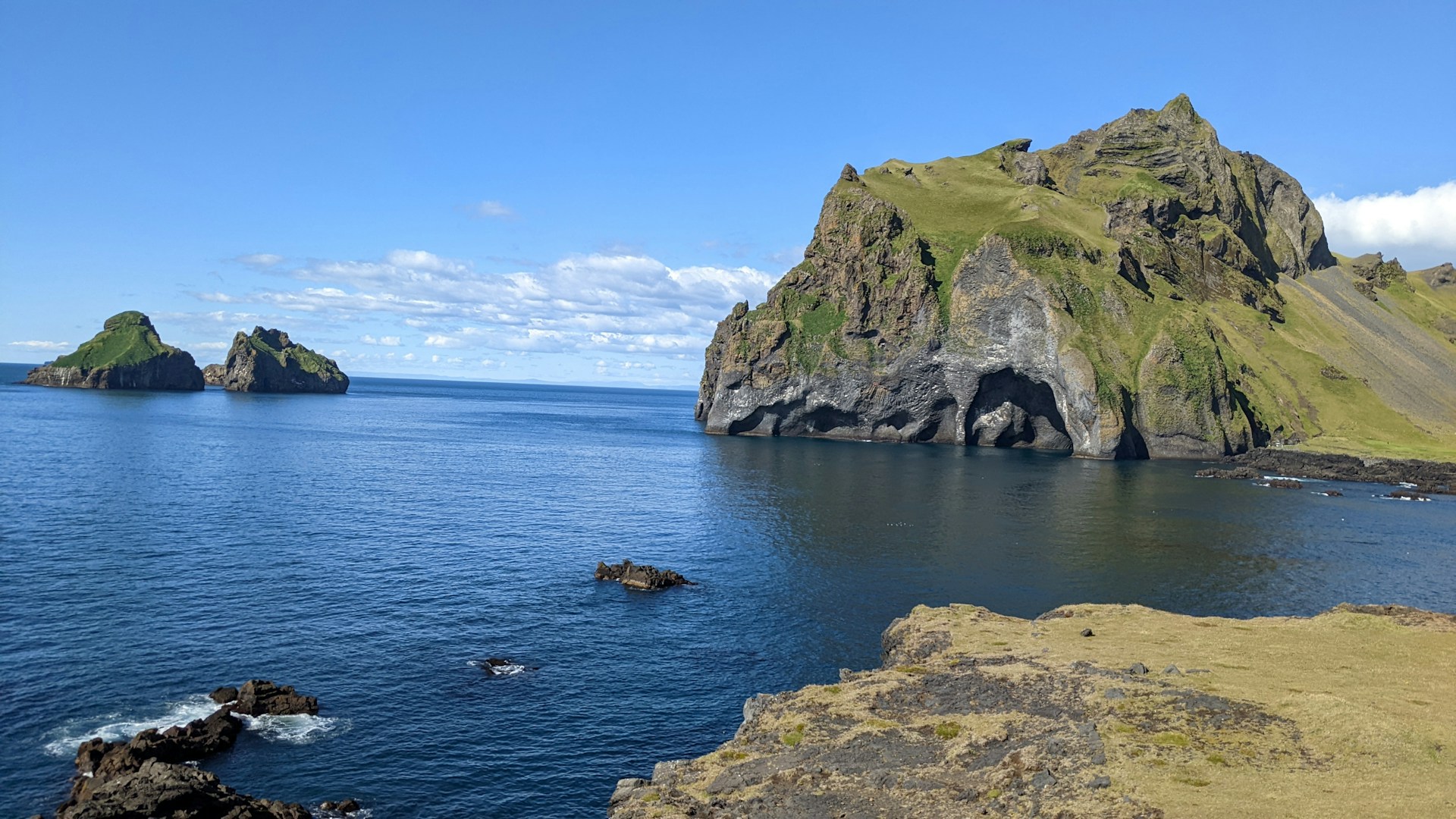
City view of Vestmannaeyjar, Iceland

Vestmannaeyjar

Vestmannaeyjar (Westman Islands) form a volcanic archipelago off Iceland’s south coast, dominated by Heimaey—the only inhabited island. Jagged cliffs rise from emerald seas, home to millions of nesting puffins and seabirds. In 1973, a dramatic volcanic eruption reshaped the island and buried part of the town in ash; today, the Eldheimar Museum preserves homes and stories from that night. The colorful harbor buzzes with fishing boats and seafood restaurants, while lava fields and craters offer hiking trails with panoramic ocean views. Each August, the Thjodhatid Festival draws crowds for music, bonfires, and fireworks beneath midnight skies. Boat tours circle sea caves and arches, often accompanied by playful seals or orcas, making Vestmannaeyjar a wild and unforgettable outpost. The island’s unique puffin-watching cliffs are a major draw, and Heimaey’s geothermal swimming pool offers warmth even on the windiest days.

Top attractions & things to do in Vestmannaeyjar

If you’re searching for the best things to do in Vestmannaeyjar, this guide brings together the top attractions and must-see places to visit in Vestmannaeyjar. The top picks below highlight the most visited sights for first-time visitors, plus a few local favorites worth adding.

Beluga Whale Sanctuary and Puffin Rescue Center in Vestmannaeyjar, Iceland

Beluga Whale Sanctuary and Puffin Rescue Center

The Beluga Whale Sanctuary and Puffin Rescue Center on Heimaey is a pioneering project for marine animal welfare. Founded in 2019, it is the world’s first sanctuary dedicated to retired beluga whales from captivity. The center’s natural sea bay allows whales to experience wild conditions while remaining cared for by marine biologists. The sanctuary also operates an acclaimed puffin rescue program, where locals and visitors help save young birds lost in the town’s lights during fledging season. Guided tours offer close-up views of the belugas and insight into conservation science. Educational exhibits teach about marine ecosystems and the challenges facing sea life in the North Atlantic. The site often partners with universities and researchers from around the world. The rescue center’s café overlooks the bay, offering an unforgettable setting for learning and relaxation. Families especially enjoy interactive displays and the chance to watch puffins being released back into the wild.
Ads place
Ads place
Ads place
Ads place
Ads place
Eldheimar Museum in Vestmannaeyjar, Iceland

Eldheimar Museum

Eldheimar Museum stands as a powerful testament to the 1973 volcanic eruption that transformed Heimaey, the largest of the Westman Islands. The interactive exhibits take visitors through the night the Eldfell volcano erupted, forcing the evacuation of over 5,000 residents and burying much of the town in ash and lava. Guests can explore a preserved home unearthed from the volcanic debris, offering a vivid window into the community’s resilience. The museum details the immense rescue and rebuilding efforts and how Icelanders harnessed volcanic heat to supply geothermal energy to the town. Multimedia displays include dramatic footage, personal accounts, and maps showing how the landscape was forever altered. Eldheimar has received awards for its innovative approach to disaster storytelling. Visitors leave with a deep appreciation for the spirit and determination of Heimaey’s people. School groups and researchers from around the world frequent the museum for its educational impact and moving stories.
Ads place
Ads place
Ads place
Ads place
Ads place
Heimaey Storhofdi Lighthouse in Vestmannaeyjar, Iceland

Heimaey Storhofdi Lighthouse

Heimaey’s Storhofdi Lighthouse is perched on the southernmost point of the island, marking the windiest place in Iceland. First lit in 1906, this iconic lighthouse has guided countless ships safely past treacherous reefs and shifting sands. The site is renowned for its puffin colonies, which nest by the thousands on nearby cliffs each summer, delighting birdwatchers and photographers. Interpretive panels explain the history of maritime navigation in the Westman Islands and highlight the lighthouse’s role in local rescue missions. On clear days, visitors enjoy panoramic views of distant glaciers and neighboring islands. Strong winds make this a popular site for wind and weather research, and the surrounding landscape blooms with wildflowers in late spring. Guided tours often share tales of heroic lighthouse keepers and dramatic sea rescues. Storhofdi is also the starting point for many hiking trails across Heimaey’s rugged southern peninsula.
Ads place
Ads place
Ads place
Ads place
Ads place
Herjolfsdalur Valley in Vestmannaeyjar, Iceland

Herjolfsdalur Valley

Herjolfsdalur Valley is a scenic wonder framed by steep volcanic cliffs, lush meadows, and black sand beaches. Named after the early settler Herjolfur Bardarson, this tranquil valley hosts one of Iceland’s most beloved festivals, Thjodhatid, which draws thousands for music and midnight bonfires each August. Ancient Viking ruins and reconstructed turf houses reveal the island’s historic roots. Hikers are rewarded with stunning views over Heimaey and the Atlantic Ocean, especially at sunrise. The valley is rich in birdlife, including fulmars and puffins that nest on nearby ledges. Legends tell of hidden people living in the crags and caves. Herjolfsdalur’s unique landscape has inspired poets, painters, and photographers for generations. Picnic sites and walking trails make it a family favorite year-round. The site’s geology is studied for its striking lava formations, which showcase layers from multiple volcanic eruptions.
Ads place
Ads place
Ads place
Ads place
Ads place
Surtsey Island in Vestmannaeyjar, Iceland

Surtsey Island

Surtsey Island, located just south of Vestmannaeyjar, is a scientific marvel formed by a volcanic eruption that began in 1963 and lasted almost four years. The island emerged from the sea as a new landmass, offering a rare opportunity for scientists to observe ecological succession from the very beginning. UNESCO designated Surtsey as a World Heritage Site in 2008, protecting it as a living laboratory. Strict regulations mean only researchers are allowed to land, but sightseeing flights and boat tours reveal the island’s dramatic coastline and evolving vegetation. Ongoing studies have recorded the arrival of over 60 plant species and numerous bird colonies. The story of Surtsey is featured in local museums, capturing the imagination of visitors interested in earth sciences. The island is a symbol of Iceland’s dynamic geology and resilience. Its formation remains a landmark event in the study of life’s origins on new land.
Ads place
Ads place
Ads place
Ads place
Ads place