
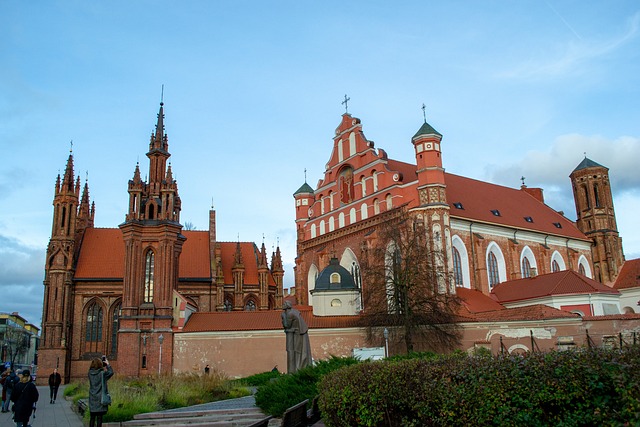
St. Anne's Church
In Vilnius, Lithuania .
More places to visit in Vilnius
Discover more attractions and things to do in Vilnius.
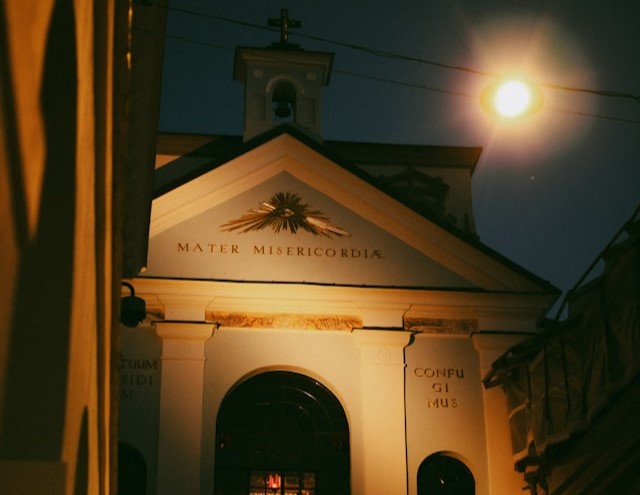
Gate of Dawn
Built in the early 16th century , the Gate of Dawn is the only remaining gate from Vilnius' original defensive wall. Its enduring fame, however, comes from a sacred icon housed in the chapel above the archway: the image of the Blessed Virgin Mary, or the "Madonna of the Gate of Dawn." This icon is believed by many to have miraculous healing powers and draws pilgrims from across Eastern Europe. The site holds particular importance in both Catholic and Orthodox traditions. Pope John Paul II visited in 1993, cementing its global spiritual status. Below the chapel, the gate serves as a passage into the Old Town, still bustling with worshippers and tourists alike. During occupations, it was one of few religious sites that remained active under Soviet rule . Candles flicker day and night, and hymns echo softly inside the chapel. The Gate of Dawn stands as a rare fusion of history, defense, and devotion.
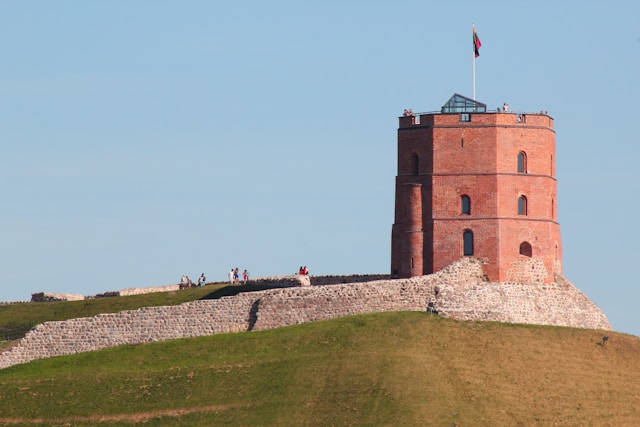
Gediminas Castle Tower
Perched on a hilltop above the Neris River, Gediminas Castle Tower is all that remains of a once-formidable fortress. The tower is named after Grand Duke Gediminas , founder of Vilnius, and has watched over the city since the early 14th century . The climb to the summit offers sweeping views of Old Town and beyond. Inside, a small museum showcases medieval armaments, models of Vilnius' development, and an exhibit on Lithuanian statehood . The tower also flies the national flag—a powerful symbol first raised after independence from the Soviet Union in 1990 . The path to the top includes remnants of ancient defensive walls, some dating back over 600 years. Each year, thousands gather here to mark the national flag day in January . Though weathered by wars and occupations, the tower remains a sentinel of Lithuanian pride and perseverance. It is arguably the most photographed landmark in Vilnius.
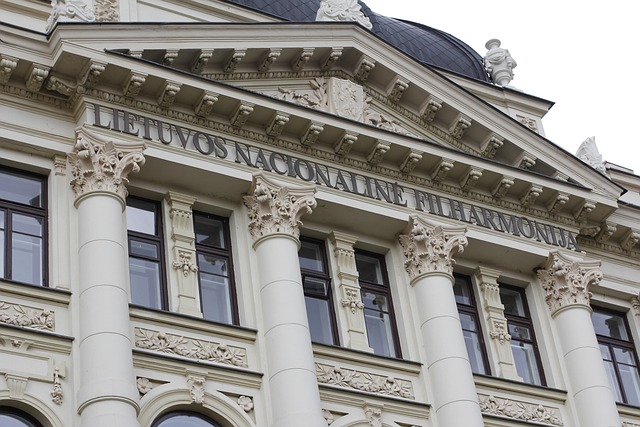
Lithuanian National Philharmonic
Nestled in Vilnius Old Town, the Lithuanian National Philharmonic stands as a beacon of musical excellence and cultural heritage. Founded in 1940 , this institution has played a central role in nurturing classical music in Lithuania. Its concert hall, located in a historic building dating back to the 19th century , features exquisite acoustics and ornate interiors. The Philharmonic is home to the Lithuanian National Symphony Orchestra , which has performed with renowned soloists and conductors from around the globe. The annual Vilnius Festival, hosted here, attracts international talent and highlights Lithuania’s musical diversity. Notably, the building survived World War II and Soviet occupation, continuing to inspire audiences through challenging times. Educational programs and outreach concerts bring classical music to new generations. With a tradition of commissioning works by Lithuanian composers , the Philharmonic remains a vital hub for creative expression and national identity. Its majestic columns and grand staircase invite visitors into a world where history and harmony converge.
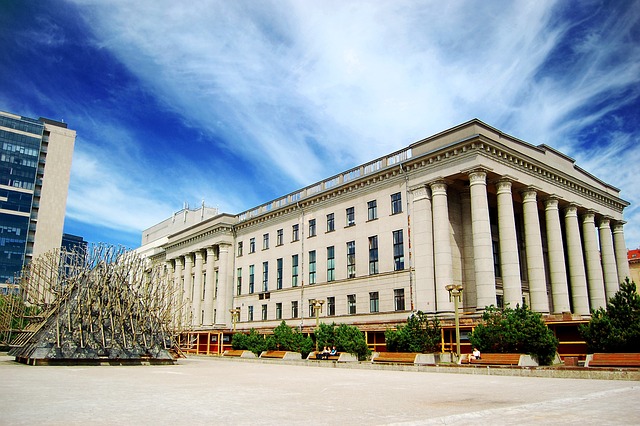
Presidential Palace
Located just steps from Vilnius University, the Presidential Palace has been the official residence of Lithuania's presidents since 1997 . However, its history stretches back to the 14th century when it served as a bishop’s palace. Over time, it hosted numerous dignitaries including Napoleon Bonaparte during his march to Moscow. The building’s neoclassical façade conceals elegant halls used for state functions, press conferences, and ceremonial events. The Changing of the Guard ceremony held every Sunday draws both locals and visitors. During national holidays, the palace square becomes a hub for speeches and gatherings. Its interiors, accessible on guided tours, feature artwork by renowned Lithuanian painters and furnishings steeped in symbolism. The palace also survived damage during both World Wars and Soviet occupation. Today, it symbolizes democratic governance and is the face of the nation’s leadership. Flags fluttering above its roof signal the president’s presence inside.
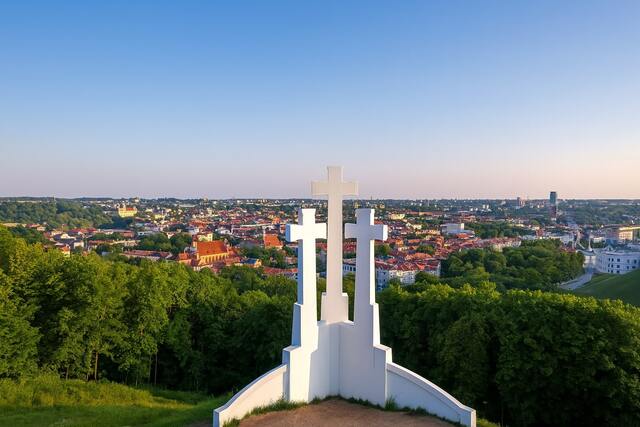
Three Crosses Monument
Towering over Vilnius from a forested hill, the Three Crosses Monument is both a spiritual landmark and a panoramic viewpoint. According to legend, it commemorates Franciscan monks martyred in the 14th century . The original wooden crosses were erected in the 17th century , later replaced by concrete structures. The current monument, built in 1989 after Soviet suppression , symbolizes Lithuania's resilience and rebirth. The site offers some of the best vistas of the Old Town and surrounding green spaces. Hikers often ascend via scenic trails through Kalnai Park. Each year, national holidays and religious processions bring crowds here to honor Lithuania's past. The monument was destroyed by the Soviets in 1950, but its reconstruction has since made it a beacon of memory and hope. Illuminated at night, the three white crosses seem to float above the city, serving as a silent sentinel watching over Vilnius.
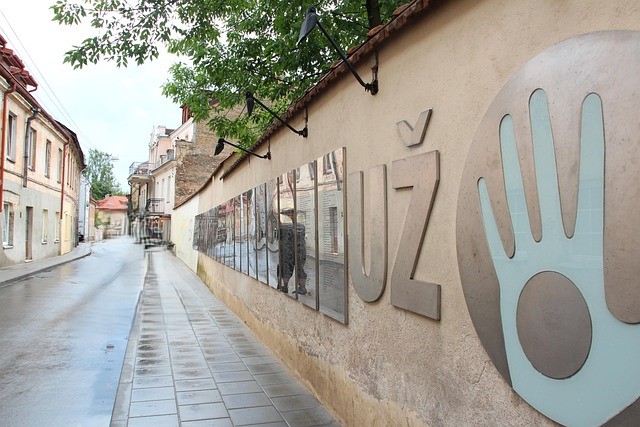
Uzupis Republic
Tucked beside the Vilnele River, Uzupis is a district unlike any other in Europe. Declaring symbolic independence on April 1, 1997 , this self-proclaimed "republic" has its own president, flag, currency, and even a constitution displayed in multiple languages on a public wall. Once neglected, Uzupis has become a haven for artists, dreamers, and free spirits. The Angel of Uzupis sculpture rises above its main square, embodying creativity and resilience. Street art flourishes here, often carrying political or philosophical undertones. Jonas Mekas , the father of avant-garde cinema, is among the district's honorary inspirations. Bohemian cafés, galleries, and studios occupy buildings that once belonged to Soviet industries. Bridges are adorned with love locks and poetry. Uzupis is often compared to Montmartre or Christiania, yet it retains a uniquely Lithuanian soul . Its playful independence and cultural activism make it one of the most intriguing urban enclaves in the Baltics .
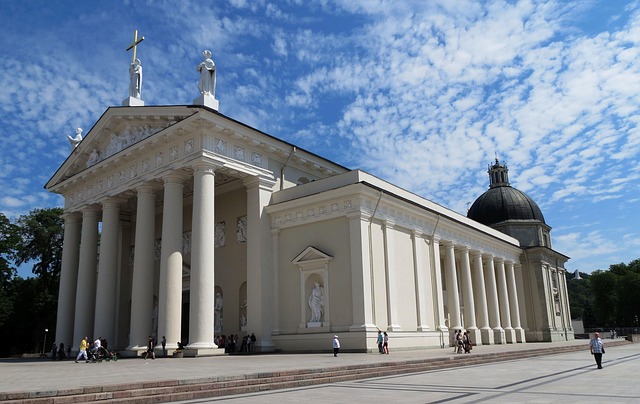
Vilnius Cathedral
Standing at the heart of Cathedral Square, Vilnius Cathedral is the spiritual symbol of Lithuania. Its neoclassical façade, stark white against the skyline, is as iconic as its role in national celebrations. The cathedral was reconstructed numerous times since its first mention in the 13th century , reflecting the country's turbulent history. Below it lie crypts where members of the Grand Duchy of Lithuania are buried. The separate bell tower, once part of the city's defensive wall, offers panoramic views. Inside, the Chapel of St. Casimir dazzles with Baroque splendor, commemorating the first canonized Lithuanian saint . Frescoes rediscovered under layers of plaster reveal artwork lost for centuries. The cathedral also contains a unique echo phenomenon at the intersection of its nave. Liturgically active, it hosts services and state ceremonies. During Soviet times , the building was used as an art gallery, highlighting its resilience and significance in preserving Lithuanian identity.
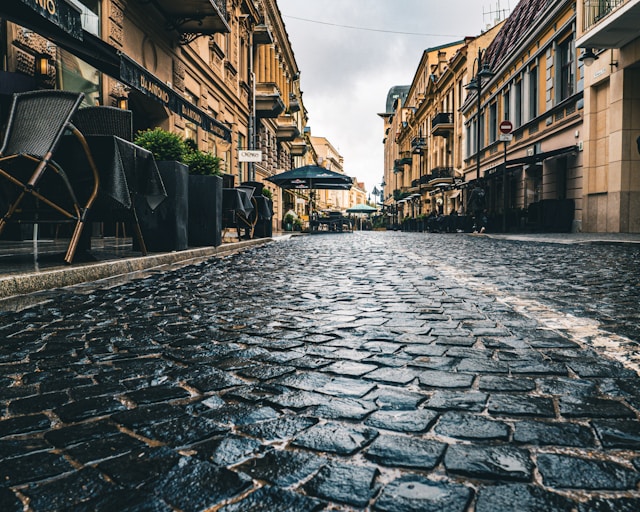
Vilnius Old Town
A UNESCO World Heritage Site, Vilnius Old Town is one of the largest preserved medieval quarters in Eastern Europe. It weaves together Gothic, Renaissance, Baroque, and Neoclassical architecture across over 1,500 buildings . Cobbled streets lead to hidden courtyards, vibrant markets, and age-old churches. The town's multicultural roots are visible in its Jewish, Polish, and Russian influences . Key sites include the Presidential Palace, Town Hall, and countless artisan shops. The Jewish ghetto from World War II is commemorated with memorial plaques and restored synagogues. Street performers and festivals keep the district alive year-round. Unlike many old towns, Vilnius’ center is still inhabited by locals , giving it a genuine and lived-in atmosphere. Cafés and bakeries offer regional delights just steps from historical relics. Walking through its labyrinthine alleys is like stepping into a Baltic time capsule. Each corner of Old Town tells a new story waiting to be uncovered.
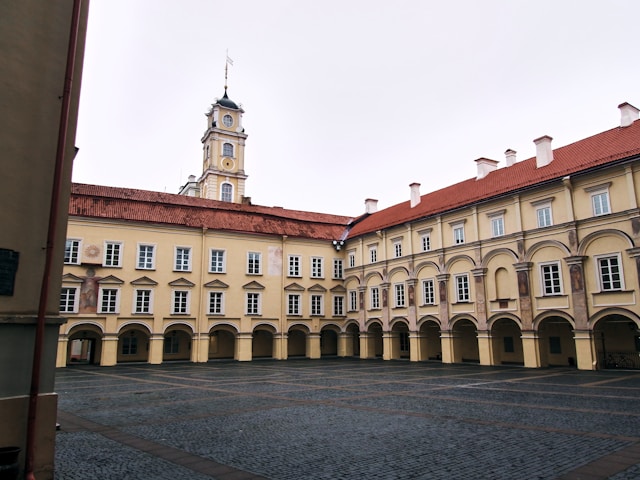
Vilnius University
Founded in 1579 , Vilnius University is one of the oldest universities in Northern and Eastern Europe. Its vast complex includes 13 courtyards and buildings in Gothic, Renaissance, Baroque, and Classical styles. The Grand Courtyard is especially striking, featuring St. John's Church and its 68-meter bell tower —the tallest in Vilnius Old Town. Over the centuries, the university was a center of Enlightenment thought, scientific discovery, and national identity. Notable alumni include poet Adam Mickiewicz , revered across the region. The library houses more than 5 million items, including ancient manuscripts and rare prints. Guided tours reveal hidden frescoes, astronomical instruments, and a ceremonial hall used since the 18th century . During Soviet occupation, the university endured ideological pressure but remained a hub of intellectual resistance. Today, it serves over 20,000 students and plays a vital role in Lithuania’s academic and cultural life. Its blend of living tradition and scholarly excellence makes it a cornerstone of Vilnius.