
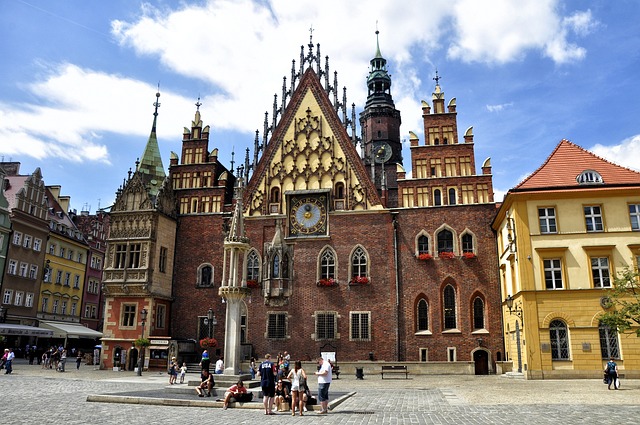
Market Square
In Wroclaw, Poland .
More places to visit in Wroclaw
Discover more attractions and things to do in Wroclaw.
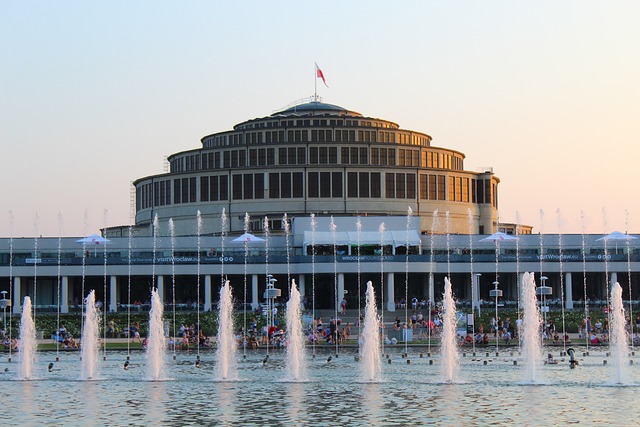
Centennial Hall
Centennial Hall, or Hala Stulecia , is an architectural marvel of early 20th-century Modernism , recognized as a UNESCO World Heritage Site. Designed by renowned architect Max Berg and constructed in 1913 , this concrete structure was groundbreaking at the time for its daring use of reinforced concrete and its monumental dome, the largest of its kind when completed. The hall commemorates the 100th anniversary of the Battle of Leipzig and symbolizes both historical memory and modern innovation. Today, it hosts concerts, international conferences, sporting events, and exhibitions. Adjacent to the hall lies the Wroclaw Multimedia Fountain , one of the largest in Europe, renowned for spectacular water and light shows accompanied by music. The surrounding park, designed by Hans Poelzig, offers serene pathways and gardens. Centennial Hall continues to inspire as a significant landmark, blending historical importance with vibrant contemporary uses, making it an essential stop in Wroclaw.

Hydropolis
Hydropolis is a contemporary, state-of-the-art museum dedicated entirely to water , housed in an extraordinary location—an underground, former 19th-century water storage facility . Opened in 2015 , Hydropolis uses immersive multimedia exhibits to explore water’s role in the planet’s ecosystems, human civilization, and technology. Highlights include stunning audiovisual presentations, interactive installations, and a life-size model of the Trieste bathyscaphe , famous for reaching the deepest known point of Earth’s oceans. Special exhibits cover diverse topics such as deep-sea exploration, the water cycle, and aquatic life. An eye-catching feature is the striking entrance, with a curtain of water welcoming visitors into this subterranean world. Less commonly known are the educational workshops designed to promote environmental consciousness among visitors of all ages. Hydropolis successfully combines science, history, and sustainability, making it a uniquely captivating experience that educates and inspires visitors to appreciate one of our planet’s most vital resources.
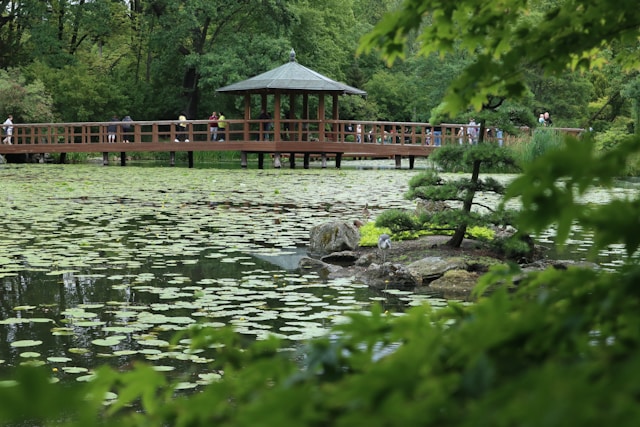
Japanese Garden
The Japanese Garden in Wroclaw is a serene and meticulously designed oasis established initially in 1913 as part of the Centennial Exhibition. Reconstructed in collaboration with Japanese experts, the garden faithfully reflects traditional Japanese garden principles. Visitors can wander along peaceful pathways, admire the carefully sculpted bonsai trees, stone lanterns, and cross elegant wooden bridges over tranquil streams and ponds filled with koi fish. The garden’s highlights include the graceful tea pavilion, where traditional tea ceremonies are occasionally demonstrated, providing insights into Japanese culture. Few visitors know about the garden’s symbolic elements, such as stones representing Mount Fuji and carefully placed plants signifying longevity and harmony. Seasonal blooms like azaleas, magnolias, and cherry blossoms transform the garden throughout the year, creating a place of constant renewal and beauty. The Japanese Garden offers a rare cultural experience, perfectly blending botanical beauty with spiritual tranquility, making it a unique attraction in Wroclaw.
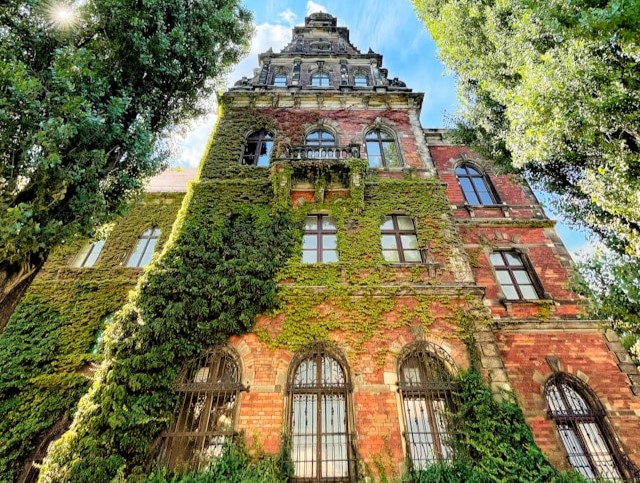
National Museum
The National Museum in Wroclaw, established in 1947 , boasts one of Poland’s finest art collections, displaying over 200,000 items . Located in a picturesque neo-Renaissance building along the Oder River, it features masterpieces from medieval times to contemporary art. Its prized collection includes remarkable works by prominent artists such as Jan Matejko , Jacek Malczewski , and Witkacy . The museum is particularly renowned for its extensive array of Silesian art , reflecting the region’s multicultural heritage. Special exhibitions frequently spotlight lesser-known artistic traditions and innovative contemporary artists, enhancing the museum's dynamic appeal. Additionally, visitors enjoy exploring the peaceful gardens surrounding the museum, showcasing sculptures and offering riverside views. Less known is the museum’s remarkable numismatic collection, highlighting centuries-old coins and medals. With its rich historical context and vibrant exhibitions, the National Museum represents an essential cultural anchor in Wroclaw, making art accessible and engaging for everyone.
Ostrow Tumski
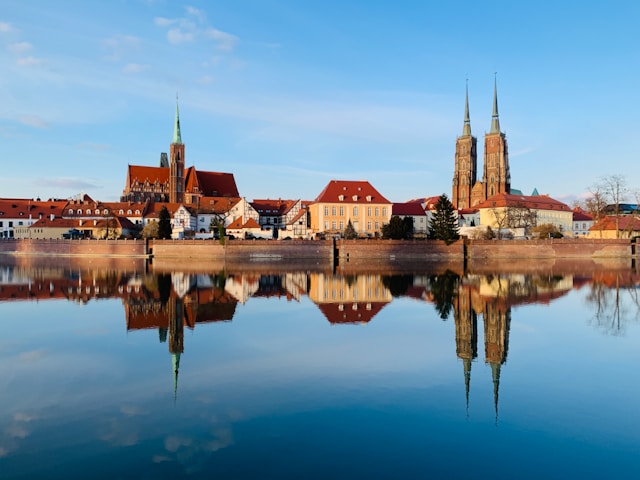
Ostrow Tumski, also known as Cathedral Island , is the oldest and most historically significant area of Wroclaw, dating back to the 10th century . Initially inhabited by Slavic tribes, it evolved into a critical religious center. The magnificent Wroclaw Cathedral of St. John the Baptist , with its soaring twin spires and striking Gothic architecture, dominates the island. At dusk, lamplighters manually illuminate antique gas lamps along cobbled streets, creating a uniquely romantic atmosphere rarely found today. Ostrow Tumski houses several churches and ecclesiastical residences, highlighting centuries of religious influence. A less known yet fascinating landmark is the Church of the Holy Cross, remarkable for its dual-level structure. Visitors often discover tranquility strolling through carefully landscaped gardens by the Oder River, or exploring the archbishop’s palace gardens. Ostrow Tumski effortlessly blends spiritual heritage, architectural splendor, and quiet charm, encapsulating the deep historical roots and enduring spiritual essence of Wroclaw.

Panorama of the Battle of Raclawice
The Panorama of the Battle of Raclawice is a monumental painting measuring 114 meters in circumference and 15 meters high, vividly depicting the famous 1794 victory of Polish insurgents led by national hero Tadeusz Kosciuszko against Russian forces. Created by a team of prominent artists, including Jan Styka and Wojciech Kossak, this artwork captivates visitors with its stunningly realistic portrayal enhanced by carefully designed three-dimensional foreground elements. Originally displayed in Lviv in 1894, the panorama found a permanent home in Wroclaw after World War II. This iconic piece symbolizes Polish resilience and pride, drawing hundreds of thousands of visitors annually. Audioguides and interpretative panels provide engaging historical context. Few realize the detailed illusions meticulously designed to merge seamlessly into the painted canvas, intensifying the dramatic impact. The Panorama stands today as both a powerful historical reminder and a masterful artistic achievement, uniquely engaging visitors with Poland’s storied past.
Sky Tower
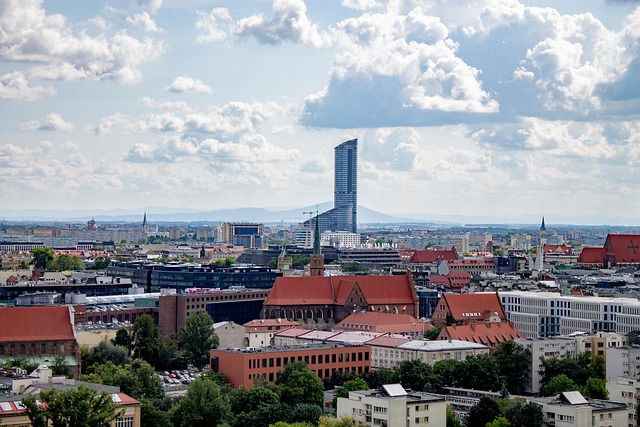
Sky Tower is Wroclaw’s modern architectural landmark and the tallest building in the city, reaching an impressive height of 212 meters . Completed in 2012 , this skyscraper is among Poland's tallest structures, offering a dramatic skyline accent. Its striking design includes sleek glass facades and innovative contemporary architecture. The Sky Tower features a public observation deck on the 49th floor , providing breathtaking panoramic views of Wroclaw and beyond, an experience particularly spectacular at sunset. The complex also houses luxury apartments, upscale shopping boutiques, sophisticated dining options, and entertainment venues. A lesser-known fact is the presence of one of Poland’s fastest elevators, reaching the observation deck in less than a minute. Sky Tower has quickly become a symbol of the city’s ambition, progress, and modern lifestyle, standing in contrast to its historical backdrop yet complementing Wroclaw’s character by adding a contemporary dimension to its rich urban tapestry.
University of Wroclaw
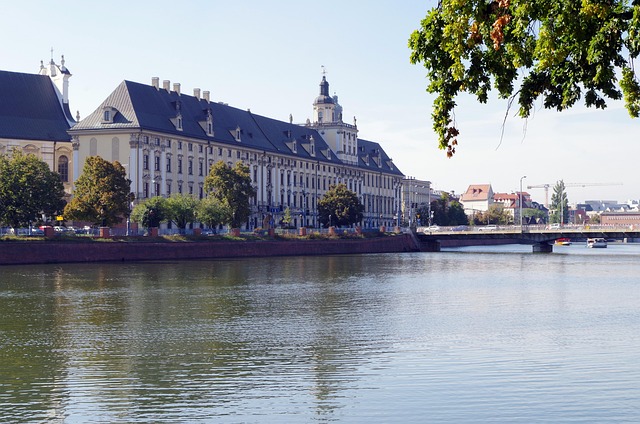
Founded in 1702 by Emperor Leopold I , the University of Wroclaw is a prestigious institution housed in remarkable baroque buildings overlooking the Oder River. The university’s architectural gem is the lavishly decorated Aula Leopoldina , renowned for its ornate frescoes, gilded stucco, and statues representing the virtues of knowledge and education. Equally impressive is the Mathematical Tower , offering panoramic views of the city from its terrace. The university’s museum displays a vast collection of scientific instruments, rare manuscripts, and historical artifacts, underscoring its long-standing academic heritage. Many visitors overlook the hidden botanical collections and the peaceful university courtyards, offering secluded retreats amidst historic surroundings. Frequent public lectures, classical music concerts, and cultural events further enrich the university’s vibrant role in city life. Today, the University of Wroclaw remains a vital educational and cultural hub, where centuries of scholarly pursuit and architectural splendor come together seamlessly.
Wroclaw Zoo
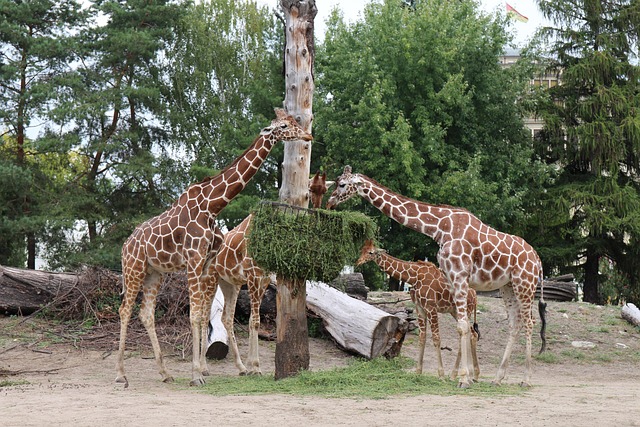
Established in 1865 , Wroclaw Zoo is the oldest and largest zoo in Poland, spanning over 33 hectares and home to around 12,000 animals representing over 1,100 species. Its most acclaimed exhibit, the Afrikarium , is Poland's first oceanarium dedicated exclusively to African fauna, featuring immersive aquatic displays with sharks, rays, and colorful coral reefs. Conservation efforts here have contributed significantly to protecting endangered species worldwide, including the rare snow leopard and okapi. Educational workshops and interactive exhibits emphasize biodiversity and ecological responsibility. The zoo’s lush greenery and historic architecture offer a pleasant environment for visitors of all ages. Lesser-known is the beautifully preserved Victorian-era Elephant House, an architectural gem providing insights into the zoo’s historical development. Regular feeding demonstrations, conservation talks, and behind-the-scenes tours add depth to every visit, making Wroclaw Zoo a captivating place for animal enthusiasts and families alike.