
City view of Ypres, Belgium

Ypres

Ypres is a city steeped in World War I history. The town was almost completely destroyed during the war but was meticulously rebuilt. The Menin Gate Memorial honors the missing soldiers of the Commonwealth, and the In Flanders Fields Museum provides a poignant exploration of the war's impact. Ypres hosts a nightly Last Post Ceremony, a moving tribute to fallen soldiers. Visitors can also explore the nearby Tyne Cot Cemetery, the largest Commonwealth war cemetery in the world. The town's medieval cloth hall, which houses the museum, is another highlight.

Top attractions & things to do in Ypres

If you’re searching for the best things to do in Ypres, this guide brings together the top attractions and must-see places to visit in Ypres. The top picks below highlight the most visited sights for first-time visitors, plus a few local favorites worth adding.

Hill 60 in Ypres, Belgium

Hill 60

Hill 60 is a historical site located just south of Ypres, known for its strategic importance during World War I. The area saw fierce fighting and is particularly remembered for the extensive use of underground warfare, including the detonation of mines beneath enemy positions. Today, Hill 60 remains largely untouched, with craters and remnants of war scattered across the landscape, allowing visitors to see the scars of battle firsthand. The site is also home to memorials for both British and German soldiers who fought and died there. The preserved trenches and bomb craters give a haunting glimpse into the brutal conditions of trench warfare. Hill 60 is also part of the Ypres Salient, one of the most fought-over areas in the war, and offers a reflective experience for those interested in military history. A preserved section of the 1st Australian Tunneling Company’s barracks reveals graffiti etched by soldiers awaiting deployment. In 2021, archaeologists uncovered a sealed dugout containing rusted rifles, boots, and a diary belonging to a young Lancashire soldier.
Ads place
Ads place
Ads place
Ads place
Ads place
In Flanders Fields Museum in Ypres, Belgium

In Flanders Fields Museum

Located in the Cloth Hall, the In Flanders Fields Museum offers an immersive exploration of World War I and its impact on the Ypres region. The museum is named after the famous poem “In Flanders Fields” by John McCrae, which became a symbol of remembrance for those who died in the war. Interactive exhibits, artifacts, personal accounts, and audiovisual displays guide visitors through the war’s history, with a focus on the human experiences of soldiers and civilians. It includes detailed narratives about the four battles of Ypres and the widespread destruction. The museum also highlights the city’s rebuilding efforts post-war. Visitors can climb the belfry for panoramic views of the reconstructed medieval city. The museum’s emotional depth and educational value make it a must-visit for those seeking to understand the region’s tragic past. A recently added exhibit features a reconstructed trench with soundscapes mimicking artillery barrages and whispered soldier conversations. The museum's archives hold over 5,000 personal letters, some still sealed and unread, donated by descendants of veterans.
Ads place
Ads place
Ads place
Ads place
Ads place
Menin Gate Memorial in Ypres, Belgium

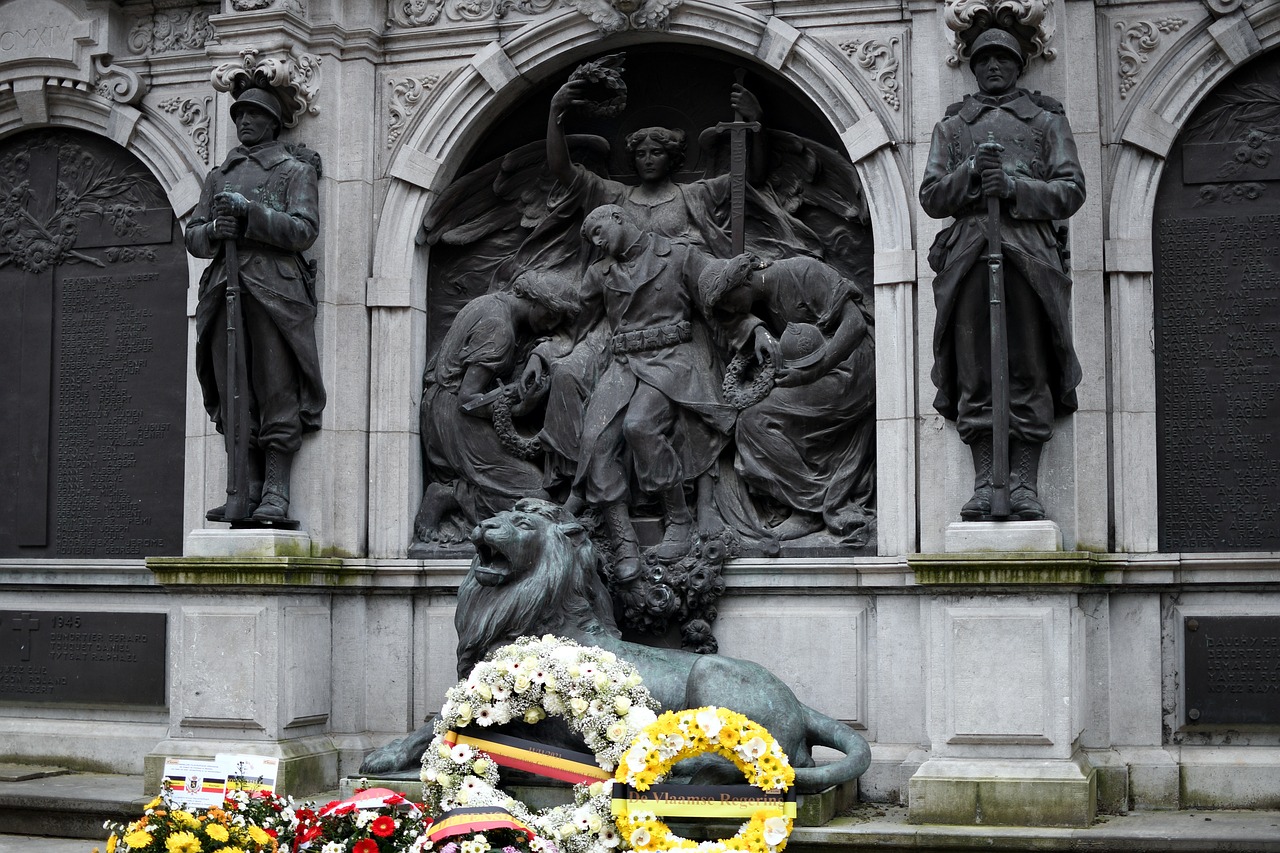
Menin Gate Memorial

The Menin Gate Memorial to the Missing is one of the most poignant and recognizable World War I memorials in the world. Located at the eastern exit of Ypres, this monumental archway lists the names of over 54,000 British and Commonwealth soldiers who went missing during the war and have no known grave. Every evening at 8 p.m. since 1928 (except during WWII), the Last Post ceremony is held under the arch to honor the fallen. The impressive structure, designed by Sir Reginald Blomfield, not only serves as a reminder of the countless lives lost but also acts as a powerful symbol of remembrance. Surrounded by ancient fortifications, Menin Gate is a site that draws visitors for reflection and education on the impacts of the war. Its emotional resonance and architectural grandeur make it one of Ypres’ most significant landmarks. The memorial's lion statues, symbolizing courage, were carved from stone quarried in the same region as the original medieval city walls. In 2018, a digital archive was launched, allowing families worldwide to access photos and letters of soldiers commemorated here.
Ads place
Ads place
Ads place
Ads place
Ads place
Saint Martin's Cathedral in Ypres, Belgium

Saint Martin's Cathedral

Saint Martin’s Cathedral, a towering Gothic church, is one of Ypres’ architectural gems. Originally built in the 13th century, the cathedral was almost entirely destroyed during World War I but was painstakingly rebuilt in the 1920s. Its imposing structure features intricate stained-glass windows and soaring vaulted ceilings that reflect its medieval origins. Inside, the cathedral holds the tomb of Bishop Jansenius, a prominent 17th-century theologian. The cathedral also houses various memorials related to the war, including a tribute to the 27th U.S. Division. The grandeur of Saint Martin’s Cathedral, combined with its role in Ypres’ post-war reconstruction, makes it a significant cultural and historical site. Visitors can appreciate both the religious and architectural history of Ypres while also reflecting on the resilience of the city in the face of immense destruction. The cathedral’s carillon, destroyed in 1914, was rebuilt with bells donated by Allied nations, each inscribed with messages of peace. A hidden staircase leads to a rooftop vantage point offering views of the Ypres Salient battlefields.
Ads place
Ads place
Ads place
Ads place
Ads place
Tyne Cot Cemetery in Ypres, Belgium

Tyne Cot Cemetery

The Tyne Cot Cemetery, located near Passchendaele, is the largest Commonwealth War Graves cemetery in the world. With nearly 12,000 graves, it is a solemn reminder of the brutal fighting that took place during the Third Battle of Ypres (Battle of Passchendaele) in 1917. The cemetery’s beautifully maintained grounds offer a peaceful yet somber environment for reflection. It also includes a memorial wall that lists the names of 35,000 missing soldiers who died after August 1917. Tyne Cot’s significance lies not only in its scale but also in its quiet dignity, offering visitors a chance to honor the fallen while learning about the war’s horrific toll. The rows of white gravestones stretching across the fields encapsulate the sense of loss that echoes throughout the region. The cemetery’s central Cross of Sacrifice stands atop a captured German pillbox, a stark reminder of the ground’s strategic value. In 2023, conservationists discovered a rare intact 1917 trench map buried near the memorial wall, now displayed in the visitor center.
Ads place
Ads place
Ads place
Ads place
Ads place