
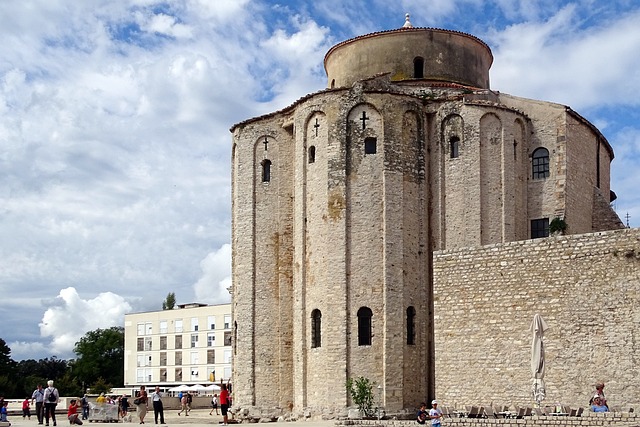
Saint Donatus Church
In Zadar, Croatia .
More places to visit in Zadar
Discover more attractions and things to do in Zadar.
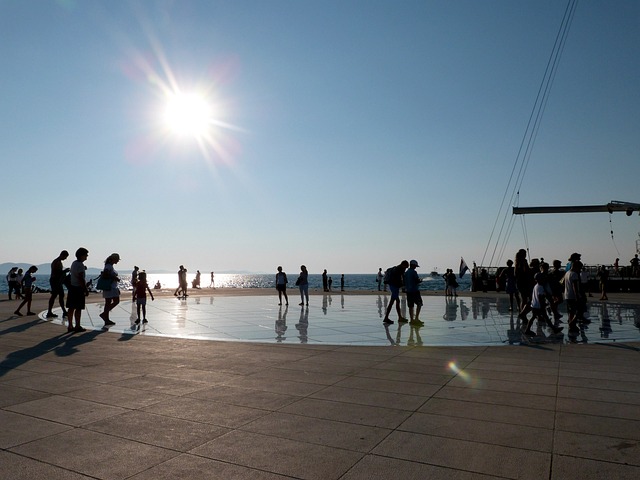
Greeting to the Sun
The Greeting to the Sun is an impressive solar-powered light installation located next to the Sea Organ on Zadar's waterfront. Designed by Nikola Basic, this circular structure consists of glass panels that absorb solar energy during the day and illuminate in colorful patterns at night. The light show is synchronized with the sounds of the Sea Organ, creating a unique multisensory experience for visitors. It is a popular spot to watch the sunset, as the lights begin to dance, enhancing the natural beauty of the view. The Greeting to the Sun represents Zadar's blend of modern art and natural landscapes. The 22-meter-wide disc contains over 300 multilayer glass panels that generate renewable energy. During summer solstice, the installation aligns perfectly with the sun’s path, casting a golden halo across the waterfront.
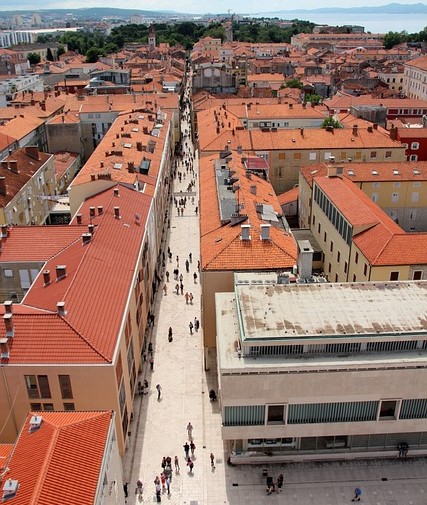
Kalelarga
Kalelarga, also known as Siroka Street, is the main artery of Zadar's Old Town. This vibrant street has been the city's social hub for centuries, lined with shops, cafes, and historic buildings. It is a lively place where locals and visitors gather, reflecting the spirit and culture of Zadar. A walk down Kalelarga provides an opportunity to experience the city's blend of ancient and modern life. The street has a unique charm, making it an ideal spot for exploring Zadar's urban landscape and its evolution through different historical periods. It remains a beloved part of the city's heritage. The street’s Roman-era pavement lies just 1 meter below the current cobblestones. Festival of Light installations in December turn Kalelarga into a glowing corridor of art.
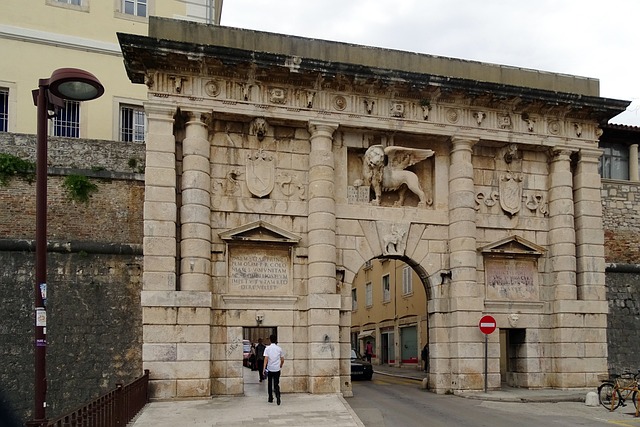
Land Gate
The Land Gate is one of the most impressive entrances to Zadar's Old Town. Constructed in the 16th century by the Venetians, the gate features ornate carvings, including the Venetian lion, symbolizing Zadar's historical ties with Venice. The gate was part of the city's defensive system and is remarkably well-preserved, offering a glimpse into Zadar's military architecture. The Land Gate is not only a historical monument but also a popular spot for photography, as it provides a grand entrance to the charming streets of the Old Town. It is an essential stop for anyone exploring Zadar's history. The gate’s triangular pediment hides a secret compartment once used to store gunpowder. Evening projections illuminate the Venetian lion relief with dynamic historical animations.
People's Square
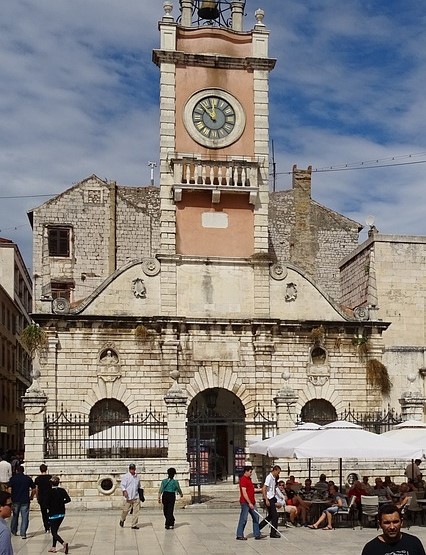
People's Square is the vibrant heart of Zadar's Old Town, surrounded by historic buildings, cafes, and shops. It has been a central meeting point for locals and visitors since medieval times and remains one of the city's most popular spots. The square features the City Loggia and the City Sentinel, which add to its historical charm. Whether enjoying a coffee or exploring the nearby streets, visitors can experience the lively atmosphere that has made People's Square a social hub for centuries. It is an ideal place to immerse oneself in Zadar's rich culture and everyday life. The 16th-century clock tower still chimes hourly with a bell cast in Venice. On weekends, the square transforms into an open-air gallery for local Dalmatian lacemakers and silversmiths.

Queen Jelena Madije Park
Queen Jelena Madije Park is one of the oldest public parks in Croatia, offering a serene retreat in the heart of Zadar. Established in the 19th century, the park is named after Queen Jelena Madije and is situated on top of the city's historic walls. It is an excellent spot for a peaceful stroll among Mediterranean plants, with panoramic views of the sea and Zadar's skyline. The park provides a green oasis where visitors can escape the hustle and bustle of the city. It is a perfect place for relaxation and enjoying the beauty of Zadar's natural and urban landscapes. The park’s century-old olive trees were transplanted from nearby Pag Island. A hidden Austro-Hungarian gazebo offers shaded seating with vistas of the harbor.
Roman Forum
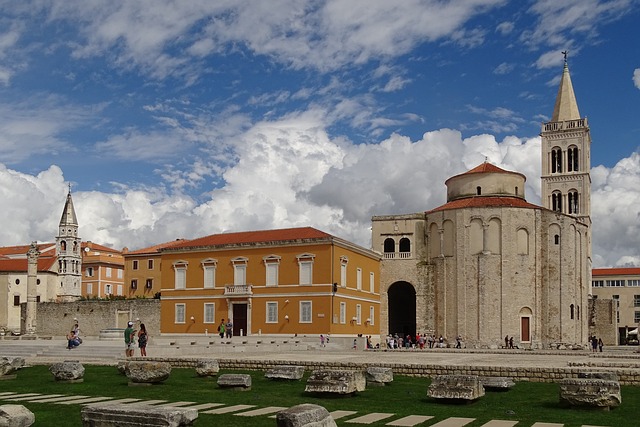
The Roman Forum in Zadar is one of the largest surviving Roman public squares on the eastern Adriatic, built in the 1st century BC under Emperor Augustus. Once the heart of Roman-era Jadera, this sprawling complex included temples, colonnades, and a capitolium dedicated to Jupiter, Juno, and Minerva. Today, its weathered stone columns and foundations stand as open-air monuments amidst Zadar's medieval streets. The forum's most iconic remnant is the Temple of Jupiter, whose Corinthian columns now form part of Saint Donatus Church. Archaeologists have uncovered altars inscribed with dedications to Roman emperors and fragments of ancient statues displayed in the Forum Museum. At night, the site is dramatically lit, casting shadows that evoke its past grandeur. Local legends claim the forum's stones were reused to build Zadar's Venetian-era walls, creating a tangible link between empires. Visitors can sit on millennia-old steps where citizens once debated politics, feeling the weight of history in every weathered stone. Recent excavations revealed a hidden crypt beneath the forum, likely used for ancient mystery cults. The Forum Museum now offers augmented reality tours that reconstruct the square's original grandeur.
Sea Organ
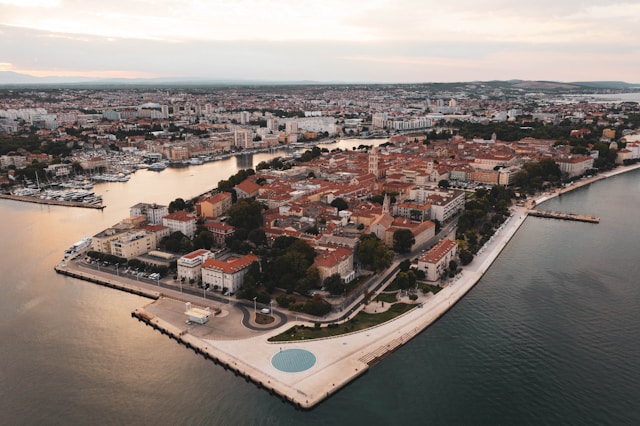
The Sea Organ in Zadar is a unique and modern architectural wonder that combines music and nature. Created by architect Nikola Basic, the organ is located on the Zadar waterfront and uses the movement of the sea to create melodious sounds. As the waves flow through a series of underwater pipes, they produce musical notes, offering a peaceful and mesmerizing experience for visitors. It is particularly beautiful at sunset, when people gather to listen to the sounds while watching the sky turn vibrant colors. The Sea Organ is a symbol of Zadar's innovation and is a must-visit for those exploring the city. The 35-meter-long installation features organ pipes tuned to play harmonies based on Dalmatian folk music. At night, LED lights embedded in the steps pulse in rhythm with the waves, creating a synesthetic experience .
St. Mary's Church
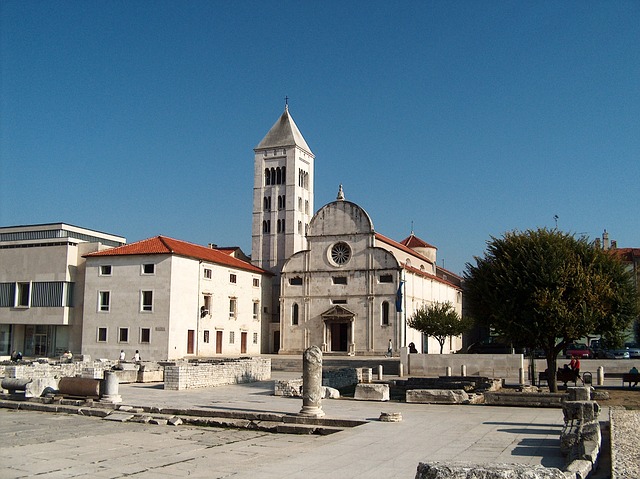
St. Mary's Church is a jewel of Zadar's religious heritage, part of a Benedictine monastery complex founded in the 11th century by Queen Jelena Madije. This Romanesque-Gothic church showcases a striking blend of architectural styles, with a baroque facade added during 18th-century renovations. Its interior dazzles with a gilded Renaissance altar and fragments of 14th-century frescoes depicting scenes from the life of the Virgin Mary. The church's bell tower, though partially ruined, offers sweeping views of Zadar's skyline and the Adriatic. Beneath the church, archaeological excavations revealed a 6th-century chapel dedicated to Saint Anastasia, linking it to Zadar's early Christian roots. The adjacent monastery houses a treasury with rare medieval manuscripts and Queen Jelena's sarcophagus. Visitors can attend Gregorian chant performances held in the nave, whose acoustics amplify the haunting melodies. A hidden courtyard features a well-preserved Roman mosaic from the original forum, bridging Zadar's pagan and Christian eras. The monastery scriptorium still produces handmade parchment using 12th-century techniques. Every September, the church hosts a Reliquary Procession displaying Saint Simeon’s bejeweled casket.
Zadar Cathedral
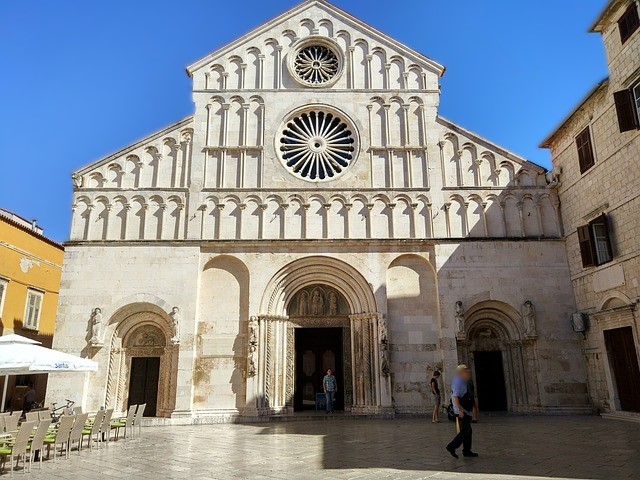
Zadar Cathedral, also known as the Cathedral of Saint Anastasia, is the largest church in Dalmatia and an important symbol of Zadar's Christian heritage. The cathedral, with its Romanesque architecture and striking bell tower, offers visitors a chance to explore both its history and beautiful design. Inside, the cathedral features stunning frescoes and intricate carvings that reflect the artistic influences of various periods. Climbing the bell tower rewards visitors with panoramic views of Zadar's Old Town and the Adriatic Sea. The cathedral remains a place of worship and a cultural monument that is central to Zadar's identity. The 12th-century sarcophagus of Saint Anastasia is adorned with reliefs depicting her martyrdom. Every December 25th, the cathedral hosts a Byzantine Rite Mass sung in Old Church Slavonic.