
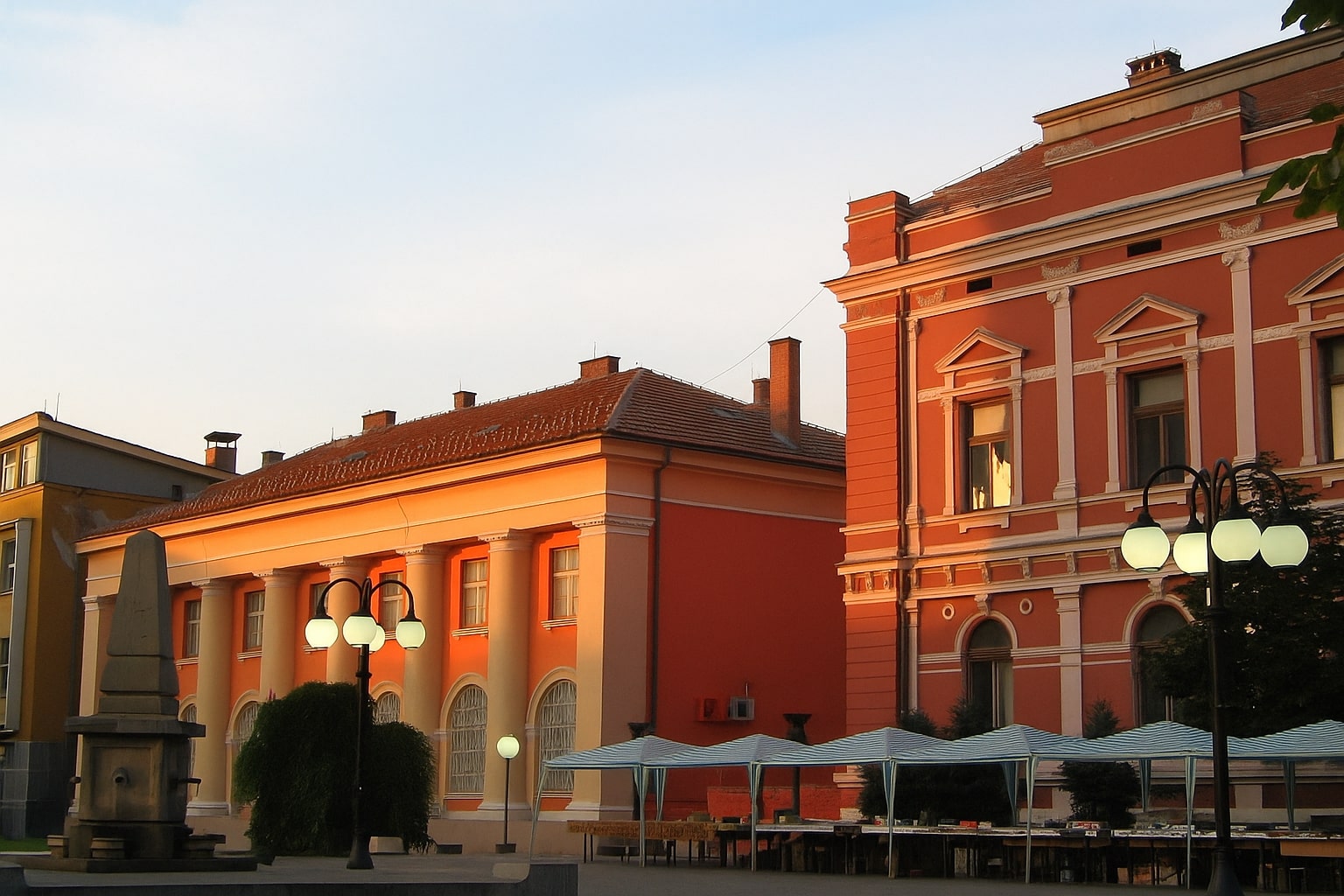
City view of Zajecar, Serbia

Zajecar

Zajecar plays a double set: archaeology by day, guitars by night. Felix Romuliana lies just beyond town, a late Roman palace whose mosaics and gates look improbably fresh against fields. The city museum fills in emperors’ family drama with coins, fresco crumbs, and a narrative voice that respects your intelligence. Back in the center, pastry shops cool trays on windowsills; people time errands to coincide with vanilla steam. Timok rivers meet and discuss currents while anglers compare tactics with enviable patience. Each summer, a guitar festival colonizes squares and staircases, turning lampposts into microphone stands. Wine from nearby hills arrives in unlabeled bottles at restaurants where the house knows your table by the second visit. Zajecar’s best move is its ability to change volume without losing pitch: ruins at noon, encores at midnight, and plenty of room in between for a nap.

Top attractions & things to do in Zajecar

If you’re searching for the best things to do in Zajecar, this guide brings together the top attractions and must-see places to visit in Zajecar. The top picks below highlight the most visited sights for first-time visitors, plus a few local favorites worth adding.

Felix Romuliana (Gamzigrad-Romuliana) in Zajecar, Serbia

Felix Romuliana (Gamzigrad-Romuliana)

Low hills open to brick walls and glittering stone where an imperial dream once took precise form in the countryside. Here the Roman emperor Galerius built a palace and memorial complex in the 3rd–4th century, shaping courtyards and temples that reflected the logic of the tetrarchy. Mosaics still show hunters and Dionysian rites while porphyry fragments whisper of titles and triumphs. The site entered the global canon in 2007 when UNESCO recognized its layered plan as rare testimony to late imperial ambition. Archaeologists trace the memory road between the palace and the mausolea where Galerius honored his mother Romula and rehearsed eternity in architecture. Walk the perimeter and the geometry asserts itself with patient clarity, each gate aligned to a ceremony you can almost hear. Evening softens the bricks and the valley folds quietly around them, and you begin to understand how power chose this landscape for both spectacle and reflection.
Ads place
Ads place
Ads place
Ads place
Ads place
Gamzigrad Spa (Gamzigradska Banja) in Zajecar, Serbia

Gamzigrad Spa (Gamzigradska Banja)

Steam rises from quiet courtyards and the hills answer with a measured echo that makes conversation unhurried. Springs here were praised since Roman days, a tradition revived in the 19th century when physicians promoted therapeutic bathing and the 20th century added clinics that taught practical balneology. The proximity to Felix Romuliana gives the spa an unusual dignity, as if hot water and empire agreed to share a valley in peace. Walks loop past pavilions and plane trees while the mineral scent writes its own soft punctuation. Old postcards capture verandas and orderly crowds and the same choreography repeats today with robes, books, and easy laughter. In the evening the hills cool quickly and the pools turn mirror calm, a stage where routine becomes ritual. The spa proves that health can be a civic culture and that hospitality works best when it respects both body and history with equal patience.
Ads place
Ads place
Ads place
Ads place
Ads place
Grlisko Lake in Zajecar, Serbia

Grlisko Lake

A road slips north through low fields and suddenly the water widens into a neat blue held by earth and willow. Created as a reservoir in the 20th century to tame the local streams of the Timok basin, the lake soon learned to host weekends for anglers and families. Picnic tables keep to modest scale while paths explore inlets that reward patience with herons and reed rustle. The shore carries the memory of earlier villages, and summer kiosks translate that heritage into grilled fish and stories that last past dusk. Kayaks draw long lines across reflections and the nearby hills hold the light until the first star appears. Locals still debate the best cove and the best month which is part of the charm because argument here ends in shared bread. Grlisko proves that utility can turn beautiful when a community treats water as a neighbor and not simply as a supply.
Ads place
Ads place
Ads place
Ads place
Ads place
Kraljevica Forest Park in Zajecar, Serbia

Kraljevica Forest Park

Pine and oak share a long slope above town, and paths coil toward overlooks where the roofs gather like careful handwriting. Kraljevica grew into a civic refuge during the 19th century when promenades and hilltop gazebos joined the European recipe for healthy cities under the lingering shadow of the Ottoman borderlands. A small fortification trace reminds visitors that surveyors once measured horizons for defense as well as for views. Today runners and families read the park by its benches while history students point out traces of wartime trenches from the 20th century. Information boards knit local botany into the story of the Timok climate and the wind edits conversation to a softer key. At sunset the ridge holds light a little longer and the town answers with an easy glow. Walk down slowly and you will notice that every shortcut becomes a promise to return with guests and show them the same gentleness.
Ads place
Ads place
Ads place
Ads place
Ads place
National Museum of Zajecar in Zajecar, Serbia

National Museum of Zajecar

A calm foyer opens onto galleries where the region explains itself with evidence rather than thunder. The museum became the natural steward of Felix Romuliana finds after systematic digs in the 20th century, assembling capitals, coins, and mosaics that carry the authority of context. Curators place imperial portraits near everyday tools so Galerius and anonymous artisans share the same well lit stage. Medieval cases follow with liturgical metalwork that survived fire and reform, then modern rooms approach the city through documentation and photographs that reframe familiar streets. Exhibitions point outward to the Timok valley and inward to households where weaving and wine defined seasons as securely as calendars. Labels are concise without being shy, and school groups move easily from a shard of glass to a map that restores its address in time. You exit with dates arranged and the sense that Zajecar keeps its memory in tools as much as in titles.
Ads place
Ads place
Ads place
Ads place
Ads place