
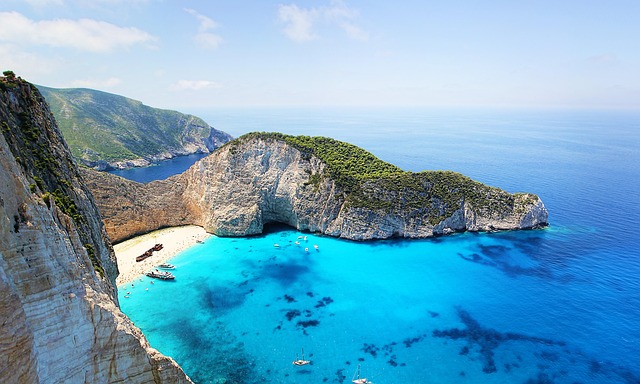
Navagio Beach (Shipwreck Beach)
In Zakynthos, Greece .
More places to visit in Zakynthos
Discover more attractions and things to do in Zakynthos.
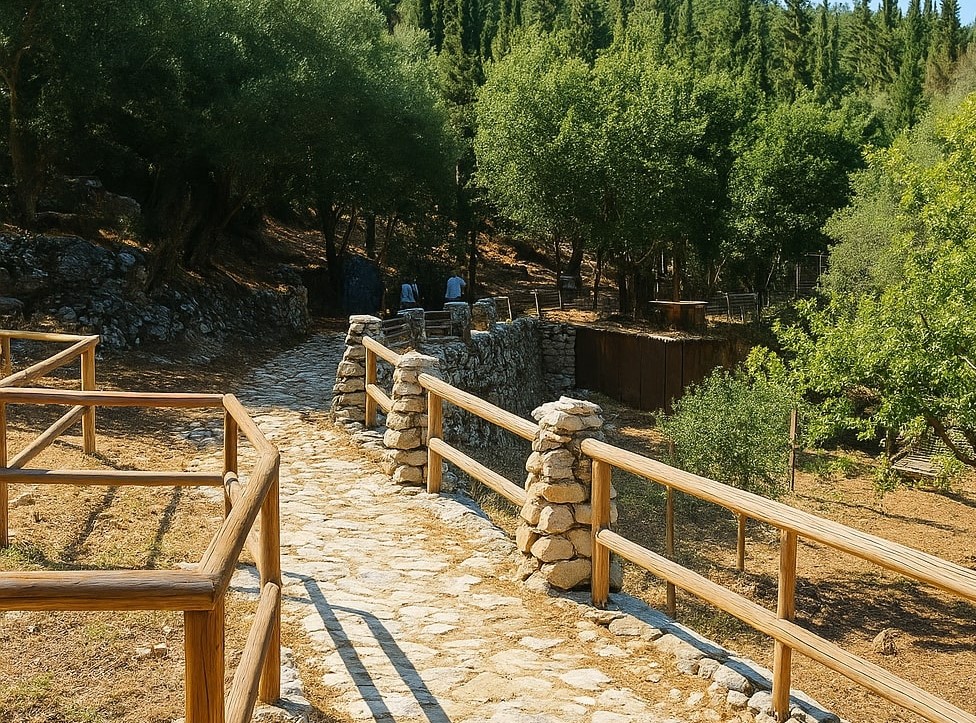
Askos Stone Park
Askos Stone Park, founded in 1983 on a hillside near Volimes, is a carved rock sanctuary showcasing over 500 animal sculptures and mythic figures etched into native limestone. Artist Petros Mavromichalis began the project to preserve local stone craft traditions, transforming natural outcrops into springing deer, leaping goats and centaur reliefs. A network of stone-dust trails winds past carved benches and shaded grottos where visitors glimpse sculpted owls and chameleons. In 2005 , a community initiative added interactive chimes made from hollowed rock tubes. Native tortoises, goats and peacocks roam freely among the sculptures, echoing the fusion of art and ecology. Picnic tables carved from boulders invite pauses under olive trees. Askos Stone Park’s blend of folk artistry, natural landscape and living wildlife creates a serene cultural escape inland from Zakynthos’s coast.
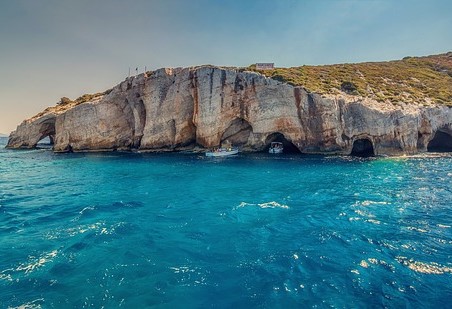
Blue Caves
The Blue Caves, along the island’s northwestern coast, are a series of marine caverns carved into Jurassic limestone. Sunlight refracting through the cave entrances intensifies the sea’s hue into electric blue tones, creating a surreal underwater glow. Boats launch from Agios Nikolaos and Volimes villages, skirting sea stacks and plunging into narrow grottoes where the water’s surface mirrors the vaulted ceilings. In 2015 , marine biologists documented rare Mediterranean corals thriving in the caves’ sheltered environment. Snorkelers slip beneath low arches to encounter schools of silvery barracudas and octopuses camouflaged among crevices. Legendary local lore speaks of pirate hideouts within the labyrinthine tunnels during the 16th-century Ottoman incursions. The caves’ acoustics amplify the slap of waves against stone, adding to the sensory wonder. Blue Caves remain a must-visit for geology enthusiasts and photographers seeking Crete’s less-traveled marine treasures.
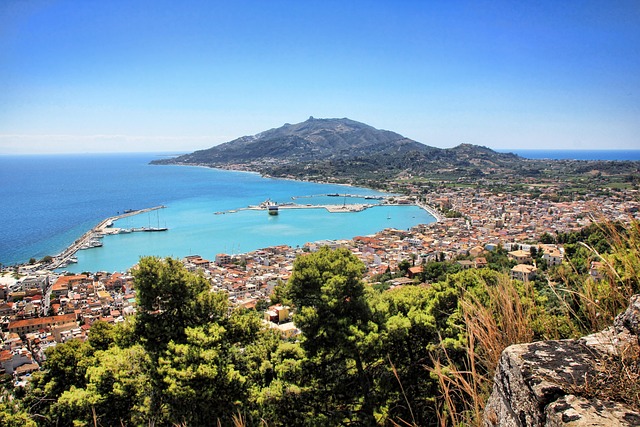
Bohali Hill & Venetian Castle
Overlooking Zakynthos Town, Bohali Hill is crowned by the ruins of a 15th-century Venetian castle built by General Leonardo Tocco. The fortress ramparts—repaired after an 1865 earthquake —offer 360° panoramic views of the Ionian Sea, Agios Nikolaos harbor and the olive-studded plain below. A narrow path lined with wild olive trees leads to battlemented terraces, where information boards recount the castle’s role in repelling Ottoman sieges. Nearby, the Chapel of St. George—rebuilt in 1720 —houses baroque icons rescued from pirate raids. At dusk, Bohali’s tavernas serve local mandolato sweets and citrus-infused liqueurs under parasols. Annual summer concerts animate the castle ruins, featuring classical ensembles against moonlit skies. Bohali Hill’s fusion of Venetian military architecture, natural vistas and living traditions makes it a highlight of Zakynthos’s cultural landscape.
Cameo Island
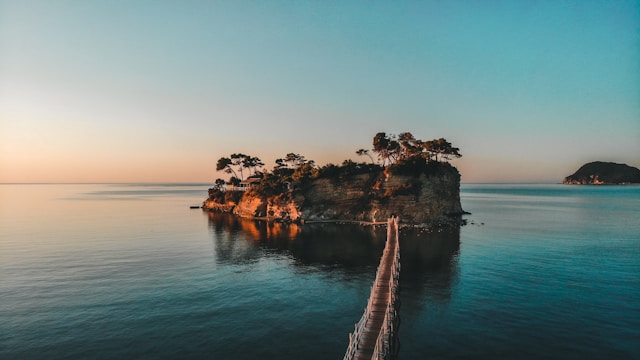
Cameo Island, a tiny sandbar in Agios Sostis Bay , is connected to the mainland by a wooden footbridge built in 1988 . Its white sand beaches and adjacent rocky islet host an open-air chapel dedicated to Panagia, popular for romantic weddings at sunset. A summer beach bar equips visitors with sunbeds and cocktails, while the shallow lagoon is ideal for paddleboarding and kayaking. Archaeological finds in 1999 uncovered Mycenaean pottery shards, hinting at ancient ritual use of the islet. Special-event DJs spin chill-out sets under olive trees, drawing crowds for full-moon parties. Conservation signage explains the area’s importance as a migratory bird stopover, with slender stilts and herons frequenting the shallows. Cameo Island’s blend of ceremony, sea-lounge vibes and discreet cultural nods makes it one of Zakynthos’s most Instagrammed spots.
Keri Caves & Lighthouse
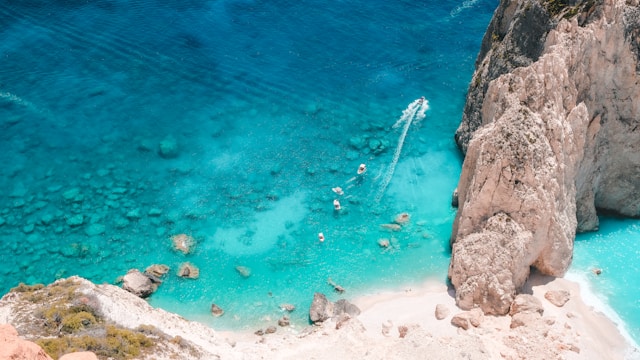
The Keri Caves, near Keri village, are a series of water-carved grottoes accessed by wooden platforms suspended over crystalline waters. Sea kayaks and glass-bottom boats depart from Keri beach, revealing underwater stalactites and colorful nudibranchs in cavern pools. A 16th-century lighthouse—perched on Keri Peninsula at 80 m elevation—guides mariners into Laganas Bay and was automated in 1984 . From its base, a network of footpaths traverses thyme-scented hillsides to panoramic cliff-top overlooks. In 2007 , marine ecologists documented seahorse populations thriving in the caves’ sheltered inlets. Snorkelers slip into warm, algae-filtered waters to observe octopuses and bream among sunken columns. At sunset, the lighthouse’s beam sweeps across cobalt waves. Keri Caves & Lighthouse’s blend of maritime geology, biodiversity and nautical heritage offers a secluded escape on Zakynthos’s southwestern coast.
Marathonisi (Turtle Island)
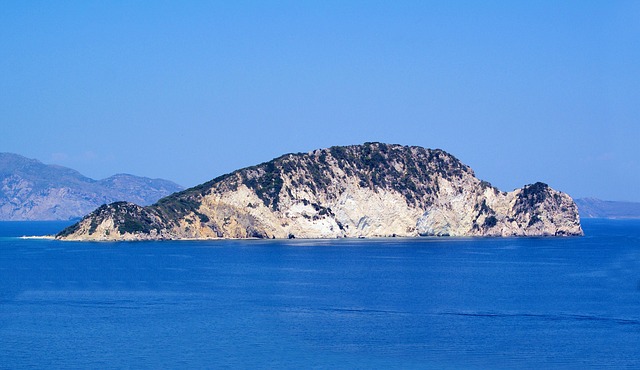
Marathonisi, often called Turtle Island for its shell-like shape, lies in Laganas Bay and is a protected nesting ground for the loggerhead sea turtle (Caretta caretta). Declared part of the National Marine Park in 2002 , its sandy beaches host over 1,000 nests each summer, monitored by conservationists. Boats depart daily from Laganas harbor, dropping visitors at two crescent beaches sheltered by dunes and juniper scrub. Seasonal hatchling releases—regulated by the park—allow guests to witness baby turtles’ first crawl to the sea under moonlit skies. Inshore reefs teem with colorful wrasse and damselfish, while the island’s southwestern promontory reveals remnants of Venetian watchtowers built in 1600 . A small freshwater spring at the island’s heart sustained former shepherd communities. Marathonisi’s blend of wildlife conservation, maritime scenery and cultural heritage makes it a symbol of sustainable tourism on Zakynthos.
Monastery of Panagia Skopiotissa (Argassi)
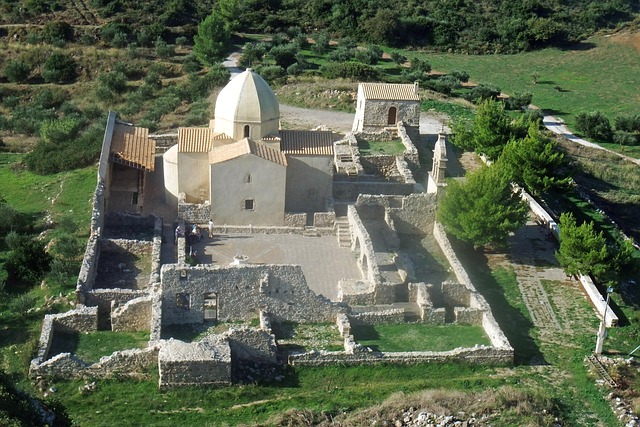
Perched on the Argassi ridge with sweeping views of the Ionian Sea , the Monastery of Panagia Skopiotissa was founded in the 17th century by local nobleman Georgios Skopelos to honor the Virgin Mary. Its whitewashed walls and blue-domed chapel recall Cycladic style, while inside, a finely carved 18th-century iconostasis houses rare icons attributed to painter Ioannis Koronaios. Each August 15, the monastery’s Feast of the Dormition draws pilgrims from across Zakynthos, who follow torchlit processions through olive groves to the courtyard. During the 1953 earthquake , the complex suffered damage but was meticulously restored in 1962 , preserving its fresco fragments and marble floors. A small on-site museum displays silver-liturgical vessels and handwritten manuscripts tracing monastic life under Venetian and Ottoman rule. Surrounding terraces planted with cypress and carob trees offer contemplative picnic spots, while the monastery’s fountain provides cool spring water. Blending spiritual devotion, island history, and panoramic vistas, Panagia Skopiotissa remains a serene haven above Argassi.
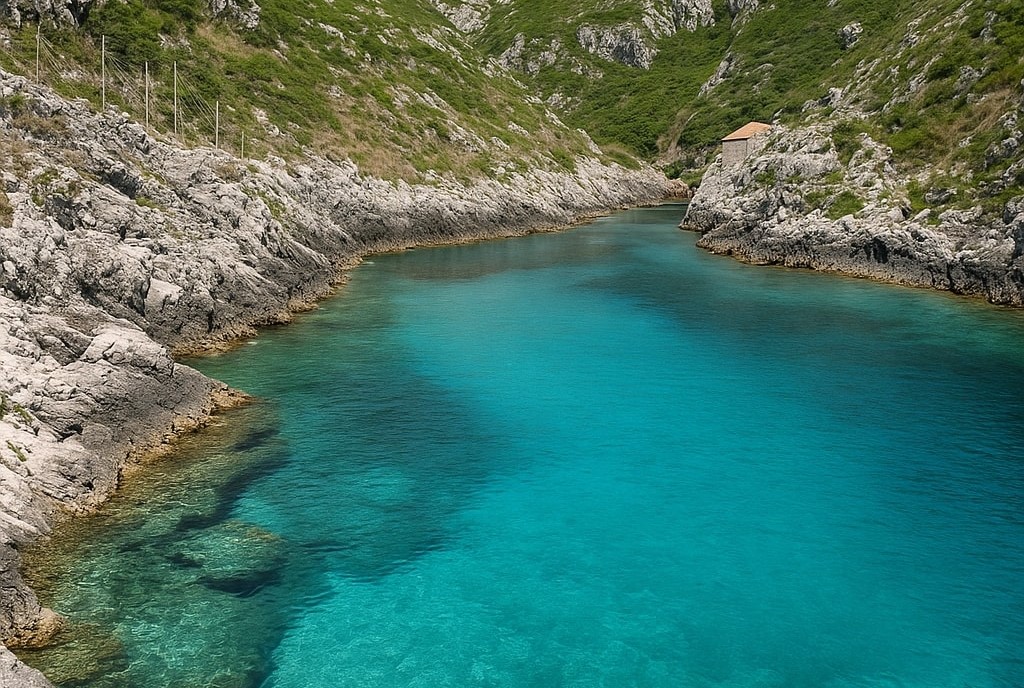
Porto Roxa Beach
Porto Roxa Beach, nestled beneath dramatic cliffs just north of Agios Nikolaos, is celebrated for its turquoise waters and sheltered pebble cove. The name “Roxa” refers to the reddish hue of the surrounding rock, formed during the Pleistocene era . Accessible via a quaint stone path carved in 1912 , the beach draws snorkeling enthusiasts to explore submerged rock ledges teeming with red gorgonian corals and schools of bream. In summer, steady meltemi winds create rolling swells ideal for beginner surfers, while seasoned divers venture to nearby sea caves. A small fisher’s shack—dating back to 1935 —offers refreshments and local honey wines. Geological surveys in 2008 documented unique mineral deposits coloring the seabed sands. At sunset, the cliffs glow apricot beneath a pastel sky, framed by tufts of thyme and wild oregano. Porto Roxa Beach’s blend of geological spectacle, marine biodiversity and tranquil ambiance makes it one of Zakynthos’s most enchanting shorelines.
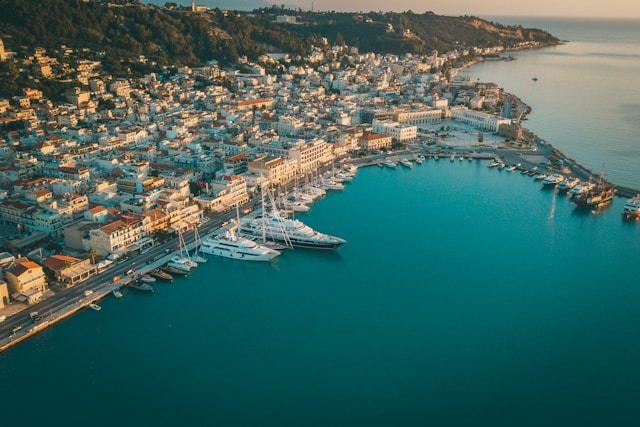
Solomos & Kalvos Waterfront Promenade
The Solomos & Kalvos Waterfront Promenade stretches along Zakynthos Town’s harbor front, named in honor of poets Dionysios Solomos and Andreas Kalvos . Lined with neoclassical arcades and palm trees, the promenade dates back to the 19th century when British governor Lord Guilford commissioned the first quayside marble benches. Today, visitors stroll past the whitewashed Church of St. Mark , pause at statues of the poets, and admire luxury yachts moored against the Ionian Sea’s sapphire backdrop. At sunset, the promenade’s cafés and taverna terraces come alive with live bouzouki music and plates of freshly caught Ionian seafood . In 2017 , the municipality installed artful LED lighting highlighting the promenade’s elegant porticoes after dark. Seasonal festivals—from the Solomos Poetry Awards in March to the Kalvos Summer Jazz Nights in July—activate the waterfront with cultural energy. Blending literary heritage, architectural grace, and seaside vibrancy, the Solomos & Kalvos Waterfront Promenade is Zakynthos’s beating heart at dusk.