
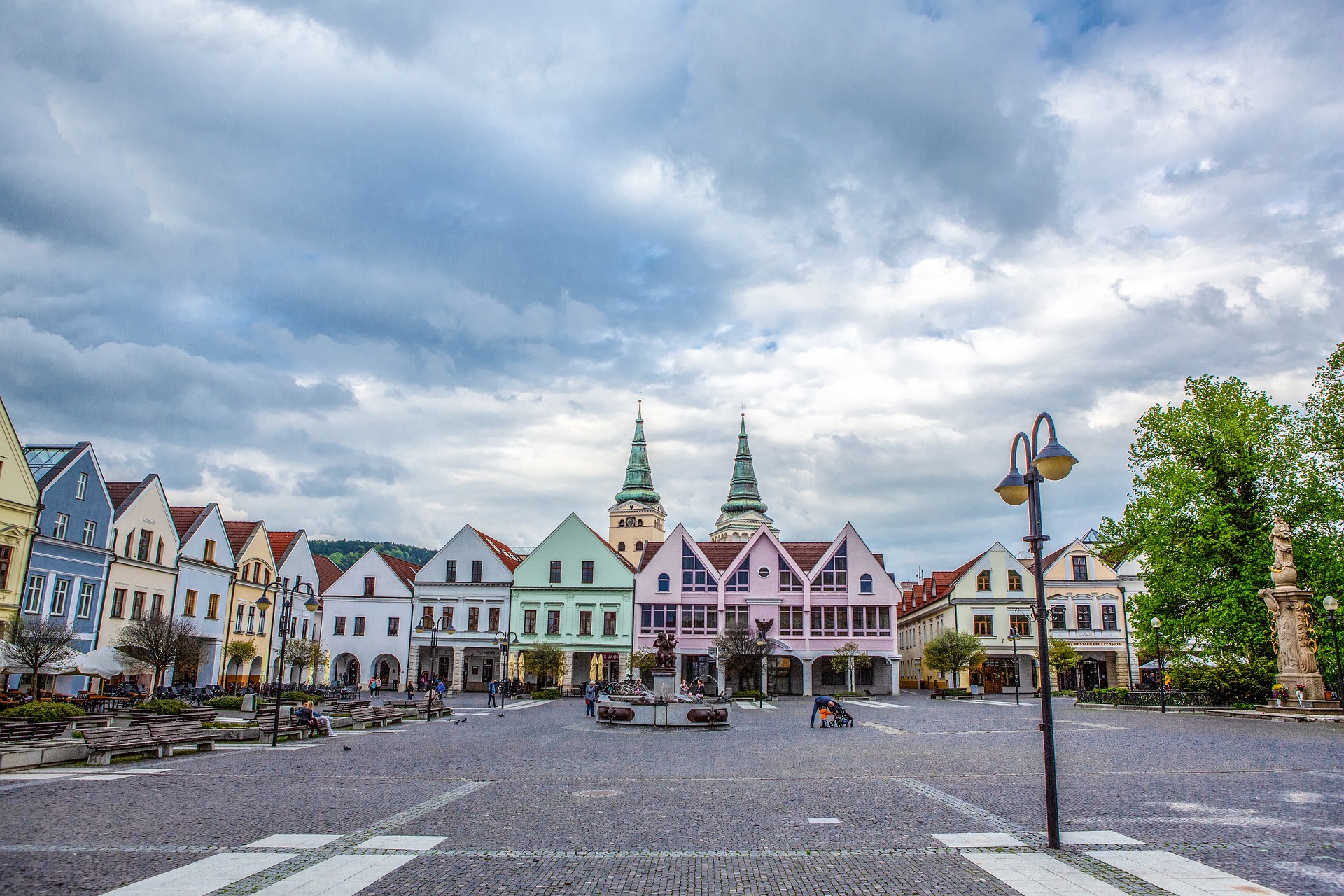
City view of Zilina, Slovakia

Zilina

Zilina sits under the Mala Fatra peaks with an appetite for both hiking boots and espresso cups. The arcaded Marianske square hosts weekend markets where sausages sizzle next to handmade ceramics. Engineers commute to sleek campuses while folk musicians tune up at the cultural house, and nobody sees a contradiction. Take the train to nearby Vratna for switchbacks and fresh air, then return for kapustnica and a glass of tart cider. The city’s modernist gems surprise, especially the round church by Joze Plecnik, a masterstroke hiding in plain sight. Street cyclists navigate confidently, proof that the river paths are more than scenery. Bookshops push local authors who argue kindly with the mountains. A playful oddity, the railway station clock once ran backward during a software prank, and locals still joke that time behaves differently here which explains why a quick visit often stretches into one more day.

Top attractions & things to do in Zilina

If you’re searching for the best things to do in Zilina, this guide brings together the top attractions and must-see places to visit in Zilina. The top picks below highlight the most visited sights for first-time visitors, plus a few local favorites worth adding.

Budatin Castle in Zilina, Slovakia

Budatin Castle

Where two rivers fold around a patch of green, the castle keeps its watch with more patience than drama. Budatin began as a water fortress guarding trade at a confluence and evolved through sieges, fashions, and careful repairs. Chronicles point to foundations in the 13th century, while later owners refitted the residence with Renaissance comfort and a proper park. Inside, galleries tell the story of the region's famed tinker craft (drotari), where wire and imagination repaired the world one pot at a time. A round tower reads like a textbook of military architecture, and the barbican lines still sketch a defensive logic that never quite sleeps. Conservation after the 20th century brought steady, unshowy care: stabilized masonry, dry walls, and displays that let objects do the speaking. Walk the lawns and you hear the Kysuca and Vah trade stories in low voices; step inside again and the vitrines translate them into tools, portraits, and itineraries. It is a compact lesson in how geography becomes culture, then heritage.
Ads place
Ads place
Ads place
Ads place
Ads place
Cathedral of the Holy Trinity in Zilina, Slovakia

Cathedral of the Holy Trinity

From the street the cathedral seems modest; step inside and the plan reveals a steady confidence that does not need to shout. The present form dates to the early 18th century, when the Jesuit order favored clear sightlines and preaching acoustics, then mellowed by later altars that keep devotion practical. A restrained Baroque vocabulary—stucco scrolls, balanced cornices, measured light—lets the liturgy carry the mood rather than the other way around. Next door, a free-standing tower long served as a campanile, the city's metronome for fires, processions, and ordinary hours. Conservators note repairs after quakes and roof leaks, the quiet heroism of limewash and scaffolds. During rehearsal the organ tests a chord that blooms through side chapels like a warm draft; even silence seems room-shaped here. Step back outside and the facade reads like a chronicle of adjustments agreed in meetings, not manifestos—civic religion written in meetings, timber, and time. It rewards repeat visits, preferably early, when light edits everything gently.
Ads place
Ads place
Ads place
Ads place
Ads place
Marianske Square and Burian Tower in Zilina, Slovakia

Marianske Square and Burian Tower

Arcades wrap the square like a porch for the whole city, turning errands into promenades and weather into theatre. Merchant houses keep Renaissance proportions over older bones, and a Marian column sets a calm center of gravity. At the edge, Burian Tower rises to about 46 meters, a civic lookout added in the 16th century that later learned to speak in bells. Under the arches you still find shop signs, painted beams, and stone thresholds polished by generations who never hurried. Guides point out faint sgraffito and a portal with a Gothic profile reused during rebuilding—a local habit of thrift that also preserves character. Cafes occupy ground floors once stacked with cloth and salt; the choreography of trade survives, only kinder. At sunset the stucco catches a second light and the square becomes reflective in every sense. Climb the gallery when open and you will understand why urbanism starts with a good rectangle, reliable shade, and a bell that tells everyone the same time.
Ads place
Ads place
Ads place
Ads place
Ads place
Neolog Synagogue in Zilina, Slovakia

Neolog Synagogue

A few blocks from the square stands a building that still looks contemporary from certain angles. The Neolog Synagogue, designed by Peter Behrens, rose between 1928–1931 and brought crisp modernist thinking into community architecture. A broad drum carries a shallow dome in reinforced concrete, with daylight managed by high windows that glow rather than glare. Inside, the women's gallery floats on slim supports, and the hall's measured volumes give singers a forgiving acoustic that audiences remember long after programs blur. Wartime rupture emptied the space; careful stewardship returned it to cultural use without over-polishing the past. Exhibitions make the hall a conversation between memory and the present, while small panels decode Hebrew inscriptions and materials with calm clarity. Stand under the dome and listen to the room breathe; then step outside to see how brick, plaster, and proportion prove that dignity can be engineered. It is a lesson in restraint that still feels generous.
Ads place
Ads place
Ads place
Ads place
Ads place
Rosenfeld Palace in Zilina, Slovakia

Rosenfeld Palace

Locals call it a little Versailles with a smile, but the charm is real. Completed in 1907 for a banker's family, Rosenfeld Palace translates Secession grace into a townhouse scale: stucco garlands, tall windows, and rooms laid out for conversation more than ceremony. A central salon stages light like a polite actor; parquet remembers music even when no one is playing. Conservation after the 20th century gave it back its poise, with reversible fixings, stable humidity, and paint research that kept original palettes legible. Today it hosts exhibitions and salons where contemporary work tests itself against measured rooms. Look for wrought ironwork on the stair and for floral motifs that repeat like riffs between doorheads and mirrors—small jokes shared by architects and plasterers. Step into the garden terrace and the city softens at once. The building proves that civility is an urban technology: proportion, maintenance, and a front door that expects conversation.
Ads place
Ads place
Ads place
Ads place
Ads place